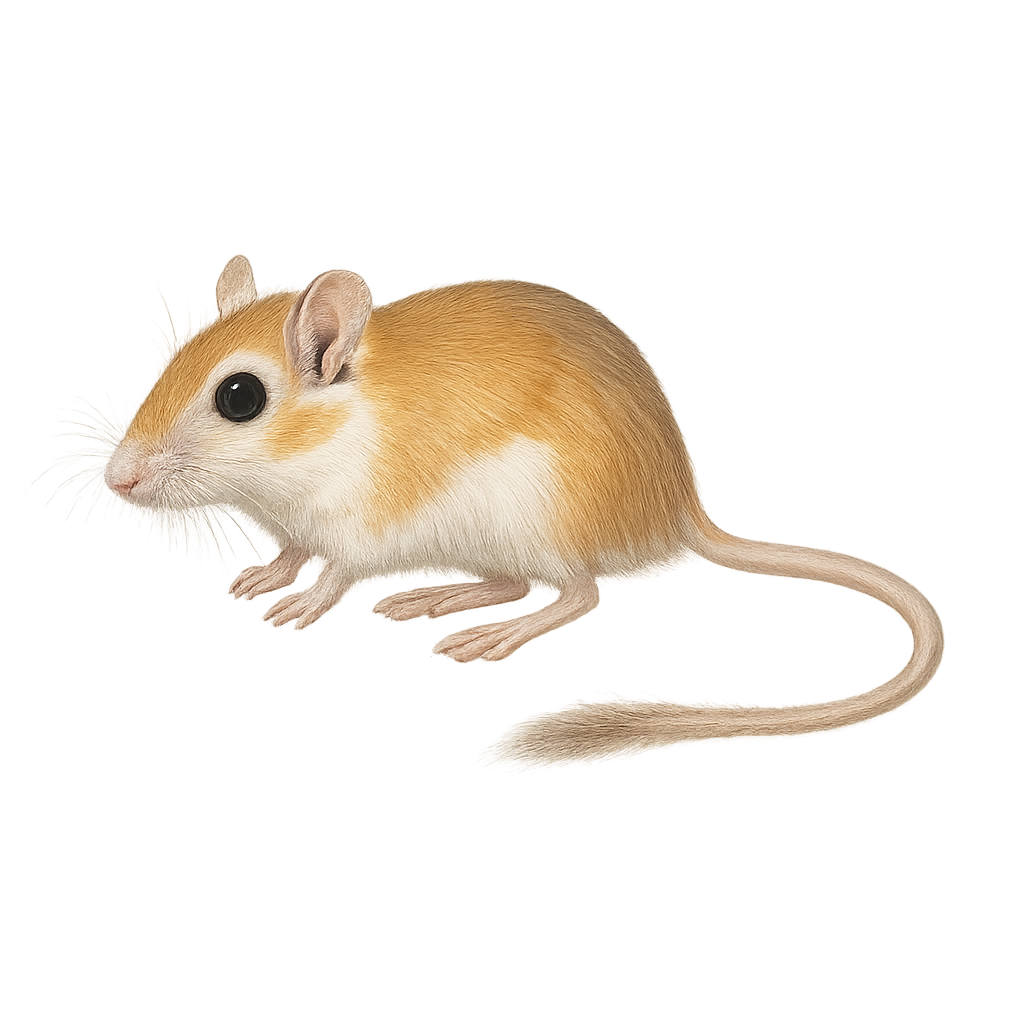
The Lesser Egyptian Jerboa, or Gerbillus gerbillus, is a small desert rodent primarily found in the arid regions of North Africa. It is well adapted to its dry environment due to its ability to conserve water and its nocturnal habits, which help it avoid the daytime heat. Its fur is typically sandy, providing excellent camouflage in its natural habitat. It primarily feeds on seeds, insects, and desert vegetation. The Lesser Egyptian Jerboa is known for its long hind legs, which allow it to make large jumps, facilitating quick movements to escape predators. Although often solitary, it can sometimes be seen in small groups.
The Gerenuk is a unique species of antelope from East Africa, recognizable by its long neck and graceful posture. It lives in savannas and semi-deserts, where it primarily feeds on shrubs and tree leaves. The Gerenuk is an excellent climber, capable of standing on its hind legs to reach high vegetation. This ability allows it to feed efficiently and avoid competition with other ground-dwelling herbivores. Although relatively discreet, the Gerenuk is threatened by habitat loss and poaching.

Gibbonss, members of the Hylobatidae family, are primates particularly known for their agility and their ability to move through the canopy. They are the smallest of the great apes, measuring between 40 and 70 cm in height, with long, powerful arms that can reach up to 2.5 times the length of their body. Their weight typically ranges from 5 to 15 kg, depending on the species. Gibbonss are primarily known for their mode of locomotion called "brachiation," where they move by swinging from branch to branch at impressive speeds, often at high altitudes. Their fur is typically dense, varying in color from black to light brown, and some species have distinct facial markings. Gibbonss primarily inhabit the tropical forests of Southeast Asia, where they feed mainly on fruits, leaves, and small insects. These primates are social and typically live in small family groups. While gibbons are not all at immediate risk, several species are endangered due to habitat loss, poaching, and the illegal wildlife trade.
The Maasai Giraffe is a subspecies of giraffe, easily recognized by its irregular and jagged patches, which differ from those of other subspecies. It typically stands between 4.3 and 4.8 meters tall, with males being larger and heavier than females, weighing between 800 and 1,200 kg. Its coat is light beige to light brown, with irregularly shaped leaf-like patches that are bordered in white. These patches are smaller and more scattered than those of the Southern Giraffe. The Maasai Giraffe primarily inhabits the savannas and grasslands of East Africa, particularly in Kenya and Tanzania. It is herbivorous, feeding mainly on acacia leaves and other tall vegetation, which it reaches with its long neck and prehensile tongue. Although the Maasai Giraffe is currently considered less threatened than other giraffe subspecies, it faces threats such as habitat loss and poaching.
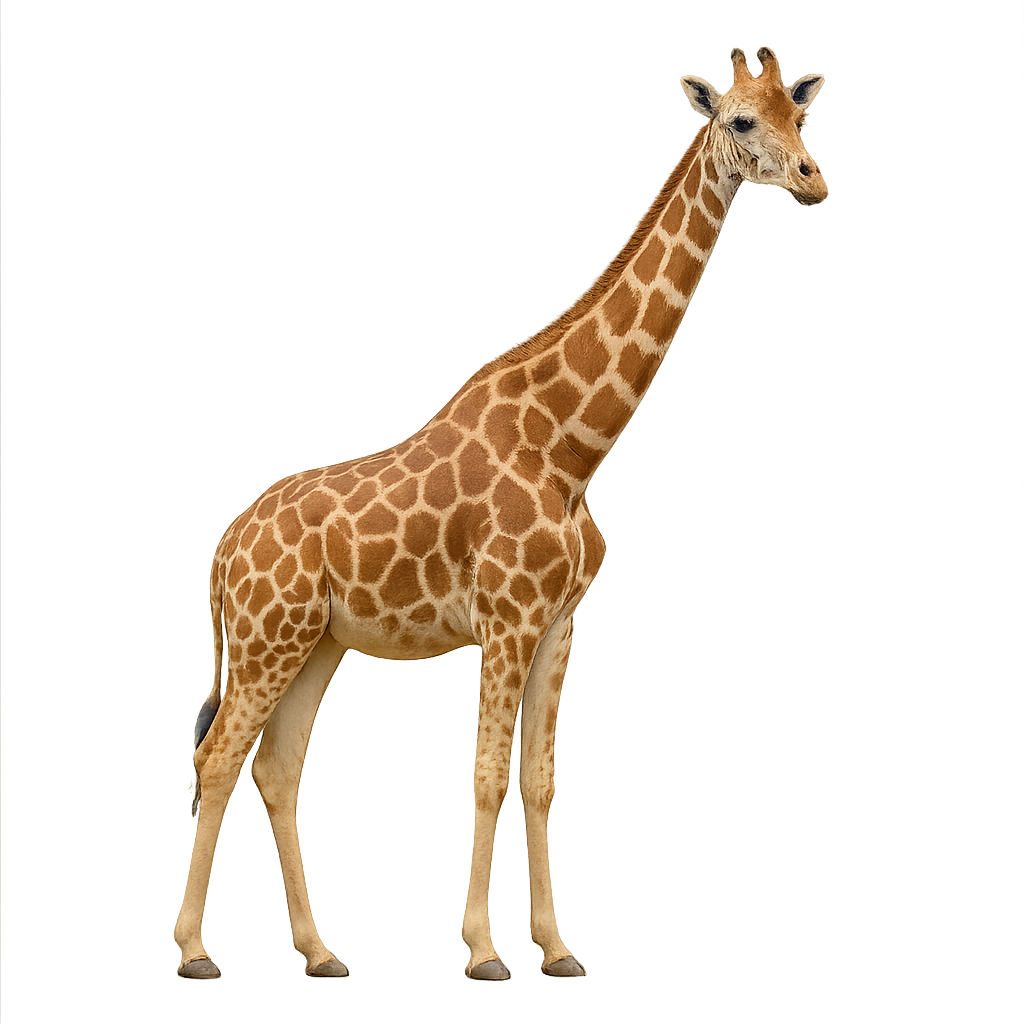
The Northern Giraffe is a subspecies of giraffe, characterized by its slender body and long neck. It stands about 4.5 to 5.5 meters tall, with males being larger and bulkier than females. Northern giraffes weigh between 800 and 1,200 kg. Their coat is light beige with irregular patches of brown or orange, which are smaller and more closely spaced than those of other giraffe subspecies. These patches are outlined in white, creating a distinctive pattern. The Northern Giraffe primarily inhabits the savannas and open woodlands of northern Kenya, particularly in the Samburu National Reserve and surrounding areas. Herbivorous, it feeds mainly on acacia leaves and other tall vegetation, which it reaches with its long neck and prehensile tongue. The Northern Giraffe is an endangered species, due to habitat loss and human conflicts, including poaching and encroachment on its land.
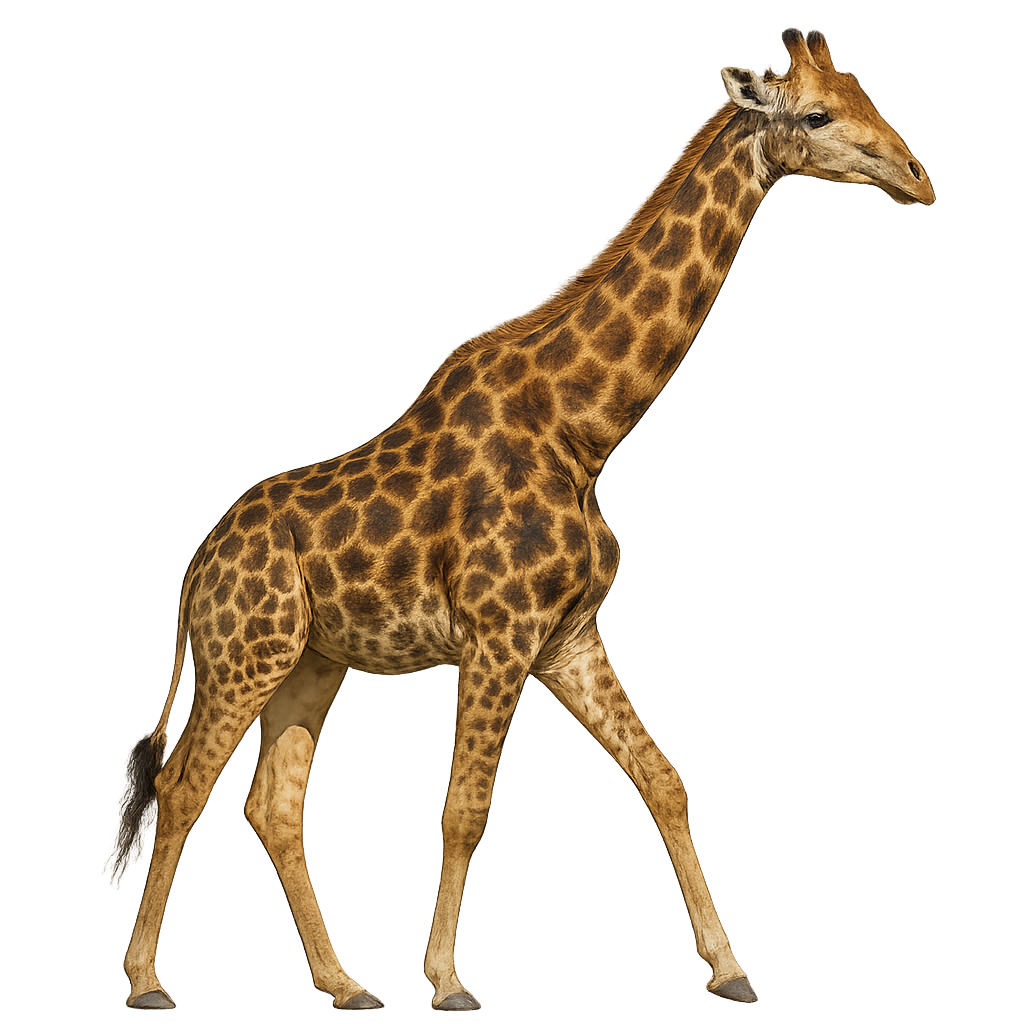
The Southern Giraffe is a subspecies of giraffe, characterized by its slender body, long neck, and robust legs. It typically stands between 4.3 and 4.8 meters tall, with males being larger and heavier than females, weighing between 800 and 1,200 kg. Its coat is light brown to beige, with irregular darker patches that are bordered by white. The patches of the Southern Giraffe are larger and more spaced out than those of other subspecies, giving it a distinctive pattern. It primarily inhabits the savannas and woodlands of southern Africa, notably in South Africa, Namibia, Botswana, and Zimbabwe. Herbivorous, it feeds primarily on acacia leaves, berries, and fruits, which it reaches with its long neck and prehensile tongue. While the species is currently less threatened than other giraffe subspecies, the Southern Giraffe faces risks related to habitat loss and population fragmentation.
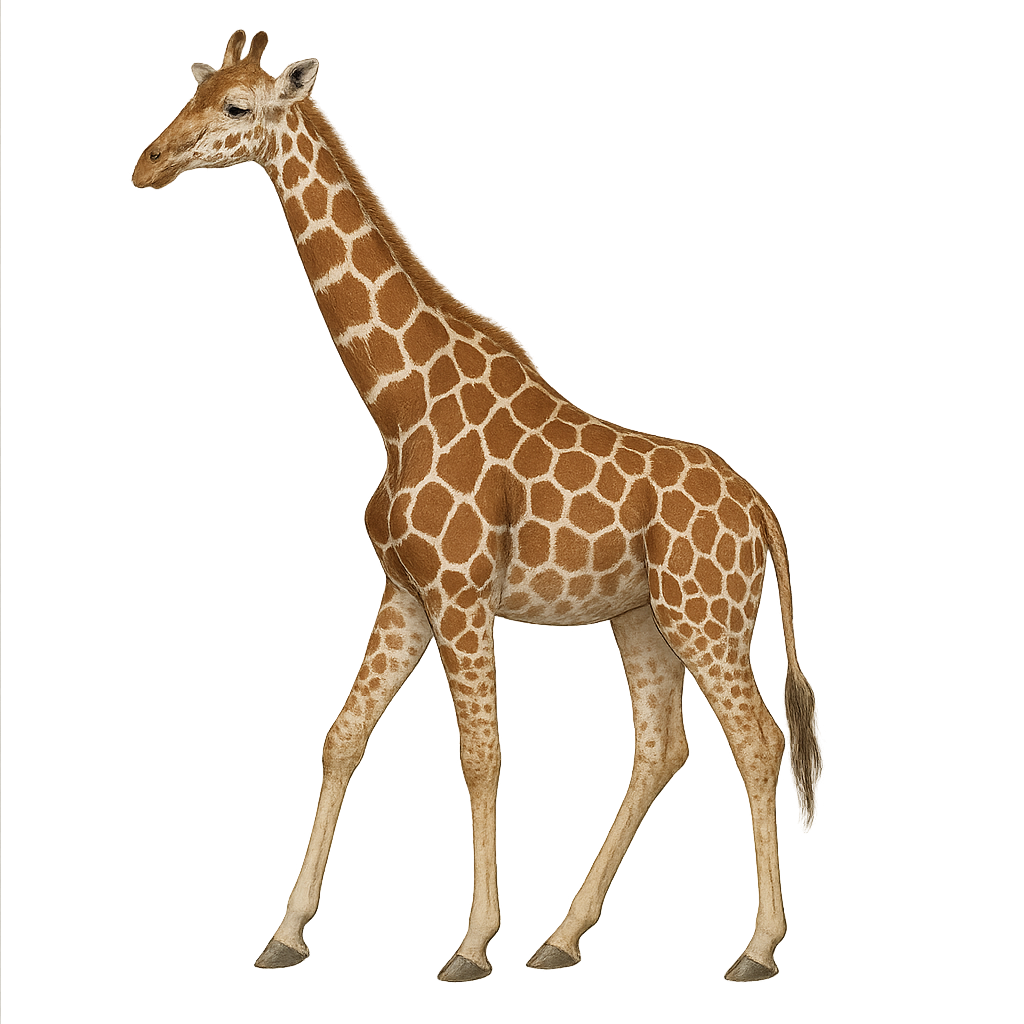
The reticulated giraffe, or Giraffa camelopardalis reticulata, is a subspecies of giraffe known for its distinctive coat pattern of large polygonal patches separated by white lines. It is primarily found in northeastern Kenya, southern Ethiopia, and Somalia. Reticulated giraffes live in loose social groups and primarily feed on acacia leaves, which they reach with their long necks. They play a crucial role in their ecosystem by promoting tree growth and seed dispersal. Although majestic, they are vulnerable due to habitat loss and poaching. Their population is declining, leading to their classification as a vulnerable species by the IUCN.
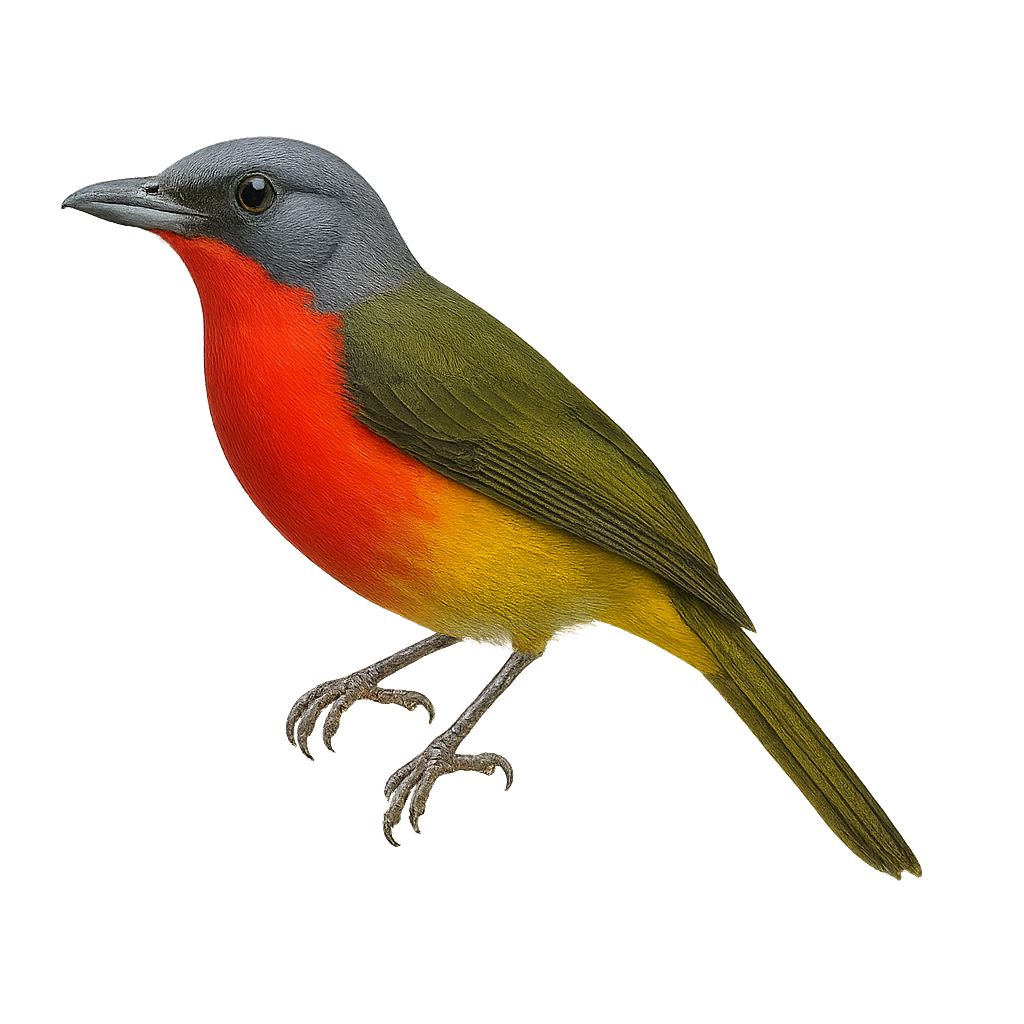
The Fiery-breasted Bushshrike is a bird with vibrant plumage, primarily bright red on the chest and belly, contrasting with an olive-green back. This passerine, belonging to the Malaconotidae family, is known for its melodious and powerful song. It primarily inhabits the humid tropical forests of Central and West Africa, where it feeds on insects and small invertebrates. Although discreet, it can be observed in pairs or small groups. Its ability to blend into dense foliage sometimes makes it difficult to spot. Its conservation status is currently stable, but deforestation could threaten its habitats in the future.
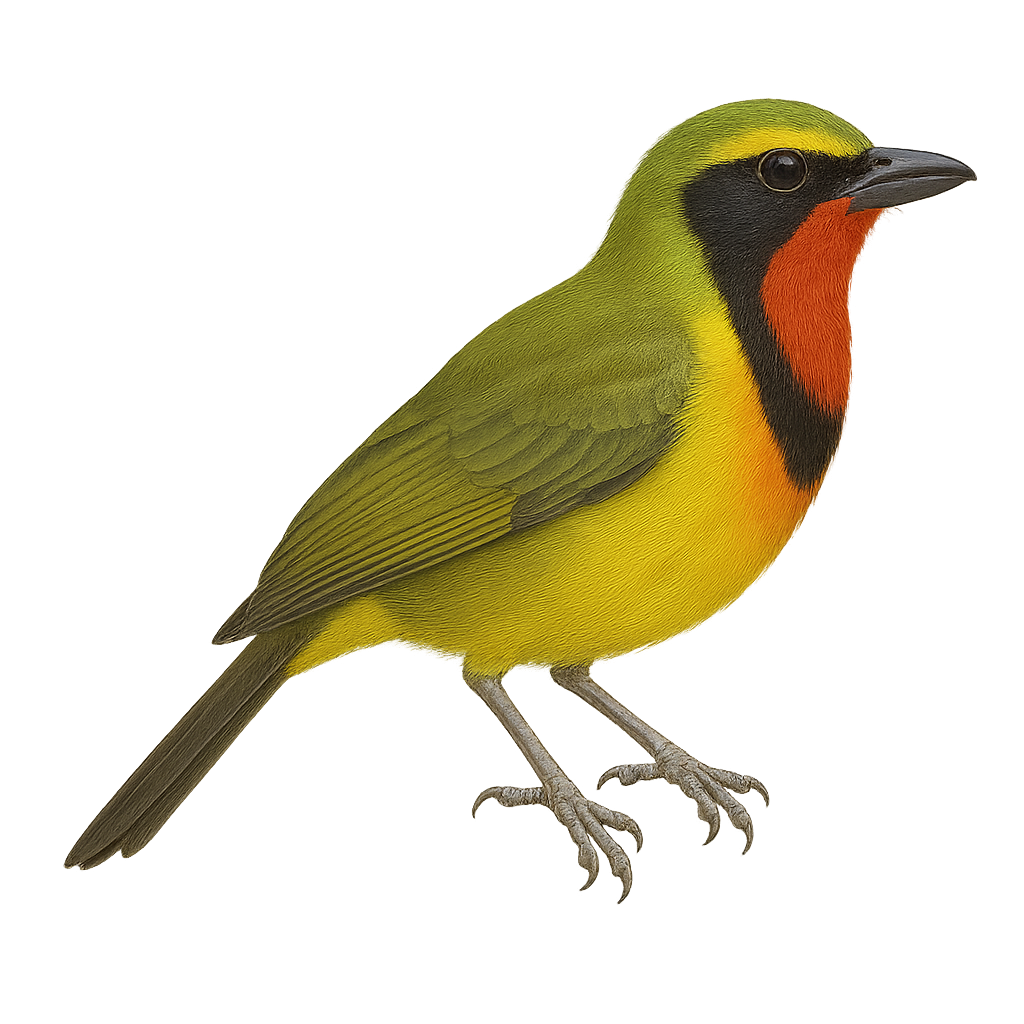
The Green-backed Bushshrike, or Telophorus viridis, is a colorful and captivating bird primarily found in the wooded regions and savannas of sub-Saharan Africa. It is easily recognizable by its bright green plumage on the back, contrasting with shades of yellow and red on the belly and chest. This bird also features a distinctive black mask around the eyes, enhancing its piercing gaze. The Green-backed Bushshrike is a relatively discreet bird, often heard before seen, thanks to its melodious and varied song. It primarily feeds on insects but also enjoys small fruits. Although generally solitary, it can sometimes be observed in small family groups.
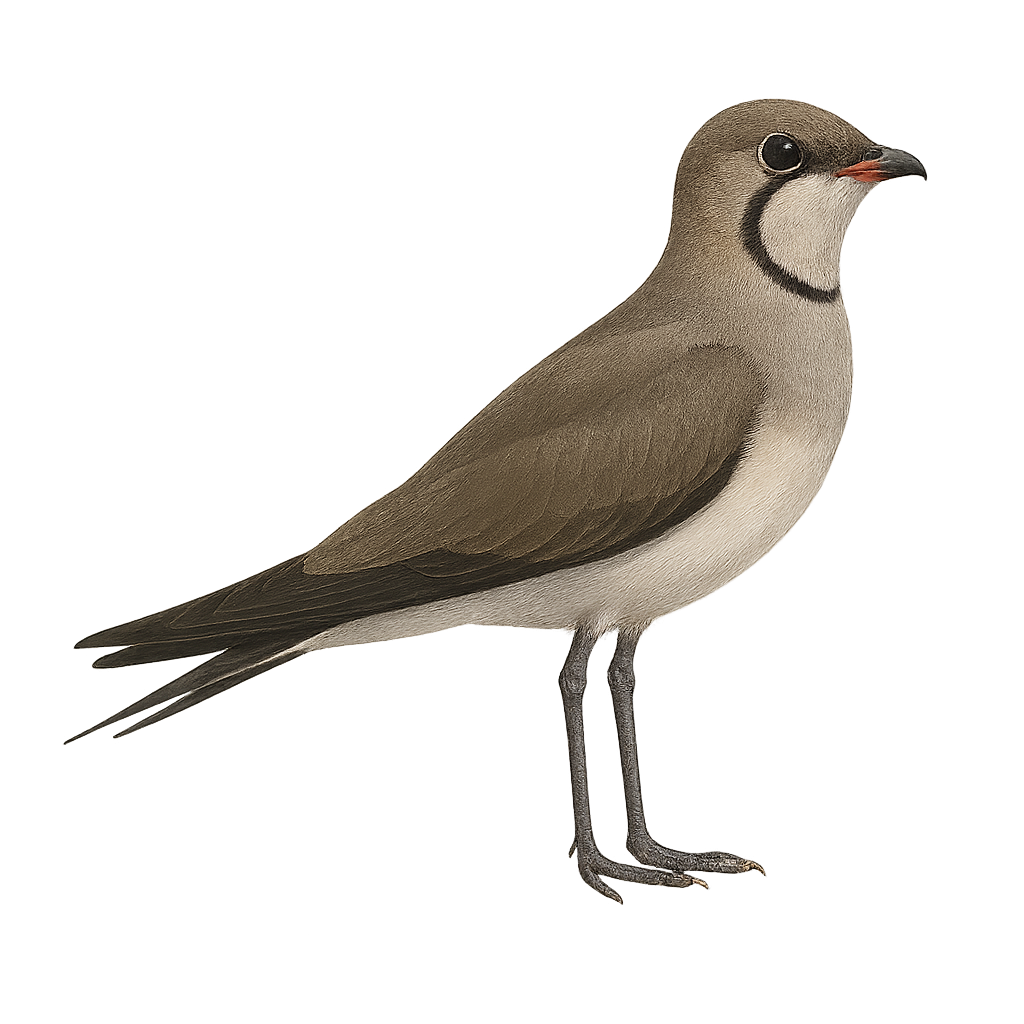
The Black-winged Pratincole, Glareola nordmanni, is a medium-sized migratory bird belonging to the Glareolidae family. It is recognizable by its light brown plumage, black wings, and forked tail. This bird is known for its ability to fly rapidly and perform impressive aerial acrobatics to catch insects in flight. It is primarily found in the steppes and open grasslands of Eastern Europe and Central Asia. The Black-winged Pratincole migrates to sub-Saharan Africa for the winter. It nests on the ground, often in loose colonies, and prefers habitats near water. Although its conservation status is concerning due to habitat loss, it remains relatively widespread in some regions.
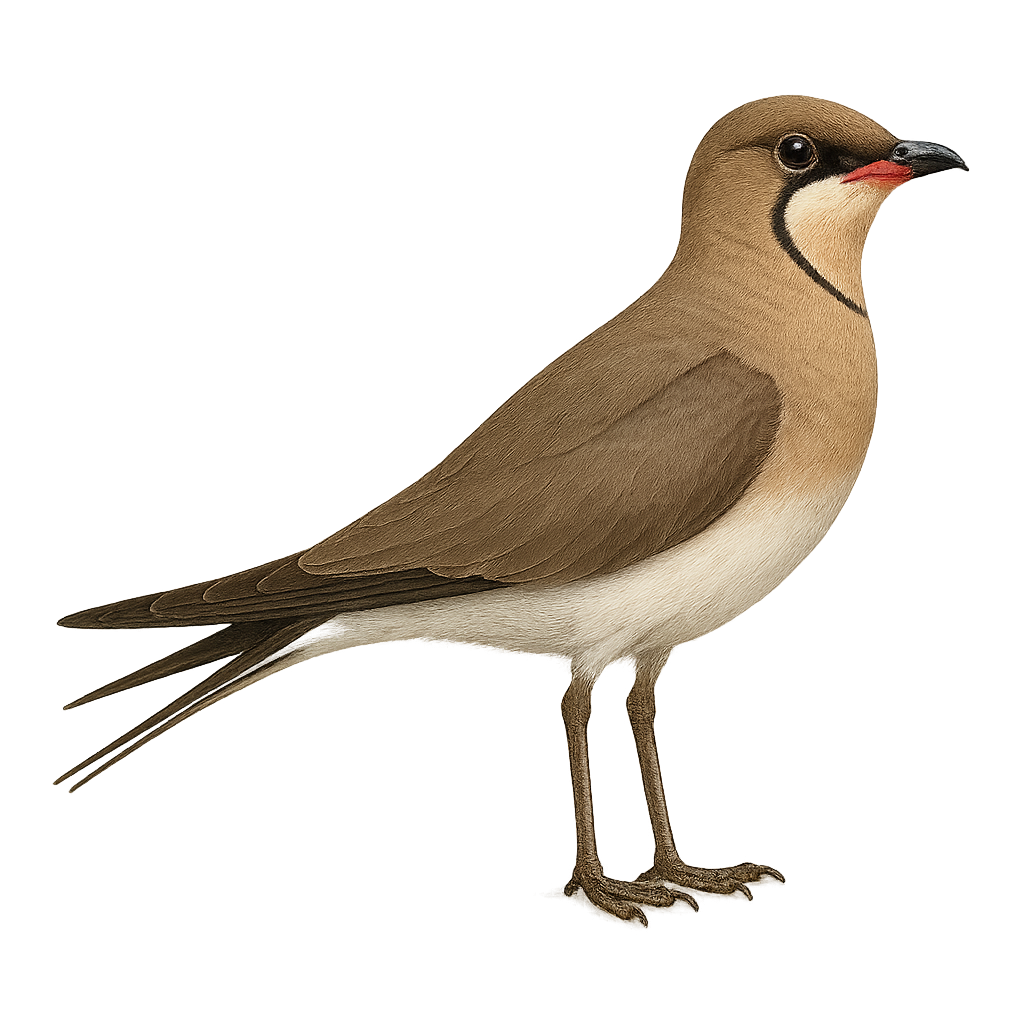
The Collared Pratincole is an elegant bird, recognizable by its light brown plumage and forked tail. It features a distinctive black collar around its throat, contrasting with its white belly. Often seen in wetlands, grasslands, and marshes, it hunts insects in flight with remarkable agility. A migratory bird, it winters in sub-Saharan Africa after breeding in Europe and Asia. Known for its fast and graceful flights, often in groups, it emits sharp calls. Although its habitat is threatened by intensive agriculture and wetland drainage, it remains relatively widespread.
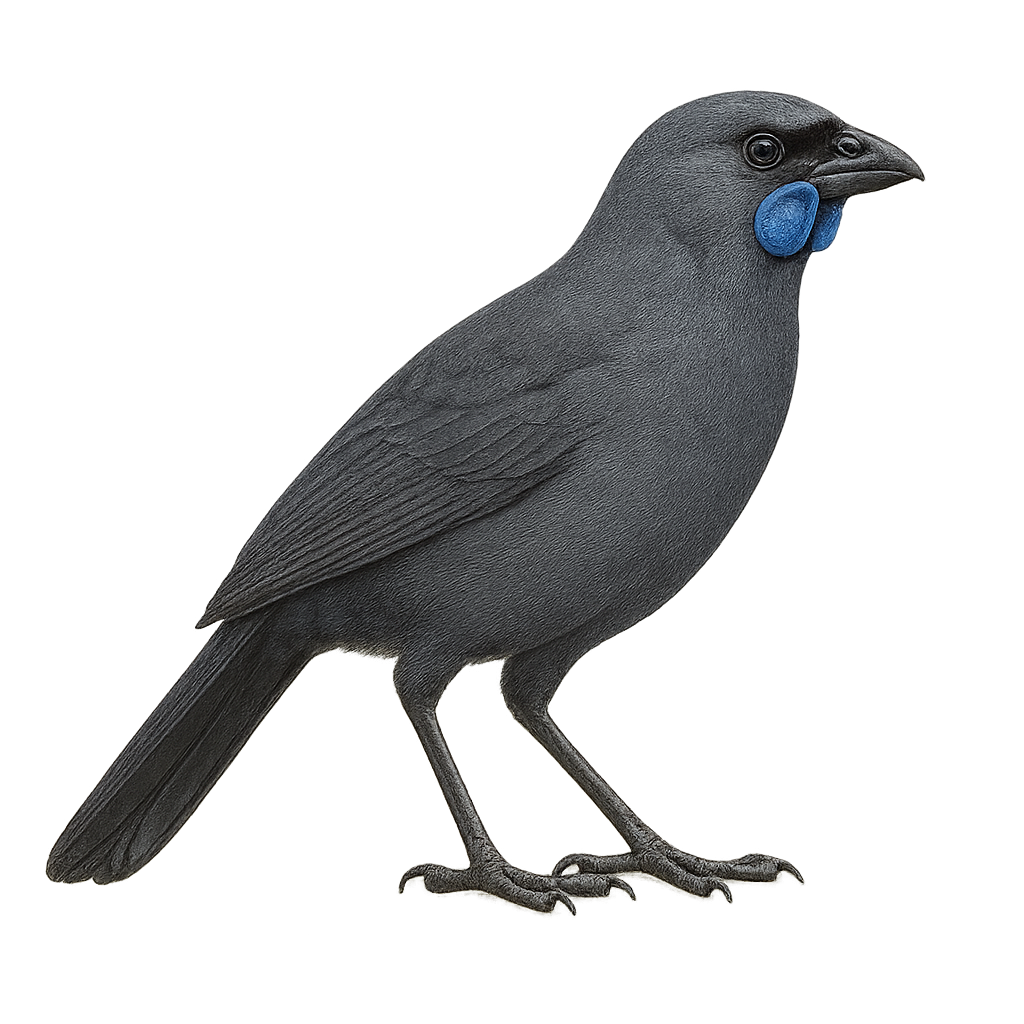
The North Island Kōkako, or Callaeas cinereus, is a bird endemic to New Zealand, specifically the North Island. This bird is easily recognizable by its ash-gray color and distinctive blue wattles on the sides of its beak. It primarily inhabits dense, humid forests where it feeds on fruits, leaves, and insects. Although capable of flight, it often prefers to move by hopping from tree to tree. The North Island Kōkako is a territorial and monogamous bird, forming pairs that vigorously defend their territory. Unfortunately, it is threatened by habitat loss and predation by introduced species, leading to a significant decline in its population.
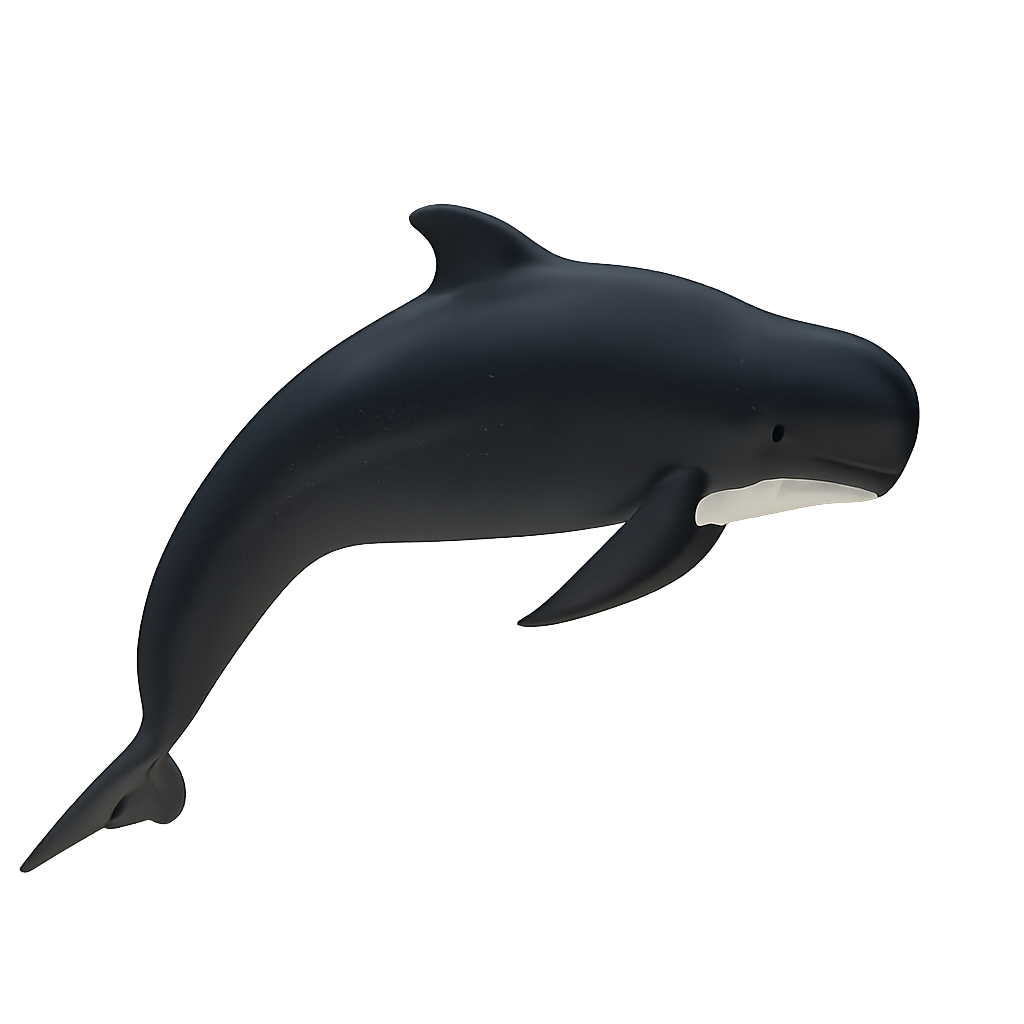
The long-finned pilot whale is a large oceanic dolphin in the family Delphinidae, measuring 5–6 m in length and weighing up to 1 200 kg. It has a robust black body, bulbous head, and long pectoral fins. It inhabits temperate to subantarctic waters, feeding mainly on squid and fish, and forms matrilineal social pods.
The Wolverine is a robust and solitary carnivore, often compared to a small bear due to its size and strength. It measures about 65 to 87 cm in length, with a tail measuring 30 to 40 cm, and weighs between 10 and 30 kg. Its fur is typically dark brown, with lighter markings on the legs and throat, forming a distinctive "mask" around its face. The Wolverine has powerful musculature, allowing it to capture prey much larger than itself, such as deer or reindeer, although it primarily feeds on small mammals, insects, and carcasses. It is an opportunist, capable of stealing food from other predators such as wolves or bears. The Wolverine primarily inhabits the northern forests of Asia and North America, including Scandinavia, Russia, Canada, and Alaska. It is an excellent climber and swimmer, well-adapted to cold, snowy environments. Although its population remains relatively stable in some areas, the Wolverine faces threats related to habitat loss, climate change, and human persecution.
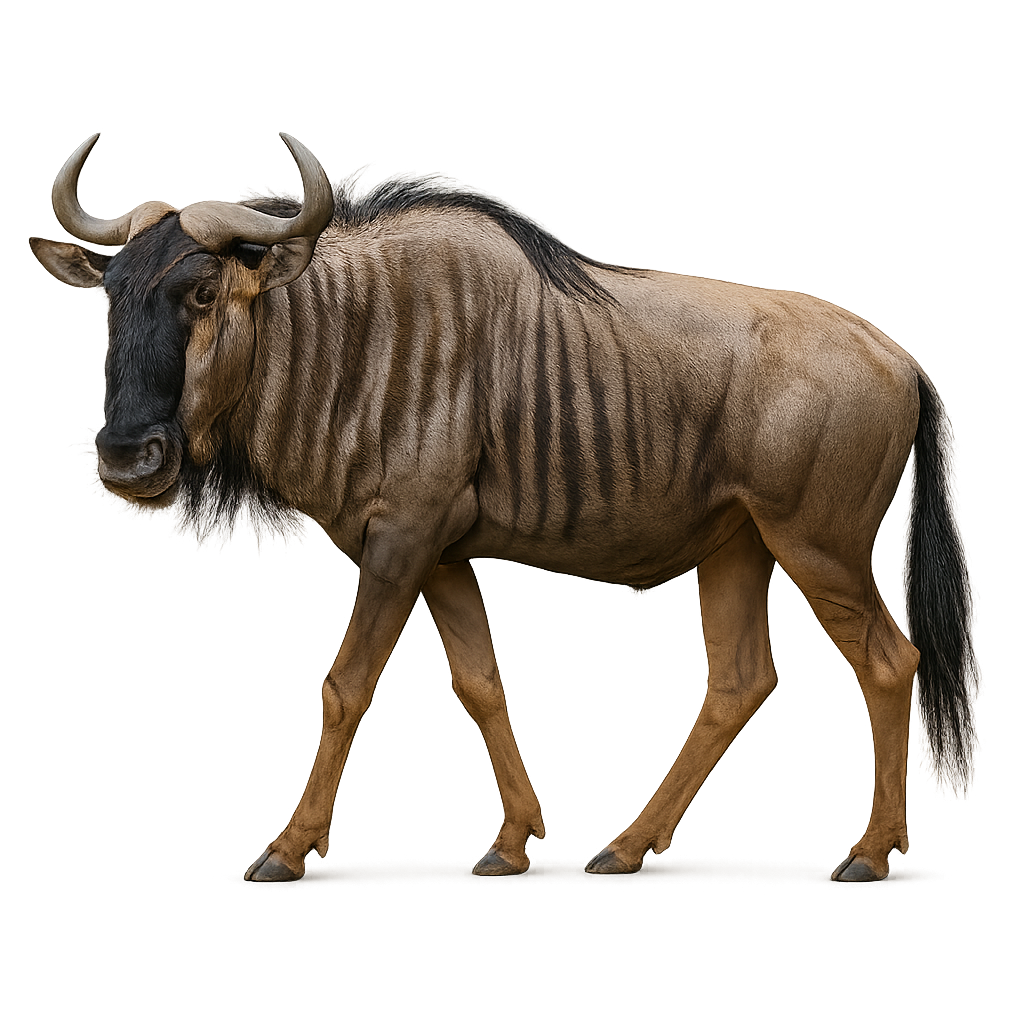
The Blue Wildebeest is a large herbivorous antelope, easily recognizable by its massive body, imposing head, and black mane. It stands about 1.3 to 1.5 meters at the withers and typically weighs between 150 and 250 kg. Its coat is generally grayish-blue, with black markings on the head, legs, and shoulders. The Blue Wildebeest has curved horns that can reach 80 cm in length. It primarily inhabits the savannas, grasslands, and woodlands of Southern Africa, notably in South Africa, Botswana, and Namibia. Herbivorous, the Blue Wildebeest mainly feeds on grasses and low vegetation, often seen in large herds in open plains. It is commonly seen during large migrations, moving in search of food and water. While the species is not currently endangered, it faces risks related to habitat loss and hunting.
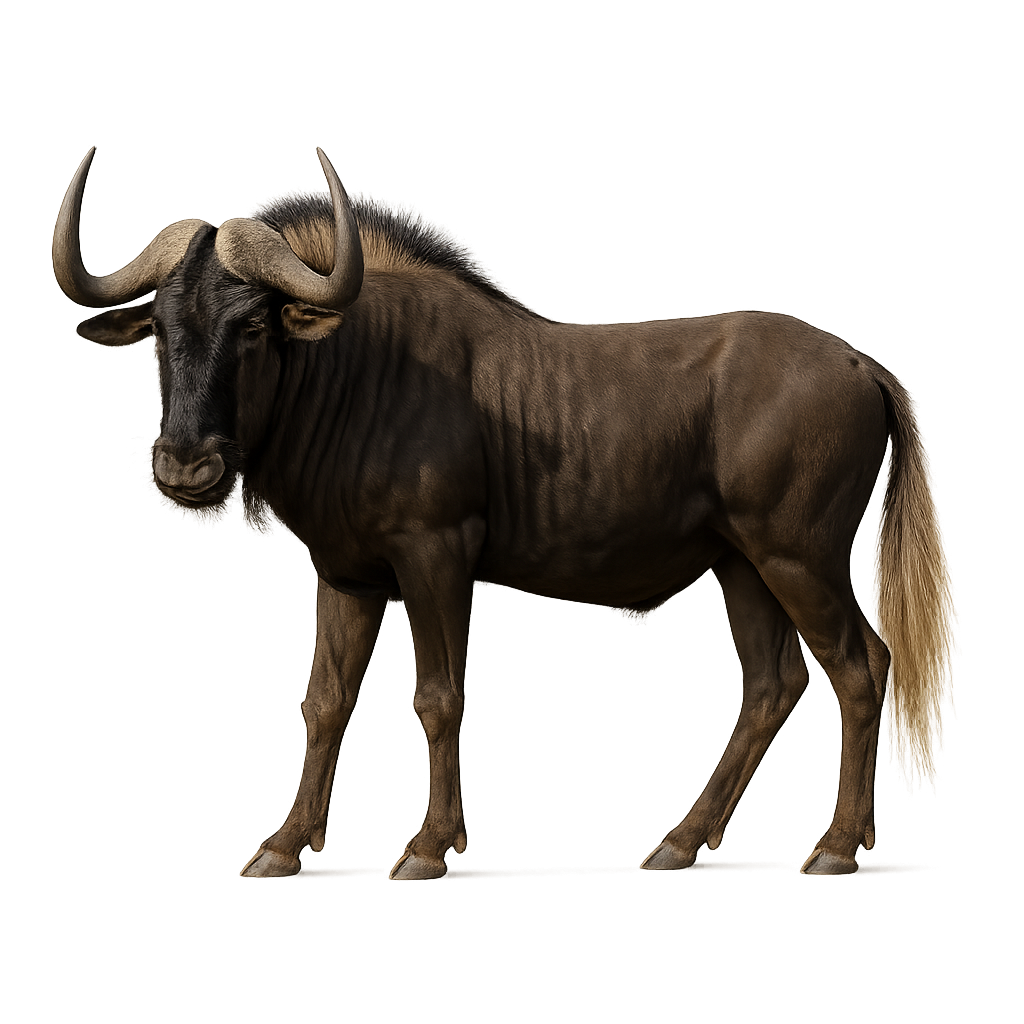
The Black Wildebeest is a large herbivorous antelope, easily recognizable by its robust build and massive head. It stands about 1.3 to 1.5 meters at the withers and weighs between 150 and 250 kg, with males generally being larger and heavier than females. Its coat is a deep black, with white markings on the throat and legs, and a black mane that distinguishes its neck. The Black Wildebeest is particularly known for its curved horns, which can reach up to 80 cm in length. It primarily inhabits the savannas and grasslands of West and Southern Africa, notably in Senegal, Namibia, and Botswana. Herbivorous, it primarily feeds on grasses and other herbaceous vegetation. The Black Wildebeest often lives in large groups, which helps protect it from predators. While the species is not endangered, it is threatened by habitat loss and climate change, which alters its living conditions.
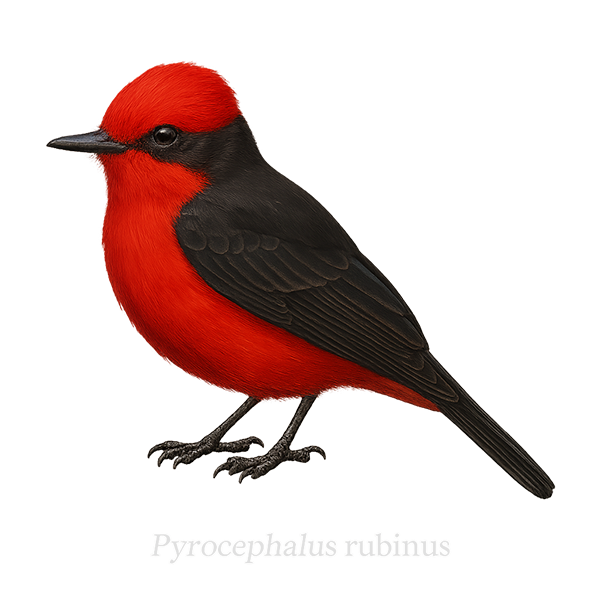
The Pyrocephalus rubinus, or Vermilion Flycatcher, is a small bird with striking plumage, especially the male, which displays a bright red on its chest and head, contrasting with its dark brown back. This passerine is often seen perched on low branches, watching for insects to feed on. It is mainly found in South America, but can also be seen in parts of Central and North America. Its habitat ranges from open forests to semi-arid areas, including grasslands and riverbanks. The Vermilion Flycatcher is known for its spectacular courtship display, where the male performs acrobatic flights to woo the female.
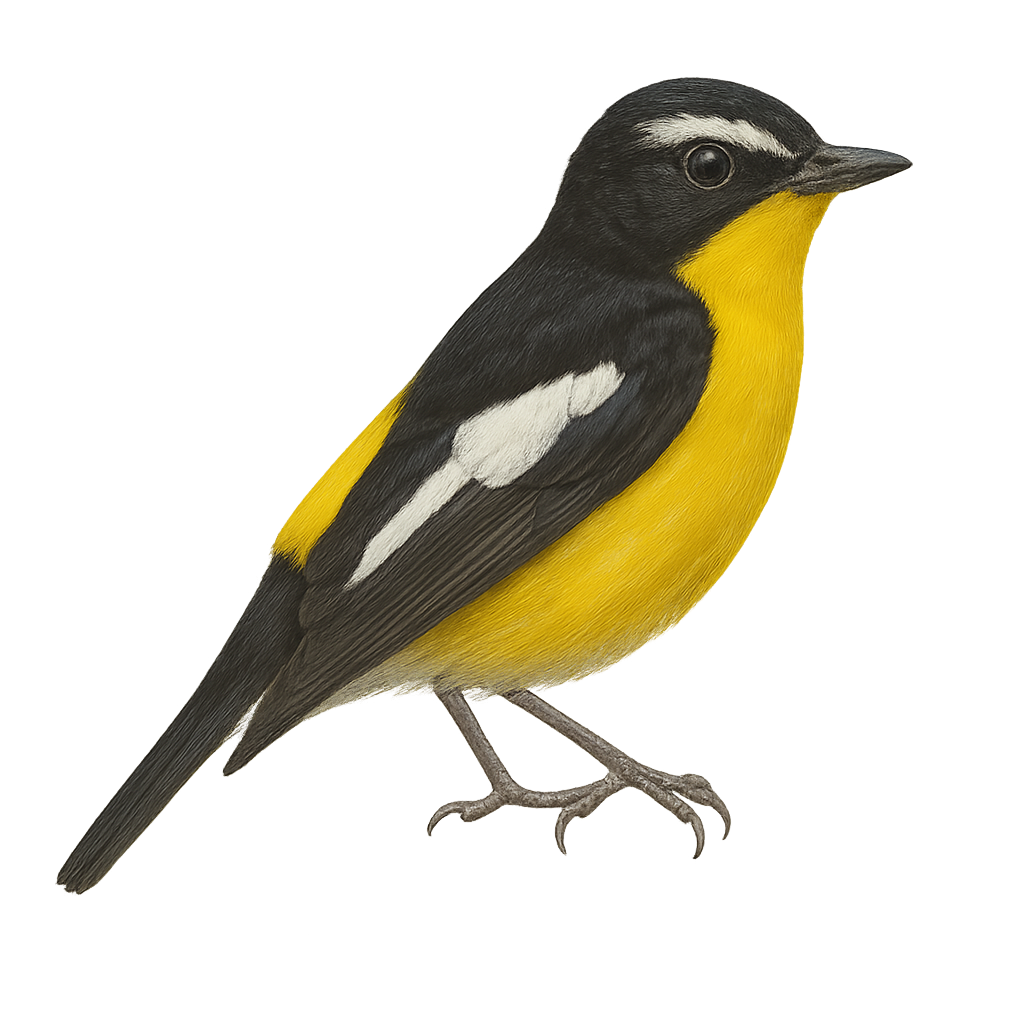
The Yellow-rumped Flycatcher, or Ficedula zanthopygia, is a small passerine bird belonging to the Muscicapidae family. Males are easily identified by their striking black and yellow plumage, with a bright yellow belly and a distinctive white wing patch, while females are more subdued in brown and yellow tones. This migratory bird breeds in the temperate forests of East Asia, including China, Korea, and Russia, before migrating south to winter in Southeast Asia. It inhabits forests, parks, and gardens, feeding primarily on insects. Its melodious song and spectacular courtship displays make it a favorite among birdwatchers.
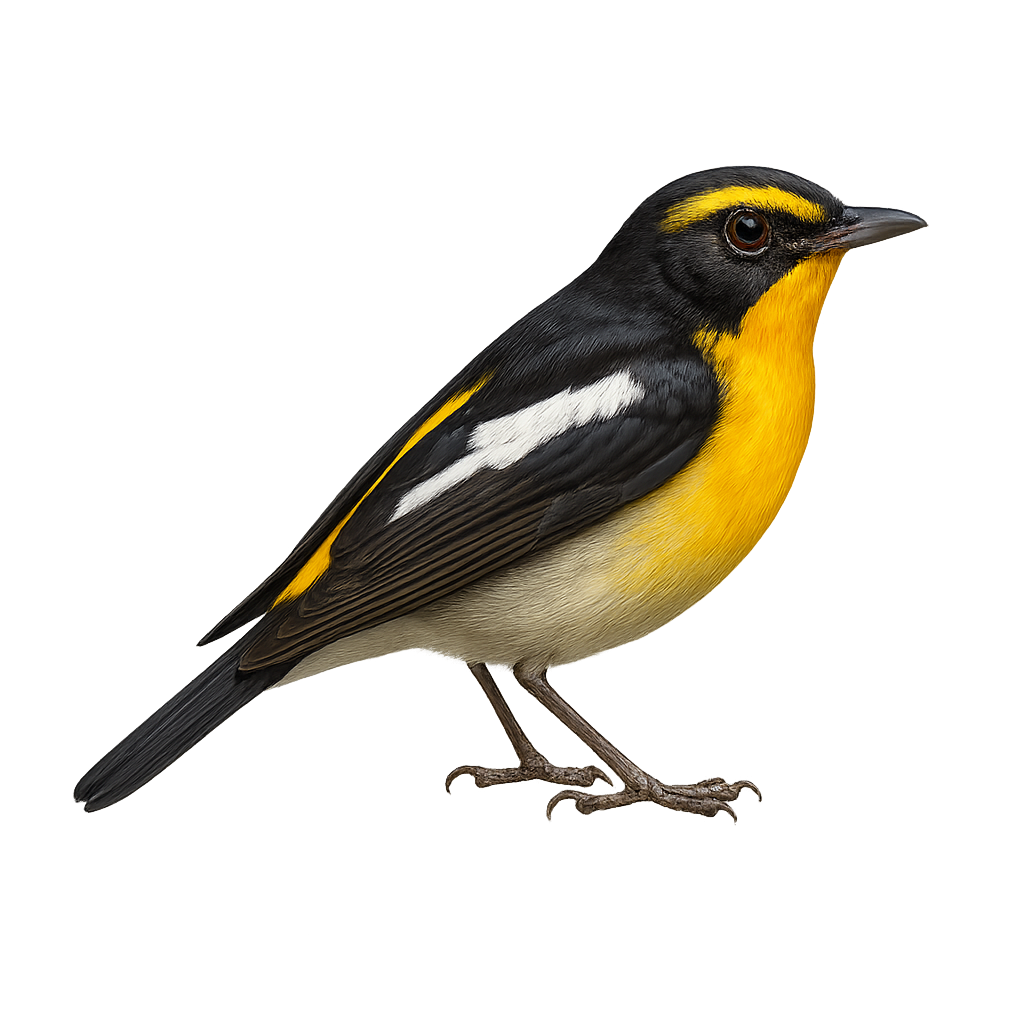
The Narcissus Flycatcher, Ficedula narcissina, is a small passerine bird in the Muscicapidae family, primarily found in East Asia. It is easily recognizable by its striking plumage: males have a black head with a bright yellow throat, a black back, and a white belly. Females are duller with brown and yellow hues. This migratory bird breeds in temperate and subtropical forests, preferring dense wooded habitats. It primarily feeds on insects, catching them in flight. The Narcissus Flycatcher is known for its melodious song, often heard during the breeding season. Although its conservation status is currently "least concern," deforestation poses a potential threat to its natural habitats.
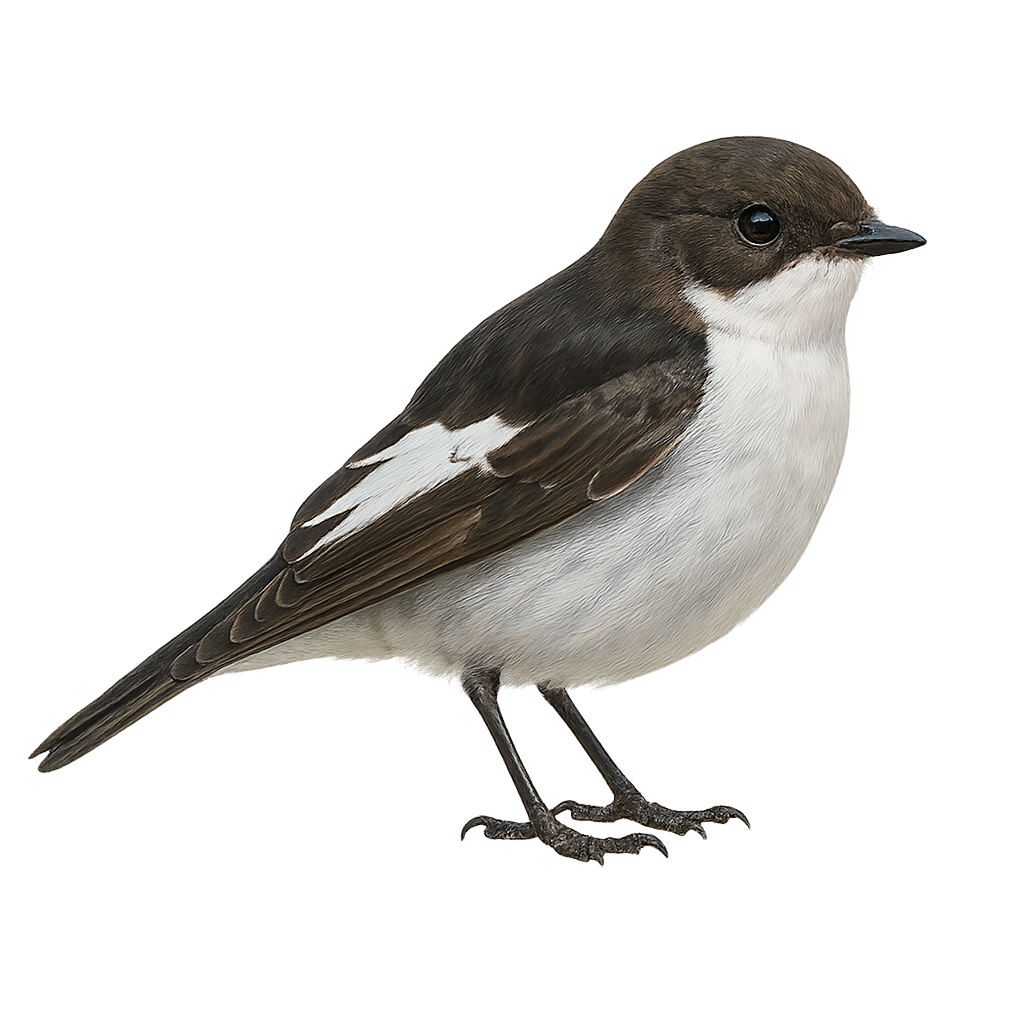
The pied flycatcher is a small migratory passerine, 11–13 cm long, with striking black-and-white plumage: the male has a glossy black back and head contrasting with a white belly, while the female shows duller brownish tones. It inhabits open woodlands, forest edges, and parks, feeding mainly on insects and spiders caught in flight or gleaned from foliage. During the breeding season, the male performs aerial chases and sings to attract the female and defend his territory.
The Rufous-gorgeted Flycatcher, Ficedula hyperythra, is a small passerine bird belonging to the Muscicapidae family. It is mainly found in the montane forests of Southeast Asia, particularly in India, Nepal, Thailand, and China. This bird is distinguished by its characteristic rufous throat, contrasting with its bluish-grey back and white belly. It is often seen alone or in pairs, feeding on insects caught in flight. The Rufous-gorgeted Flycatcher is a migratory bird, moving to lower altitudes during winter. It is appreciated by birdwatchers for its melodious song and its ability to adapt to different forest habitats.
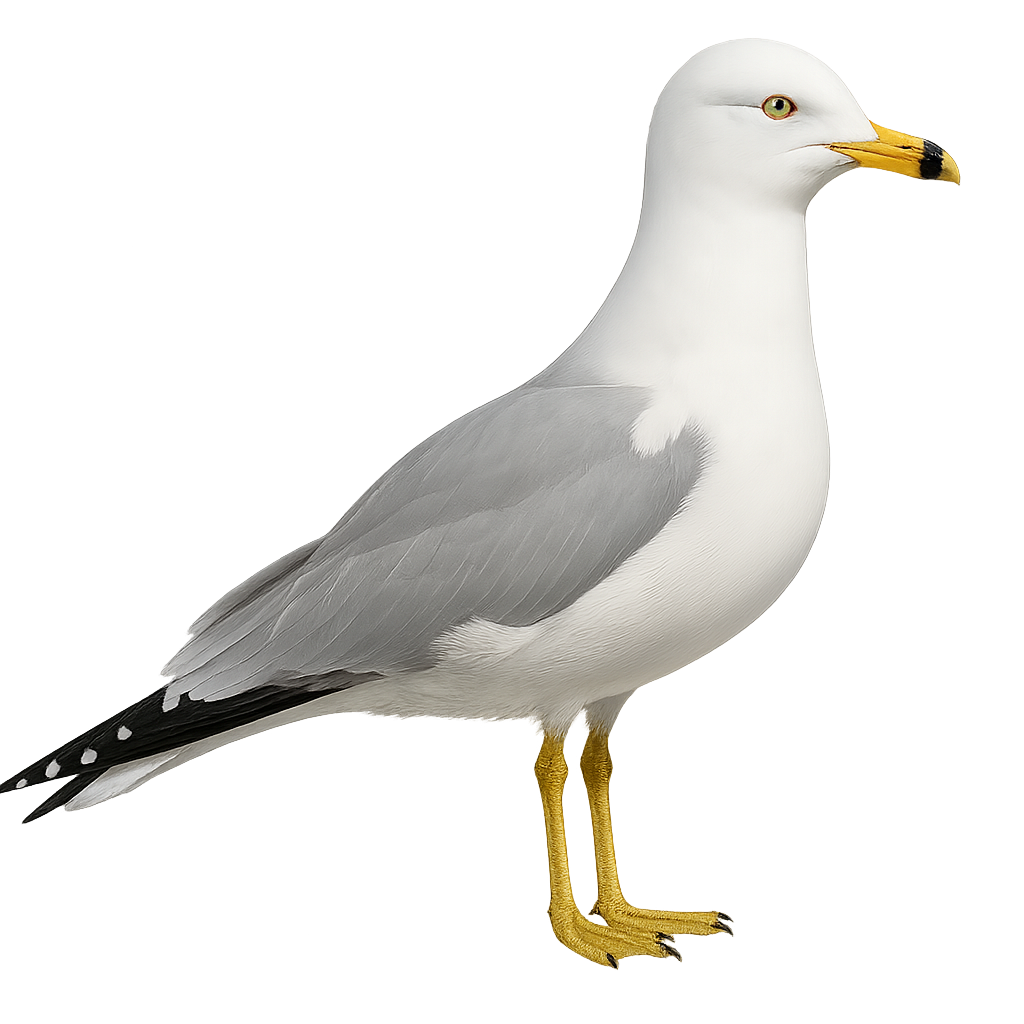
The Ring-billed Gull, Larus delawarensis, is a medium-sized bird easily identified by its yellow bill with a distinctive black ring. Its plumage is primarily white with gray wings and black wingtips. It often frequents coastal areas, lakes, and rivers, but can also be found in urban areas, where it adapts well to human presence. This gull is known for its piercing call and social behavior, often seen in large groups. Opportunistic, it feeds on fish, insects, small mammals, and human waste. Its ability to adapt to various environments makes it a widely distributed species in North America.
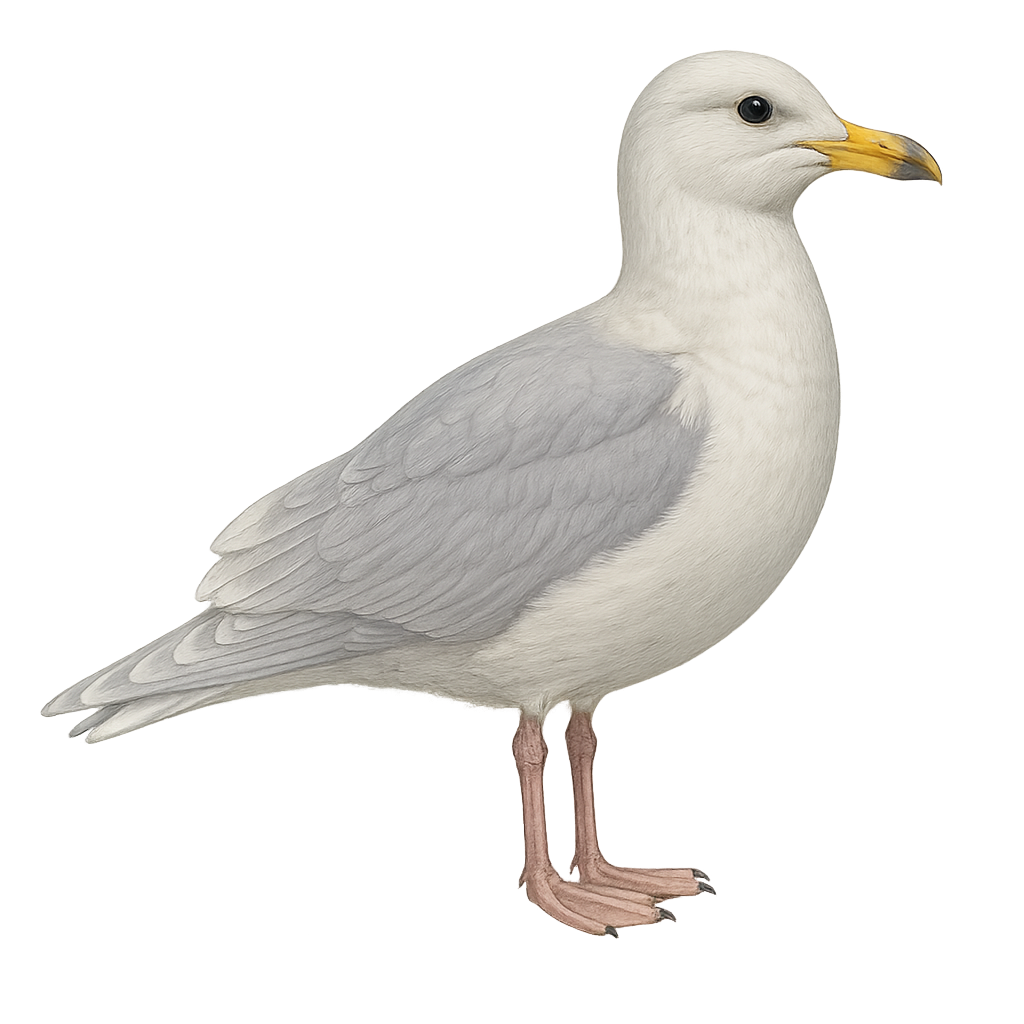
The Iceland Gull, or Larus glaucoides, is a medium-sized seabird primarily found in Arctic and subarctic regions. It is notable for its pure white plumage and pale grey wings, lacking the black markings typical of many other gulls. During the breeding season, it nests on coastal cliffs and rocky islands, often in mixed colonies with other gull species. Its diet is varied, including fish, crustaceans, and human waste. As a migratory bird, it winters further south along the Atlantic coasts of Europe and North America. Its flight is graceful and powerful, and it emits distinctive high-pitched calls.
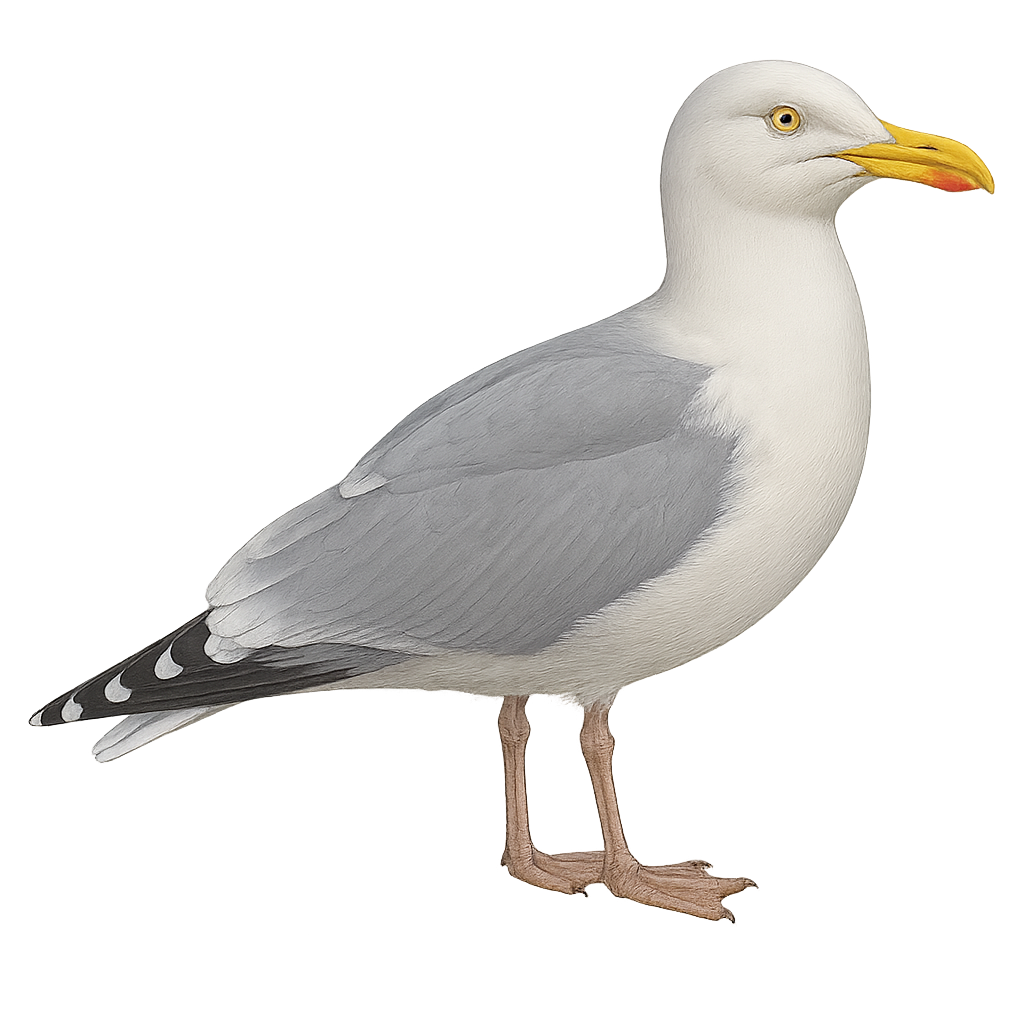
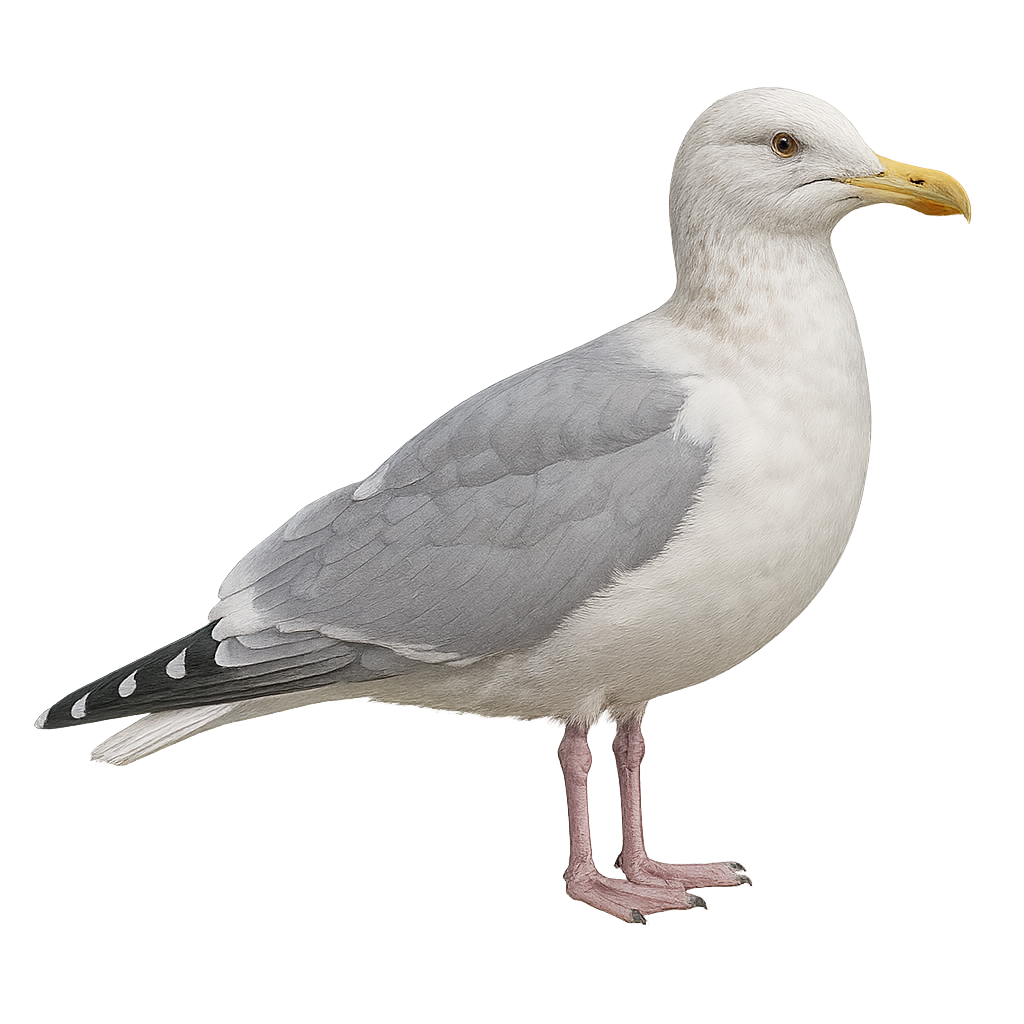
The herring gull is a large seabird in the family Laridae, up to 66 cm long with a wingspan of up to 1.4 m. It has a white head, body and tail, grey back and wings with black wingtips marked with white spots, and pink legs. It breeds in coastal colonies on islands, cliffs and urban roofs, foraging on fish, crustaceans, invertebrates and human refuse. The breeding season runs from April to June, when it lays 2–3 eggs in a simple ground scrape.
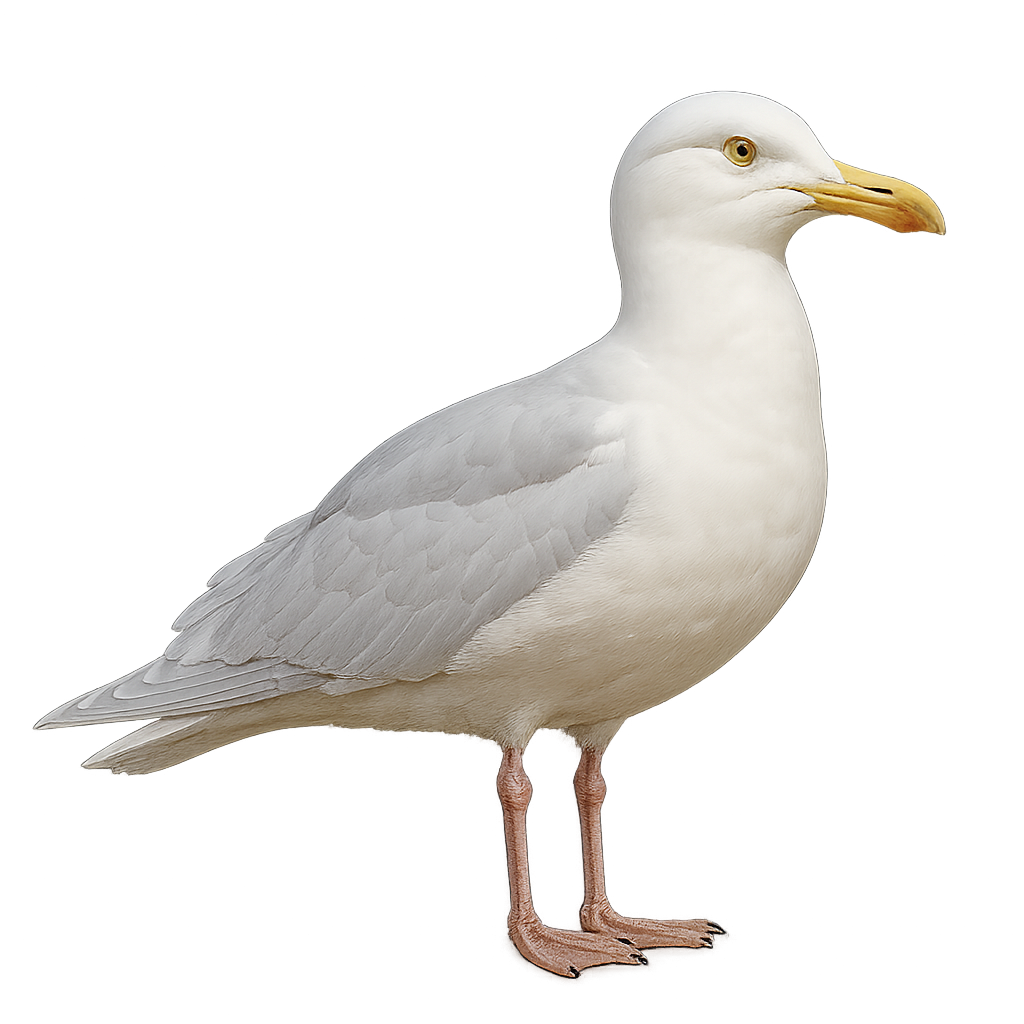
The Glaucous Gull is a large seabird, easily recognizable by its imposing size and distinctive plumage. It measures between 60 and 70 cm in length, with a wingspan of 140 to 150 cm, and weighs between 1.2 and 2.5 kg. Its plumage is primarily white, with light gray wings and black markings on the tips of the feathers. The head and beak are generally yellow, with a red band on the beak. This gull is an excellent swimmer and an opportunistic hunter, feeding mainly on fish, crustaceans, and human waste when near urban areas or ports. The Glaucous Gull primarily inhabits coastal regions of the Arctic and North Atlantic and is well adapted to cold, marine environments. Although it is not endangered, it faces risks related to pollution, habitat loss, and human disturbances.
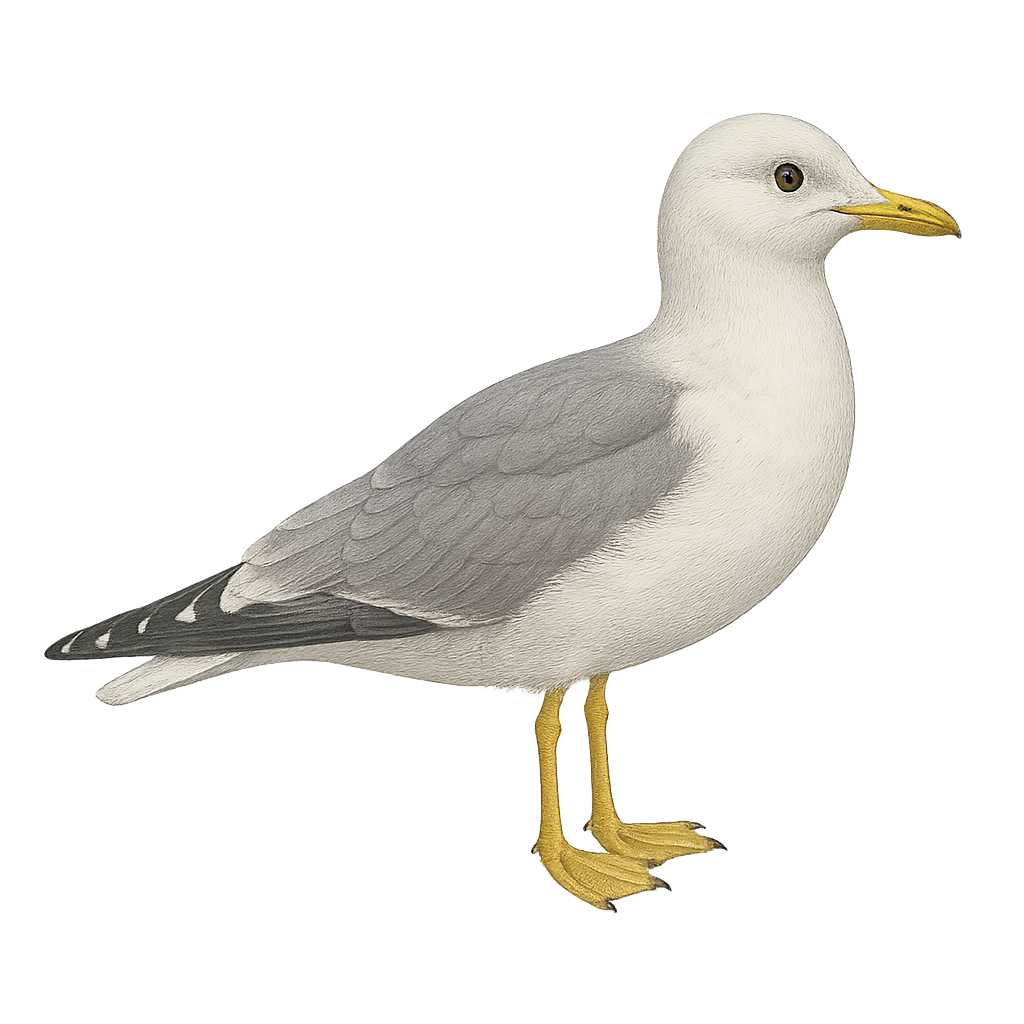
The common gull, or Larus canus, is a medium-sized seabird, identifiable by its light grey back and white underparts. Its wings feature a black band with distinctive white spots. The bill is yellow with a greenish tip, and its legs range from green to yellow. It inhabits coasts, lakes, and rivers, often in colonies. An opportunistic feeder, it consumes fish, invertebrates, and human waste. Partially migratory, it moves southward in winter. Its population is stable, though sensitive to environmental changes. The common gull is a social bird, often seen in groups, playing a crucial role in coastal ecosystems.
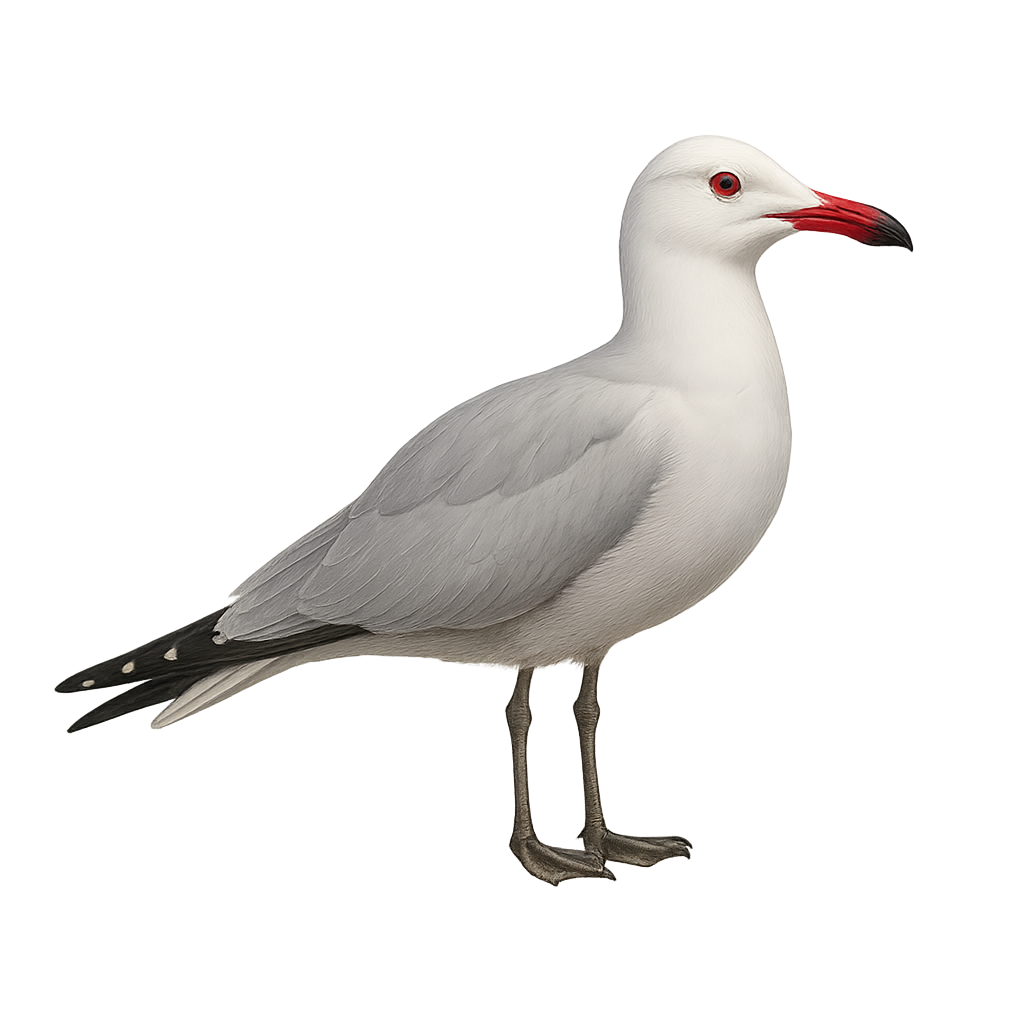
The Audouin's Gull, Larus audouinii, is a rare and elegant gull species primarily found in the Mediterranean basin. Recognizable by its pure white plumage, light gray wings, and bright red bill with a black tip, it stands out with its slender silhouette and graceful demeanor. This gull mainly nests on rocky islands and isolated coasts, forming dense colonies. It primarily feeds on fish, skillfully diving into the water to catch its prey. Although its population experienced a significant decline in the 20th century, conservation efforts have led to some stabilization. However, it remains vulnerable to human disturbances and environmental changes.
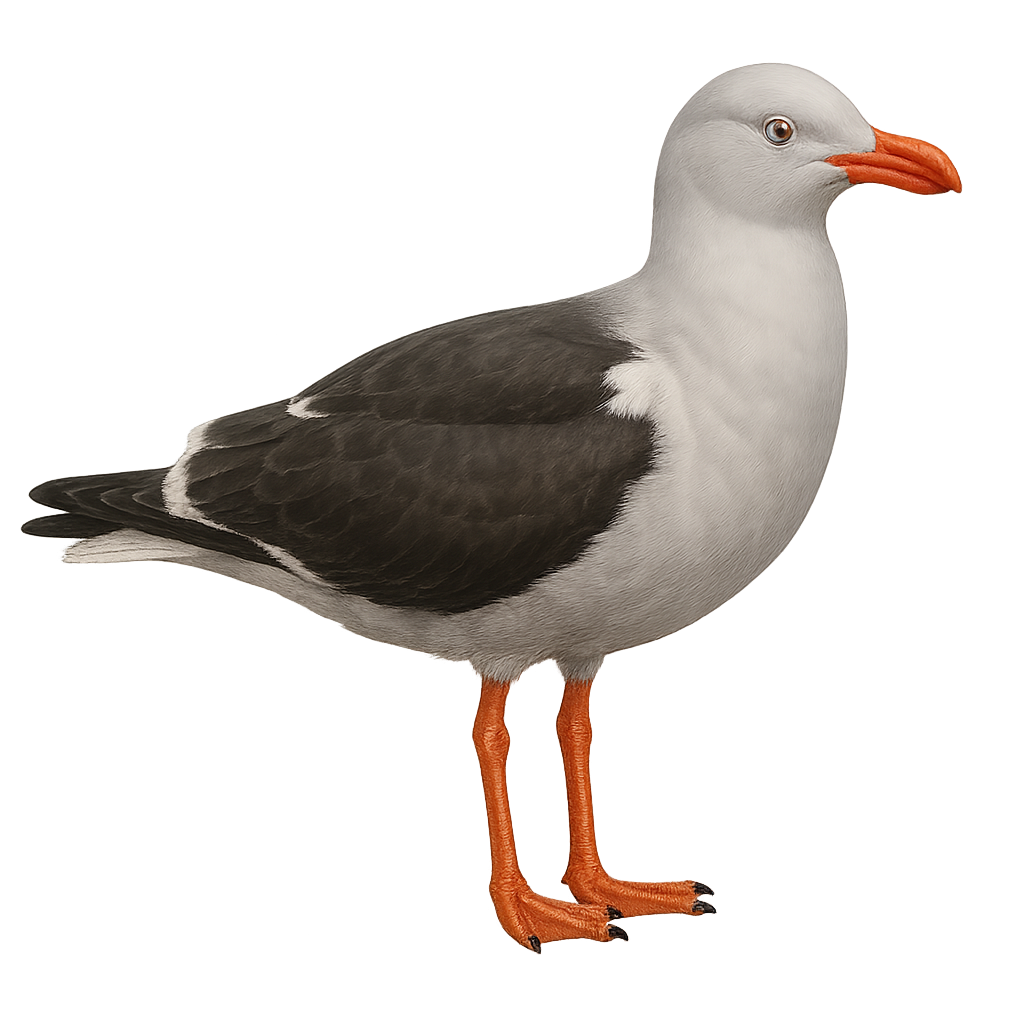
The Dolphin Gull, scientifically known as Leucophaeus scoresbii, is a medium-sized gull species primarily found along the coastal regions of South America, particularly in Patagonia and the Falkland Islands. It features a predominantly grey plumage with darker shades on the wings and back, while its head is white. This gull is notable for its bright red bill and pinkish legs. Often seen in small groups, it feeds on fish, crustaceans, and marine debris. Known for its opportunistic behavior, it frequently approaches inhabited areas in search of food.
The Thayer's Gull, Larus thayeri, is a medium-sized seabird belonging to the Laridae family. It is characterized by its pale gray plumage on the back and wings, contrasting with a white belly. Its bill is yellow with a red spot on the lower mandible, and it has pink legs. Found mainly in the Arctic and subarctic regions of North America, particularly in Canada and Alaska, it nests on coastal cliffs and islands. As a migratory bird, it winters along the Pacific coast from southern Alaska to California. An opportunistic feeder, it consumes fish, invertebrates, and human waste. Although often confused with other gull species, it is recognized for its graceful flight and distinctive calls.
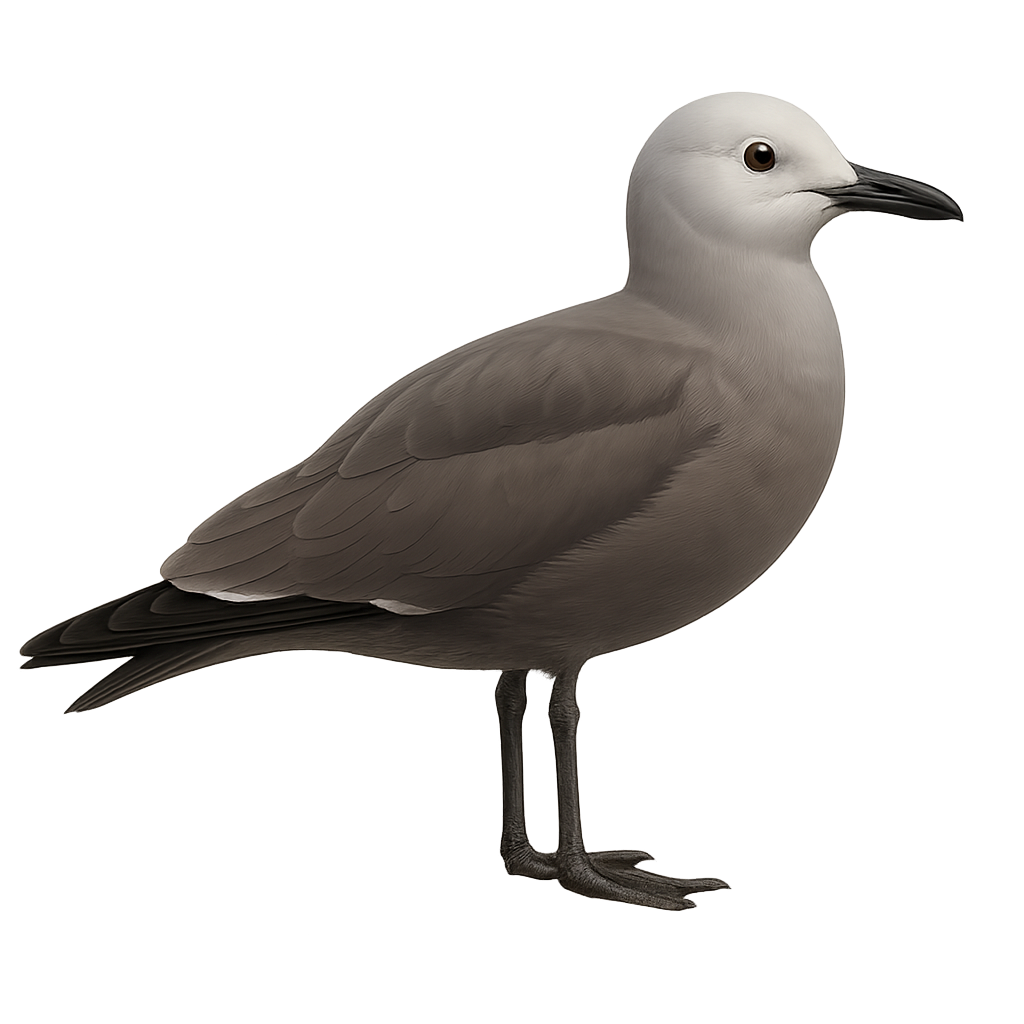
The Grey Gull, or Leucophaeus modestus, is a medium-sized coastal bird primarily found along the Pacific coasts of South America. It is characterized by its uniform ash-grey plumage and black legs and bill. Unlike other gulls, it often nests far from the coast, in deserts or arid areas, which is unusual for a seabird. It feeds mainly on small fish, crustaceans, and invertebrates found in shallow waters. The Grey Gull is also known for its seasonal migrations, moving north during the austral winter. Although its conservation status is currently of concern, it is vulnerable to human disturbances and environmental changes.