

Your wildlife photography guide.
Explore the fishing cat in detail, study its behavior, prepare your shots.
Where to observe and photograph the fishing cat in the wild
Learn where and when to spot the fishing cat in the wild, how to identify the species based on distinctive features, and what natural environments it inhabits. The WildlifePhotographer app offers tailored photography tips that reflect the fishing cat’s behavior, helping you capture better wildlife images. Explore the full species profile for key information including description, habitat, active periods, and approach techniques.
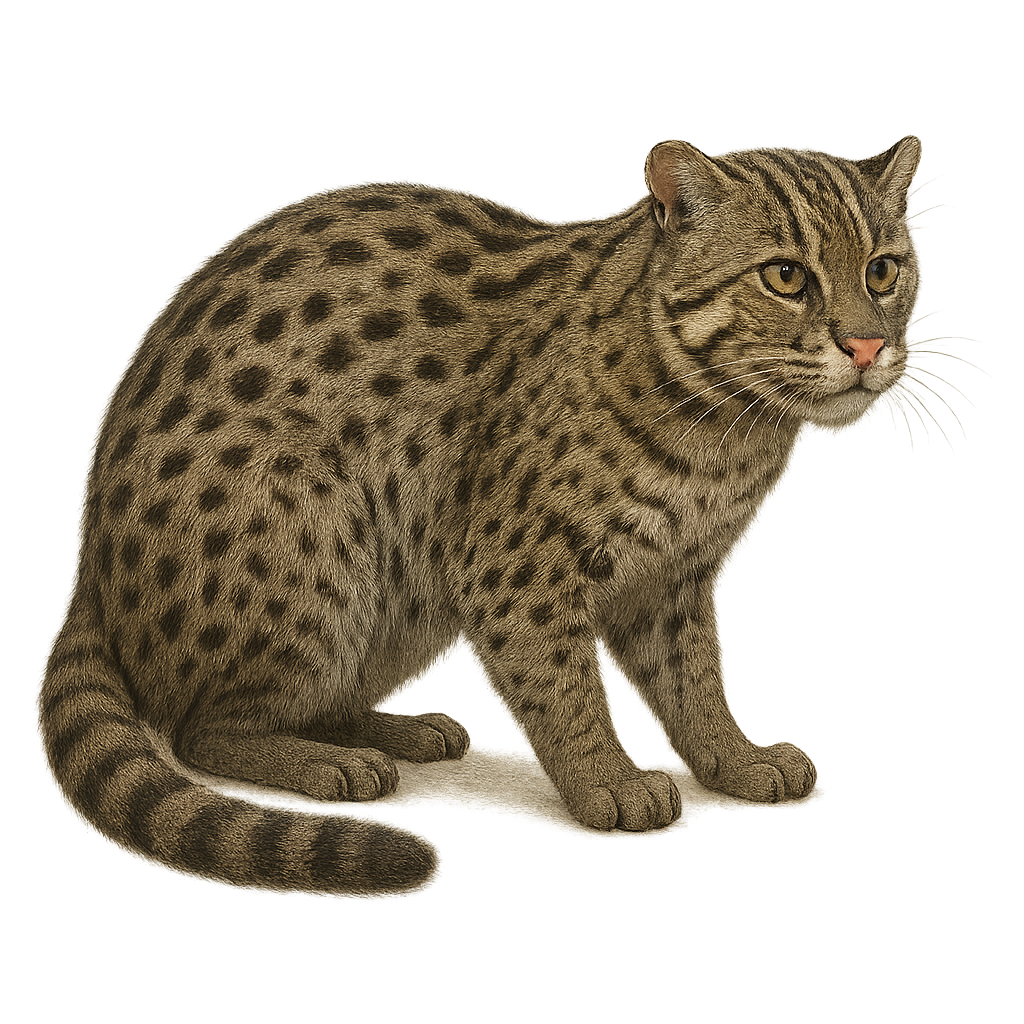
Fishing cat
Scientific name: Prionailurus viverrinus
IUCN Status: Vulnerable
Family: FELIDAE
Group: Mammals
Sensitivity to human approach: Shy
Minimum approach distance: 10 m
Rut period: January to February
Gestation: 63-70 jours
Births: April to May
Habitat:
Wetlands, swamps, riparian forests
Activity period :
Mainly active at night, generally discreet during the day.
Identification and description:
The fishing cat, or Prionailurus viverrinus, is a medium-sized feline primarily found in South and Southeast Asia. It is well adapted to aquatic life, with partially webbed feet that allow it to swim efficiently. Its coat is grayish with dark spots, providing excellent camouflage in marshy habitats. The fishing cat is an opportunistic predator, feeding mainly on fish, but also on small mammals, birds, and insects. Unfortunately, it is threatened by habitat loss due to human expansion and wetland pollution. Its population is declining, making it a vulnerable species according to the IUCN.
Recommended lens:
400mm – adjust based on distance, desired framing (portrait or habitat), and approach conditions.
Photography tips:
To photograph the fishing cat, it is essential to blend into the environment to avoid scaring it away. Use a telephoto lens of at least 400mm to capture detailed images from a distance. The best opportunities often arise at dusk or dawn when the animal is most active. Be patient and prepared to wait a long time to get the perfect shot. Focus on wetlands and swamps, where the fishing cat is likely to hunt.
From knowledge to field practice
A species profile helps you understand an animal. In the field, the challenge is often different. Remembering your own observations.
The WildlifePhotographer app allows you to:
• record your personal observations
• note locations, dates, and behaviors
• revisit your field references over time
• build a private and long-term field logbook
The app does not provide observation locations.
It helps you organize what you actually observe, with respect for wildlife.