

Your wildlife photography guide.
Explore the guereza colobus in detail, study its behavior, prepare your shots.
Where to observe and photograph the guereza colobus in the wild
Learn where and when to spot the guereza colobus in the wild, how to identify the species based on distinctive features, and what natural environments it inhabits. The WildlifePhotographer app offers tailored photography tips that reflect the guereza colobus’s behavior, helping you capture better wildlife images. Explore the full species profile for key information including description, habitat, active periods, and approach techniques.
Guereza colobus
Scientific name: Colobus guereza
IUCN Status: Least Concern
Family: CERCOPITHECIDAE
Group: Mammals
Sensitivity to human approach: Suspicious
Minimum approach distance: 20 m
Rut period: October to November
Gestation: 175-190 jours
Births: April to May
Habitat:
Tropical and subtropical forests, mainly in East Africa (Ethiopia, Kenya, Tanzania), in woodlands and mountain forests
Activity period :
Primarily active during the day, with peak activity in the morning and late afternoon.
Identification and description:
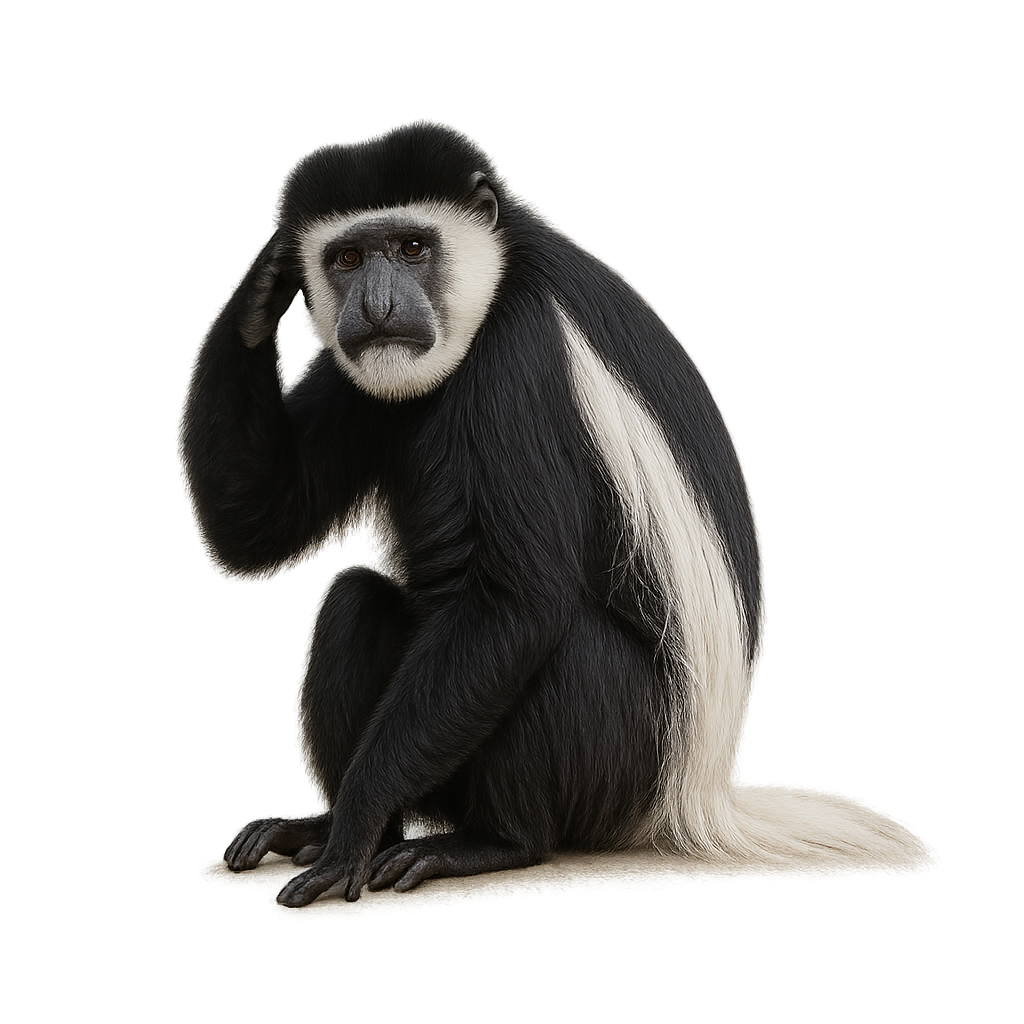
The Guereza Colobus is a large primate belonging to the family Cercopithecidae, easily recognized by its distinctive black and white fur. It has a white mane around its face, white limbs, and a long, bushy tail that helps it stabilize in the trees. Its black body is contrasted by tufts of white fur along the sides and back, making it one of the most elegant primates of the forest. It primarily lives in the tropical and subtropical forests of East Africa, spending most of its time in the trees.
The Guereza Colobus is primarily herbivorous, feeding on leaves, fruits, seeds, and flowers. With its specialized stomach, it can digest tough, fibrous leaves that other animals cannot consume. It lives in social groups led by a dominant male and is generally very calm, moving gracefully and agilely through the forest canopy. Although its population remains stable in some protected areas, it faces threats due to deforestation and hunting, causing some populations to be classified as vulnerable.
Recommended lens:
200 mm – adjust based on distance, desired framing (portrait or habitat), and approach conditions.
Photography tips:
To photograph the Guereza colobus, a telephoto lens is essential to capture its movements in the trees and its social behavior. Dusk or early morning offers ideal soft light. Be patient and discreet, as these monkeys can be very sensitive to human disturbance, especially when in groups.
From knowledge to field practice
A species profile helps you understand an animal. In the field, the challenge is often different. Remembering your own observations.
The WildlifePhotographer app allows you to:
• record your personal observations
• note locations, dates, and behaviors
• revisit your field references over time
• build a private and long-term field logbook
The app does not provide observation locations.
It helps you organize what you actually observe, with respect for wildlife.