
Your wildlife photography guide.
Explore the japanese raccoon dog in detail, study its behavior, prepare your shots.
Where to observe and photograph the japanese raccoon dog in the wild
Learn where and when to spot the japanese raccoon dog in the wild, how to identify the species based on distinctive features, and what natural environments it inhabits. The WildlifePhotographer app offers tailored photography tips that reflect the japanese raccoon dog’s behavior, helping you capture better wildlife images. Explore the full species profile for key information including description, habitat, active periods, and approach techniques.
Japanese Raccoon Dog
Scientific name: Nyctereutes viverrinus
IUCN Status: Least Concern
Family: CANIDAE
Group: Mammals
Sensitivity to human approach: Suspicious
Minimum approach distance: 10 m
Rut period: February to March
Gestation: 59-64 jours
Births: April to May
Habitat:
Forests, grasslands, wetlands
Activity period :
Mainly active at night, generally discreet during the day.
Identification and description:
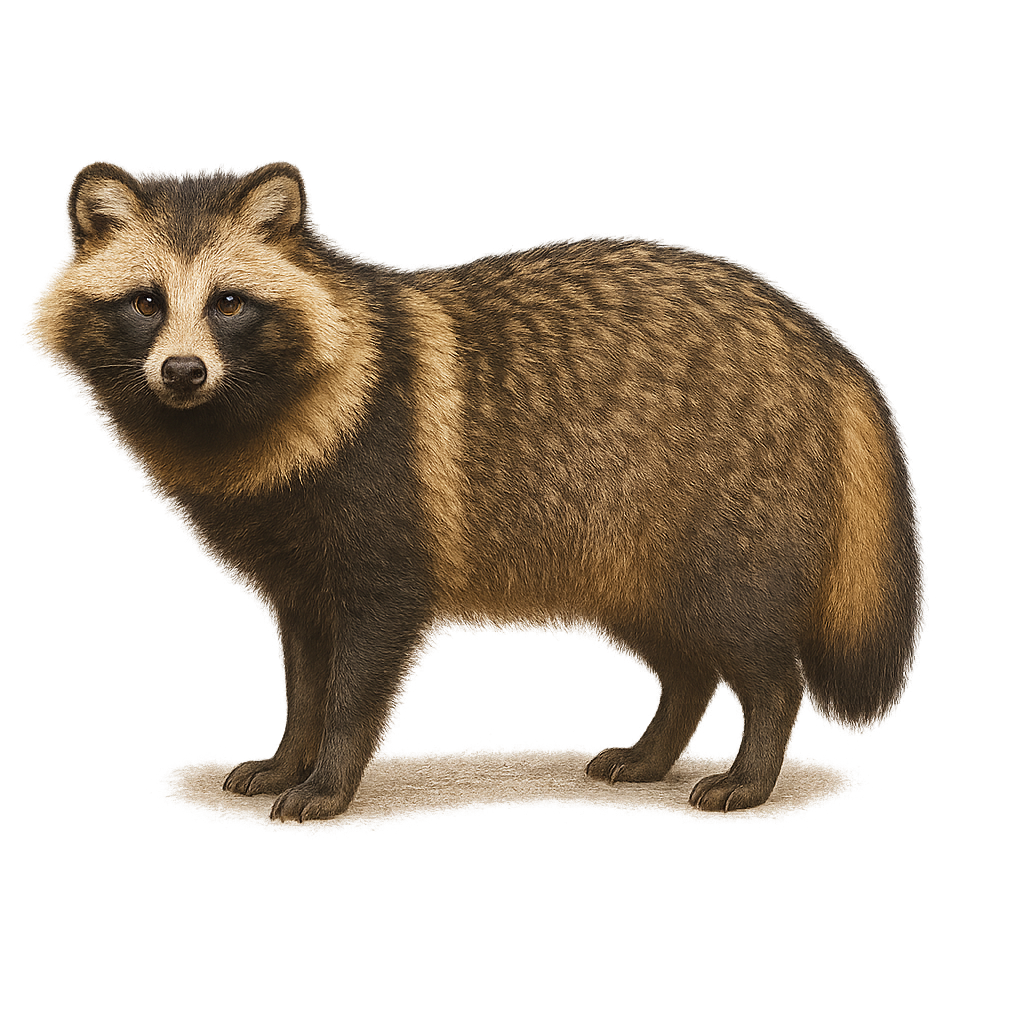
The Japanese Raccoon Dog, or Nyctereutes viverrinus, is a medium-sized canid known for its thick fur and resemblance to a raccoon. Native to Japan, it thrives in temperate climates and is primarily found in forests, grasslands, and wetlands. This omnivorous mammal feeds on fruits, insects, small animals, and occasionally human waste. It is notable for its ability to climb trees, a rare trait among canids. The Japanese Raccoon Dog is a social animal, often seen in small family groups. Although hunted for its fur, it is not considered endangered.
Recommended lens:
400mm – adjust based on distance, desired framing (portrait or habitat), and approach conditions.
Photography tips:
To photograph the Japanese Raccoon Dog, it is advisable to use a telephoto lens of at least 400mm to capture detailed images from a distance. Look for it in forests and grasslands, especially at dusk, as it is primarily nocturnal. Be patient and discreet to avoid scaring it away. Use a tripod to stabilize your camera, especially in low-light conditions. Opt for twilight hours to benefit from soft, natural light.
From knowledge to field practice
A species profile helps you understand an animal. In the field, the challenge is often different. Remembering your own observations.
The WildlifePhotographer app allows you to:
• record your personal observations
• note locations, dates, and behaviors
• revisit your field references over time
• build a private and long-term field logbook
The app does not provide observation locations.
It helps you organize what you actually observe, with respect for wildlife.