

Your wildlife photography guide.
Explore the mandarin duck in detail, study its behavior, prepare your shots.
Where to observe and photograph the mandarin duck in the wild
Learn where and when to spot the mandarin duck in the wild, how to identify the species based on distinctive features, and what natural environments it inhabits. The WildlifePhotographer app offers tailored photography tips that reflect the mandarin duck’s behavior, helping you capture better wildlife images. Explore the full species profile for key information including description, habitat, active periods, and approach techniques.
Mandarin duck
Scientific name: Aix galericulata
IUCN Status: Least Concern
Family: ANATIDAE
Group: Birds
Sensitivity to human approach: Suspicious
Minimum approach distance: 30 m
Courtship display: April to May
Incubation: 28-30 jours
Hatchings: April to June
Habitat:
Lakes, rivers, and ponds in forested regions of East Asia and temperate Europe, notably in China, Japan, and Korea, and near water bodies
Activity period :
Primarily active during the day, with peak activity in the morning and late afternoon.
Identification and description:
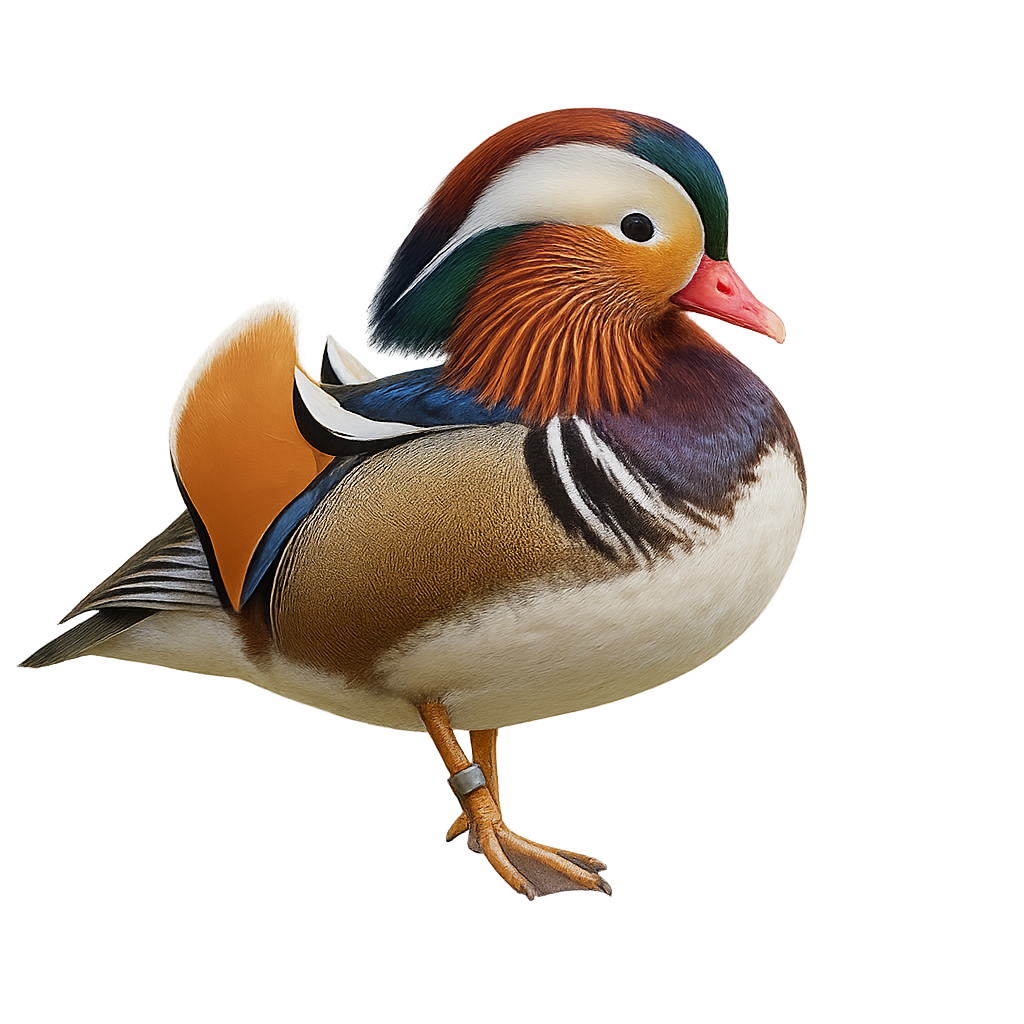
The Mandarin Duck is a spectacular waterfowl, easily recognizable by its vibrant and colorful plumage, particularly in the male. The male displays an impressive mix of bright colors, including orange, blue, and green, with a distinctive crest on the head and feathers on the sides of the neck that resemble scales. The female, more subdued, has brown plumage with subtle white accents around the eyes and bill.
Native to East Asia, the Mandarin Duck is now widely distributed in Europe and North America, often seen in parks and gardens around bodies of water. This duck prefers calm waters in lakes, ponds, and rivers, where it feeds mainly on seeds, fruits, insects, and small crustaceans. Although the Mandarin Duck is not considered endangered, its natural habitat can be threatened by pollution and the loss of wetland areas.
Recommended lens:
300 mm – adjust based on distance, desired framing (portrait or habitat), and approach conditions.
Photography tips:
Use a telephoto lens to photograph the Mandarin duck, especially when it is swimming or resting on the banks. The soft light of early morning or evening is ideal for capturing the vibrance of its colors and details. Be discreet and respect their space to avoid disturbing their natural behavior, especially during the breeding season.
From knowledge to field practice
A species profile helps you understand an animal. In the field, the challenge is often different. Remembering your own observations.
The WildlifePhotographer app allows you to:
• record your personal observations
• note locations, dates, and behaviors
• revisit your field references over time
• build a private and long-term field logbook
The app does not provide observation locations.
It helps you organize what you actually observe, with respect for wildlife.