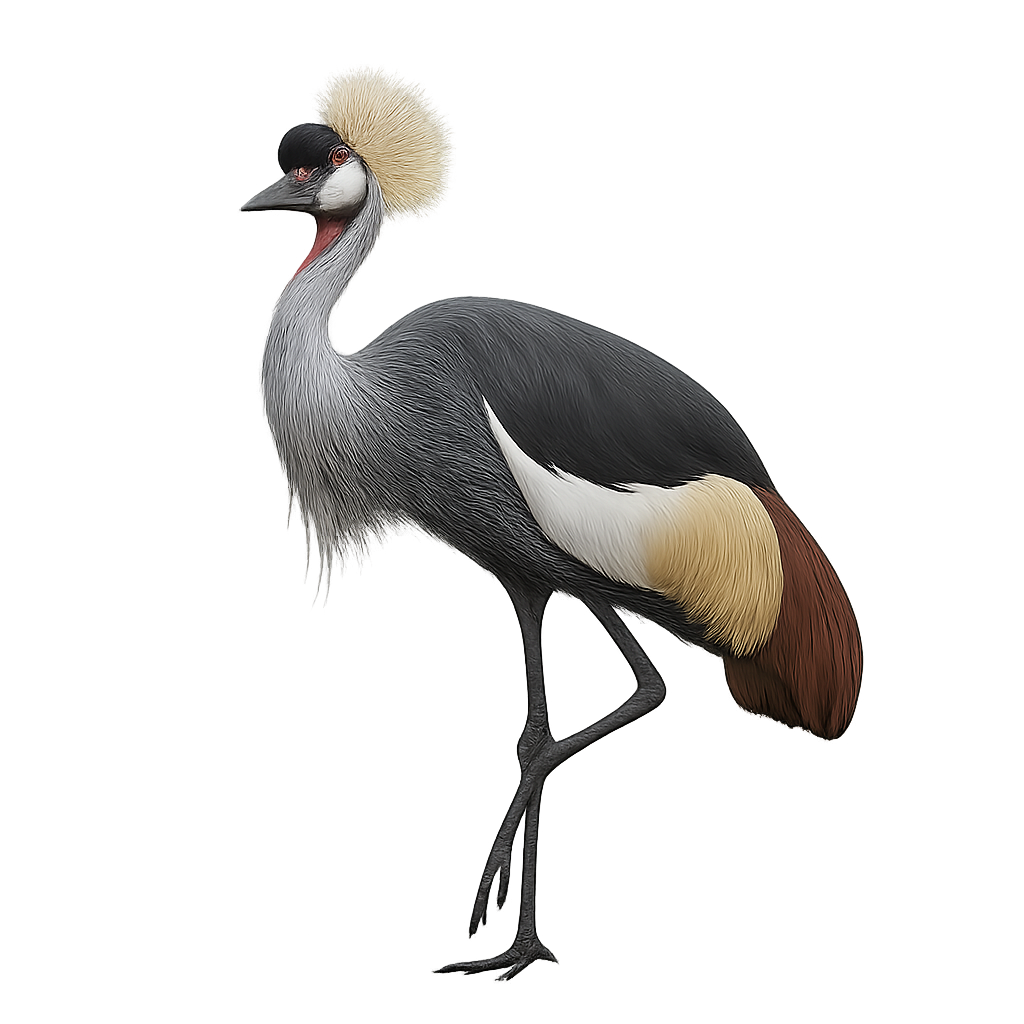
The Crowned Crane is a large crane species, easily recognizable by its majestic golden plume crown on its head. It stands about 1 meter tall, with a wingspan of 1.8 to 2.2 meters, and weighs between 3 and 5 kg. Its plumage is mainly light gray, with white feathers on its belly and wings, and a head adorned with a golden crest, giving it a royal appearance. This species is primarily found in East Africa, notably in Uganda, Kenya, and Tanzania, where it inhabits wetlands, marshes, and grasslands. The Crowned Crane primarily feeds on seeds, roots, insects, and occasionally small vertebrates. It is a social bird, living in groups and often performing spectacular courtship displays, during which it engages in dances and calls. Although the Crowned Crane is considered "vulnerable," conservation efforts have been implemented to protect the species, as it faces threats from habitat loss, hunting, and human disturbance.
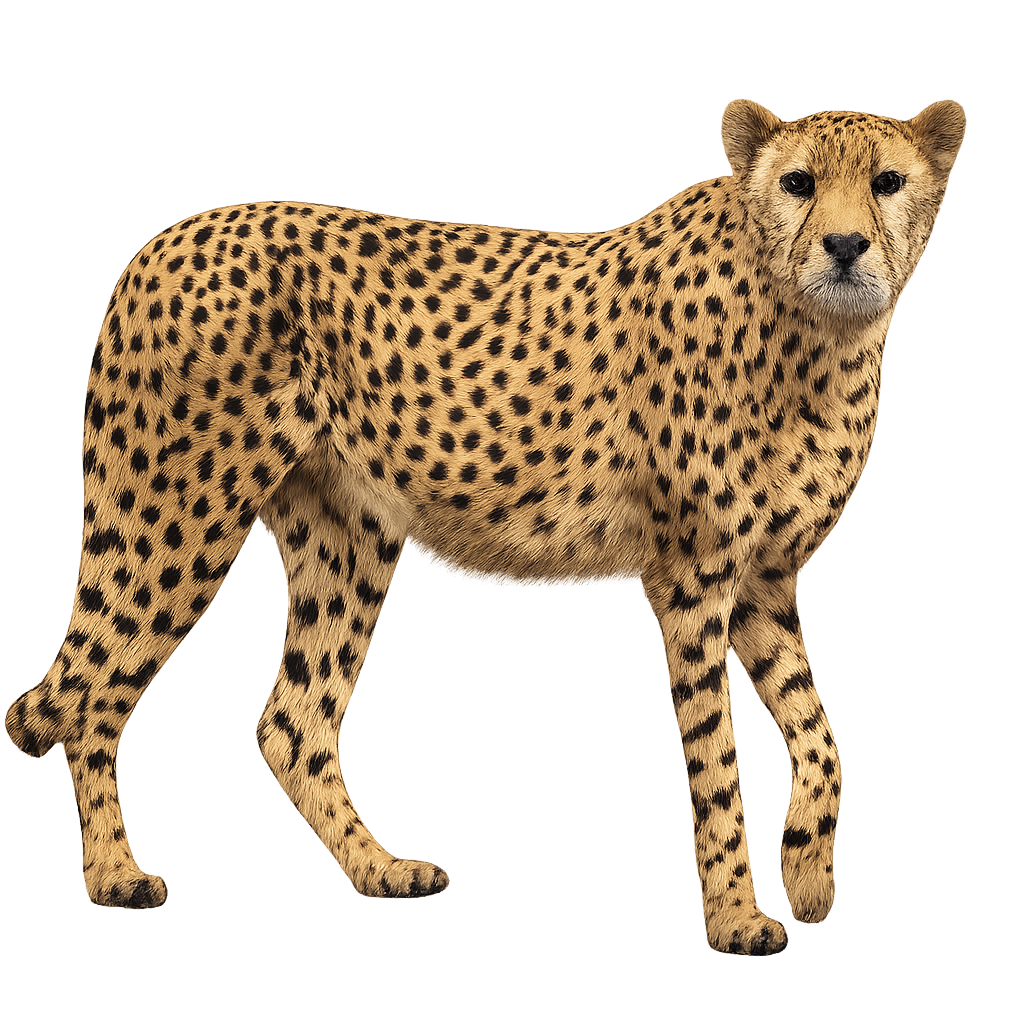
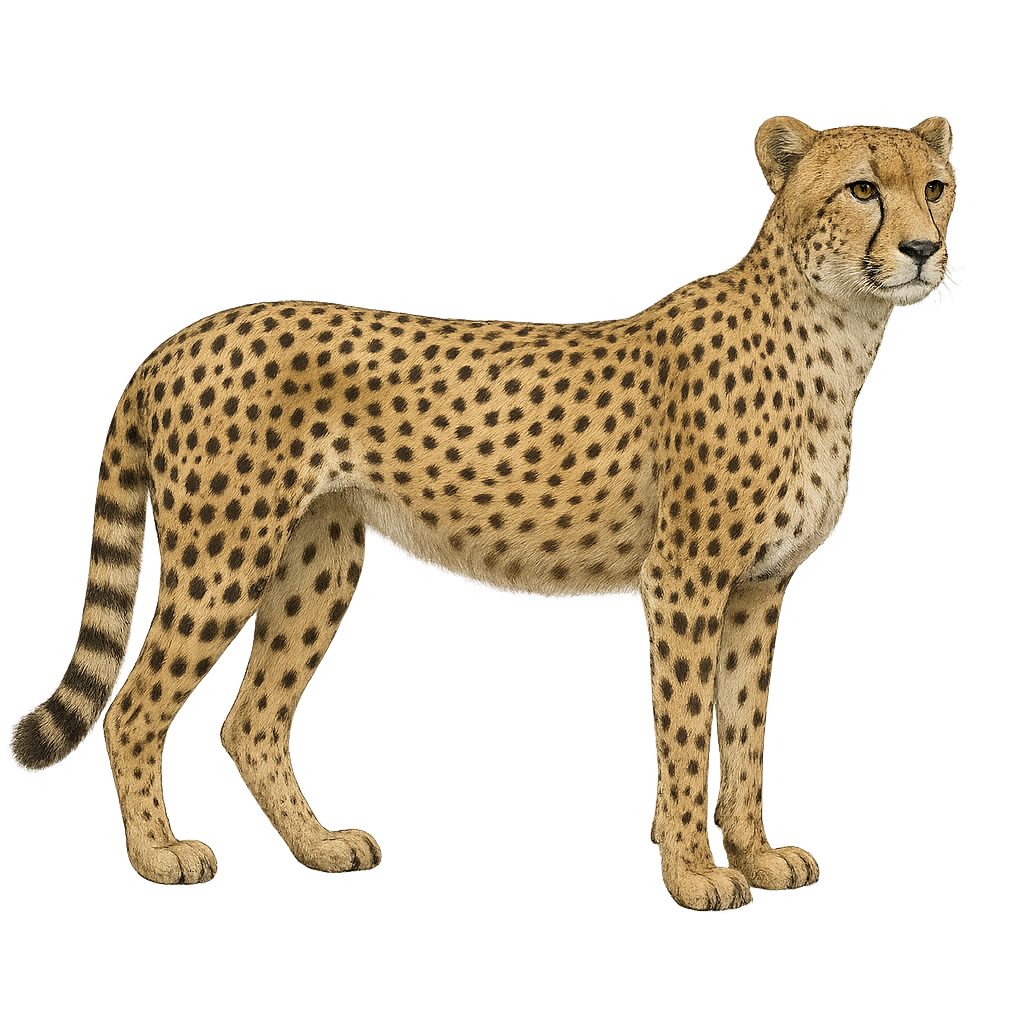
The Cheetah is a large feline known for its exceptional speed, making it the fastest land mammal. It measures about 1.1 to 1.5 meters in length, with a shoulder height of around 75 cm, and weighs between 40 and 65 kg. Its coat is short, golden to light brown with distinct black spots, allowing it to blend effectively in the savannas. It has a round head with large nostrils, sharp eyes, and distinctive black tear marks on its cheeks, which help it focus its vision while hunting. The Cheetah primarily inhabits sub-Saharan Africa, with small populations in Iran, in open habitats such as savannas, grasslands, and deserts. Carnivorous, it mainly feeds on gazelles, springboks, and other small animals. Unlike other large cats, the Cheetah hunts using speed rather than brute strength. It can reach speeds of 100 to 110 km/h in a few seconds, but this speed can only be maintained for short distances. Although the Cheetah is not critically endangered, it faces threats like habitat loss, poaching, and reduced natural prey.
The Asiatic cheetah, or Iranian cheetah, is a rare subspecies of cheetah primarily found in Iran. It is distinguished by its tawny coat with black spots and its slender, speed-adapted body. This feline is a symbol of Iranian wildlife but is critically endangered due to habitat loss, hunting, and a decrease in natural prey. Conservation efforts focus on habitat protection and raising awareness among local communities. The Asiatic cheetah is a diurnal hunter, using its incredible speed to catch prey such as gazelles and hares.
The Saharan cheetah, or Acinonyx jubatus hecki, is a rare subspecies of cheetah found mainly in the desert regions of the Sahara. It is distinguished by its pale coat and less pronounced spots, making it well-suited to its arid environment. This feline is an agile and fast predator, capable of reaching impressive speeds to catch its prey. Unfortunately, it is critically endangered due to habitat loss, hunting, and the decline of its natural prey. Conservation efforts are crucial for its survival. Solitary by nature, the Saharan cheetah is primarily active during the cooler hours of the morning and evening, avoiding the intense desert heat.
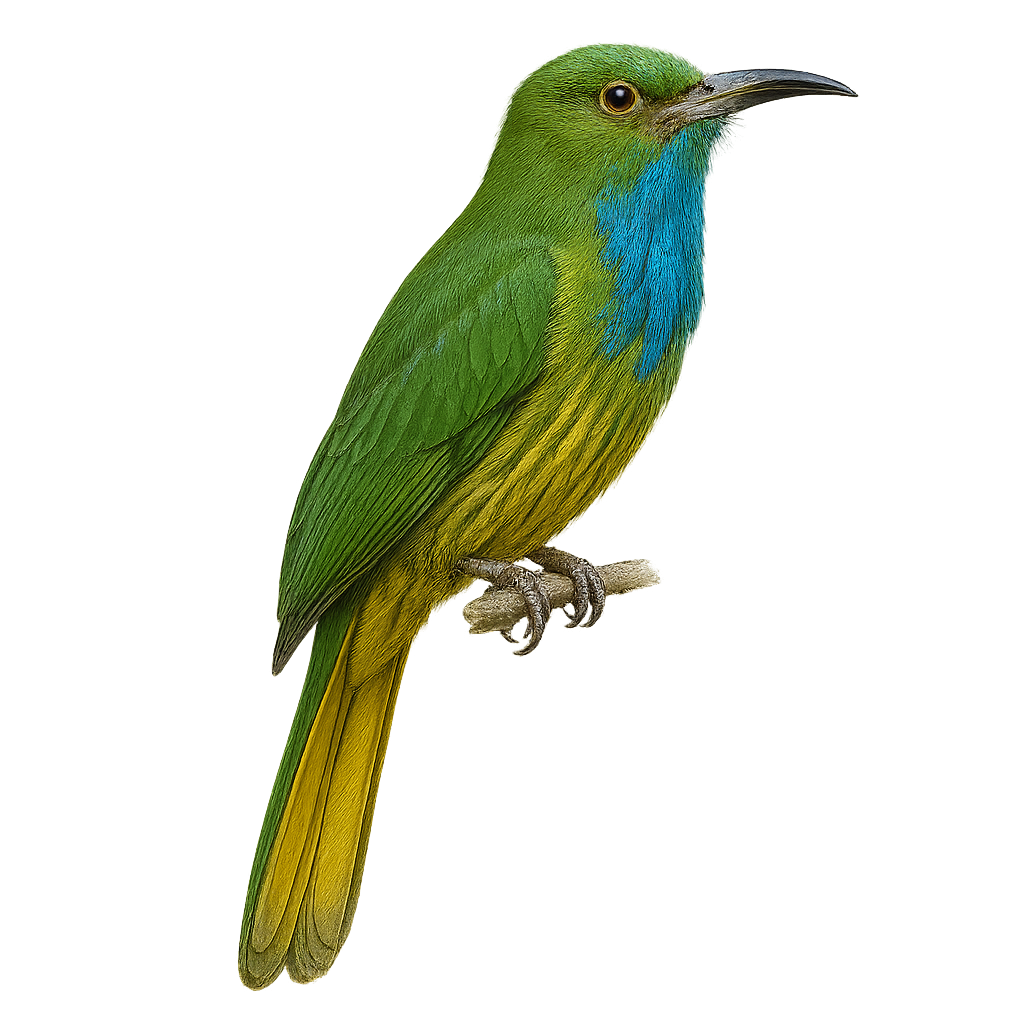
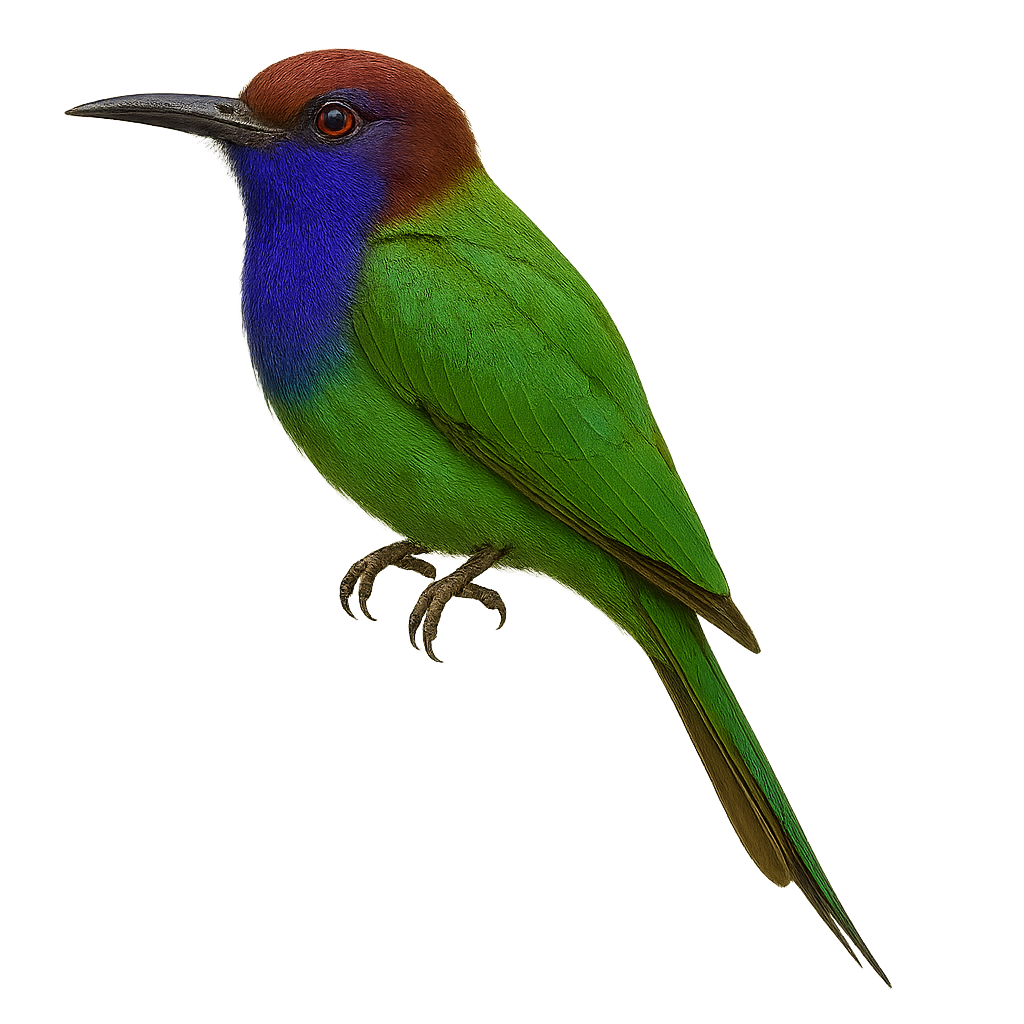
The Blue-bearded Bee-eater, or Nyctyornis athertoni, is a fascinating bird known for its striking plumage and distinctive blue beard. It primarily inhabits the tropical and subtropical forests of Southeast Asia, particularly in India, Bangladesh, and Thailand. This bird measures about 30 to 35 cm in length and primarily feeds on insects, especially bees and wasps, which it catches in flight with its robust and slightly curved beak. The Blue-bearded Bee-eater is a diurnal bird, often observed alone or in pairs, and is known for its agile and swift flight. Although relatively tolerant of human presence, it prefers dense wooded areas where it can hide and feed in peace.
The Blue-breasted Bee-eater, or Merops variegatus, is a colorful and fascinating bird belonging to the Meropidae family. It boasts a vibrant plumage with shades of green, blue, and brown, and a bright blue breast that gives it a distinctive appearance. This bee-eater is often observed in savannas, open forests, and wooded areas of sub-Saharan Africa. It primarily feeds on flying insects, especially bees and wasps, which it catches in flight with remarkable agility. The Blue-breasted Bee-eater is a sociable bird, often seen in small groups, and is known for its spectacular courtship displays. Although its conservation status is currently stable, deforestation and habitat loss could pose future threats.
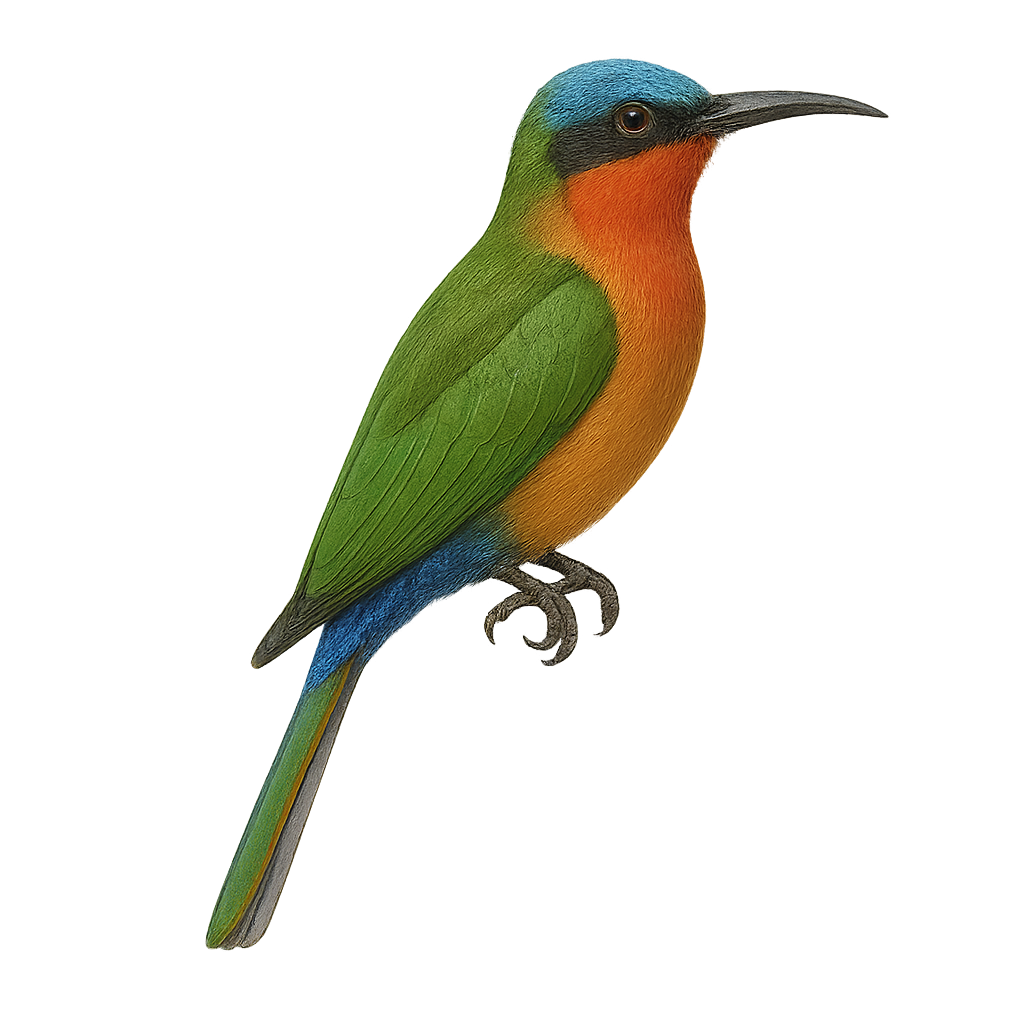
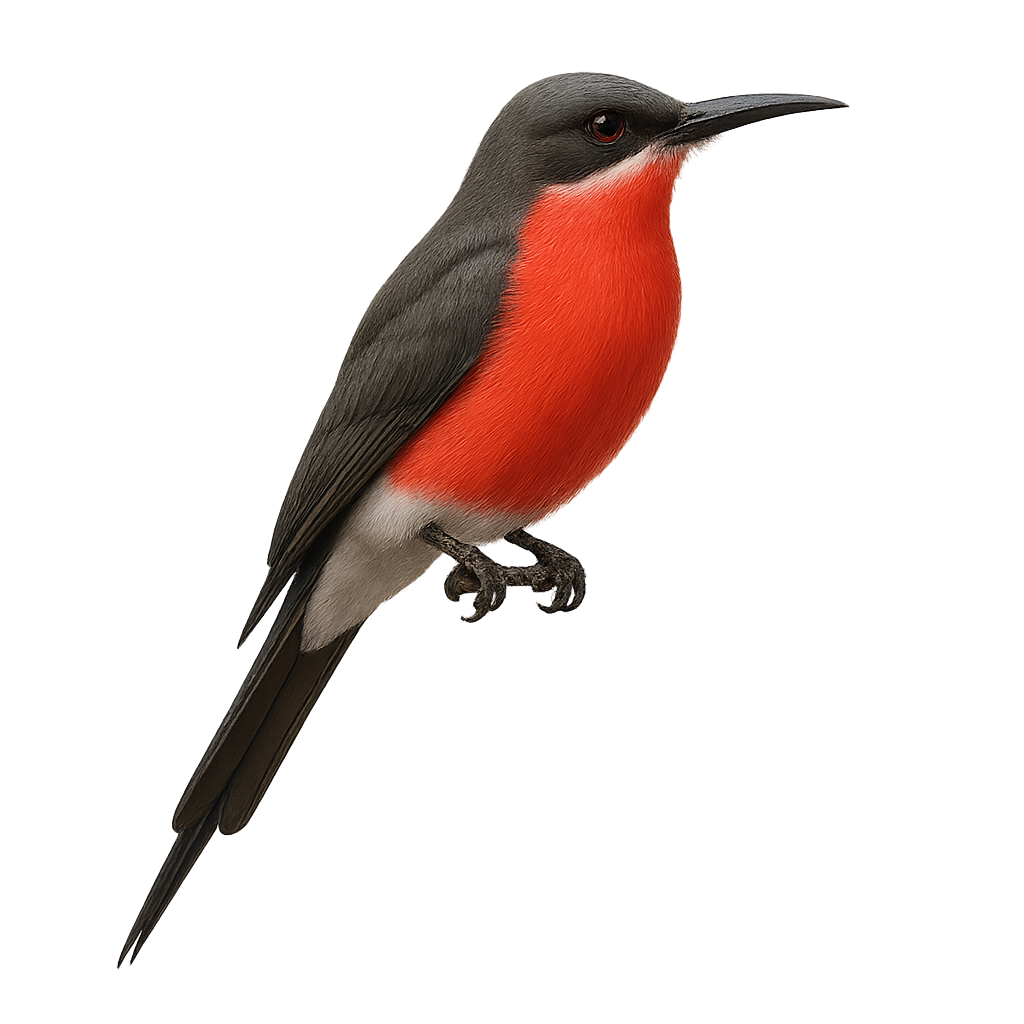
The Red-bearded Bee-eater, or Nyctyornis amictus, is a striking bird native to the tropical forests of Southeast Asia. Easily identifiable by its vivid red throat and bright green plumage, it measures about 25 to 30 cm in length. This bird is known for its sturdy, slightly curved beak, perfect for catching flying insects, especially bees and wasps. It prefers dense wooded habitats, where it can perch discreetly while waiting for prey. The Red-bearded Bee-eater is a solitary bird, often seen alone or in pairs. Its breeding season varies by region, but it typically nests in tree cavities or sandy banks. Although its conservation status is currently "Least Concern," deforestation poses a potential threat to its natural habitat.
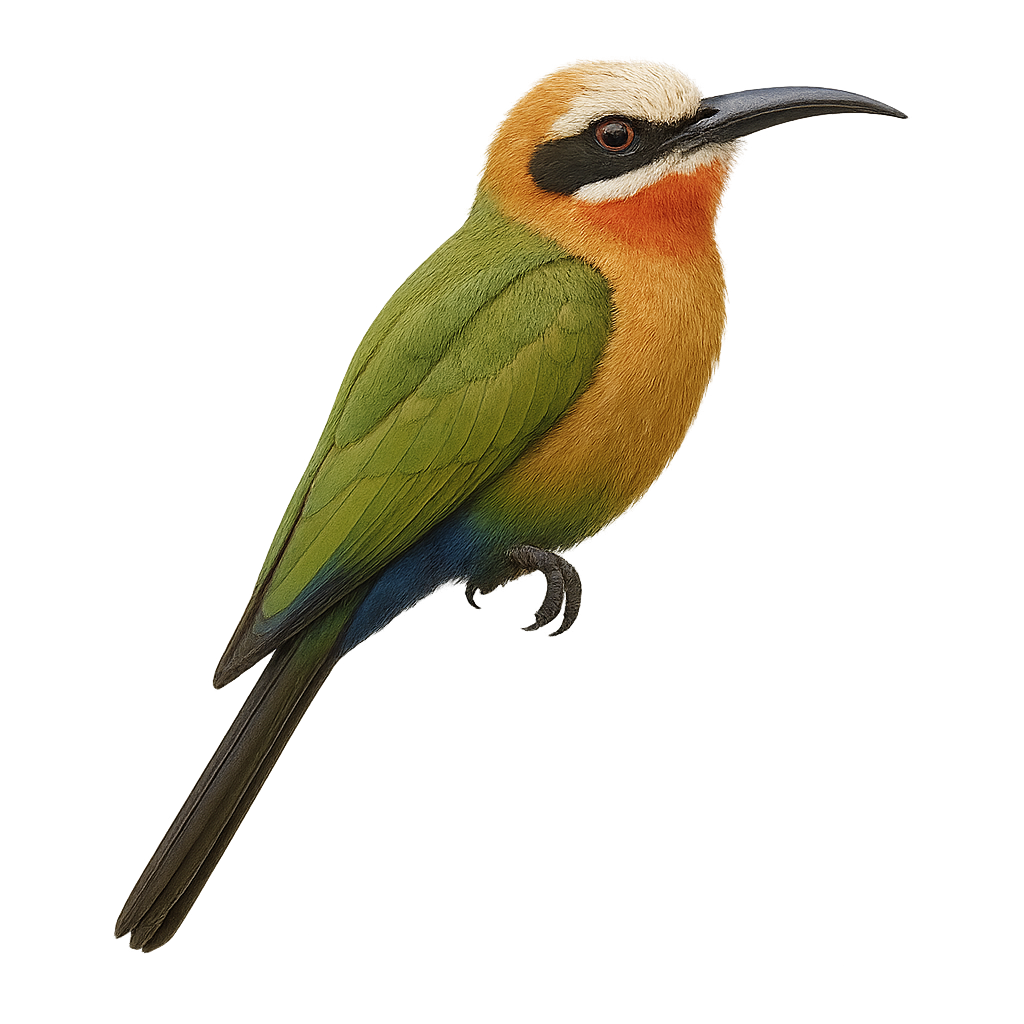
The White-fronted Bee-eater, Merops bullockoides, is a colorful and fascinating bird, recognizable by its vibrant plumage and social behavior. It features a green head with a distinctive white forehead, a red throat, and a yellow belly. Its wings are bright green, while its tail is bluish with elongated central feathers. This bee-eater is often seen in groups, nesting in colonies along sandy riverbanks. It primarily feeds on flying insects, especially bees and wasps, which it catches in flight with agile aerial maneuvers. The White-fronted Bee-eater is a diurnal bird, active mainly during the day, and is known for its melodious calls and graceful flight.
The White-throated Bee-eater is a colorful and elegant bird belonging to the Meropidae family. It is distinguished by its bright plumage, with a white throat contrasting with shades of green, blue, and black. This migratory bird is mainly observed in sub-Saharan Africa, where it frequents savannas, open forests, and wooded areas. It primarily feeds on flying insects, especially bees and wasps, which it catches in mid-air thanks to its remarkable aerial skills. The White-throated Bee-eater is a sociable bird, often seen in groups, and it nests in burrows dug into sandy banks. Its breeding season generally coincides with the rainy season when food availability is optimal.
The Blue-throated Bee-eater, Merops viridis, is a colorful and fascinating bird known for its vibrant plumage and captivating social behaviors. It sports bright green feathers, with a blue throat and wings in shades of brown and blue. This bird is often observed in Southeast Asia, particularly in tropical forests and open wooded areas. It primarily feeds on flying insects, especially bees and wasps, which it catches in flight with remarkable agility. The Blue-throated Bee-eater is a sociable bird, often seen in groups, and is known for its spectacular courtship displays. Its breeding season varies by region but is generally active during the warmer months.
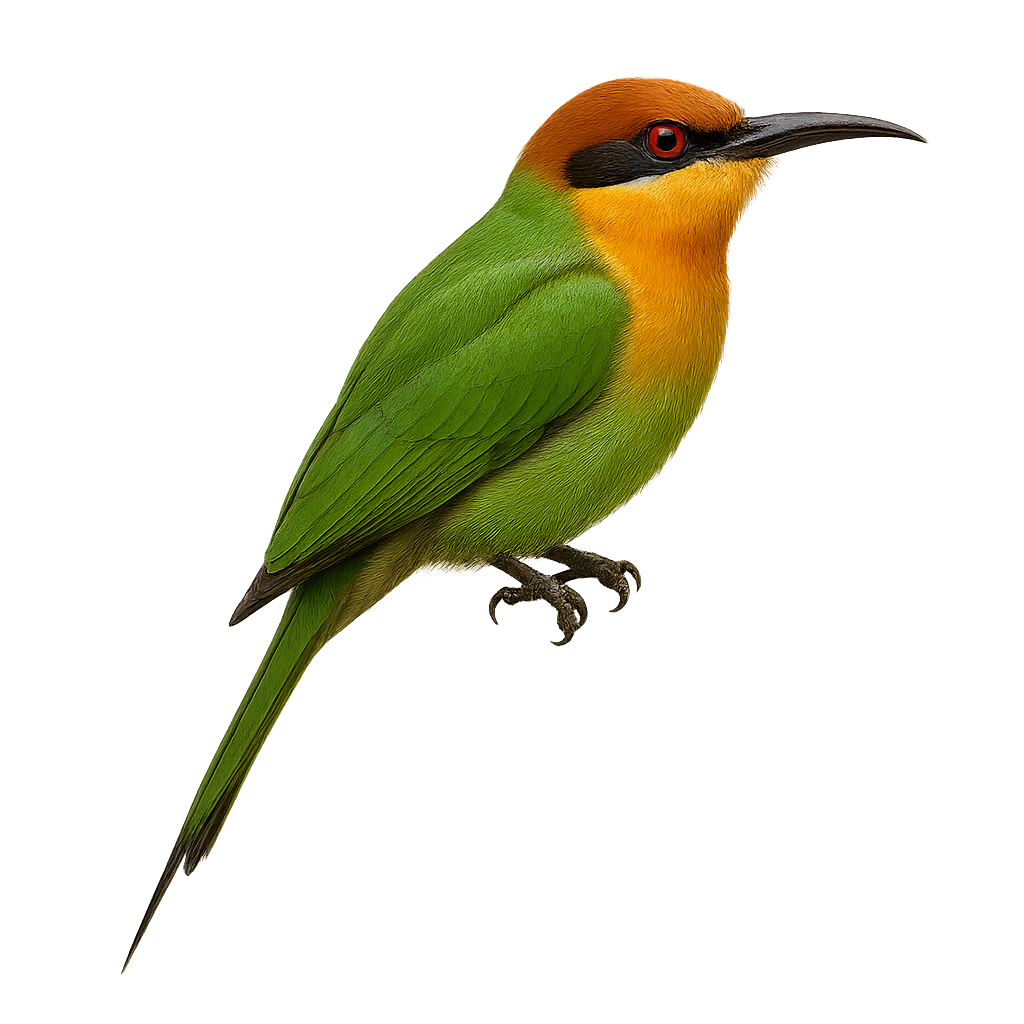
The Bullock's Bee-eater, or Merops bullocki, is a colorful and fascinating bird belonging to the Meropidae family. This bee-eater is distinguished by its vibrant plumage, combining shades of green, blue, and yellow, with an often orange throat. It is mainly observed in wooded regions and open savannas of sub-Saharan Africa. This bird is known for its specialized feeding habits, primarily consuming flying insects, particularly bees and wasps, which it captures in flight with its aerial hunting techniques. The Bullock's Bee-eater is a social bird, often seen in small groups, and is renowned for its spectacular courtship displays. Although not considered threatened, deforestation and habitat loss could affect its populations in the long term.
The Rufous-crowned Bee-eater, or Merops americanus, is a colorful and fascinating bird known for its vibrant plumage and social behavior. It features bright feathers in shades of green, blue, and yellow, with a long, curved beak ideal for catching insects in flight. This bird is often seen in groups, nesting in colonies on sandy banks. It primarily feeds on bees and wasps, which it skillfully captures. The Rufous-crowned Bee-eater is a migratory bird, traveling long distances between its breeding grounds and wintering areas. It is appreciated for its beauty and its role in controlling insect populations.
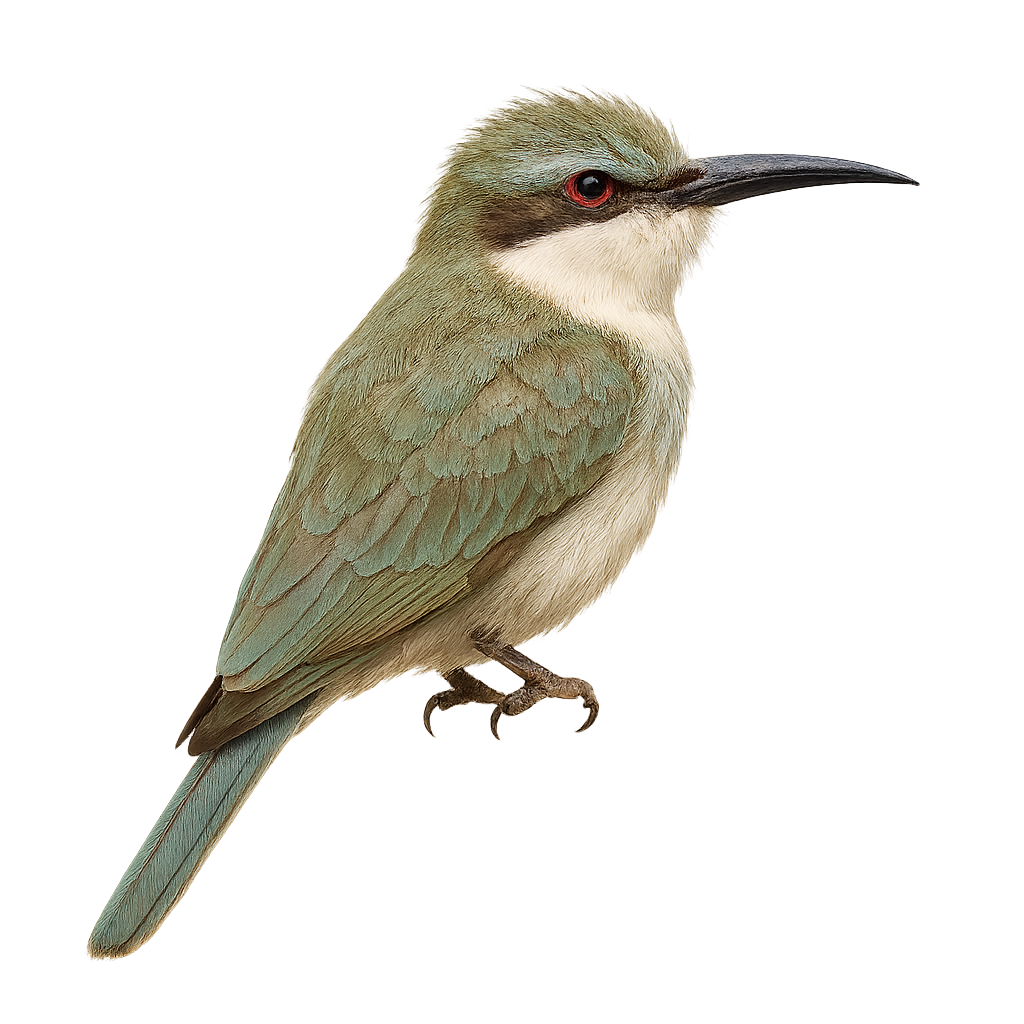
The Black-headed Bee-eater, or Merops mentalis, is a small and discreet bee-eater found in West and Central Africa, typically in open woodlands and forest edges. It is identified by its bright green plumage, turquoise-blue belly, and distinct white throat bordered by black “moustache” markings. Its slender black bill is slightly curved downward. This species is usually seen in pairs or small groups, perched openly while hunting flying insects, especially bees and dragonflies. Although little known outside its range, the Black-headed Bee-eater remains relatively common in undisturbed habitats.
The Swallow-tailed Bee-eater is a colorful and fascinating bird, recognizable by its long forked tail and vibrant plumage. It displays bright shades of green, blue, and yellow, making it easily identifiable in its natural habitat. This bird is often seen in small groups, primarily feeding on flying insects that it catches mid-air. It has a particular fondness for bees and wasps, which it skillfully handles. The Swallow-tailed Bee-eater is a partial migrant, inhabiting savannas, open forests, and semi-arid regions of sub-Saharan Africa. Its presence is an indicator of ecosystem health, as it relies on the availability of insects for sustenance.
The Blue-tailed Bee-eater, Merops philippinus, is a colorful and graceful bird belonging to the Meropidae family. This bee-eater is distinguished by its vibrant plumage, predominantly green with a bright yellow throat and turquoise blue tail. It is often seen in Southeast Asia, particularly in open areas near water, where it hunts insects in flight. Known for its acrobatic flights and melodious song, it nests in burrows dug into sandy banks. Although sociable, it remains wary of humans. Its population is stable, but it is sensitive to environmental changes.
The Arabian Green Bee-eater, Merops cyanophrys, is a medium-sized, colorful bird, measuring about 28 cm in length. It is easily recognizable by its bright green plumage, pale blue cheeks, and vivid yellow throat. This elegant bird is often observed in flight, catching insects mid-air with its agile aerial maneuvers. It frequents open areas, savannas, and semi-arid regions, often near water. A migratory species, it breeds in southern Europe and western Asia, then migrates to sub-Saharan Africa for the winter. The Arabian Green Bee-eater is a sociable bird, often seen in groups, and nests in burrows dug into sandy banks.
The Blue-headed Bee-eater, or Merops muelleri, is a captivating bird belonging to the Meropidae family. This bee-eater is distinguished by its bright blue head, green back, and rufous chest, creating a striking contrast. It is primarily found in the dense tropical forests of Central Africa, notably in Cameroon, the Central African Republic, and the Democratic Republic of the Congo. This bee-eater is a specialized insectivore, feeding mainly on bees and wasps, which it catches in flight with agile aerial maneuvers. The Blue-headed Bee-eater is a social bird, often seen in small groups. Its breeding period is poorly documented, but it is known to nest in burrows dug into sandy banks. Although its conservation status is currently assessed as "least concern," deforestation poses a potential threat to its natural habitat.
The Black-headed Bee-eater, or Merops breweri, is a colorful and fascinating bird primarily found in the tropical forests of Central Africa. It is distinguished by its black head contrasting with its bright green body and white throat. This bee-eater is a specialized insectivore, feeding mainly on bees and wasps, which it catches in flight thanks to its agility and speed. It lives in small family groups and is known for its complex social behaviors, including food sharing and cooperative territory defense. Although its habitat is threatened by deforestation, it is currently classified as "least concern" by the IUCN.
The Rainbow Bee-eater, Merops ornatus, is a colorful and fascinating bird primarily found in Australia and New Guinea. Its slender silhouette and vibrant colors, ranging from emerald green to azure blue, make it a remarkable visual spectacle. This bird measures about 23 to 28 cm in length, with a long, tapered tail. It is known for its aerial prowess, catching insects in flight, particularly bees and wasps. The Rainbow Bee-eater is often seen in groups, nesting in burrows dug into sandy banks. Its melodious song and aerial courtship displays add to its charm. Although widely distributed, it is sensitive to disturbances in its natural habitat.
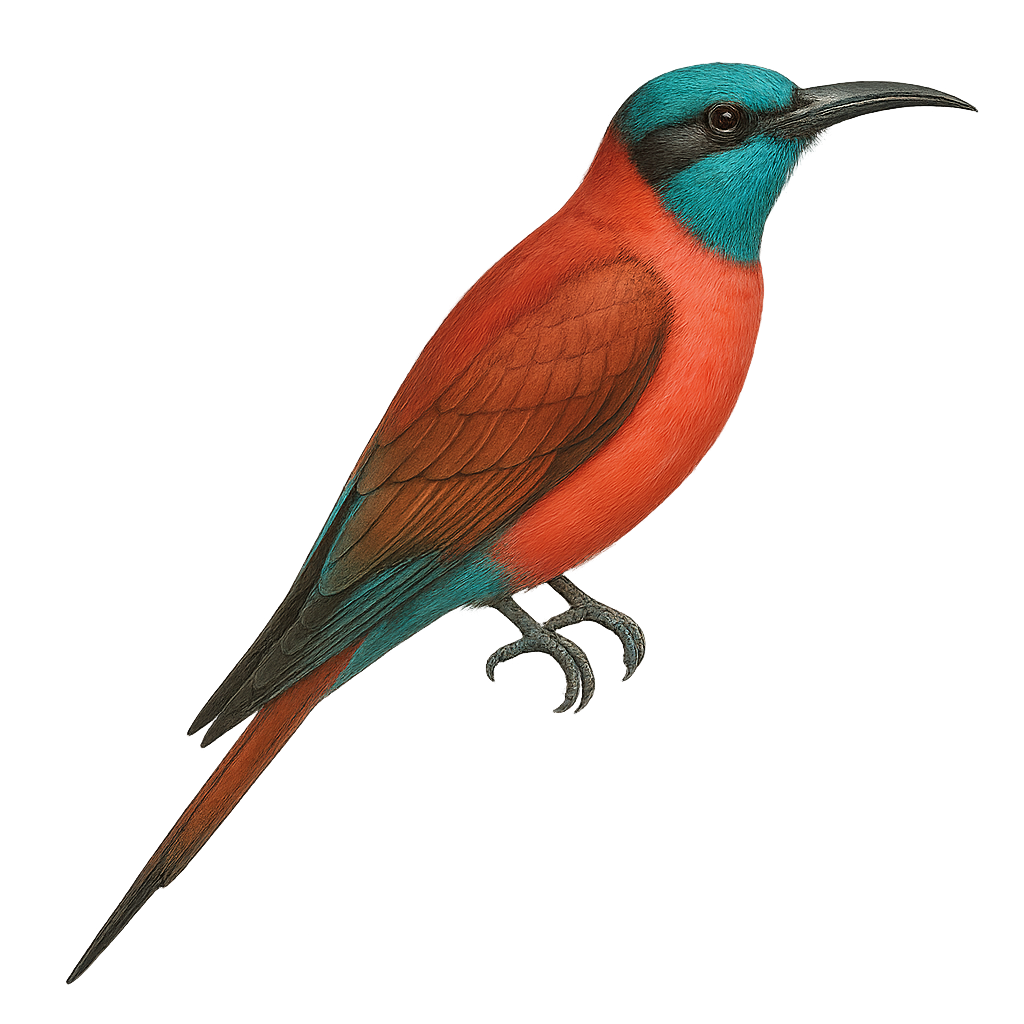
The Northern Carmine Bee-eater, Merops nubicus, is a striking bird with vibrant colors, primarily carmine red with blue-green wings and tail. Known for its graceful flight, it skillfully catches insects mid-air, particularly bees and wasps. This sociable bird lives in colonies along rivers and lakes in sub-Saharan Africa, digging burrows in sandy banks for nesting. It is a partial migrant, moving seasonally to follow prey availability. Although its habitat is threatened by human activity, it is currently listed as Least Concern by the IUCN.
The European Bee-eater is a small, colorful bird, easily recognizable by its vibrant plumage, which features a combination of bright colors, mainly blue, green, yellow, and orange. It measures about 28 to 30 cm in length, with a wingspan of 40 to 45 cm, and weighs between 30 and 40 g. Its beak is long and pointed, perfectly adapted to catching insects in flight, primarily wasps, bees, and other flying insects. The European Bee-eater primarily inhabits open areas, grasslands, forest edges, and steppes in Europe, as well as North Africa and Western Asia. It is migratory and mostly travels to sub-Saharan Africa for the winter. This small bird lives in colonies, and its nests are often dug into cliffs or riverbanks. The European Bee-eater is known for its swift flights and acrobatic behavior while capturing its prey. Although the species is not endangered, it may be threatened by habitat loss and human disturbances, such as the degradation of natural habitats.
The Asian Green Bee-eater, or Merops orientalis, is a vibrant and graceful bird, easily recognized by its bright green plumage, blue throat, and black eye stripe. Measuring about 23 cm in length, it has a slender, slightly curved beak, perfect for catching insects in flight. This bird is often seen in small groups, perching on exposed branches to watch for prey. It is particularly common in open regions, savannas, and agricultural areas. The Asian Green Bee-eater is a partial migrant, moving according to the seasons to find food resources. Its presence is an indicator of the health of local ecosystems.
The Boehm's Bee-eater, or Merops boehmi, is a colorful and fascinating bird, primarily found in the wooded regions and savannas of Central and East Africa. It is distinguished by its vibrant plumage, blending shades of green, blue, and yellow, with a long, tapered tail. This bee-eater is a specialized insectivore, feeding mainly on bees and other flying insects, which it skillfully captures in flight. Sociable by nature, it often lives in small colonies and nests in burrows dug into sandy banks. Its melodious song and aerial acrobatics make it a captivating sight for nature observers.
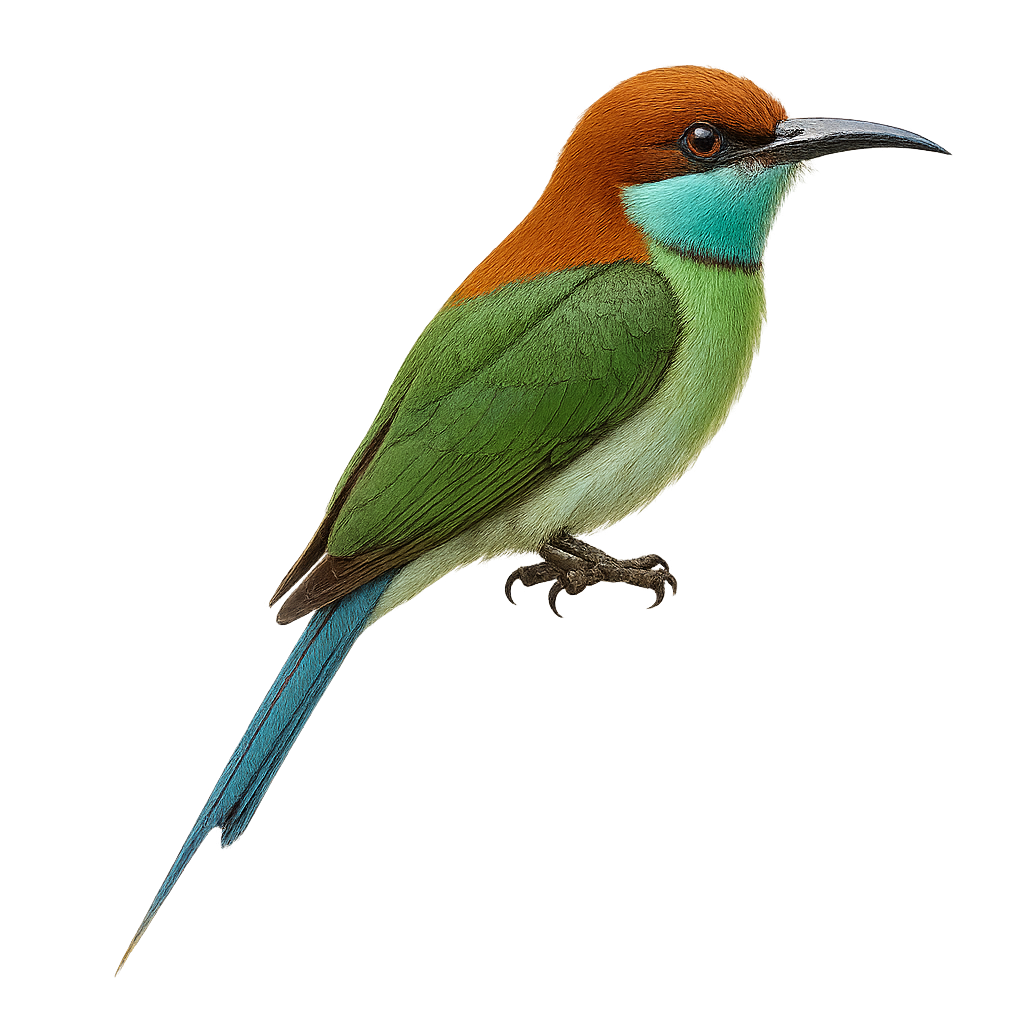
The Chestnut-headed Bee-eater is a colorful and fascinating bird belonging to the Meropidae family. It is distinguished by its chestnut-colored head, bright green back, and vivid yellow throat. Its tail is long and tapered, often adorned with elongated central feathers. This bird is primarily insectivorous, feeding on various flying insects, especially bees and wasps, which it catches in flight with remarkable agility. It is found in open forests, woodlands, and grasslands of South and Southeast Asia. The Chestnut-headed Bee-eater is a sociable bird, often seen in groups, and it nests in burrows dug into sandy banks.
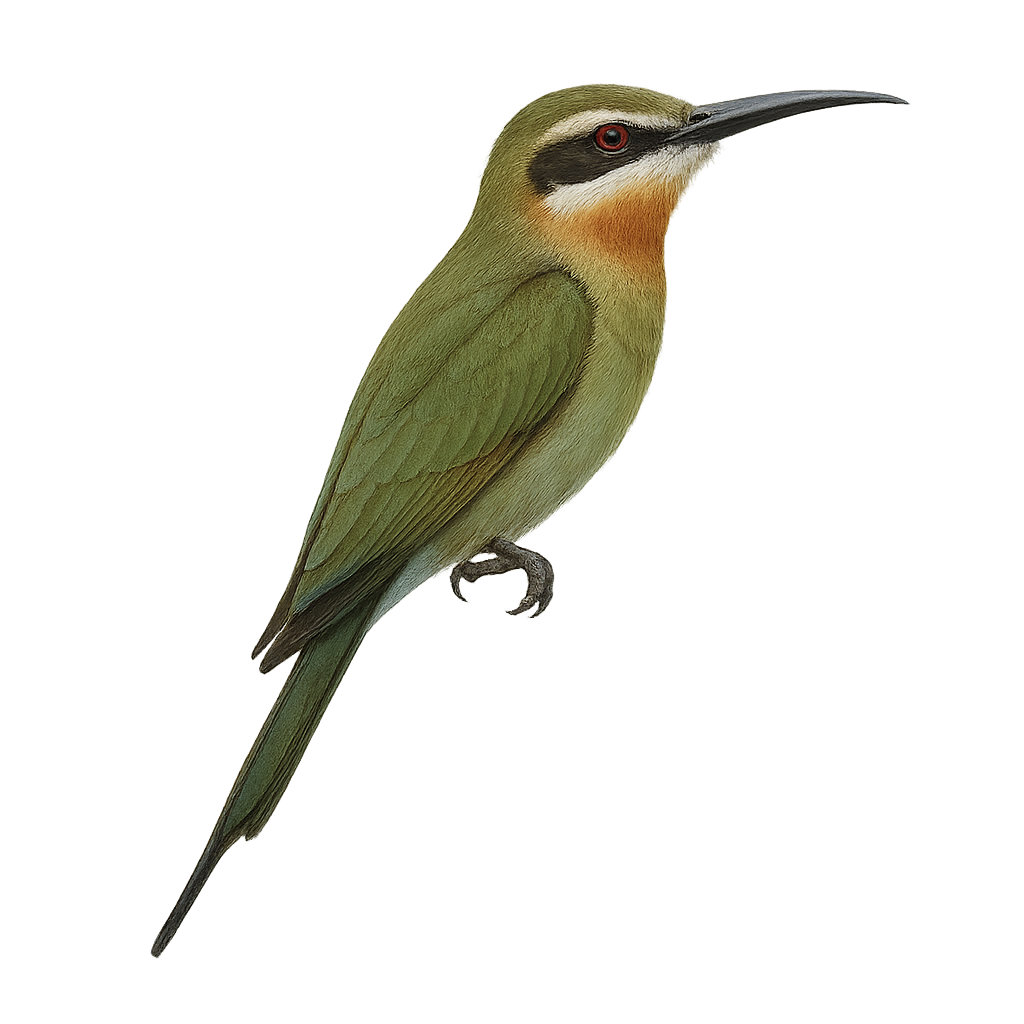
The Madagascar Bee-eater, Merops superciliosus, is a colorful and fascinating bird, primarily found in Madagascar and parts of East Africa. It is distinguished by its vibrant plumage, featuring shades of green, blue, and rufous, as well as its long, slender tail. This bird is often seen in flight, catching insects mid-air with its thin, curved beak. It typically nests in burrows dug into sandy banks, forming noisy and dynamic colonies. The Madagascar Bee-eater is a diurnal bird, active mainly during the day, and is known for its social behaviors and spectacular courtship displays.
The Blue-cheeked Bee-eater, or Merops persicus, is a strikingly colorful bird known for its vivid green plumage, blue throat, and distinctive black eye stripe. Measuring about 28 to 30 cm in length, it features long, pointed wings and a forked tail. This migratory bird primarily feeds on flying insects, especially bees, wasps, and dragonflies, which it catches in flight with remarkable agility. It inhabits open areas, savannas, and riverbanks, often seen in groups. During the breeding season, it digs burrows in sandy banks for nesting. The Blue-cheeked Bee-eater is a fascinating sight for birdwatchers and nature enthusiasts.
The Somali Bee-eater is a colorful bird, primarily green with shades of blue and yellow, and a reddish throat. It is endemic to the arid regions of the Horn of Africa, particularly in Somalia and northeastern Kenya. This bird is often seen in small groups, perching on exposed branches from where it hunts flying insects. Its flight is fast and agile, allowing it to catch prey mid-air. The Somali Bee-eater is a social bird, often seen preening each other. It nests in burrows dug into sandy banks, where it lays its eggs. Although its population is stable, it is sensitive to habitat disturbances.
The Purple-bearded Bee-eater is a colorful and fascinating bird endemic to the forests of Sulawesi, Indonesia. It is distinguished by its purple beard and bright green plumage, which allow it to blend into the dense canopy. This bird measures about 25 cm in length and primarily feeds on insects, especially bees and wasps, which it catches in flight with its slender, elongated beak. The Purple-bearded Bee-eater is a sociable bird, often seen in small groups. It prefers humid forest habitats and wooded areas at mid-altitude. Although its conservation status is concerning due to deforestation, it remains relatively common in some protected areas.
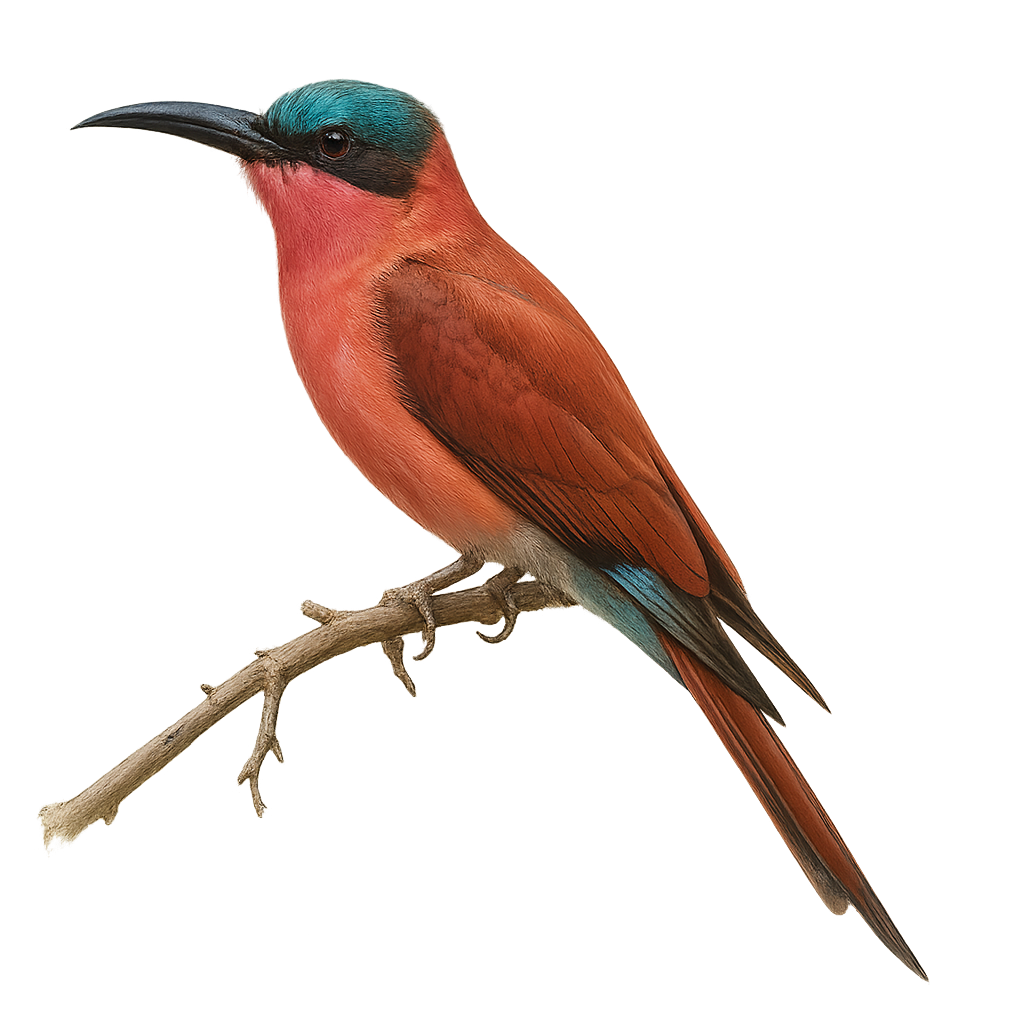
The Southern Carmine Bee-eater, Merops nubicoides, is a vibrant and captivating bird found primarily in southern Africa. It is distinguished by its bright red plumage, turquoise head, and long, tapered tail. This bee-eater is about 35 cm long, with a slightly curved black bill, perfect for catching insects in flight. It frequents sandy riverbanks and open savannas, where it digs burrows for nesting. Sociable by nature, it lives in colonies and feeds mainly on bees and wasps, which it catches in mid-air. Its flight is fast and agile, often accompanied by high-pitched calls. This beautiful bird is a delight to watch, especially during its courtship displays.
The Rosy Bee-eater, Merops malimbicus, is a graceful member of the Meropidae family, found across Central and Western Africa. It inhabits tropical forests, open savannas, clearings, and riverbanks, often seen soaring above the canopy or perched in the open. This species is easily recognized by its long triangular wings, uniform grey upperparts, rosy-pink underparts, a black eye stripe, and a sharp white moustache. Partially migratory, it sometimes forms massive breeding colonies with over 20,000 pairs. It nests in tunnels dug into sandy riverbanks or sandbars. Its call consists of harsh, brief notes like tik and trrp, typical of bee-eaters.