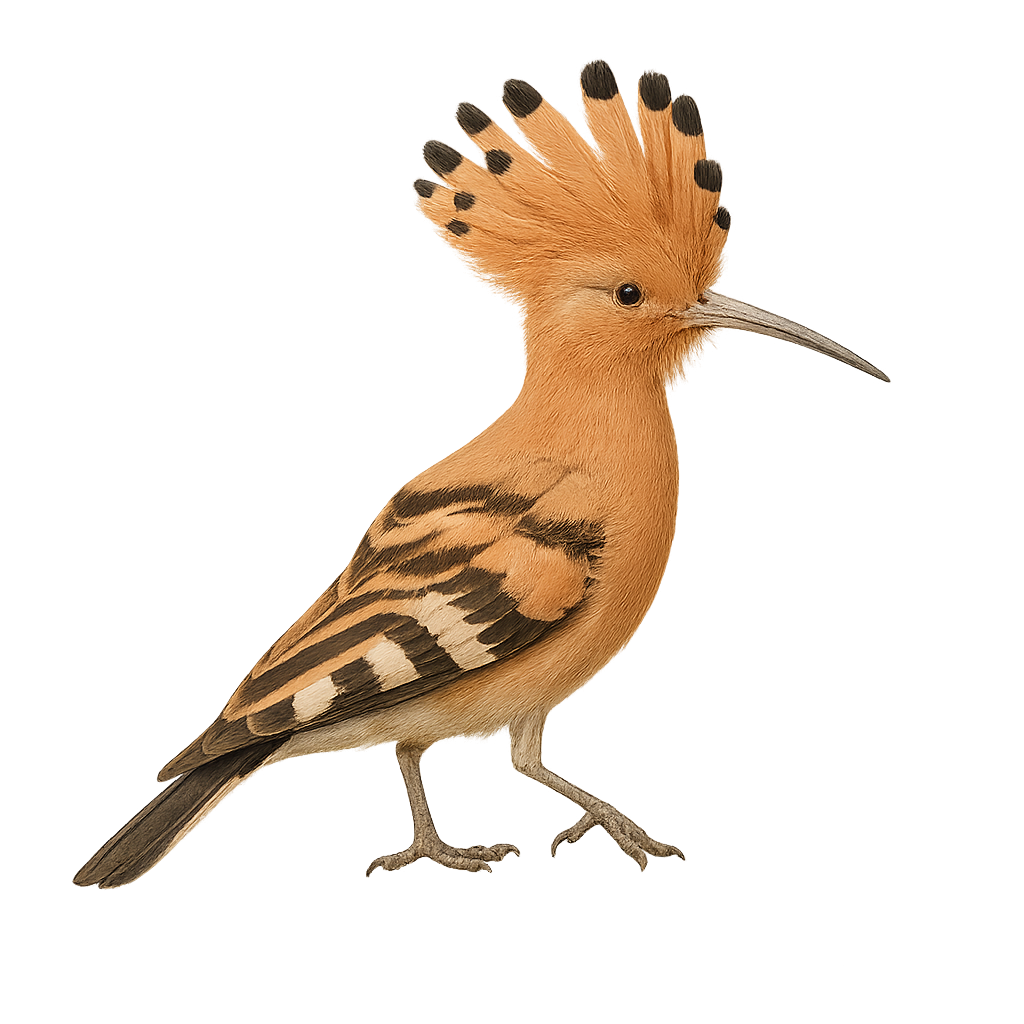
The African Hoopoe, or Upupa epops africana, is a captivating bird, easily identified by its distinctive crest and black-and-white plumage patterns. It primarily inhabits the savannas and wooded areas of sub-Saharan Africa. This bird feeds mainly on insects, which it captures with its long, slender beak. The African Hoopoe is often seen probing the ground for food and is known for its distinctive "hoo-hoo-hoo" call. While generally solitary, it can be observed in small groups during the breeding season. Its adaptability to various habitats makes it a resilient species, although habitat loss remains a potential threat.
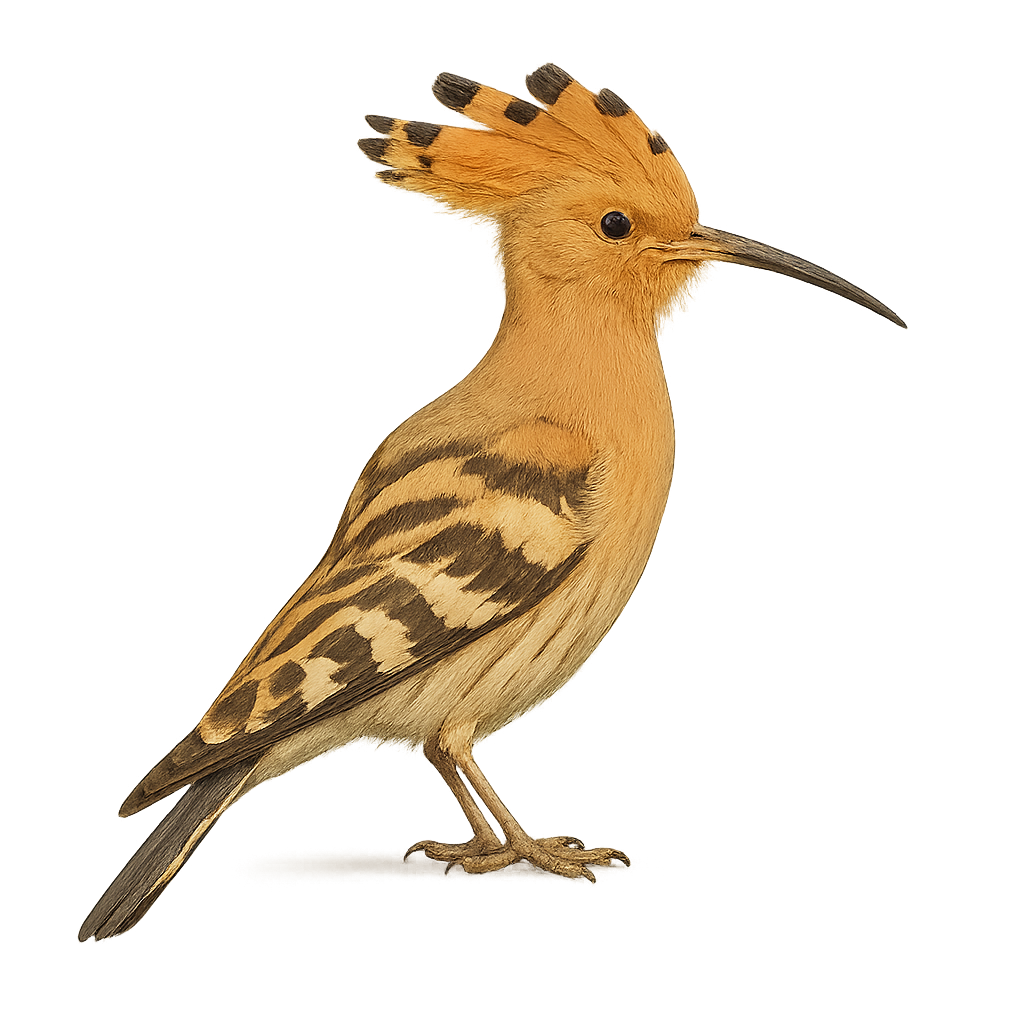
The Eurasian Hoopoe is a bird with a spectacular plumage, easily recognizable by its colorful crest of feathers that it raises in the shape of a tuft on its head. It measures about 25 to 29 cm in length, with a wingspan of 44 to 48 cm, and weighs between 40 and 70 g. Its plumage is primarily light beige, with black and white stripes on the back and wings, and its beak is long, thin, and slightly curved, ideal for probing the ground in search of insects and other small prey. The Eurasian Hoopoe primarily inhabits open areas, such as grasslands, orchards, forest edges, and cultivated areas across Europe, Asia, and North Africa. It mainly feeds on insects, such as ants, termites, and larvae, which it catches by probing the ground. This bird is an excellent flier, capable of flying long distances with powerful wingbeats. Although the species is not endangered, it is vulnerable to habitat loss and the intensification of agriculture.
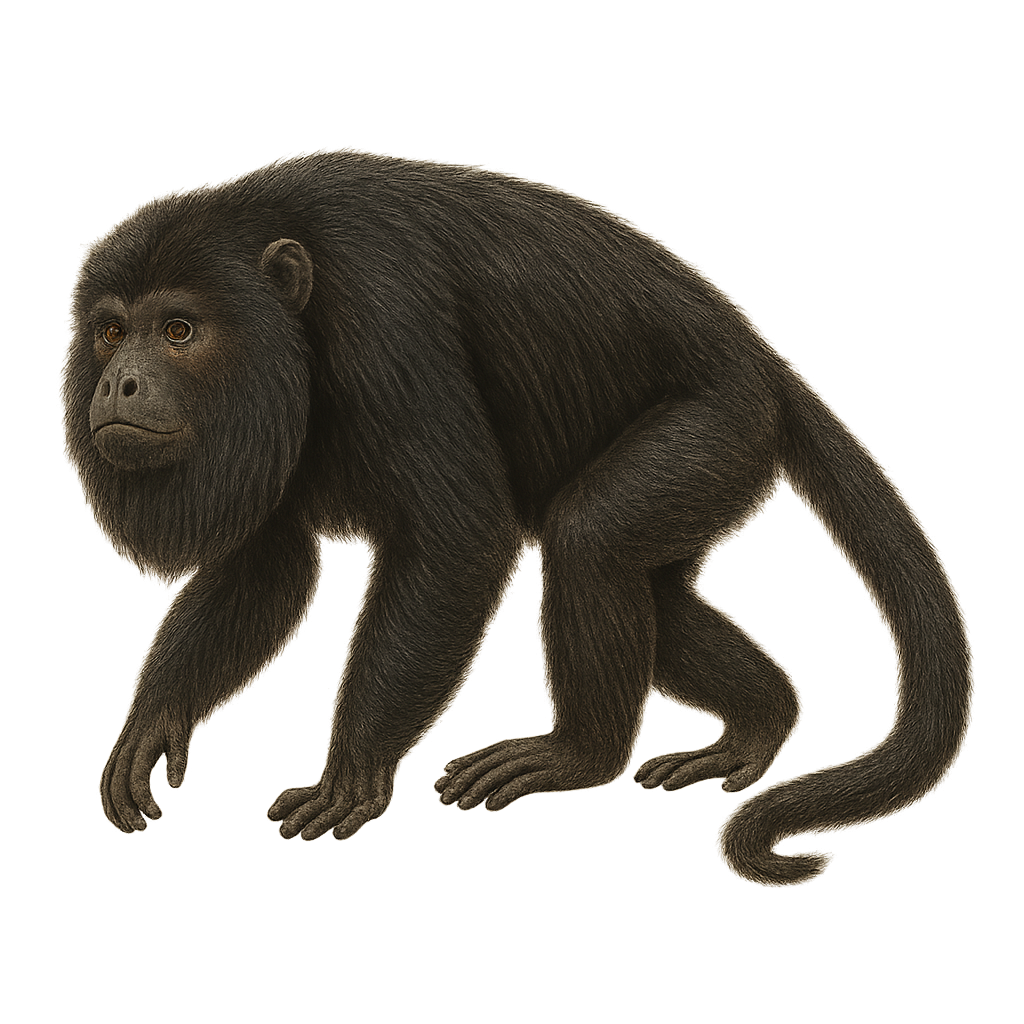
The Alouatta caraya, commonly known as the black howler, is a primate of the Atelidae family. This monkey is easily recognizable by its black fur in males and golden brown in females. It primarily inhabits the tropical and subtropical forests of South America, notably in Brazil, Argentina, Paraguay, and Bolivia. Black howlers are famous for their powerful calls, audible over several kilometers, used to mark their territory. They live in social groups consisting of several individuals and primarily feed on leaves, fruits, and flowers. Their arboreal lifestyle makes them particularly agile in trees, although they spend much of their time resting to digest their fiber-rich diet.
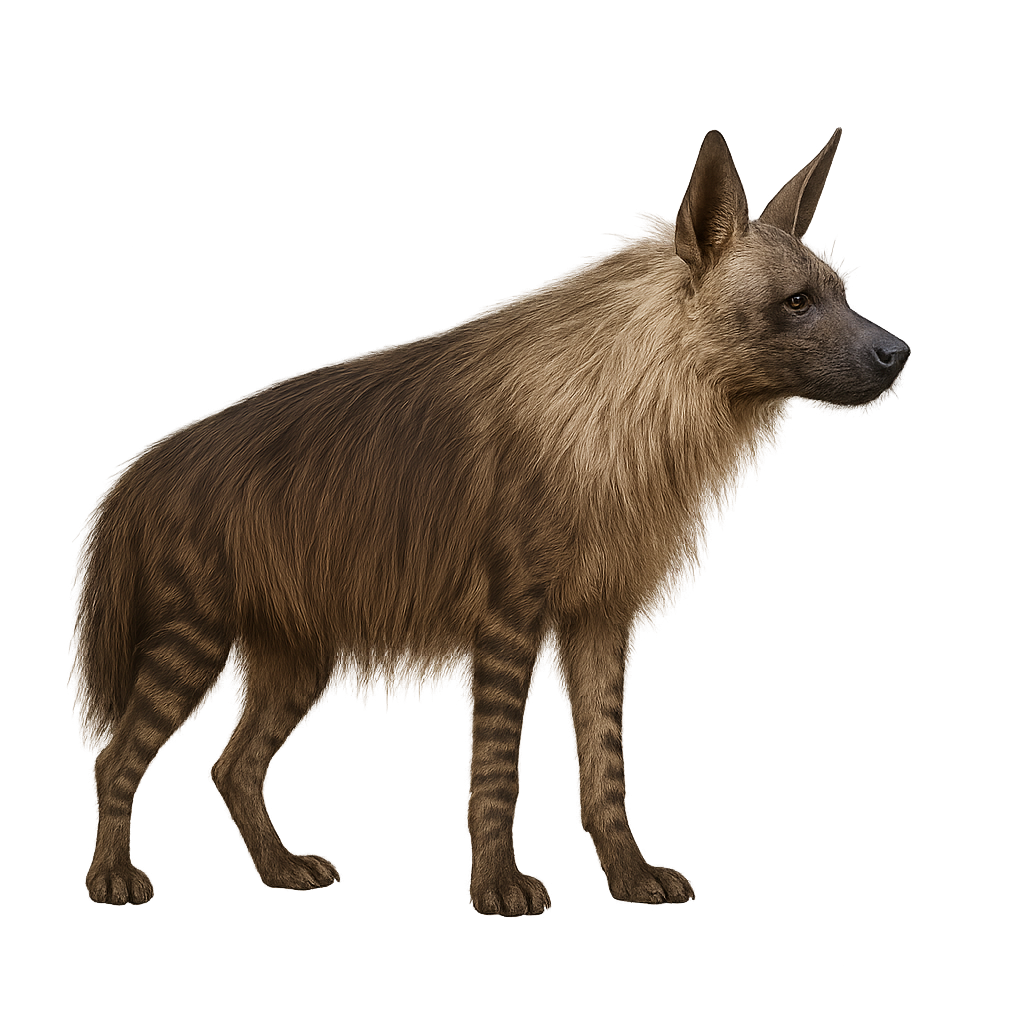
The brown hyena, scientifically known as Parahyaena brunnea, is a medium-sized carnivorous mammal, primarily nocturnal, inhabiting the arid and semi-arid regions of southern Africa. It is distinguished by its long, shaggy coat, ranging from dark brown to black, with lighter stripes on its legs. Its snout is pointed, and it has large, rounded ears. Unlike other hyenas, it is mainly a scavenger, feeding on carcasses left by other predators. It lives in small family groups but often hunts alone. Although its appearance might seem intimidating, it is generally shy and avoids human interactions.
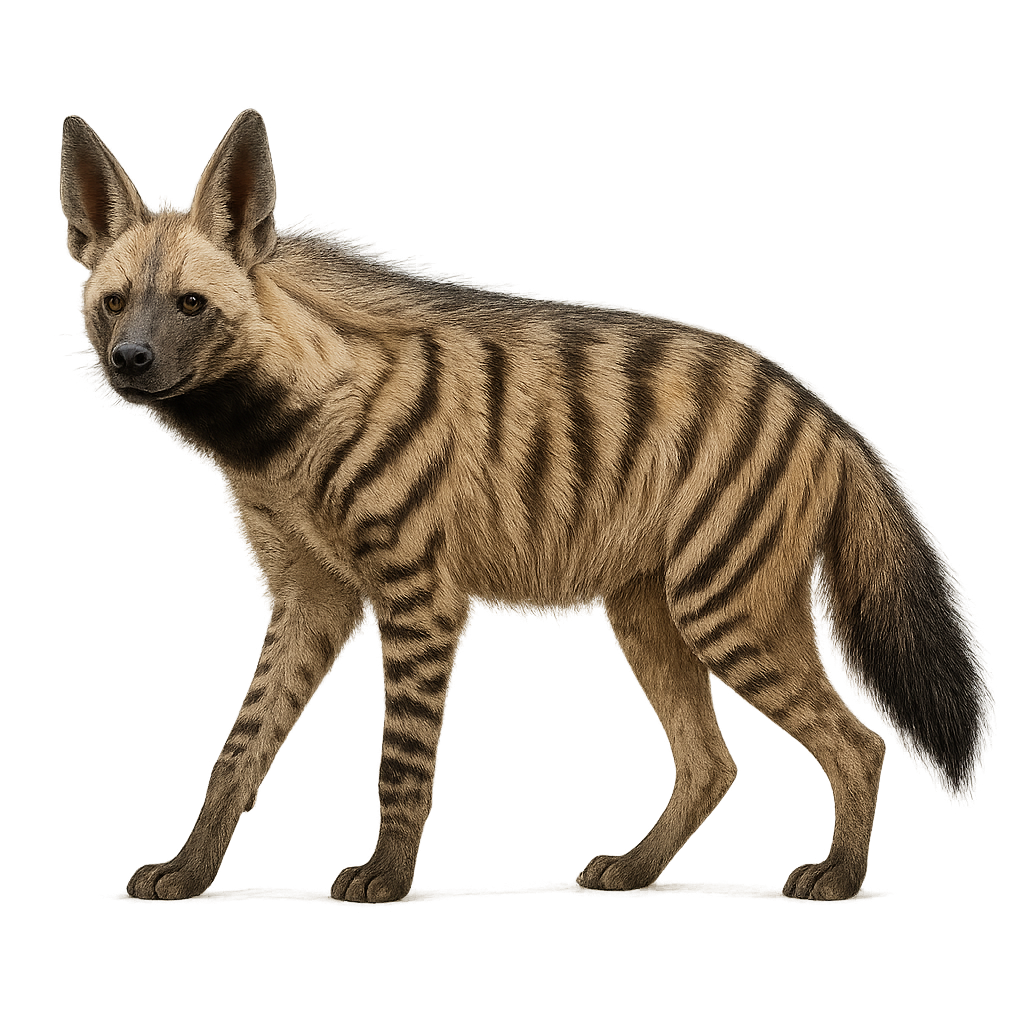
The Striped Hyena is a medium-sized carnivore, easily recognizable by its striped coat and unique behavior among hyenas. It measures about 90 cm in length, with a shoulder height of 60 cm, and weighs between 40 and 60 kg. Its coat is mainly gray or beige, with black stripes on the flanks, helping it blend into its environment. The Striped Hyena has a wide head, large ears, and an elongated muzzle, along with a short tail. Unlike the spotted hyena, the Striped Hyena is more solitary and prefers to hunt alone or in small groups. It primarily feeds on small mammals, reptiles, and insects, but is also opportunistic and a scavenger, feeding on the carcasses of dead animals. It is found mainly in North Africa, in arid and semi-arid areas such as deserts and savannas. While the Striped Hyena is not endangered, it is threatened by habitat loss and human conflict.
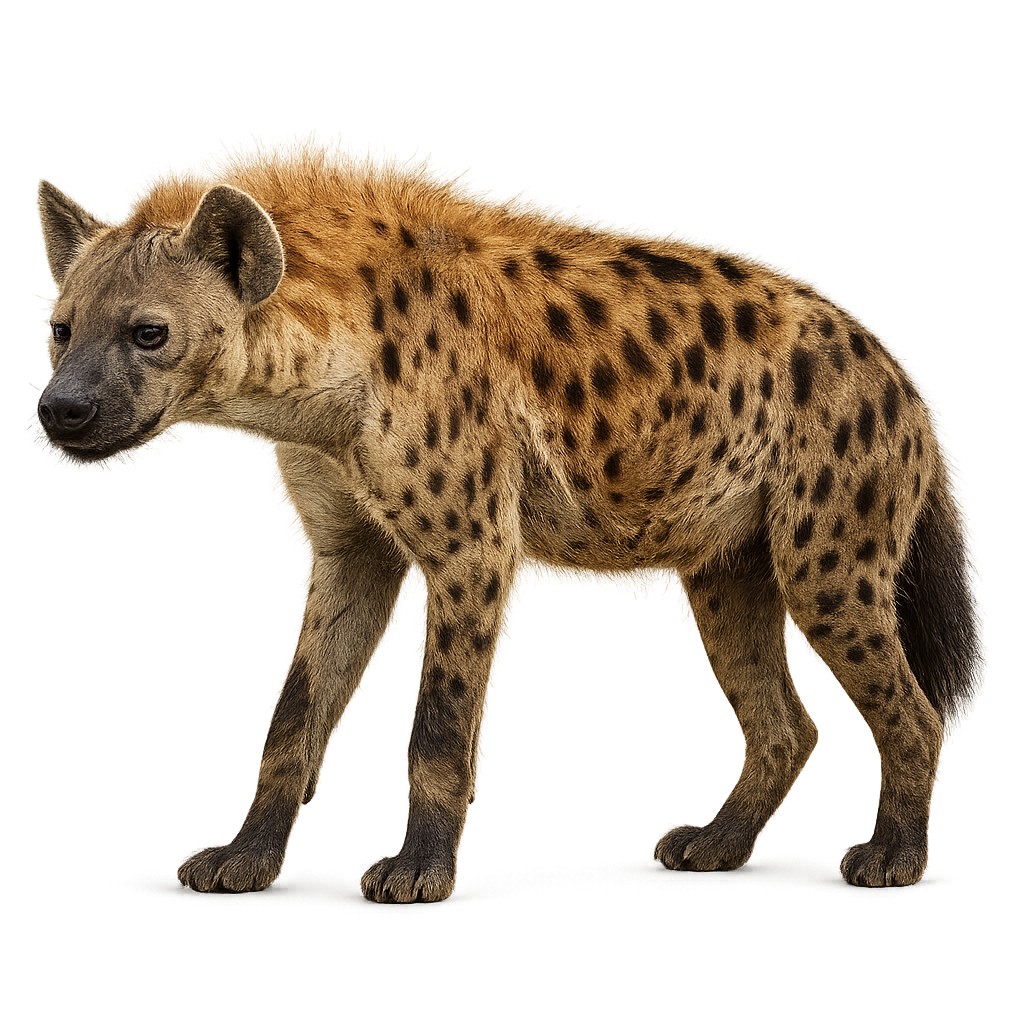
The Spotted Hyena is a robust carnivore, known for its complex social behavior and distinctive call. It measures between 90 and 150 cm in length, with a shoulder height of about 70 cm, and weighs between 40 and 80 kg. Its coat is characterized by black and brown spots on a yellow-gray background, giving it a unique appearance. The Spotted Hyena primarily inhabits savannas, open grasslands, and wooded areas in sub-Saharan Africa, where it forms large clans organized around a strict hierarchy. It is primarily carnivorous, feeding on large prey such as gazelles and zebras, but it is also an opportunistic scavenger, feeding on carcasses of animals killed by other predators. It is an effective hunter, using group strategies to capture prey. Although the species is relatively abundant, it is sometimes viewed negatively due to its reputation as a scavenger, but it plays an important role in ecosystems by eliminating carcasses and regulating animal populations.
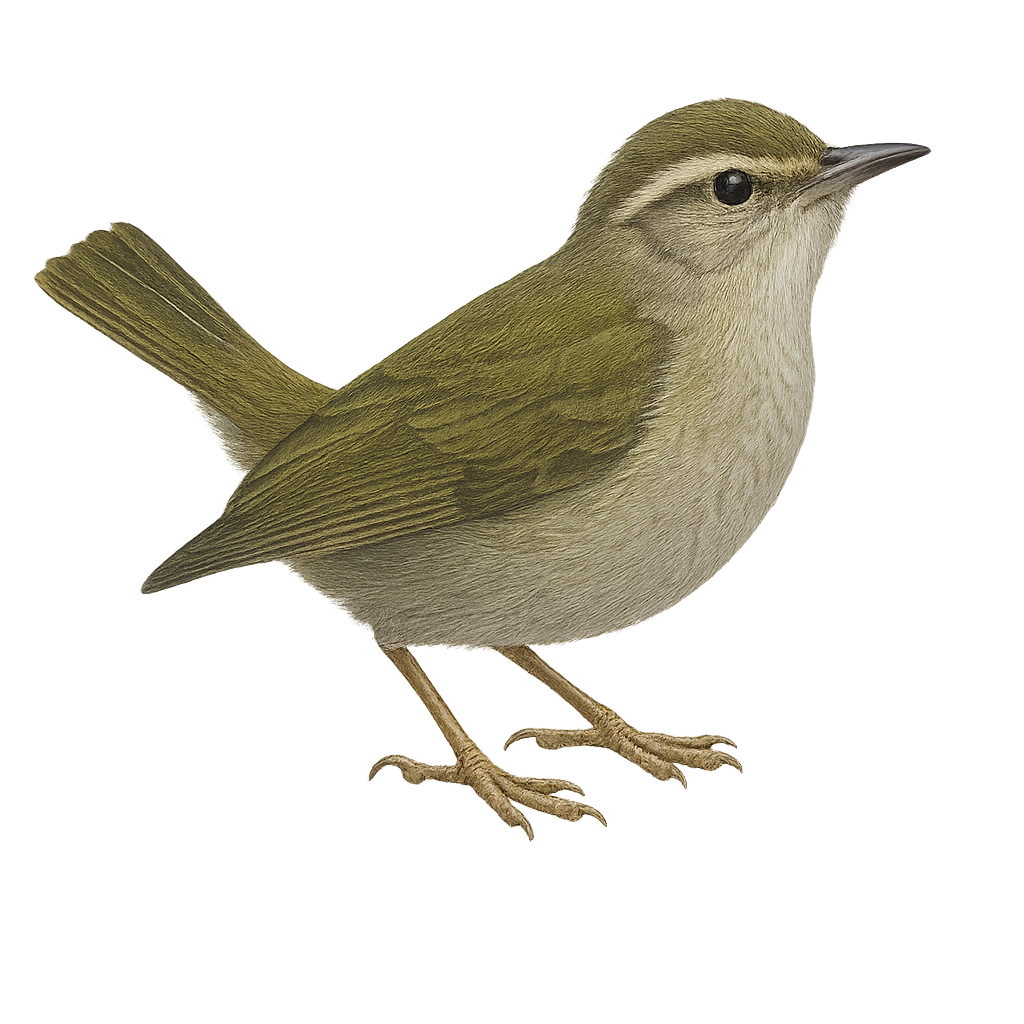
The Green Hylia is a small passerine bird found primarily in sub-Saharan Africa. It is recognizable by its olive-green plumage on the back and lighter underparts, with a slightly darker head. Its modest size and slender, pointed beak are adapted to its mainly insectivorous diet, although it also consumes fruits. It primarily inhabits tropical rainforests, forest edges, and wooded areas. Its song is a melodious trill that often resonates in its natural habitat. Although discreet, it is quite active, moving quickly through foliage in search of food.
The icterine warbler is a small migratory passerine, 11–13 cm long, with olive-green upperparts and pale yellow underparts, distinguished by a bright yellow supercilium. It inhabits open woodlands and edges, feeding mainly on insects and spiders gleaned from foliage or caught in flight. During breeding, males perform singing display flights and sing from elevated perches to attract females and defend territories.
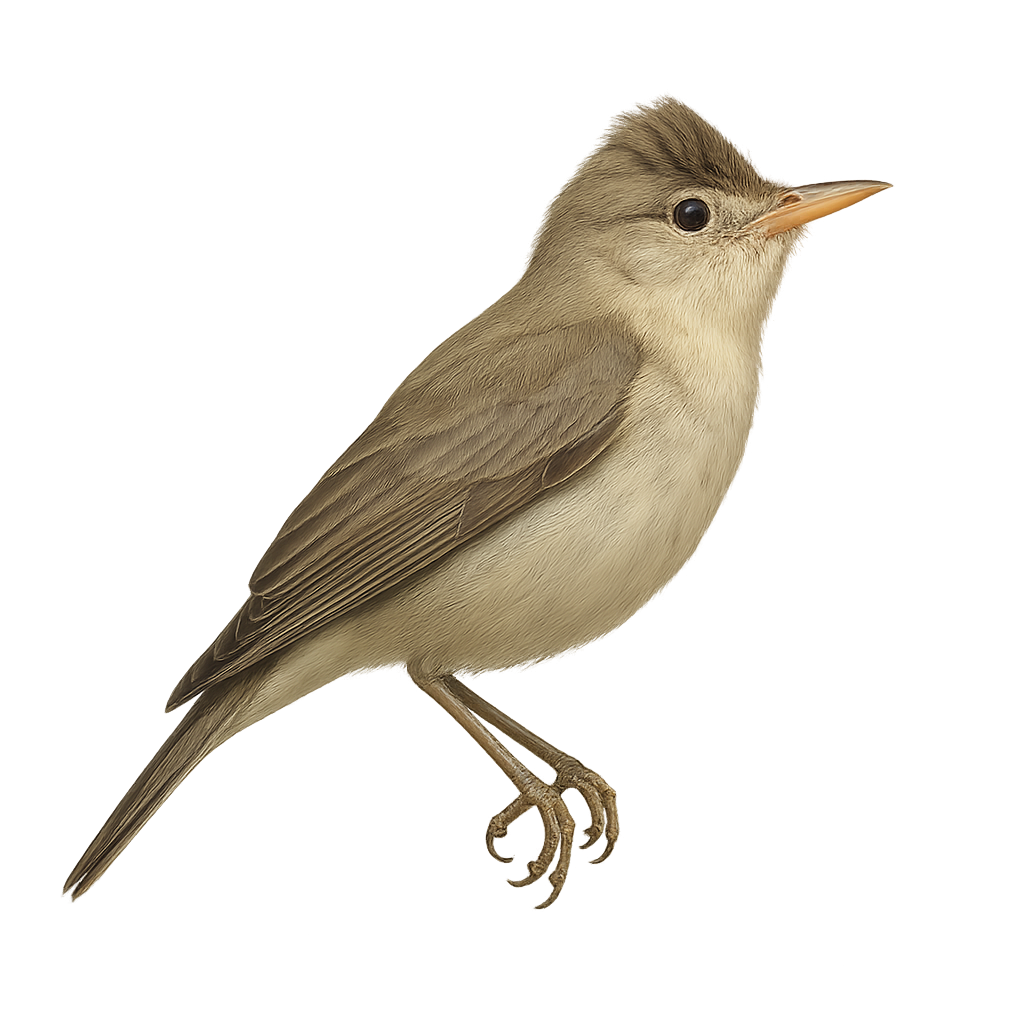
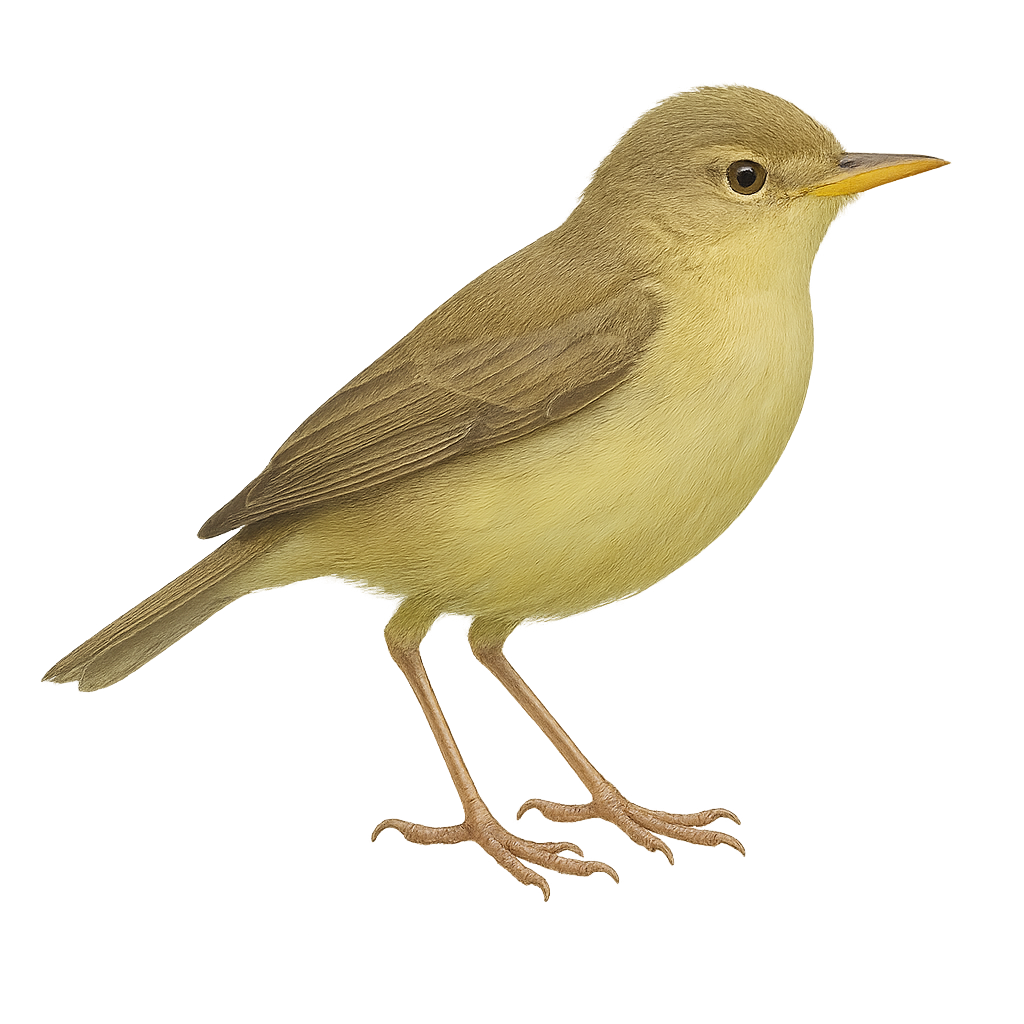
The melodious warbler is a small migratory passerine of 11–13 cm with olive-yellow upperparts and pale yellow underparts. It inhabits open woodlands, hedgerows and groves, feeding mainly on insects captured in flight or among foliage. During breeding, males sing from elevated perches to attract females and defend territory.
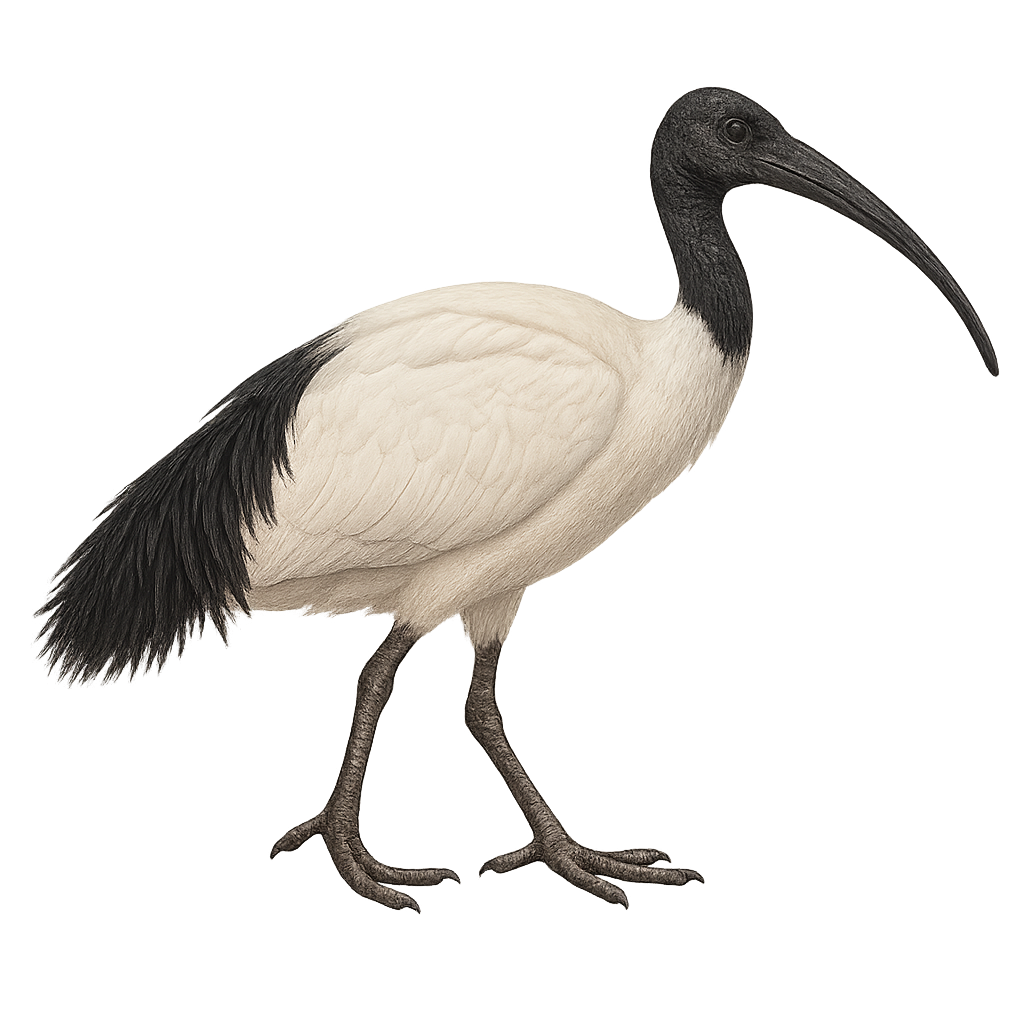
The Australian White Ibis, or Threskiornis molucca, is a medium-sized bird easily recognizable by its white plumage contrasting with its black neck and head. Its long, curved beak is perfectly adapted for probing the ground in search of food. This bird is often seen in wetlands, marshes, and estuaries, but it has also adapted well to urban environments. Known for its gregarious behavior, it forms large colonies during the breeding season. Although its appearance may seem austere, the Australian White Ibis plays a crucial role in the ecosystem by controlling insect populations and cleaning up organic waste. Its ability to adapt to various habitats makes it a resilient species, although its interaction with humans can sometimes be a source of conflict.
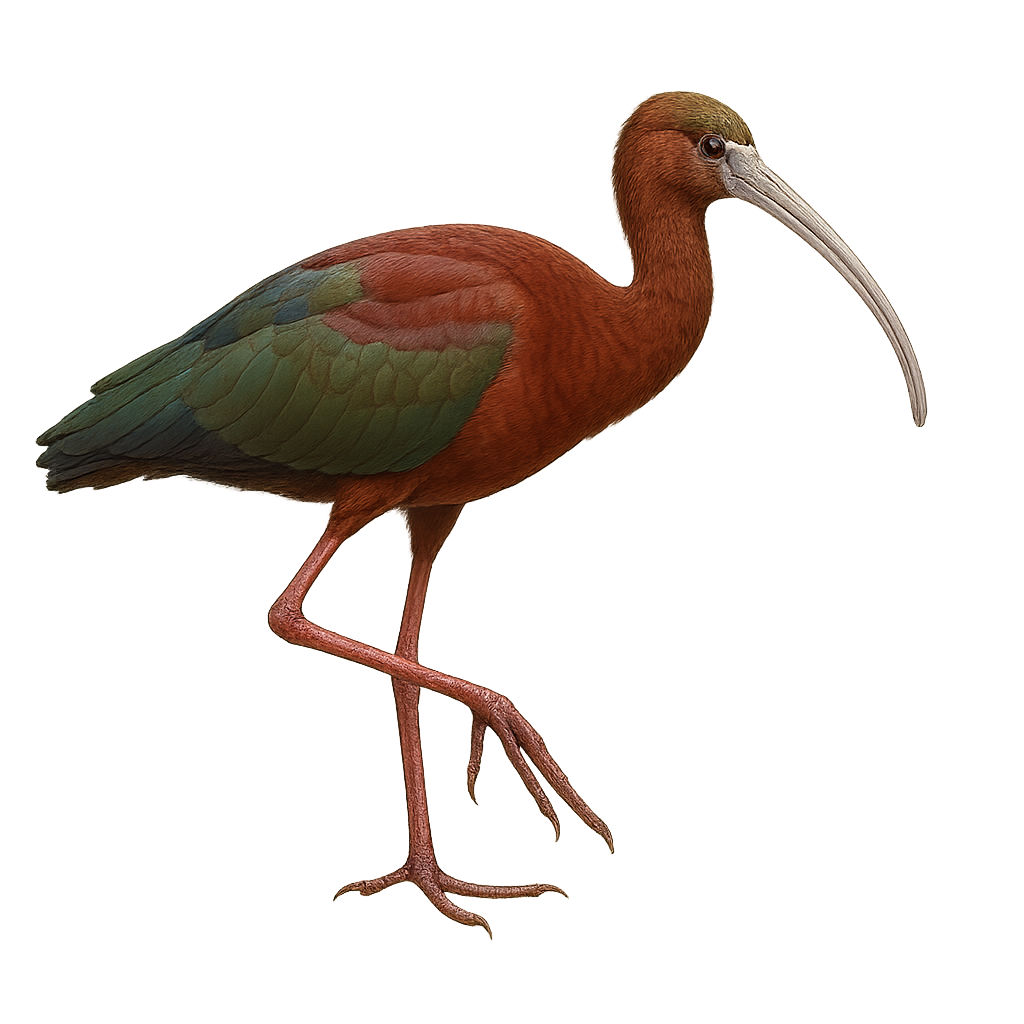
The White-faced Ibis is an elegant waterbird, recognizable by its iridescent plumage with metallic hues ranging from green to purple. It has a long, curved bill, perfect for probing mud in search of food. This bird primarily inhabits wetlands, such as marshes and lake edges, where it feeds on small invertebrates and aquatic plants. During the breeding season, it forms noisy colonies and often nests alongside other waterbird species. Although relatively common, it is sensitive to habitat disturbances, particularly the destruction of wetlands.
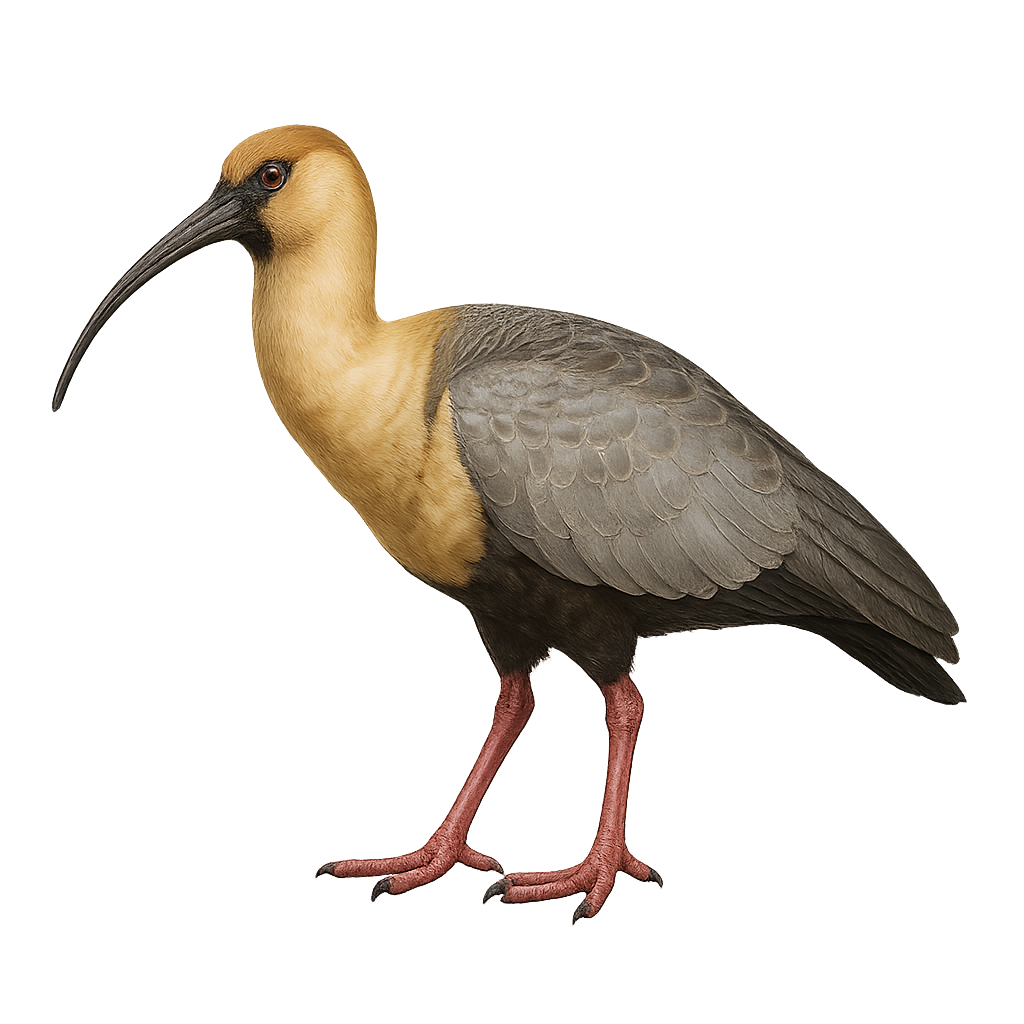
The Black-faced Ibis, or Theristicus melanopis, is a medium-sized bird belonging to the Threskiornithidae family. It is easily recognizable by its gray and brown plumage, distinctive black face, and long curved bill. This bird is primarily found in South America, particularly in Argentina, Chile, and Uruguay. It inhabits various environments, from open grasslands to wetlands, and feeds mainly on insects, worms, and small invertebrates. The Black-faced Ibis is a gregarious bird, often seen in groups, and is known for its distinctive calls. Although not considered threatened, it is sensitive to environmental changes and habitat loss.
The Black-headed Ibis, Threskiornis melanocephalus, is an elegant and distinctive bird, easily recognizable by its black head and neck contrasting with its white plumage. This bird, belonging to the Threskiornithidae family, is often found in the wetlands of South and Southeast Asia, where it primarily feeds on small invertebrates, fish, and crustaceans. Measuring about 65 to 75 cm in length, it has a long, curved bill ideal for probing in the mud. Although its conservation status is currently "near threatened," monitoring its populations is crucial due to the ongoing degradation of its natural habitat. The Black-headed Ibis is a gregarious bird, often seen in groups, making it fascinating to observe for birdwatchers and nature enthusiasts.
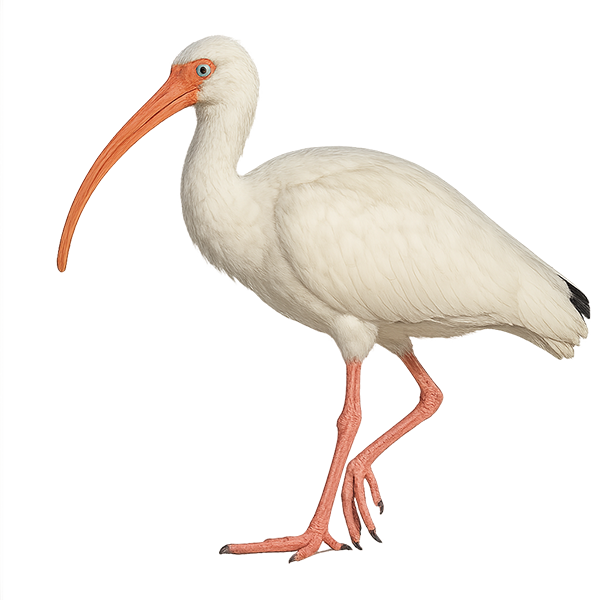
The American White Ibis, Eudocimus albus, is an elegant and graceful bird found mainly in wetlands and coastal areas of the Americas. It is easily recognizable by its bright white plumage, long curved reddish bill, and red legs. Adults measure about 65 cm in length with a wingspan of 95 cm. They primarily feed on small aquatic invertebrates, which they capture by probing the mud with their bill. American White Ibises live in colonies and are often seen in large groups. Their flight is characterized by regular wing beats and gliding. Although they are mainly diurnal, they can be active at dawn and dusk.
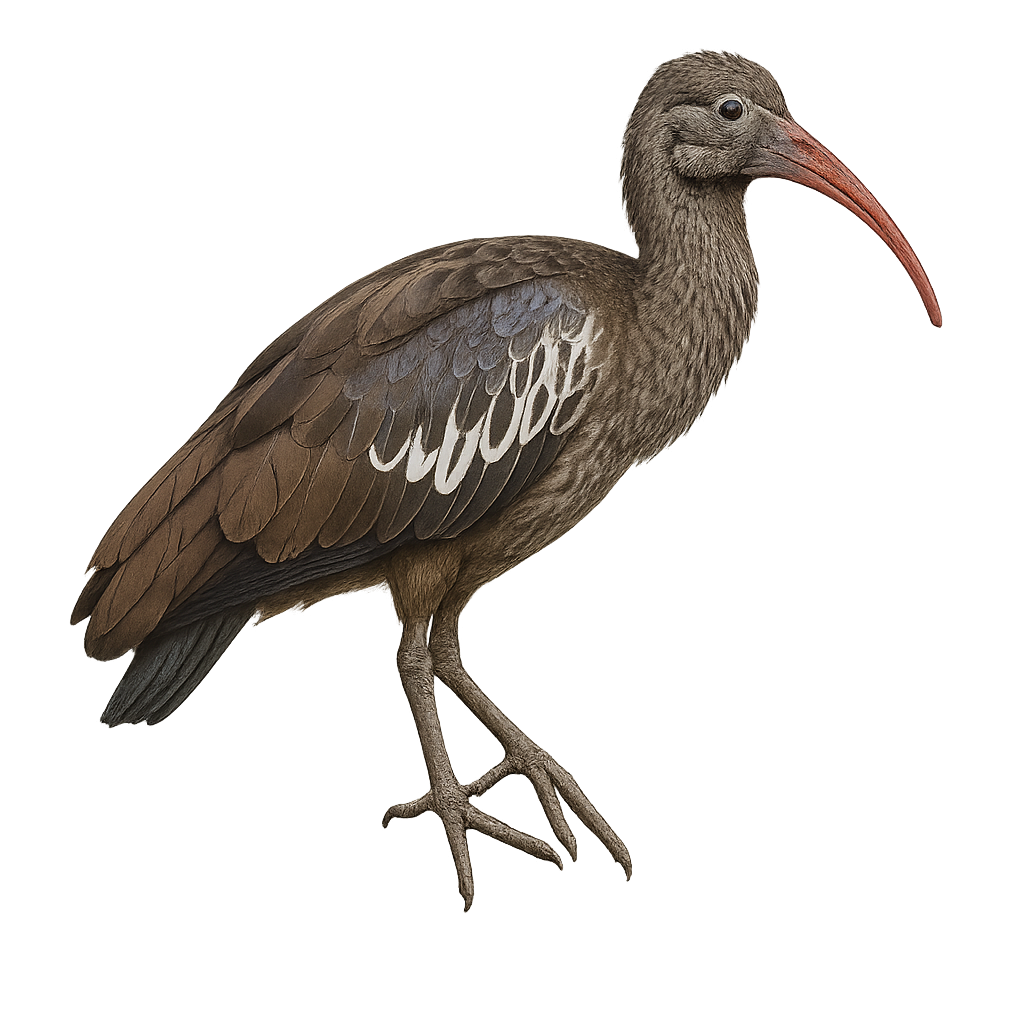
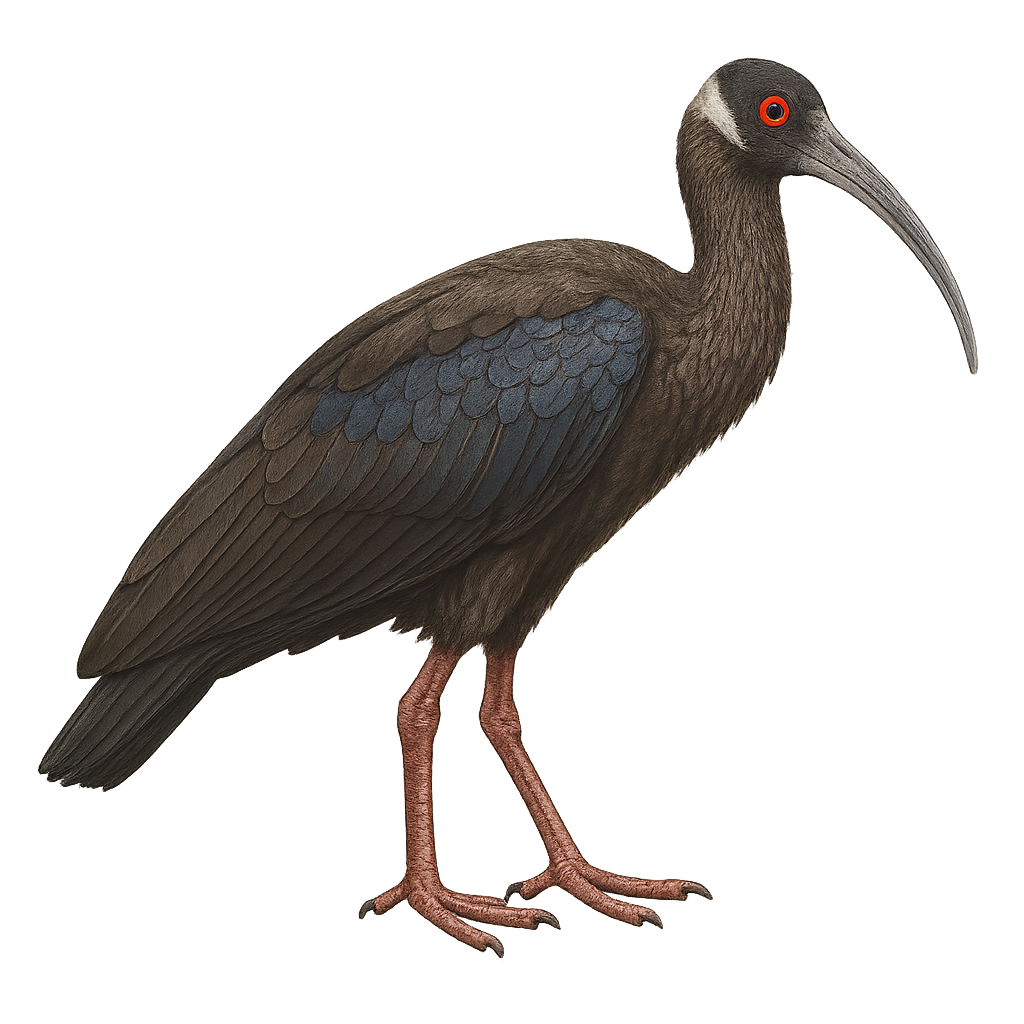
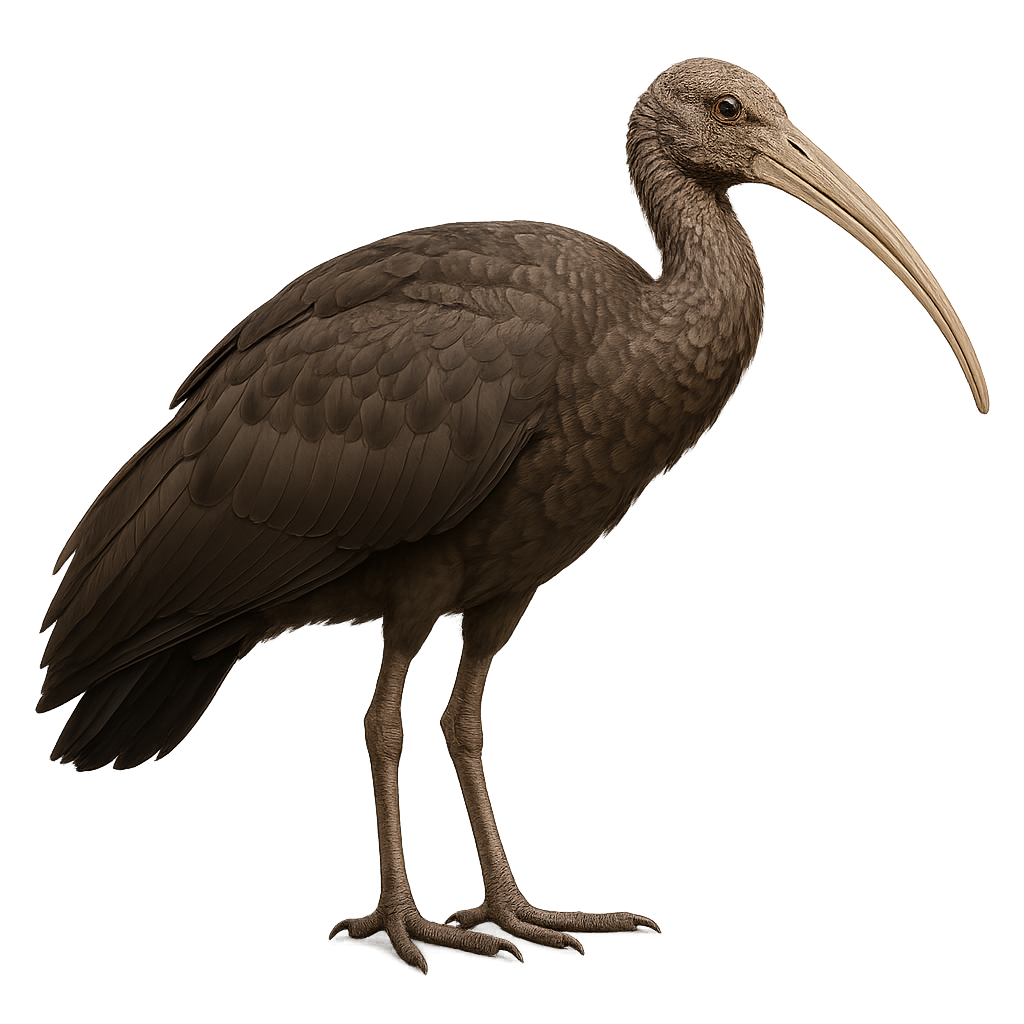
The Wattled Ibis, Bostrychia carunculata, is a bird endemic to the Ethiopian highlands. It is distinguished by its dark brown plumage, characteristic wattles around the base of its beak, and broad wings. This gregarious bird is often seen in small groups, foraging in wet grasslands and marshes. It primarily feeds on insects, worms, and small invertebrates. The Wattled Ibis is a diurnal bird, active mainly in the morning and late afternoon. Its distinctive call, a harsh croak, often echoes through the mountainous valleys. Although relatively tolerant of human presence, it prefers undisturbed areas for nesting and breeding.
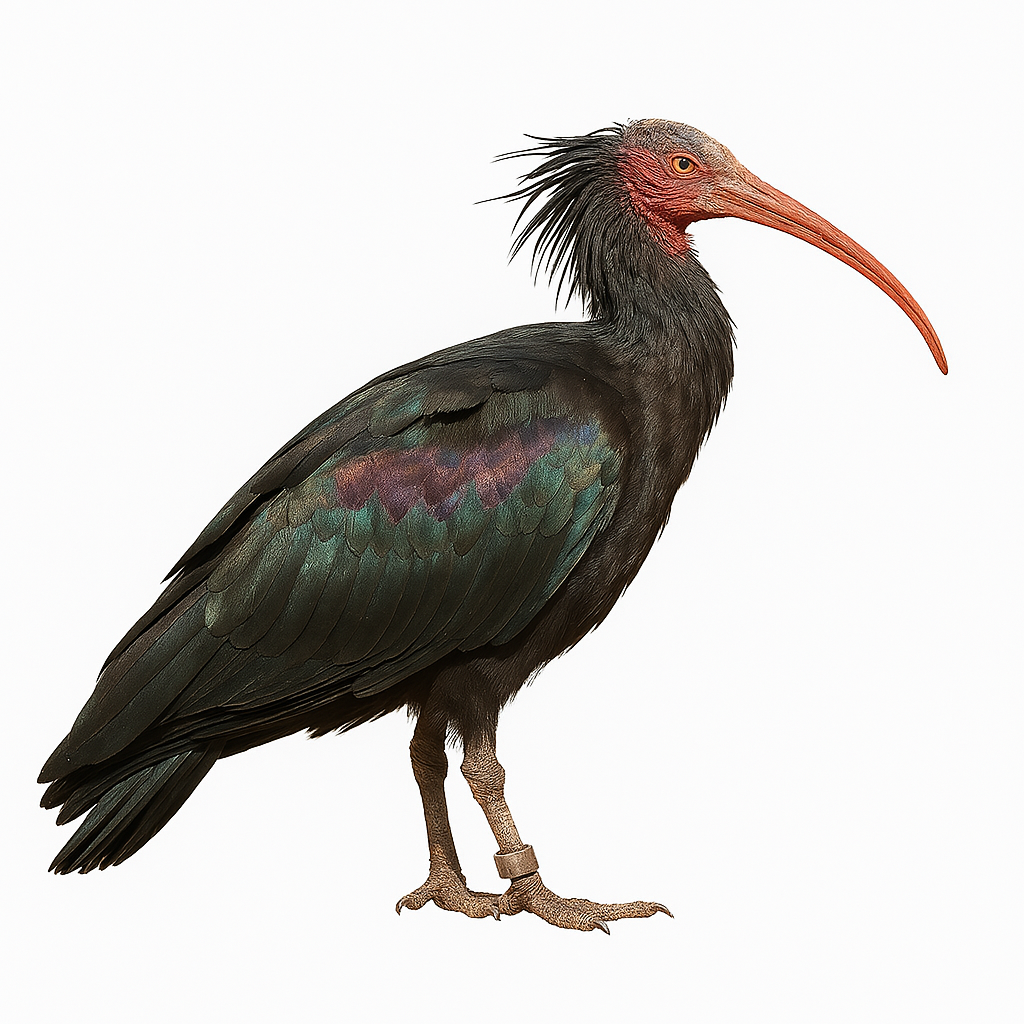
The Bald Ibis is a large migratory bird, easily recognizable by its dark plumage and bare head, adorned with a light down. It measures about 65 cm in length, with a wingspan of 1.3 to 1.4 meters, and weighs between 1.5 and 2.5 kg. Its plumage is brownish-red, with metallic green and purple hues that appear in the light. The head of the Bald Ibis is almost completely devoid of feathers, except for a small tuft of feathers on the top. It has a long curved beak, adapted for probing the ground in search of small invertebrates, worms, and seeds. The Bald Ibis primarily inhabits wetlands, marshes, and river valleys in the Middle East, North Africa, and parts of Europe. It is primarily herbivorous and insectivorous, feeding on aquatic plants and small animals found in marshy areas. The Bald Ibis is a migratory species, moving in groups during the breeding season and winter. While the species has been severely reduced in its range, conservation efforts have helped maintain small populations in certain areas. However, it remains vulnerable to habitat loss and human disturbance.
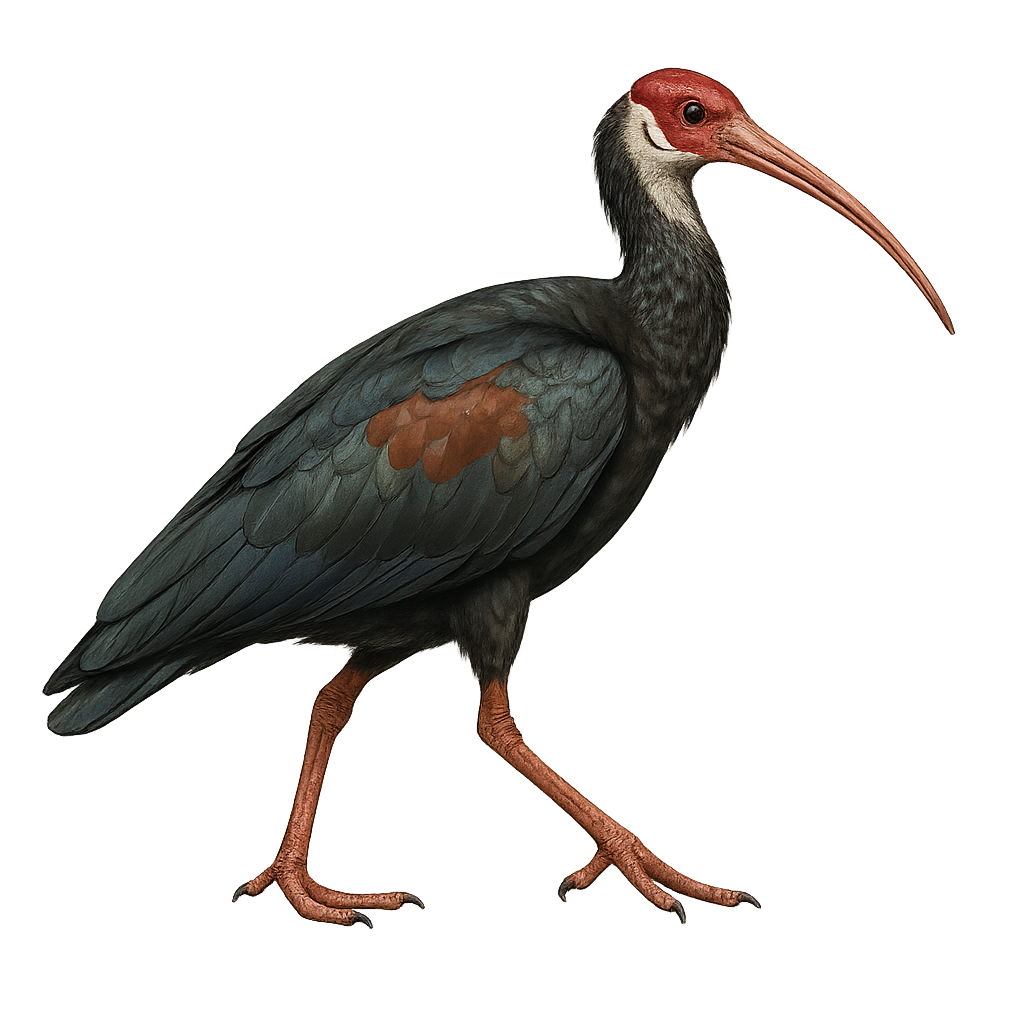
The Southern Bald Ibis, Geronticus calvus, is a medium-sized bird known for its distinctive bare, reddish head and glossy black plumage with metallic sheen. It inhabits open grasslands and mountainous regions of southern Africa, particularly in South Africa, Lesotho, and Eswatini. This gregarious bird feeds mainly on insects, small reptiles, and seeds, which it finds by probing the ground with its long, curved bill. Colonies often nest on cliffs or rocky outcrops, building cup-shaped nests with twigs and grass. Although their population is stable, they are vulnerable to habitat loss and human disturbances.
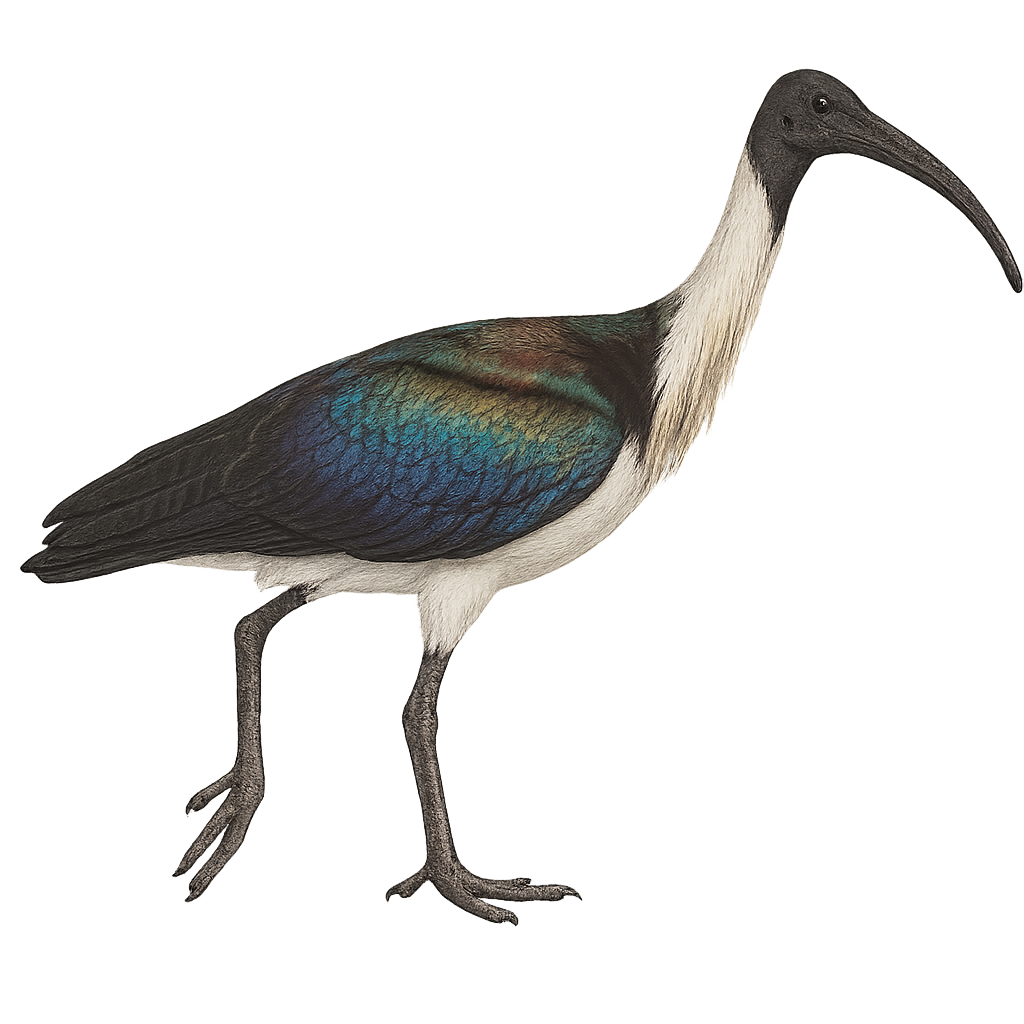
The Australian Ibis, or Threskiornis spinicollis, is a large wading bird easily recognized by its bare black head, long down-curved bill, and straw-colored feathers hanging from its breast. Its plumage is strikingly contrasted: the back and wings are bluish-black with iridescent reflections, while the neck, nape, and underparts are white. It inhabits wetlands, flooded meadows, and farmlands across Australia and New Guinea. It feeds on frogs, insects, small reptiles, and worms. Often seen in flocks, it breeds in colonies in trees near water. The species is widespread and well adapted to open environments.
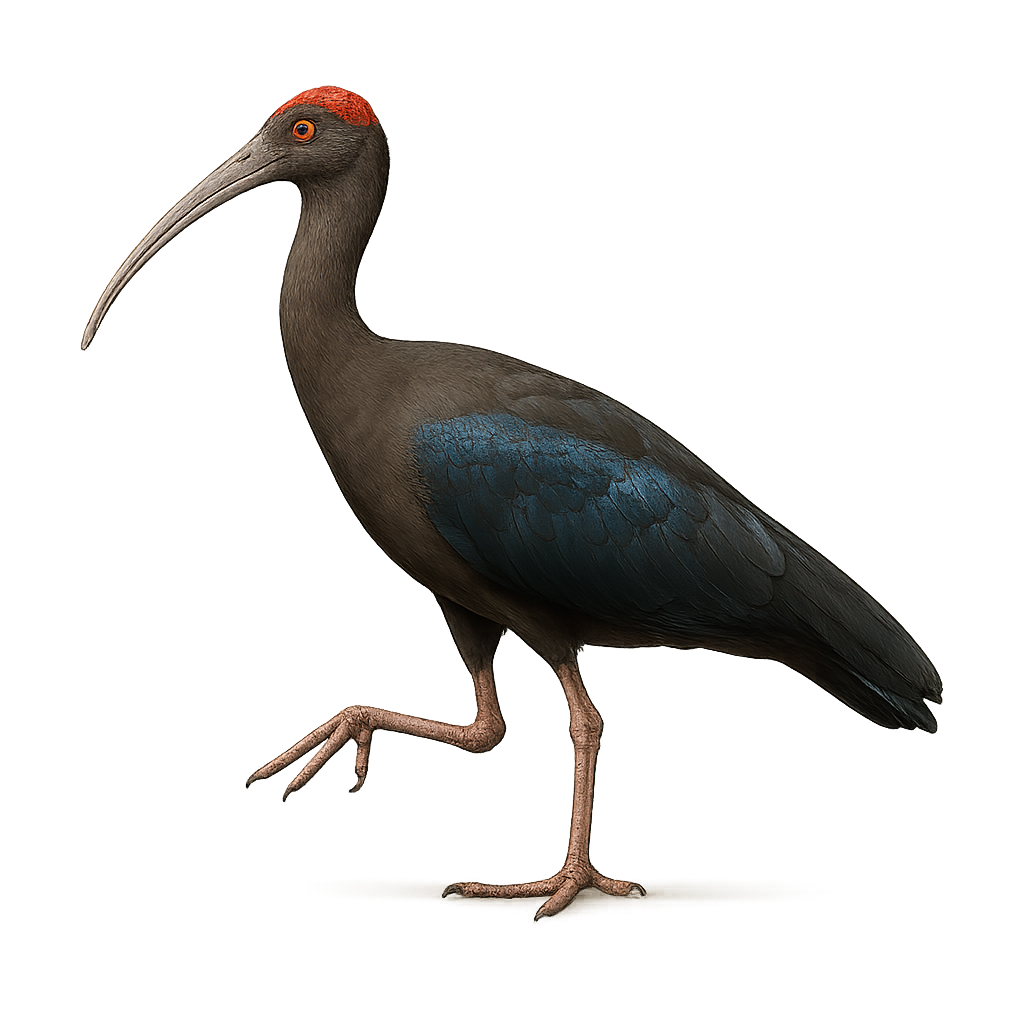
The White-shouldered Ibis, or Pseudibis davisoni, is a large and rare wading bird from Southeast Asia, recognizable by its dark plumage, white neck, and black crown. It also features long legs and a curved bill adapted for foraging in wetlands. It inhabits open forests, flooded grasslands, and rice fields in Myanmar, Cambodia, and southern Laos. This species feeds mainly on insects, frogs, crustaceans, and small reptiles. Usually solitary or seen in small groups, the White-shouldered Ibis is critically endangered due to habitat loss and hunting.
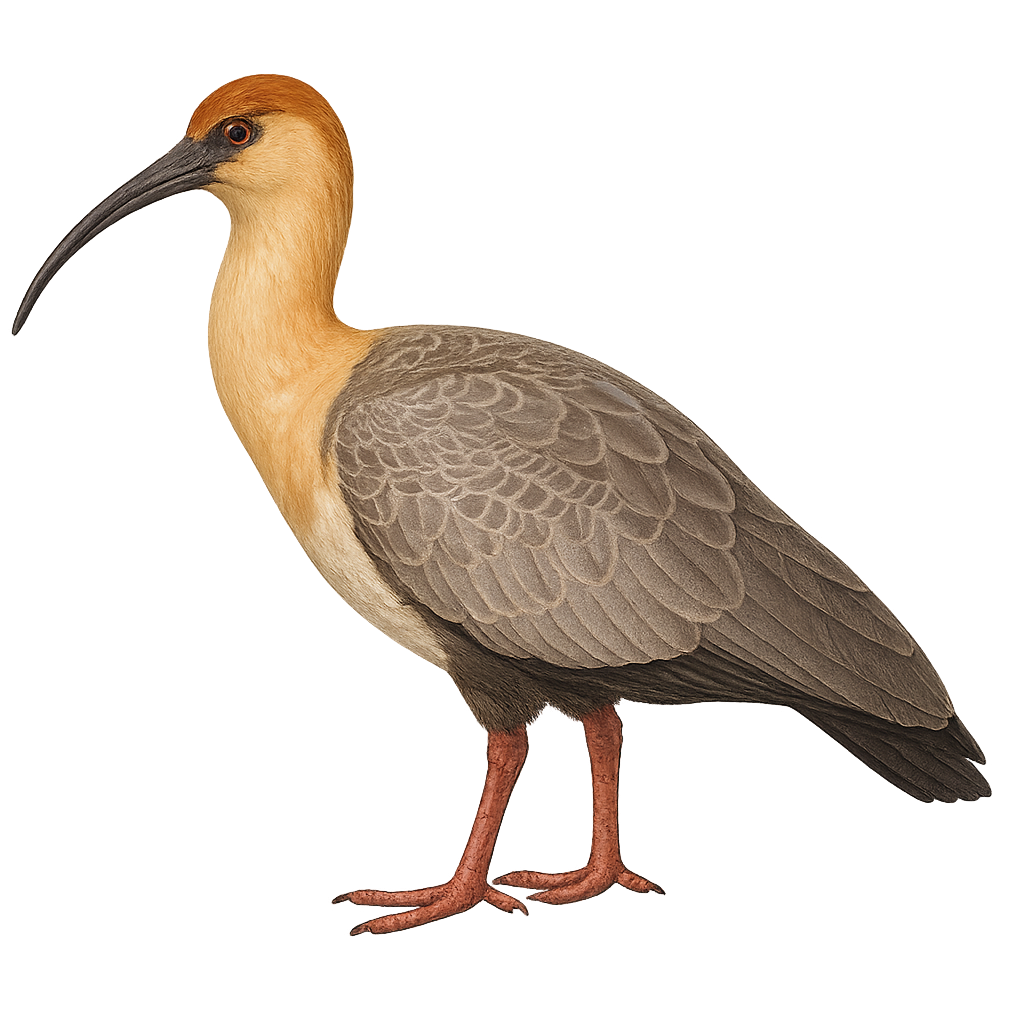
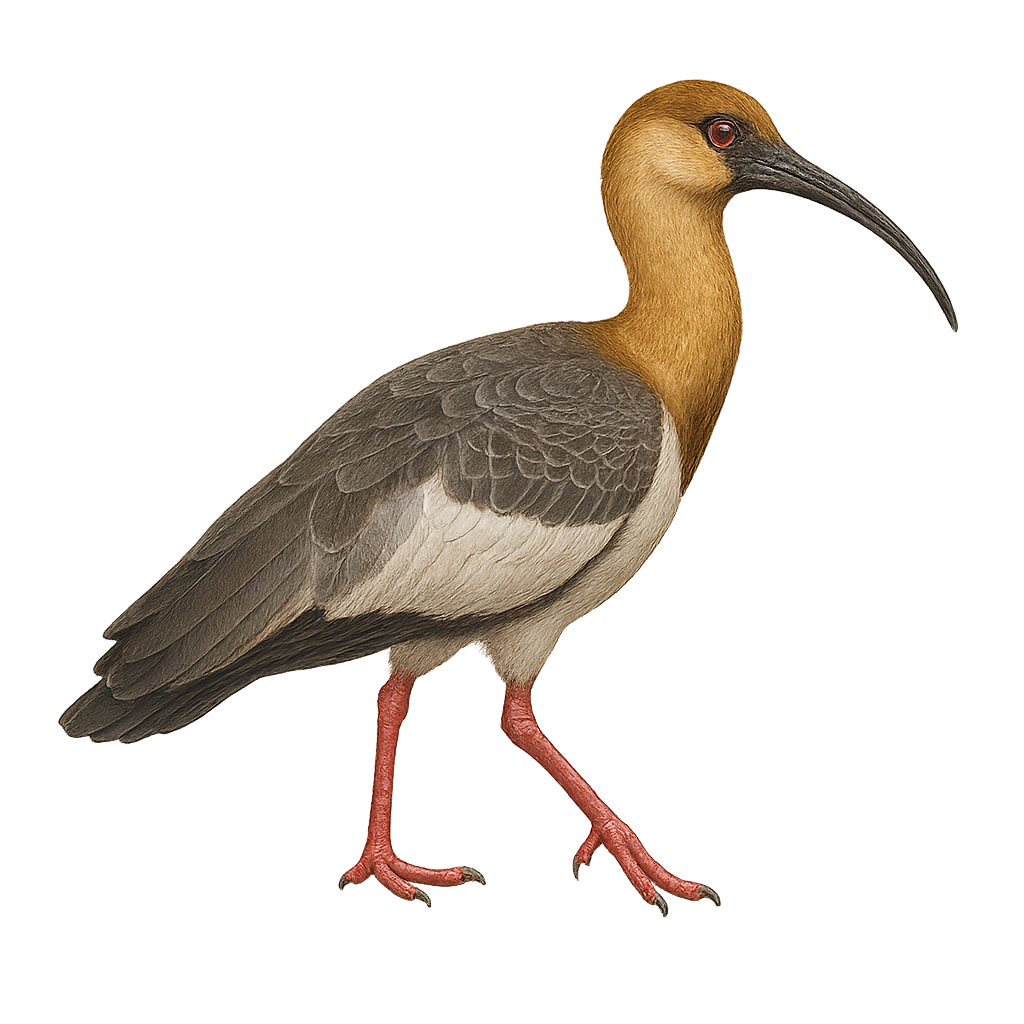
The Andean Ibis, or Theristicus branickii, is a large wading bird identified by its pale gray plumage, orange-brown head and neck, long curved black bill, and black-tipped wings. It inhabits the high Andean plateaus between 3,000 and 5,000 meters, primarily in Peru, Bolivia, Ecuador, and northern Chile. Found in high-altitude grasslands, wet meadows, and marshy pastures, it feeds on invertebrates, larvae, and small vertebrates, probing the ground with its long bill. Usually solitary or in small groups, it is often seen walking in open landscapes. The species is generally stable, though reliant on the preservation of Andean ecosystems.
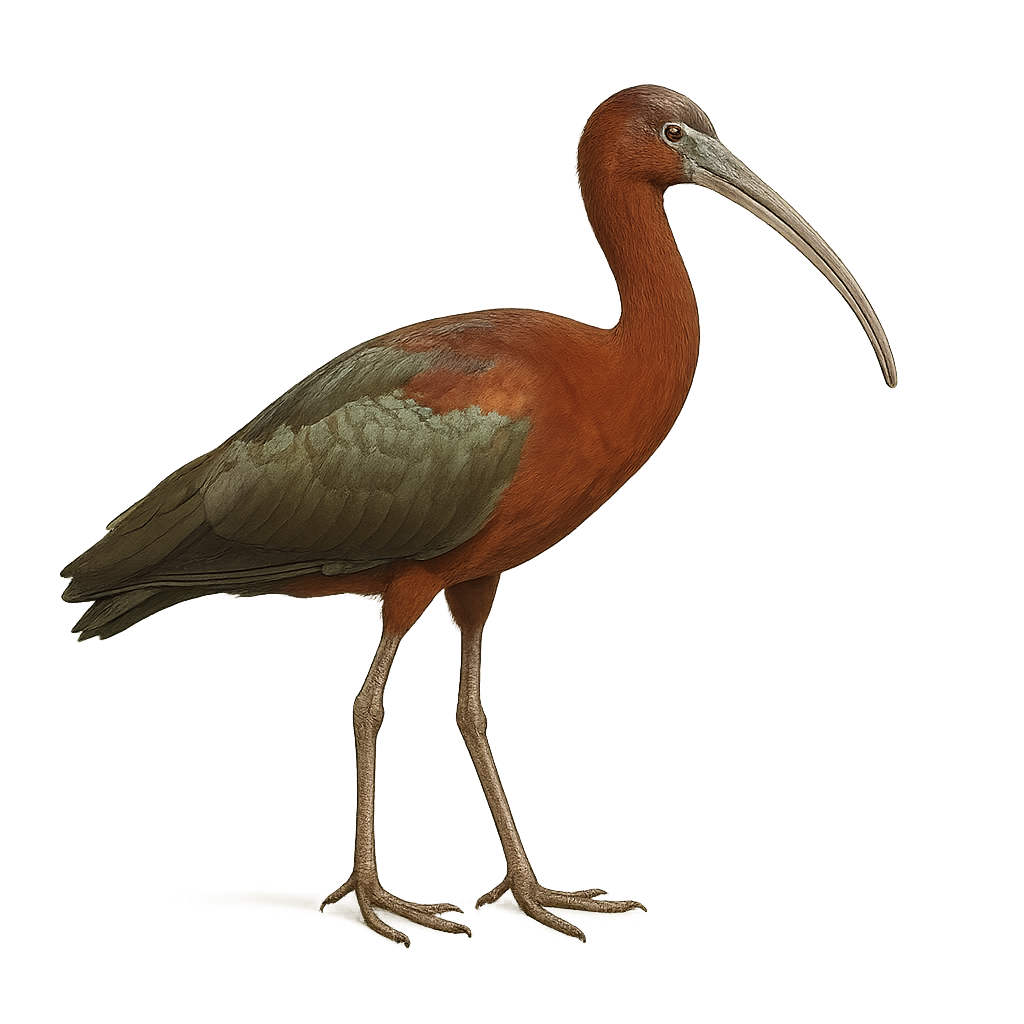
The Glossy Ibis is an elegant bird, easily recognizable by its iridescent brown-green plumage and its long, curved bill shaped like a sickle. It measures about 60 to 70 cm in length, with a wingspan of 1.1 to 1.2 meters, and weighs between 350 and 500 g. Its plumage is generally dark, with metallic shades of green and bronze that shine in the light. The Glossy Ibis is also distinguished by its long, slender legs and graceful neck. This bird primarily inhabits wetlands, such as marshes, rivers, and shallow lakes, where it feeds on small aquatic invertebrates, mollusks, insects, and fish. It uses its long, curved bill to probe in the water and mud in search of food. The Glossy Ibis is a migratory species, living in colonies during the breeding season. It is primarily found in Europe, North Africa, the Middle East, and South Asia. While the species is not immediately endangered, it is sensitive to habitat loss and water pollution.
The Giant Ibis, or Pseudibis gigantea, is a rare and majestic bird species primarily found in the dry forests and wetlands of Cambodia, Laos, and Vietnam. This impressive bird stands out due to its imposing size, reaching up to 106 cm in height, and its gray-brown plumage with metallic sheen. Its long, curved beak allows it to probe the mud in search of food, mainly consisting of insects, small reptiles, and amphibians. Unfortunately, the Giant Ibis is critically endangered, mainly due to habitat loss and hunting. Conservation efforts are underway to protect this iconic species and preserve its environment.
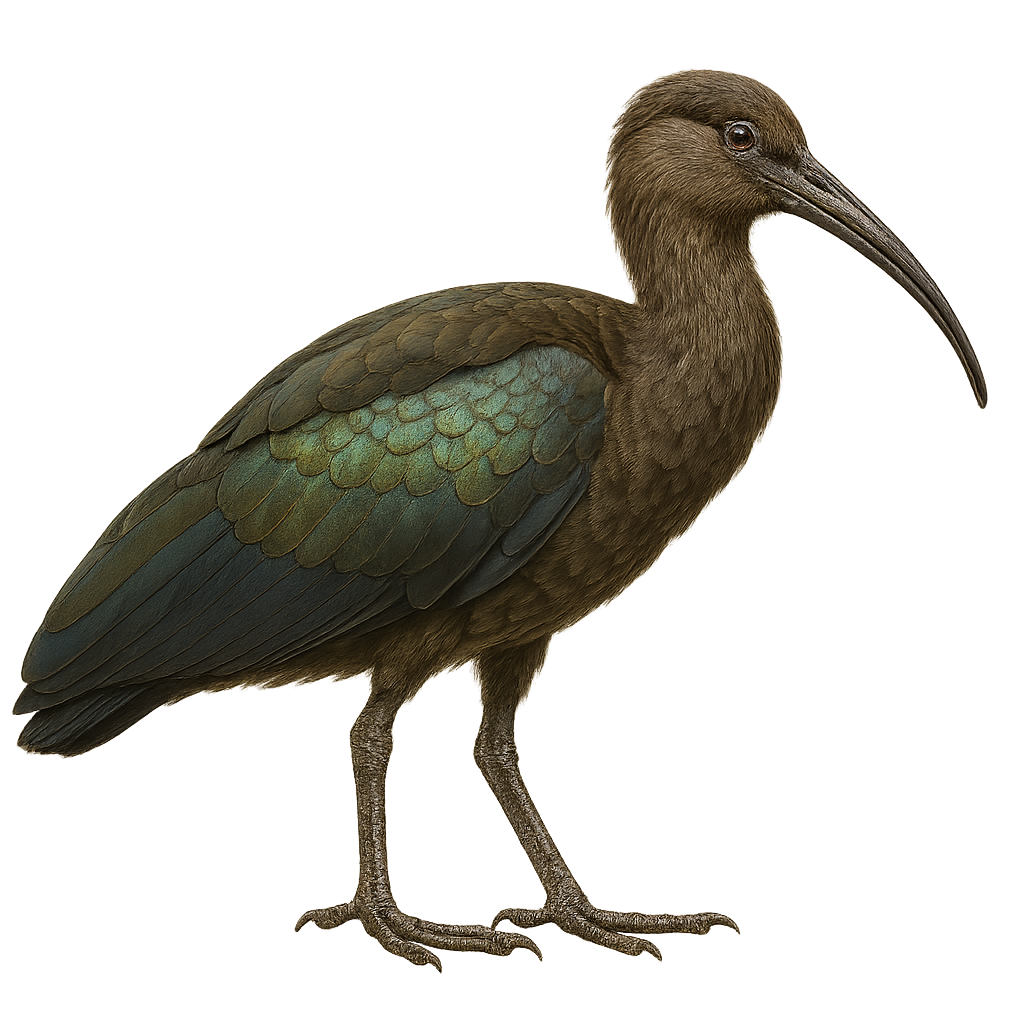
The Hadada Ibis, or Bostrychia hagedash, is a medium-sized bird known for its metallic brown-green plumage and distinctive call, often heard at dusk. Native to sub-Saharan Africa, it inhabits wetlands, grasslands, and open forests. This gregarious bird primarily feeds on insects, worms, and small invertebrates, which it probes from the ground with its long, curved bill. It is often seen in groups, especially during breeding seasons. Although generally tolerant of human presence, it can become wary if disturbed. The Hadada Ibis plays a crucial role in the ecosystem by controlling insect populations and aiding in seed dispersal.
The Malagasy sacred ibis, or Threskiornis bernieri, is a bird species endemic to Madagascar, primarily found in coastal wetlands and mangroves. This medium-sized bird, recognizable by its white plumage contrasting with its black head and neck, is often seen in small groups. It feeds mainly on small invertebrates, fish, and crustaceans, which it finds by probing the mud with its long, curved bill. Deforestation and habitat degradation are major threats to its survival. Classified as vulnerable by the IUCN, the Malagasy sacred ibis is the focus of conservation programs aimed at protecting its habitats and raising awareness among local populations about its ecological importance.
The Bare-faced Ibis, or Theristicus caudatus, is a medium-sized bird easily recognizable by its grayish plumage and distinctive bare face. It features a long, curved bill, ideal for probing the ground for food. This ibis primarily inhabits wetlands, grasslands, and marshes in South America, notably in Brazil, Argentina, and Uruguay. It is often seen in small groups, feeding on small invertebrates, crustaceans, and sometimes seeds. Although generally tolerant of human presence, it prefers less disturbed areas for breeding. Its breeding season varies by region, but it is known to build nests high up, often in trees or dense bushes.
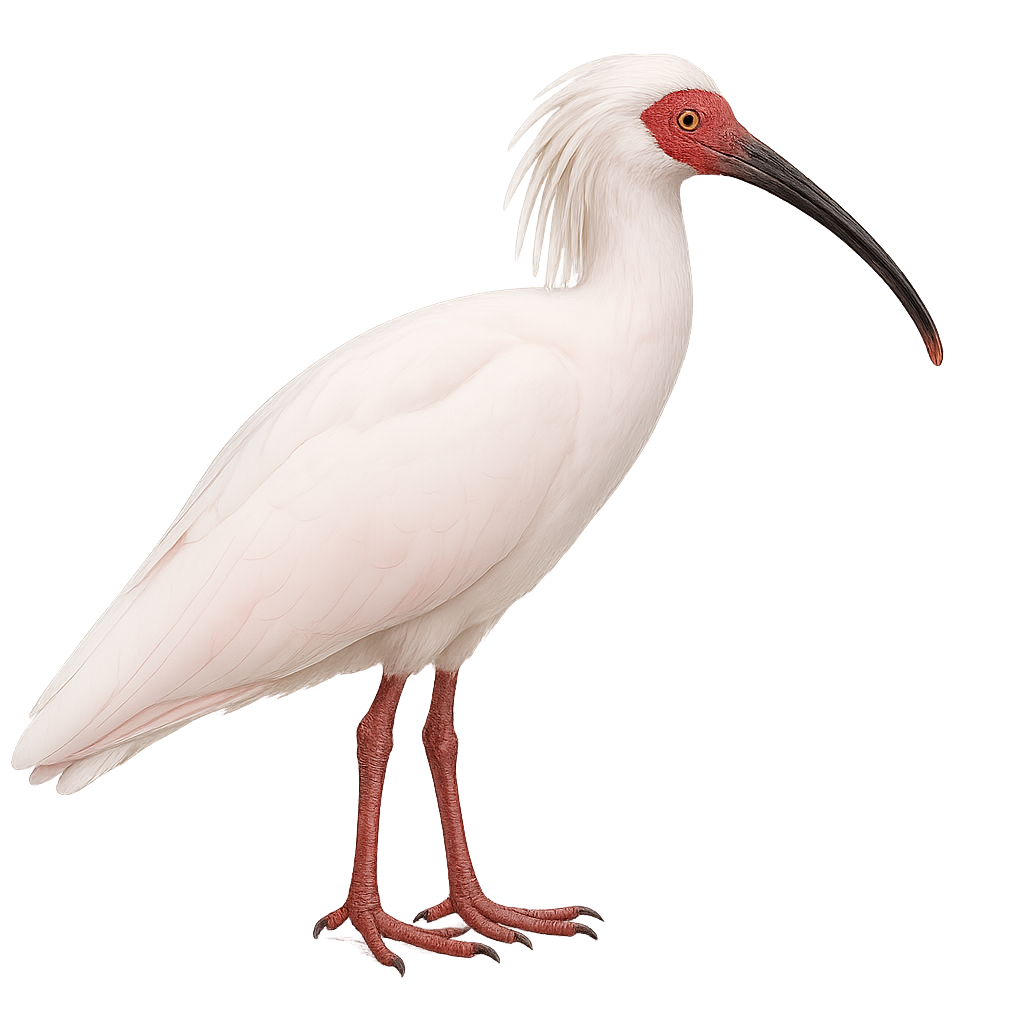
The Crested Ibis, scientifically known as Nipponia nippon, is an elegant and rare bird once widespread in East Asia. It is easily recognizable by its striking white plumage, long red legs, and curved black beak. Its head features a bare reddish skin, and a distinctive crest adorns its nape. This majestic bird primarily inhabits wetlands, rice paddies, and marshes, where it feeds on small fish, insects, and crustaceans. Unfortunately, the Crested Ibis has experienced a dramatic population decline due to habitat loss and hunting, but conservation efforts have helped stabilize some populations.
The Black-headed Ibis, or Pseudibis papillosa, is a medium-sized bird known for its distinctive black head and neck contrasting with its white body. It primarily inhabits wetlands, marshes, and rice paddies in South Asia. This ibis is often seen in small groups, feeding on crustaceans, insects, and small fish. Although relatively common in some areas, habitat degradation poses a threat to its population. Its flight is graceful, with slow and steady wing beats, and it emits characteristic harsh calls. The breeding season varies by region but is often influenced by the rainy season.
The Olive Ibis, scientifically known as Bostrychia olivacea, is a shy and elusive bird found primarily in the tropical rainforests of Central and West Africa. Its distinctive olive-green plumage with metallic sheen makes it a unique sight. Preferring swampy areas and riverbanks, it feeds on insects, small crustaceans, and mollusks. Although often solitary, it can be seen in small groups during the breeding season. The Olive Ibis is a wary bird, making it less studied compared to other ibis species. Its conservation status is concerning due to habitat loss from deforestation.
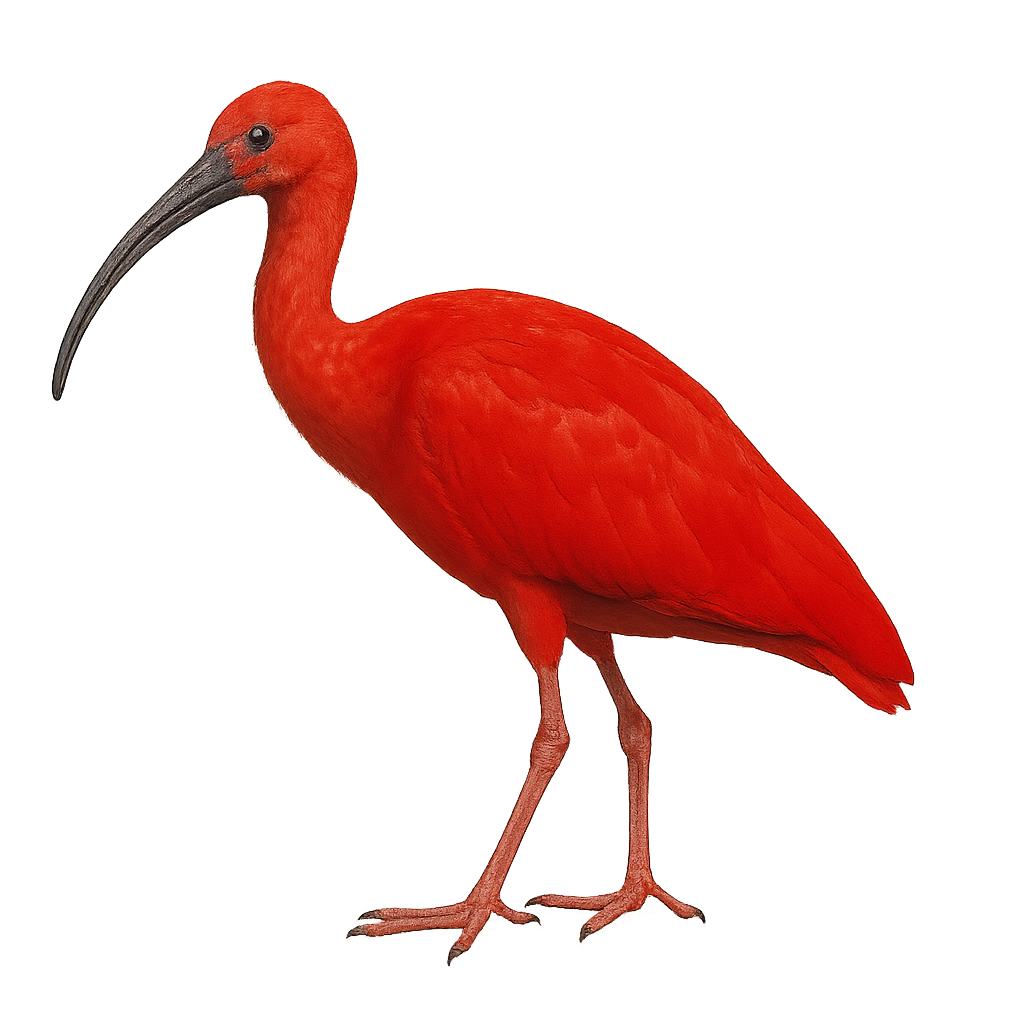
Native to coastal regions of South America and the Caribbean, the scarlet ibis is a bird recognizable by its bright red plumage. It primarily lives in wetlands and mangroves, feeding mainly on small fish, crustaceans, and invertebrates. This migratory bird is often seen in groups, where its bright colors create impressive visual displays. While the scarlet ibis is not threatened, habitat destruction poses a risk to its population.
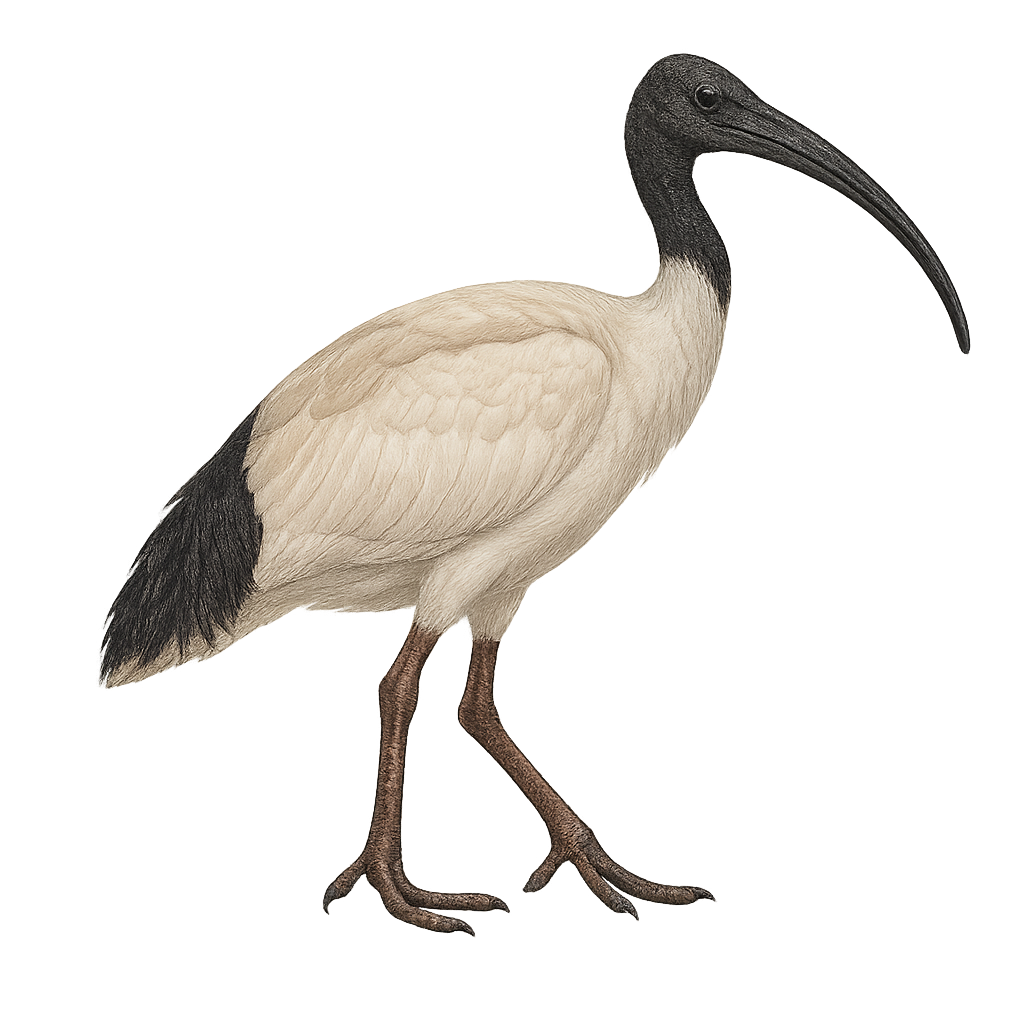
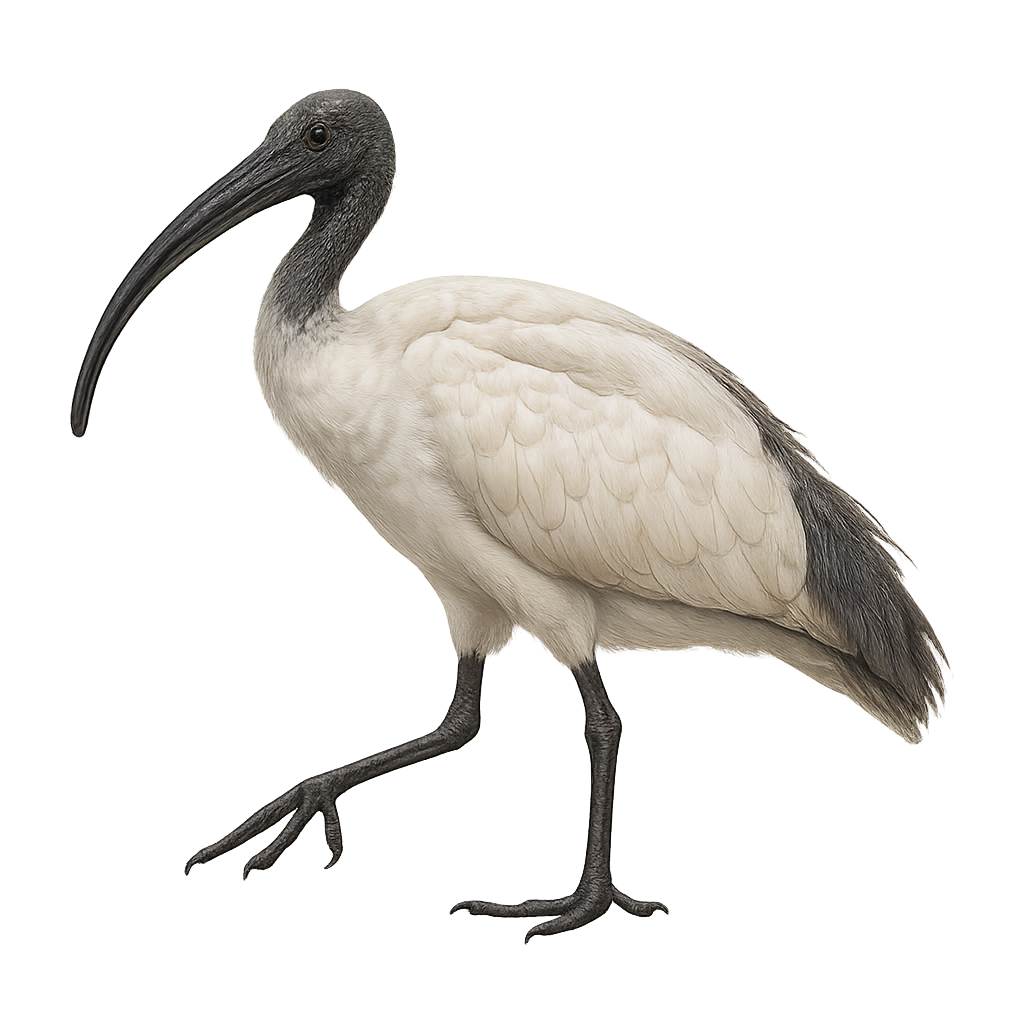
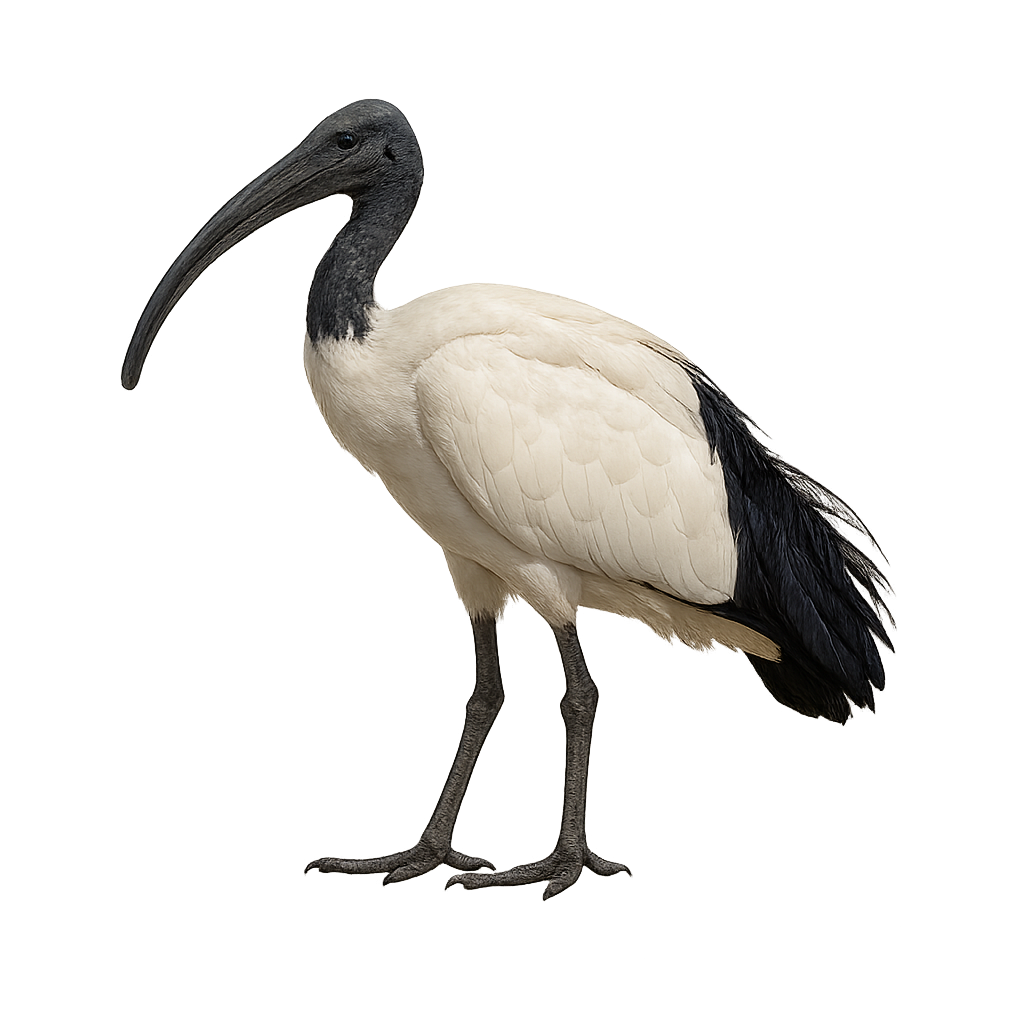
The Sacred Ibis is a large bird with primarily white plumage, with black feathers on its wings and a bare head. It measures about 65 to 75 cm in length, with a wingspan of 1.2 to 1.3 meters, and weighs between 1.5 and 2.5 kg. Its beak is long and curved, adapted for probing the ground in search of small invertebrates, fish, crustaceans, and mollusks. The Sacred Ibis primarily inhabits wetlands, such as marshes, rivers, and lakes, in sub-Saharan Africa, as well as Southeast Asia and Egypt. This bird holds particular significance in ancient Egyptian culture, where it was associated with the deity Thoth, the god of wisdom and writing. The Sacred Ibis is often seen in large colonies and prefers to feed in groups, probing water and mud for food. Although the species is not immediately endangered, it is vulnerable to habitat loss, pollution, and hunting.