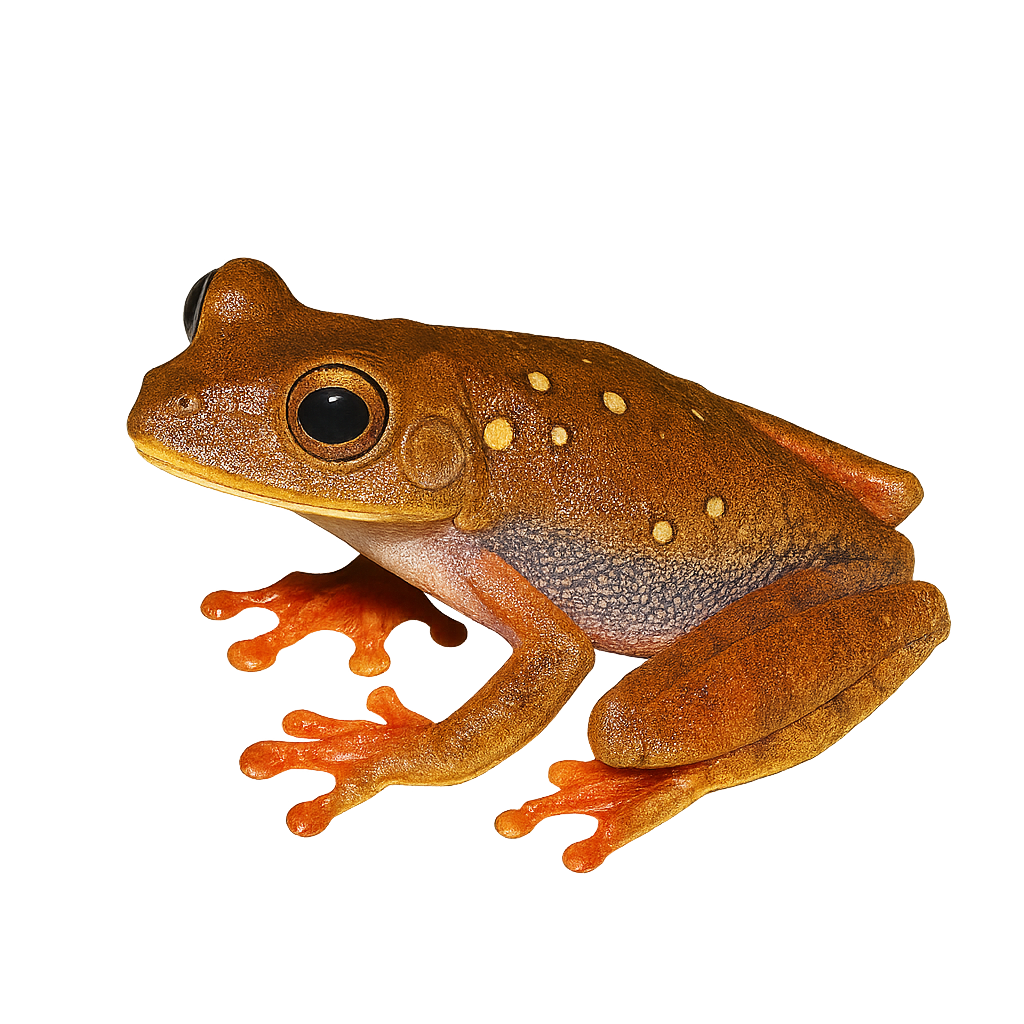
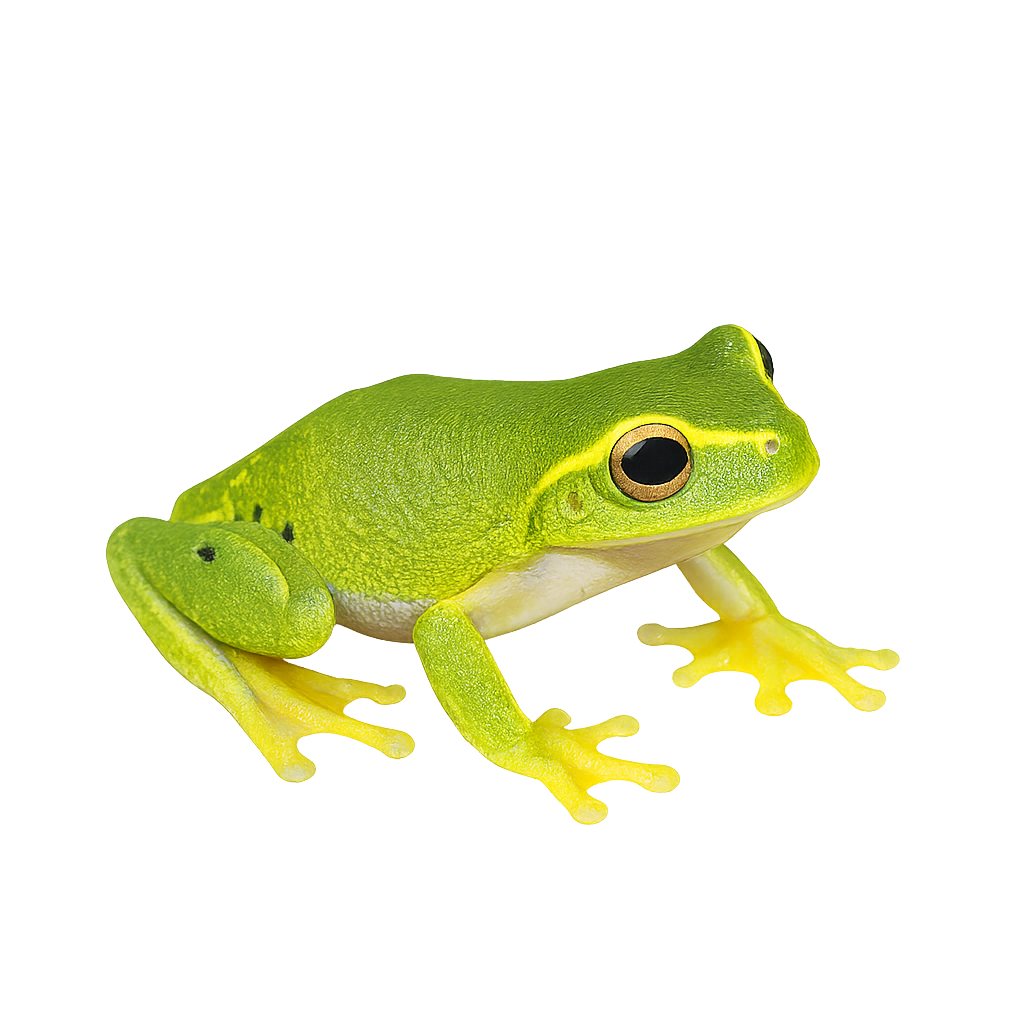
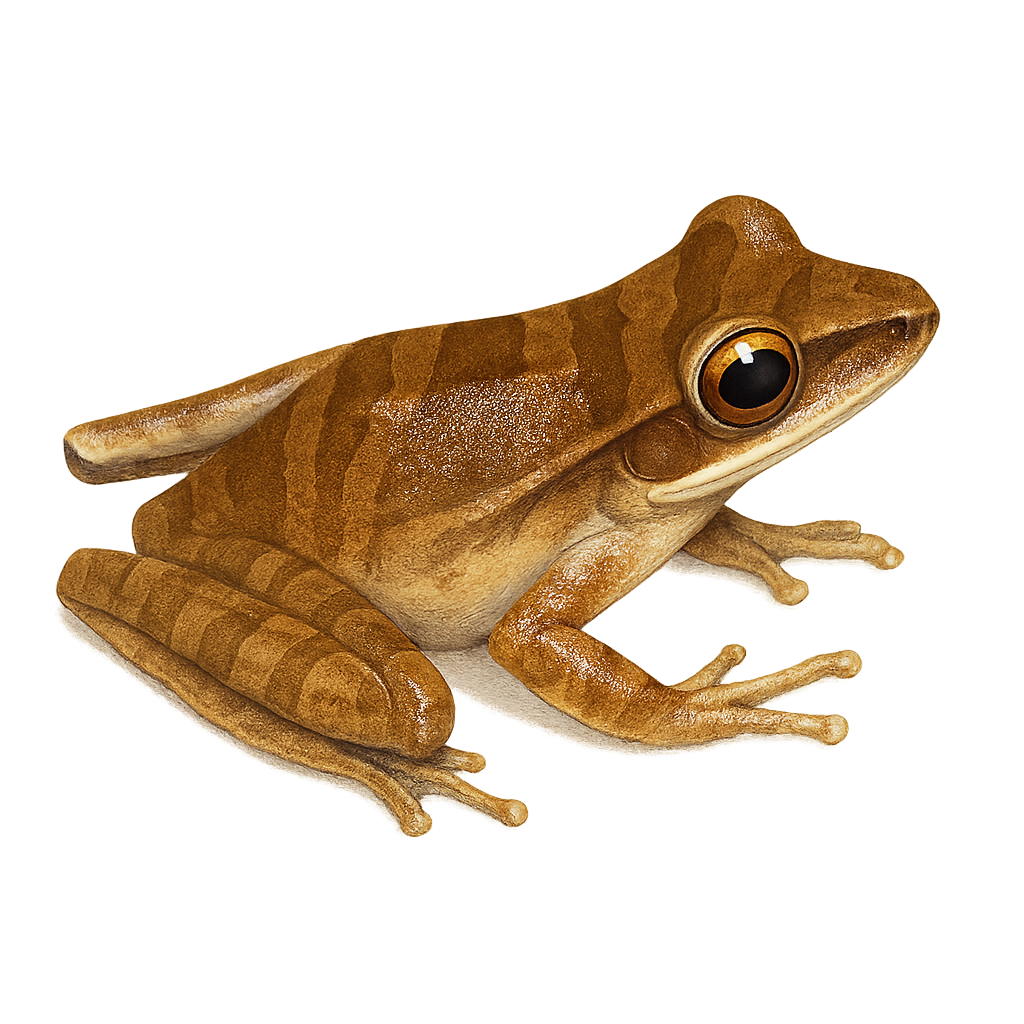
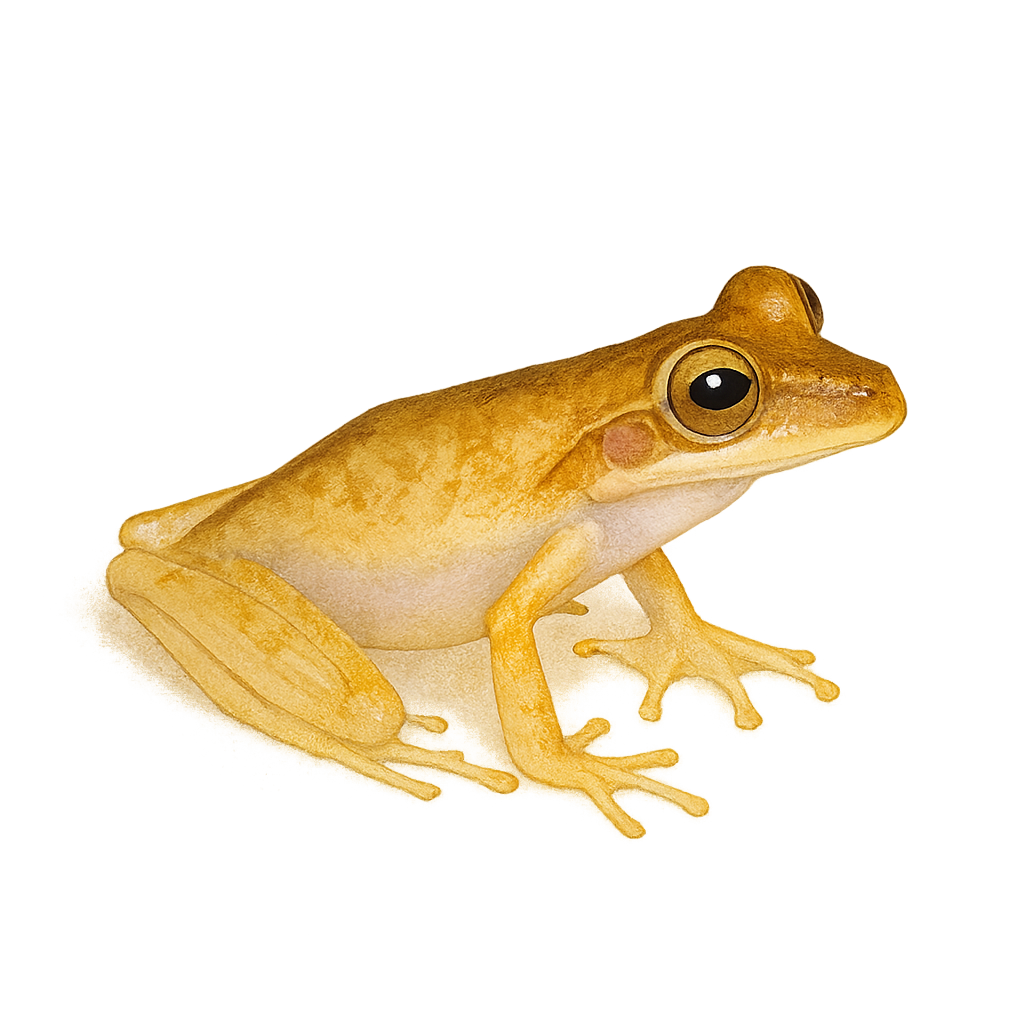
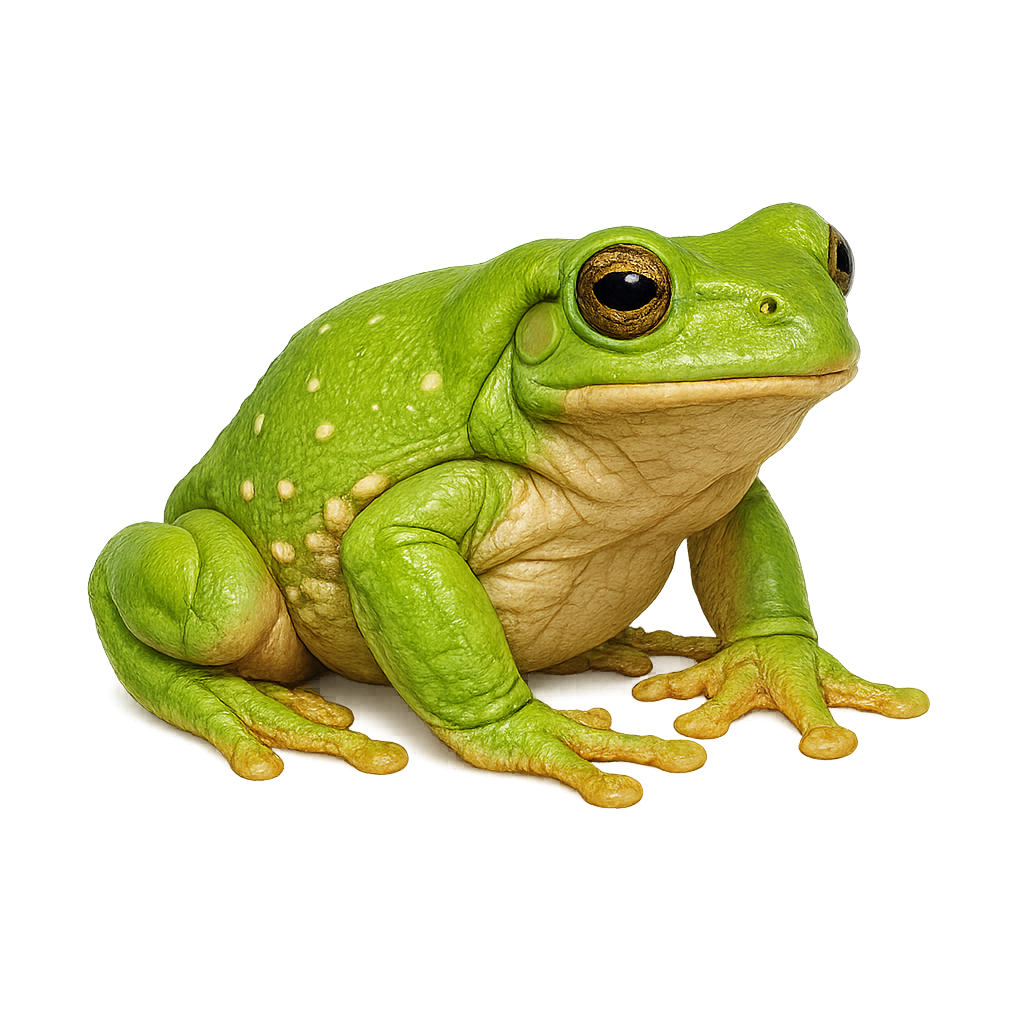
The White-lipped Tree Frog, or Litoria infrafrenata, is a species of tree frog native to Australia and New Guinea. It is the largest tree frog species in the world, reaching up to 14 cm in length. Its coloration ranges from bright green to brown, with a distinctive white stripe along its lower lip. It has adhesive fingers that allow it to easily climb trees. This species is primarily nocturnal and feeds on insects and other small invertebrates. It prefers humid habitats such as rainforests, swamps, and riparian zones. Although it is widely distributed, it is sometimes threatened by habitat loss and pollution.
The Map Treefrog, Boana geographica, is a species of amphibian in the Hylidae family. It is primarily found in the humid tropical forests of South America, particularly in Brazil, Colombia, and Peru. This frog features a green coloration with distinctive geographical patterns on its back, allowing it to effectively camouflage in its natural environment. It is generally nocturnal, feeding on insects and other small invertebrates. The Map Treefrog plays a crucial role in the ecosystem by regulating insect populations. Although its conservation status is currently "Least Concern," deforestation and habitat loss pose potential threats to its long-term survival.
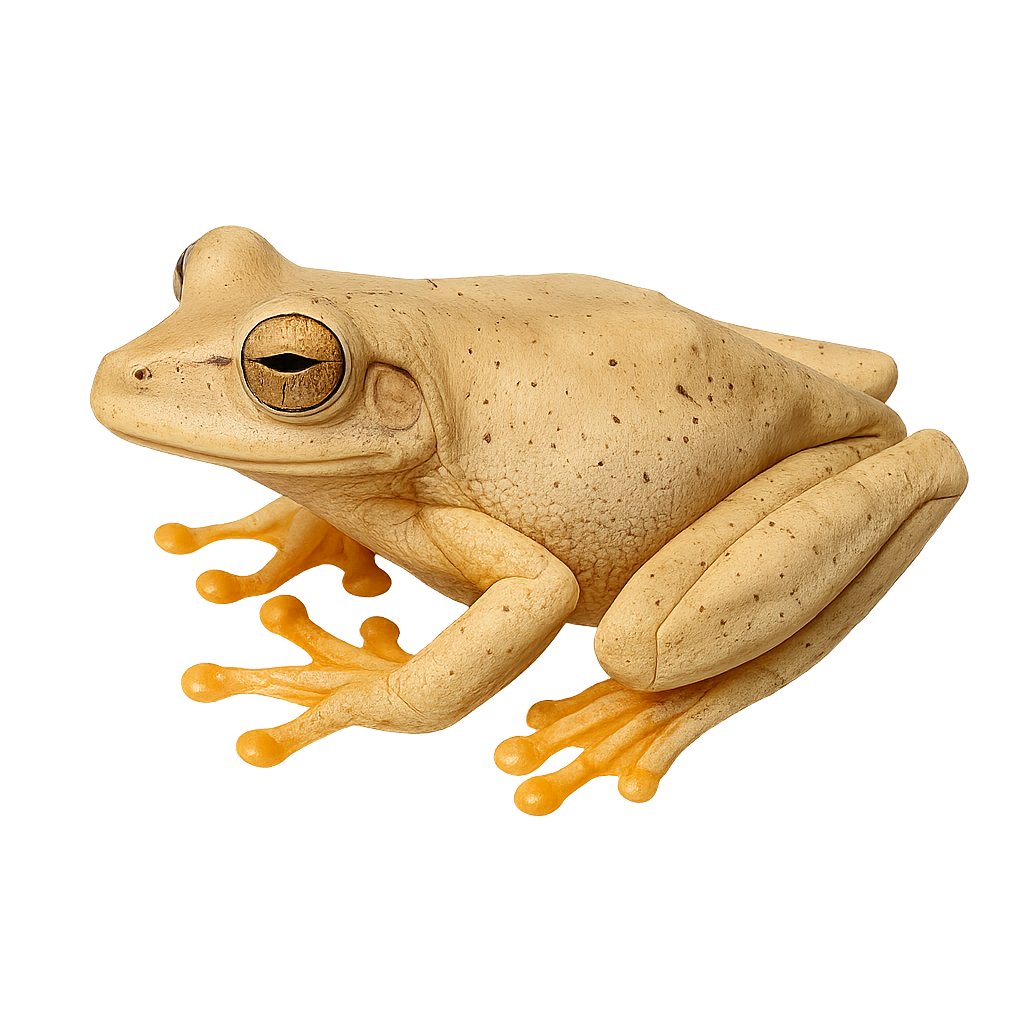
The Dainty Green Tree Frog, Litoria gracilenta, is a species of arboreal frog native to Australia. It is identifiable by its smooth, glossy skin, typically bright green, although some may exhibit shades of yellow or blue. Its eyes are prominent with a horizontal pupil, and its legs are long and slender, adapted for tree-dwelling. It primarily inhabits tropical rainforests, swamps, and wooded areas near water bodies. The Dainty Green Tree Frog is mostly nocturnal, feeding on insects and other small invertebrates. Although widely distributed, it is sensitive to environmental changes, particularly habitat loss and pollution.
The Basin treefrog, or Boana lanciformis, is an amphibian species in the Hylidae family. It is primarily found in the humid tropical forests of South America, particularly in Brazil, Colombia, and Venezuela. Its green and brown coloration allows it to blend effectively among foliage. It has a slender body and long legs, adapted for arboreal life. The Basin treefrog is nocturnal and primarily feeds on insects. It plays a crucial role in the ecosystem by regulating insect populations. Although its habitat is threatened by deforestation, it is currently classified as "least concern" by the IUCN.
The Basin tree frog, scientifically known as Hypsiboas lanciformis, is a species of arboreal frog native to the humid tropical forests of South America. It is characterized by its slender body and long limbs, which allow it to move nimbly among the trees. Its coloration ranges from green to brown, providing excellent camouflage among the foliage. This species is primarily nocturnal, feeding on insects and other small invertebrates. It plays a crucial role in the ecosystem by controlling insect populations. Although its conservation status is currently stable, deforestation poses a potential threat to its natural habitat.
The Lemur Leaf Frog, Agalychnis lemur, is a fascinating species of arboreal frog native to the tropical rainforests of Central America. It is renowned for its striking red eyes and vibrant green skin, which help it blend in with the foliage. At night, it becomes active, hunting insects and other small invertebrates. Its feet are equipped with suction pads that allow it to climb smoothly on slick surfaces. Although primarily nocturnal, it can be seen during the day resting on leaves. This species is an important indicator of forest ecosystem health, as it is sensitive to environmental changes.
The Smith Frog, or Boana faber, is a species of arboreal frog found primarily in the humid tropical forests of South America. It is recognizable by its smooth skin and coloration ranging from brown to olive green, often with darker patterns. This frog is known for its nest-building behavior, from which it derives its name. It uses its hind legs to dig shallow pools in the ground, where it lays its eggs. These pools fill with rainwater, providing a protected environment for the development of tadpoles. The Maçon's Tree Frog is primarily nocturnal, making it difficult to observe during the day. It plays a crucial role in the ecosystem as an insect predator and in the food chain.
The Mexican Giant Tree Frog, or Agalychnis dacnicolor, is a tree-dwelling frog species native to the tropical forests of Mexico. It is easily recognizable by its bright green skin and distinctive red eyes, giving it a striking appearance. This frog is primarily nocturnal, resting on leaves during the day and becoming active at night to hunt insects. It uses its adhesive pads to climb trees and move agilely through its habitat. The Mexican Leaf Frog plays a crucial role in the ecosystem by regulating insect populations and serving as prey for various predators. Although its population is stable, it is threatened by deforestation and habitat loss.
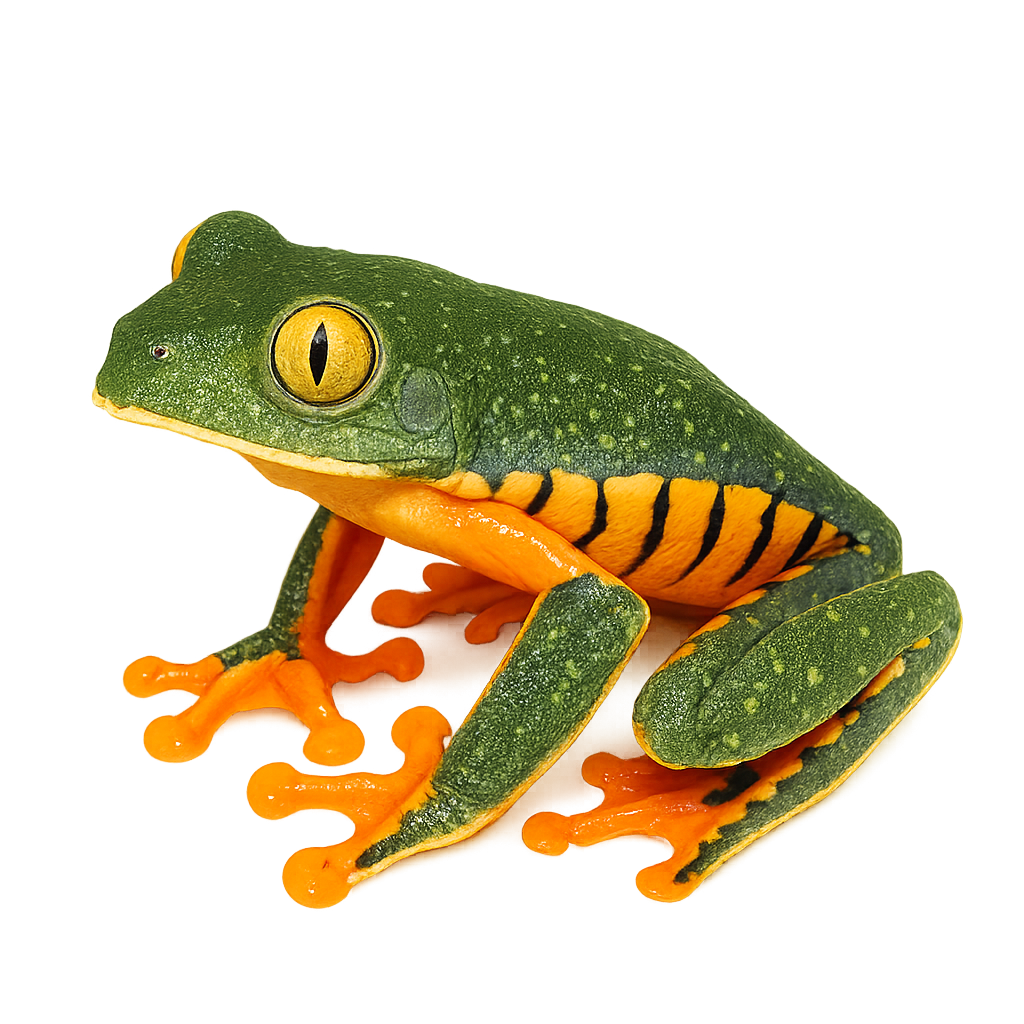
Cruziohyla calcarifer, known as the splendid leaf frog, is a captivating species within the Hylidae family. It is distinguished by its vibrant coloration, featuring an emerald green back speckled with yellow spots and flanks adorned with blue and black patterns. This frog also boasts prominent eyes and webbed feet, adapted to its arboreal lifestyle. It primarily inhabits the humid tropical forests of Central America, where it skillfully camouflages among the leaves. Nocturnal, it feeds on insects and other small invertebrates. Although its habitat is threatened by deforestation, it is currently classified as "Least Concern" by the IUCN.
The Polka-dot Tree Frog, Hypsiboas punctatus, is a species of tree frog found primarily in South America. It is recognizable by its smooth skin and distinctive spotted patterns on a bright green background. These frogs are generally small, measuring about 3 to 4 cm in length. They are nocturnal and spend the day hidden in dense vegetation. Their call is a key part of their reproductive behavior, attracting mates during the rainy season. They primarily feed on insects and play an important role in controlling pest insect populations. Although they are widespread, their habitat is threatened by deforestation and pollution.
The Polka‑dot treefrog, or Boana punctata, is a species of amphibian in the Hylidae family. It is characterized by its smooth skin and dark spots on a bright green background, allowing it to blend effectively into its natural habitat. It is primarily nocturnal and found in the tropical rainforests of Central and South America. It is arboreal, spending most of its time in trees. Reproduction typically occurs during the rainy season, when males call to attract females. Eggs are laid in water, where tadpoles develop before metamorphosing into adult frogs.
The Chirique-Flusse Treefrog, scientifically known as Boana pugnax, is a captivating amphibian species native to the tropical rainforests of South America. It is known for its adaptability to various aquatic environments, from rivers to swamps. Its skin, often green with brown hues, provides excellent camouflage among leaves and branches. Males are noted for their loud calls, used to attract females during the breeding season. This species is primarily nocturnal, feeding on insects and other small invertebrates. Although its conservation status is not currently concerning, habitat destruction poses a potential threat.
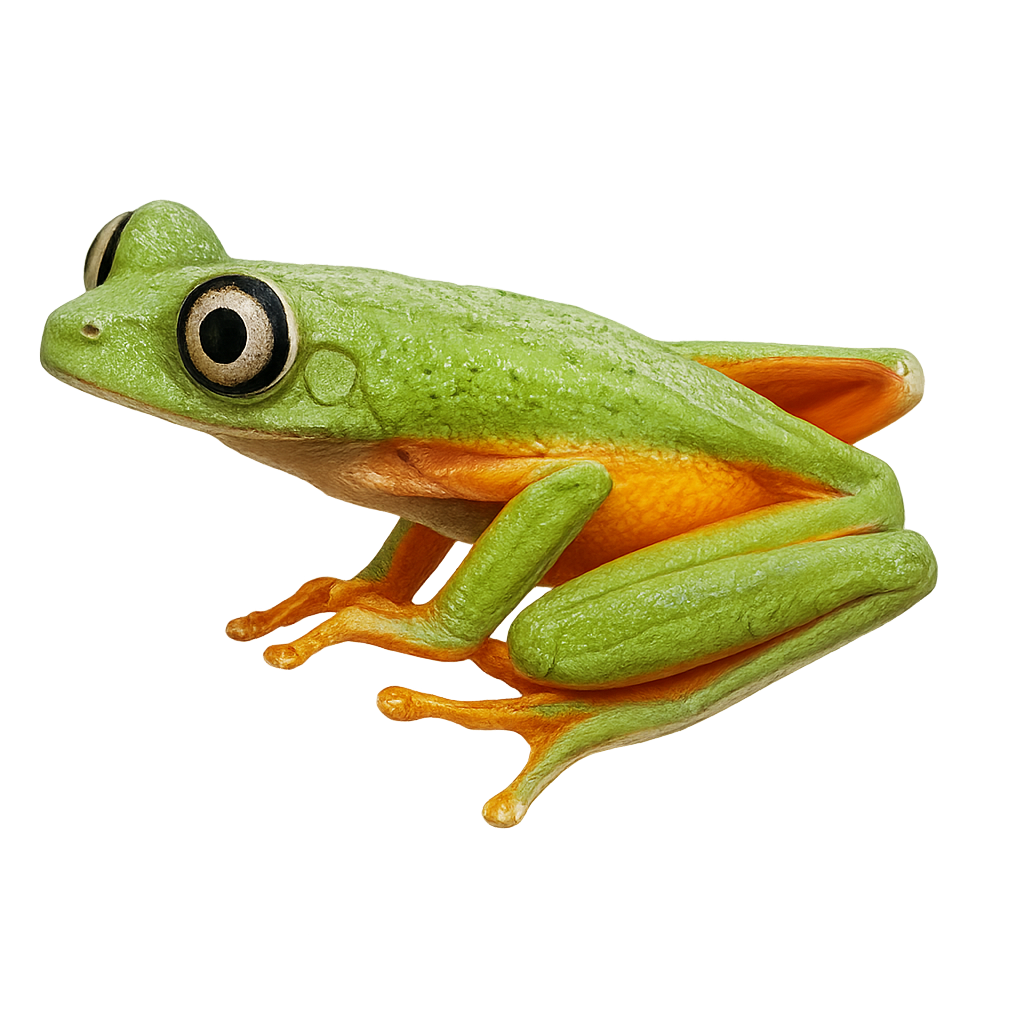
The Misfit Leaf Frog, or Agalychnis saltator, is an arboreal frog native to the tropical forests of Central America. It is particularly known for its ability to leap long distances, allowing it to move efficiently between tree branches. Its skin is a bright green, providing excellent camouflage among the foliage. This frog's eyes are red with a vertical pupil, giving it a striking appearance. It is primarily nocturnal, hiding during the day to avoid predators. The leaf frog plays a crucial role in its ecosystem by regulating insect populations and serving as prey for other animals.
The Magnificent Tree Frog, or Litoria splendida, is a species of tree frog endemic to Australia, primarily found in the humid regions of the north. It is distinguished by its bright green color and golden eyes, making it a subject of fascination for herpetologists and nature enthusiasts. Measuring between 7 and 11 cm, this frog has smooth skin and adhesive fingers that allow it to easily climb trees. It is often active at night, feeding on insects and other small invertebrates. Although relatively tolerant of human activity, it is sensitive to environmental changes, particularly deforestation and water pollution.
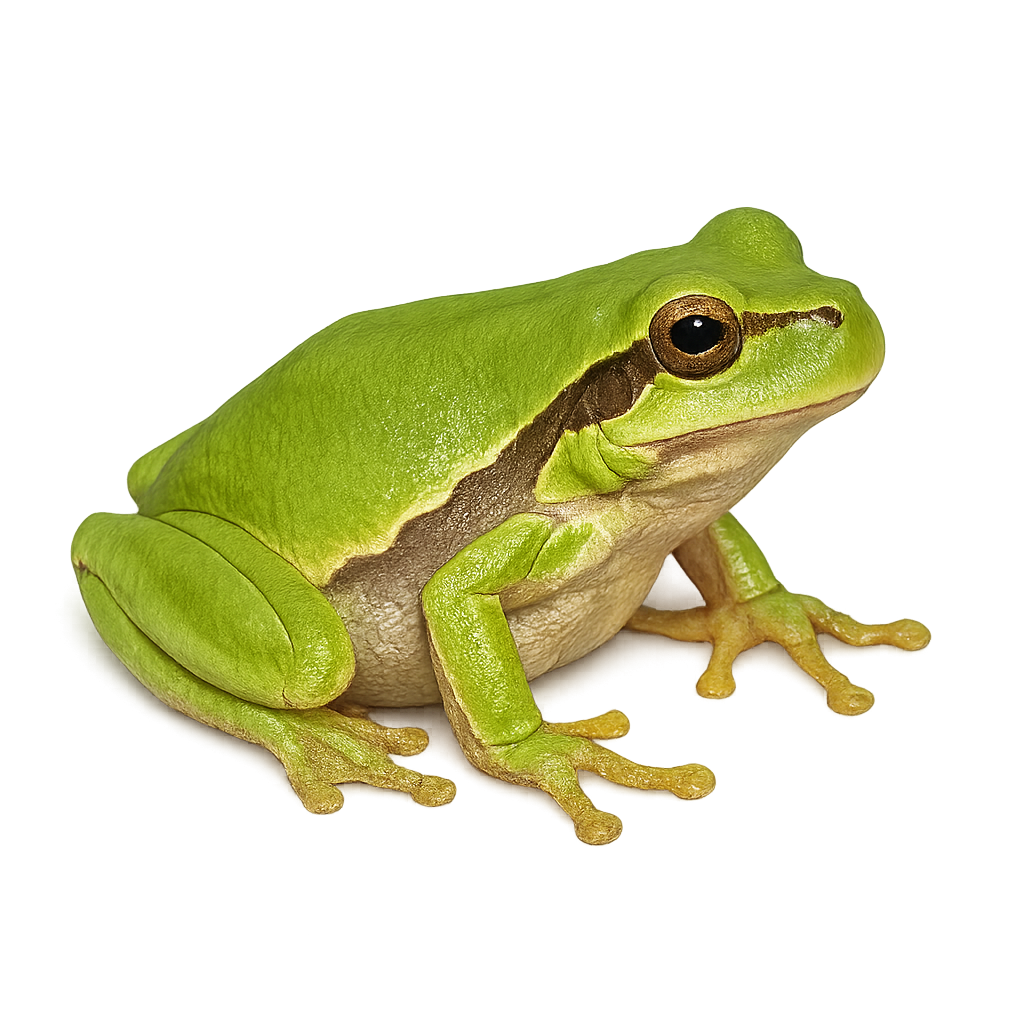
The European Tree Frog, or Hyla arborea, is a small arboreal frog native to Europe. It is characterized by its smooth skin and bright green color, although some may exhibit shades of brown or gray. Typically measuring between 3 and 5 cm, it has adhesive pads on its fingers, allowing it to climb easily on plants and trees. It is often found near stagnant water bodies, such as ponds and marshes, where it breeds. Its call, a loud croak, is particularly noticeable during the breeding season. Although primarily nocturnal, it can be seen basking in the sun during the day.
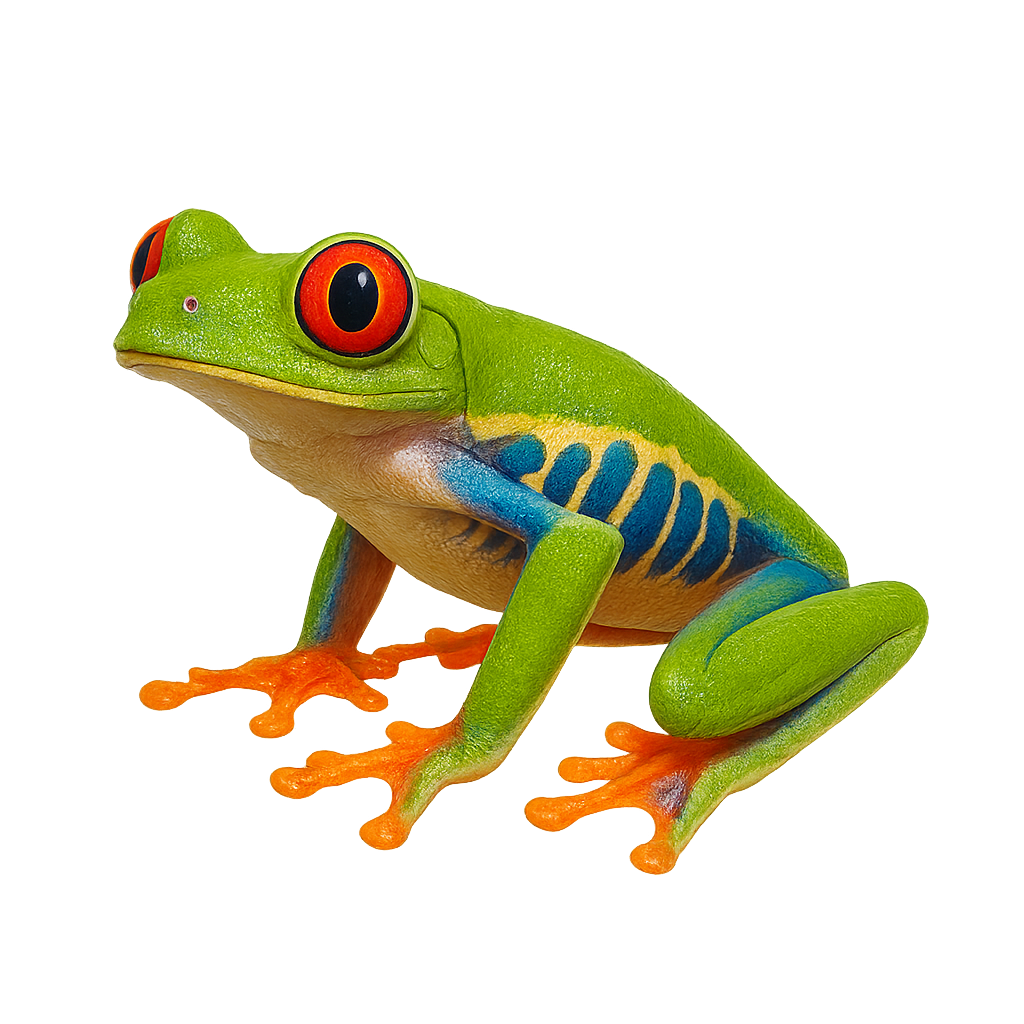
The Litoria chloris, commonly known as the Red-eyed Green Treefrog, is a species of arboreal frog native to Australia. It is distinguished by its bright green color and characteristic red eyes. Measuring between 4 and 7 cm, it has webbed feet that allow it to leap agilely from tree to tree. This species is primarily nocturnal and feeds on insects, which it captures with its sticky tongue. It inhabits tropical rainforests, often near water bodies. The green tree frog plays a crucial role in the ecosystem by regulating insect populations. Although currently classified as "least concern" by the IUCN, deforestation and climate change threaten its natural habitat.
The Litoria xanthomera, or Orange-thighed Frog, is a tree-dwelling frog species endemic to Australia, primarily found in the tropical regions of northeastern Queensland. It is characterized by its smooth skin and bright green color, often dotted with yellow spots, which gives it its name. Typically measuring between 4 and 6 cm in length, this frog is nocturnal and commonly found in humid rainforests near water bodies. It is known for its distinctive call, used to attract mates during the rainy season. Although its population is stable, it is sensitive to environmental changes and habitat loss.
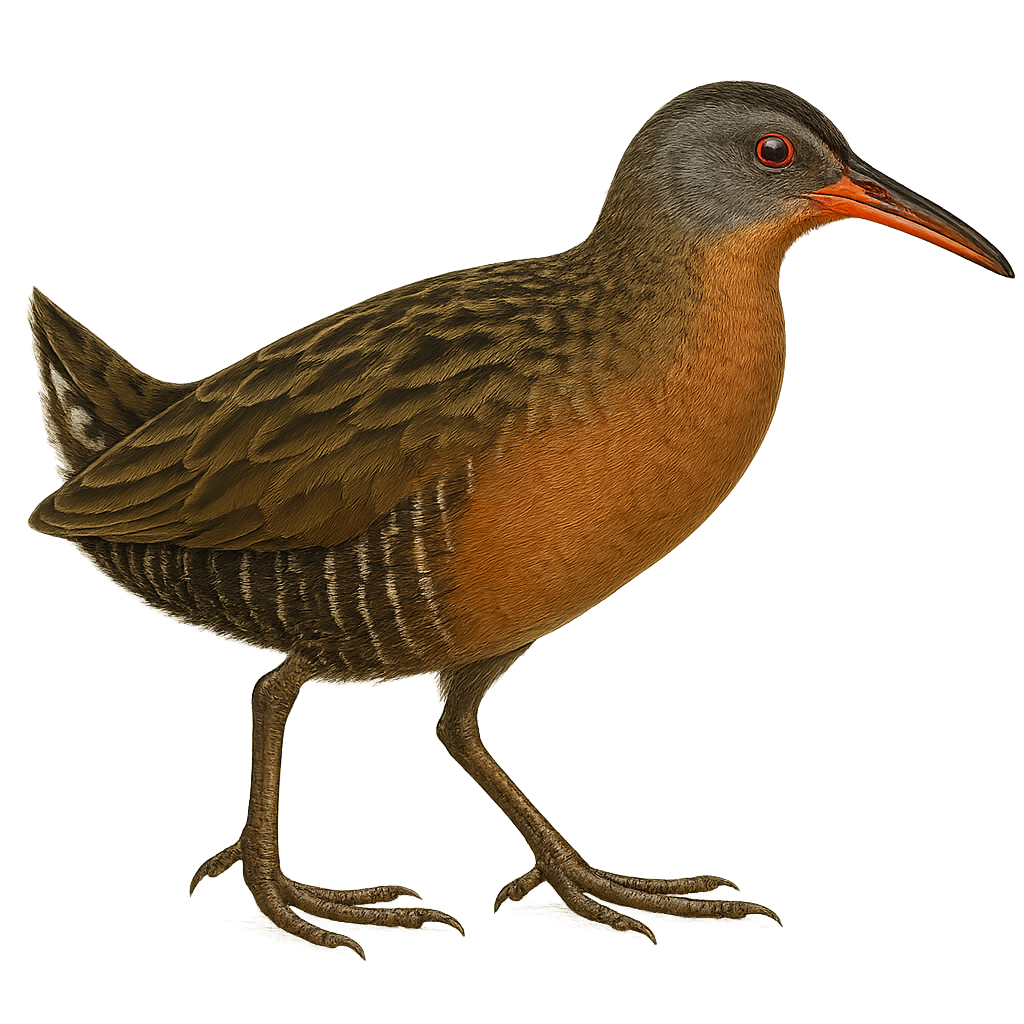
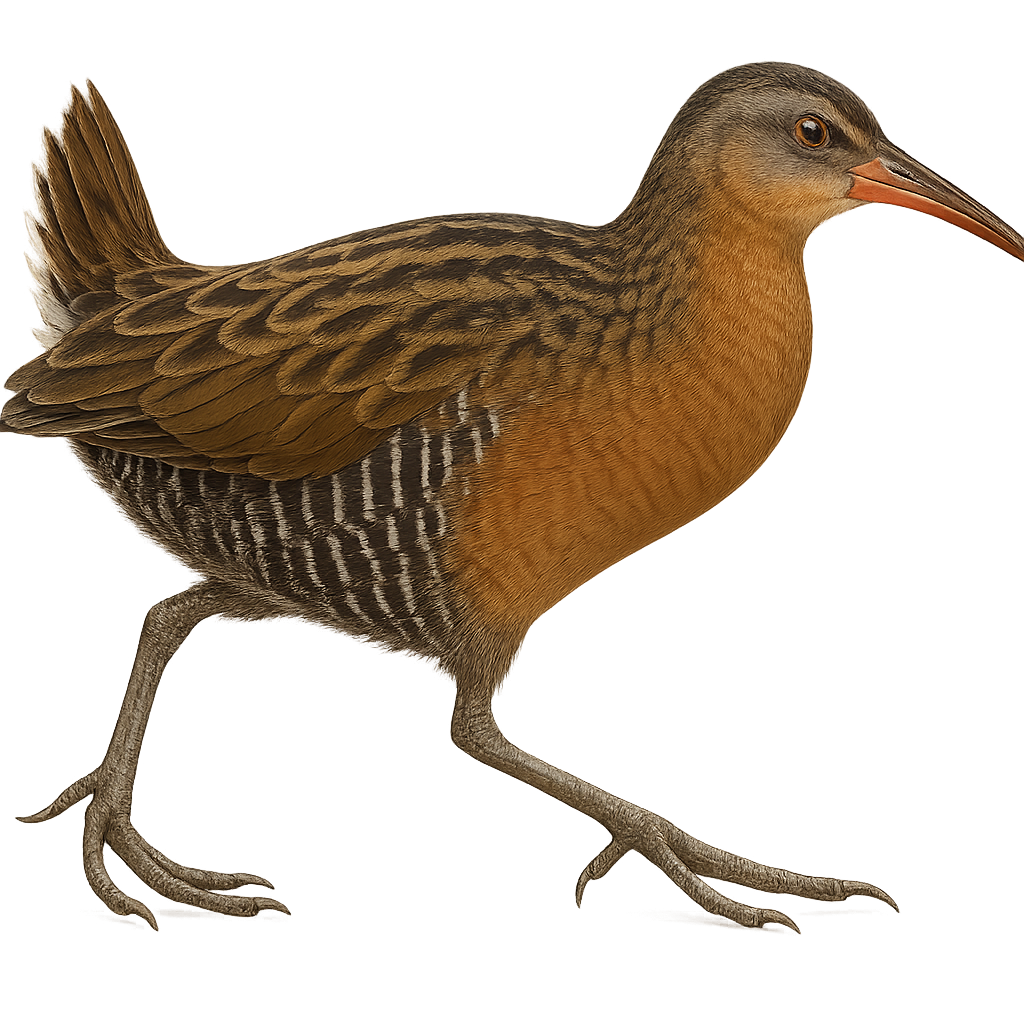
The Virginia Rail is a medium-sized waterbird, measuring about 20 to 27 cm in length. It is recognizable by its reddish-brown plumage on the back and wings, and its gray belly. Its long, slightly curved bill is perfect for probing mud in search of food. This bird prefers marshes and wetlands where it can hide among the reeds. It is often heard rather than seen due to its secretive behavior and dense habitat. The Virginia Rail primarily feeds on insects, small crustaceans, and seeds. It is known for its distinctive calls, often described as repeated "kik-kik-kik" sounds.
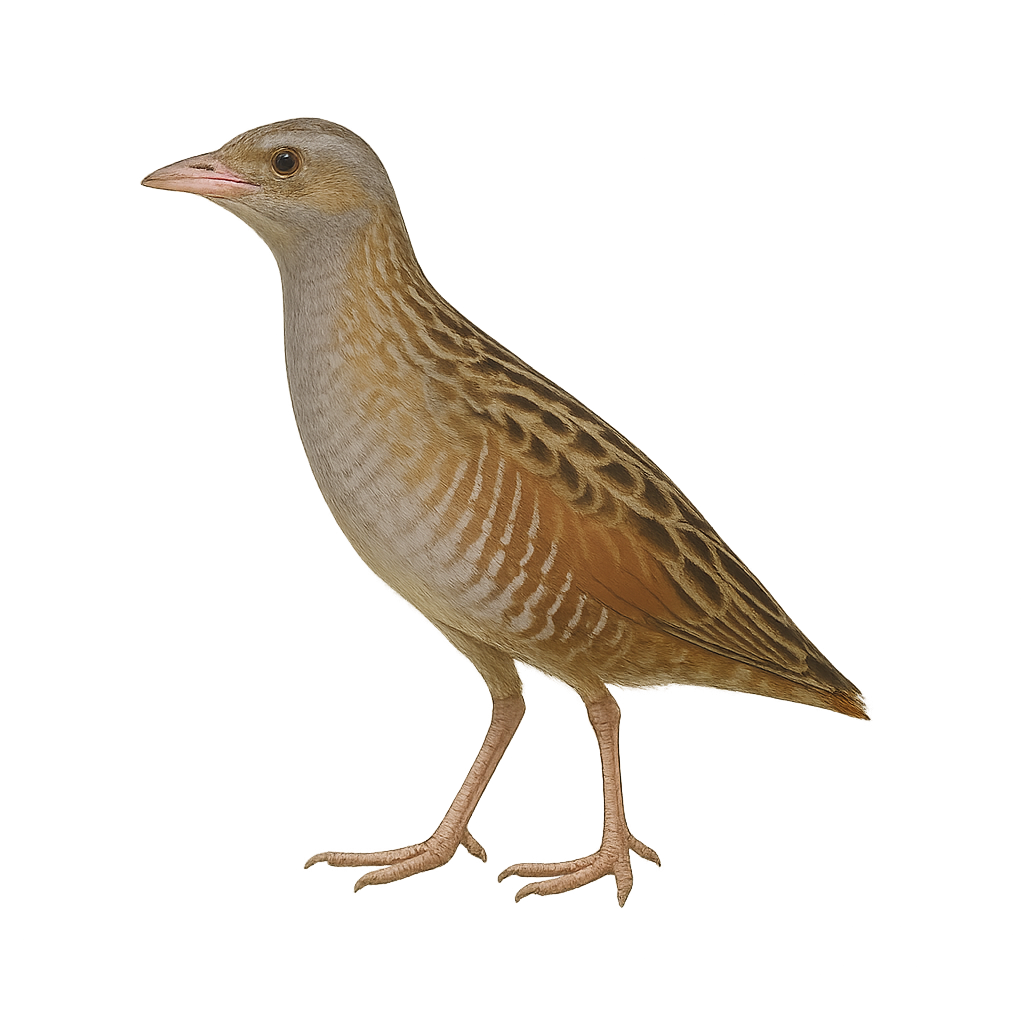
The corn crake is a rail in the family Rallidae, measuring 23–28 cm with cryptically streaked brown plumage and grey legs. It inhabits damp grasslands and tall vegetation, feeding mainly on insects, earthworms and molluscs taken from the ground. During breeding, the male emits a loud, repeated “crek-crek” call both night and day to attract females and defend territory.
The King Rail, Rallus elegans, is a medium-sized waterbird belonging to the Rallidae family. It is characterized by its reddish-brown plumage, black and white barred flanks, and slightly curved long bill. Mainly found in the freshwater marshes of North America, it is often difficult to spot due to its secretive behavior and dense habitat. This bird is an excellent swimmer and primarily feeds on aquatic insects, crustaceans, and small fish. Although its call is powerful and distinctive, it is rarely heard outside the breeding season. Habitat conservation is crucial for its survival, as it is vulnerable to wetland destruction.
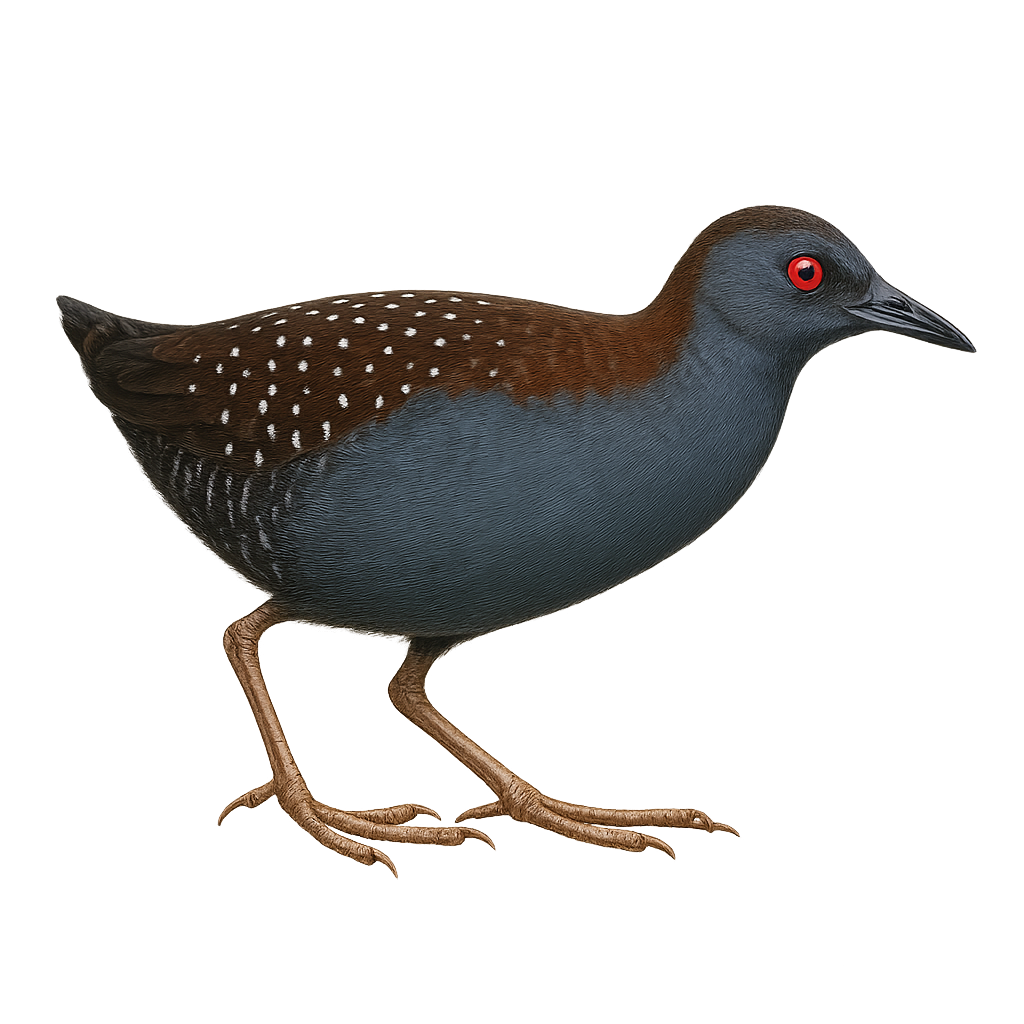
The Black Rail is a small, elusive bird known for its secretive nature and rarity. It measures about 10 to 15 cm in length and weighs between 30 and 40 grams. Its plumage is primarily black with shades of gray and brown, and it has distinctive red eyes. This rail prefers freshwater marshes and wet grasslands, where it primarily feeds on insects, small crustaceans, and seeds. It is often heard rather than seen, emitting sharp, piercing calls. Its population is declining due to habitat loss and predation, making it a conservation concern.
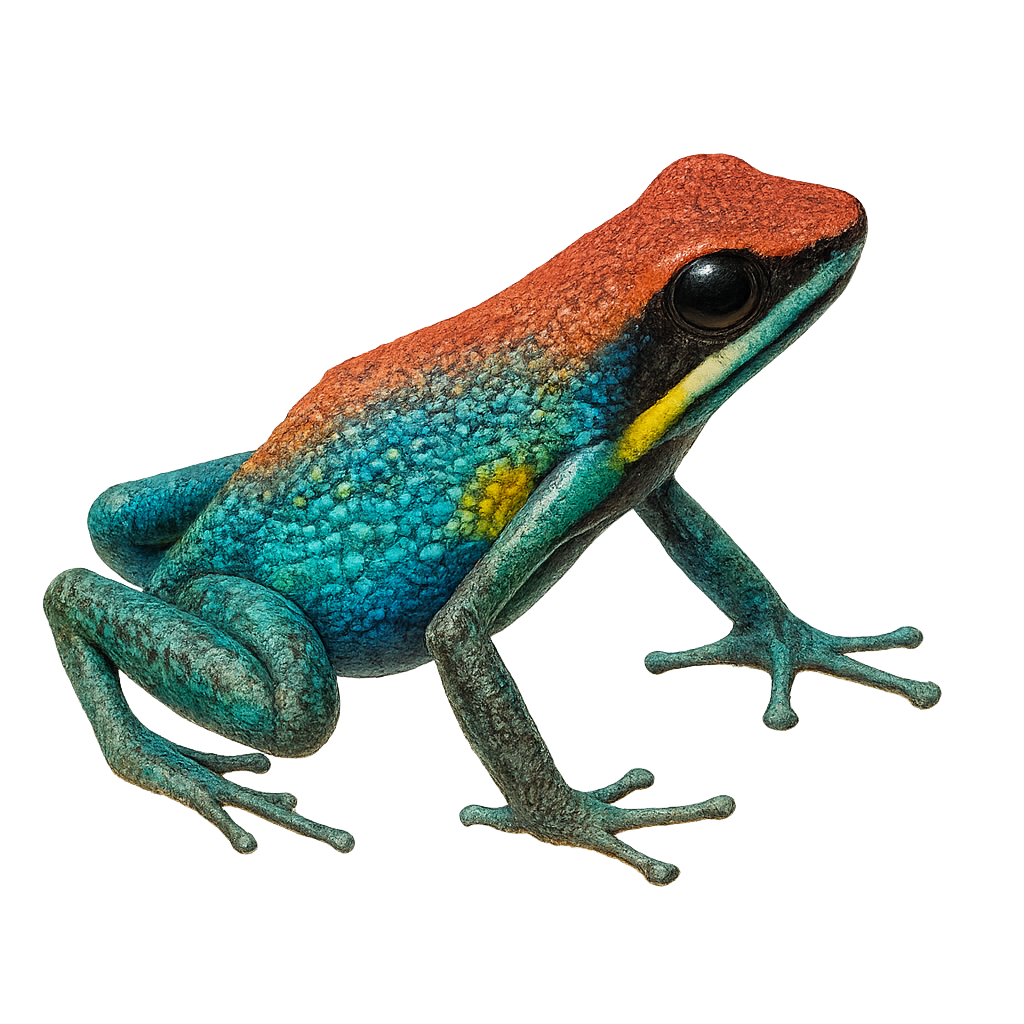
The Ecuador poison frog, Ameerega bilinguis, is a brightly colored frog species belonging to the Dendrobatidae family. It is primarily found in the humid tropical forests of Ecuador and Colombia. Known for its vivid colors, typically a mix of black, blue, and yellow, this frog uses its appearance to warn potential predators of its toxicity. It measures about 2 to 3 cm in length. Ameerega bilinguis are diurnal and primarily feed on small insects. Their skin secretes toxic alkaloids, a common trait among frogs of this family. They play a crucial role in the ecosystem by controlling insect populations and serving as prey for certain predators immune to their poison.
The Gambian pouched rat, scientifically known as Cricetomys gambianus, is a large rodent native to sub-Saharan Africa. It is easily identifiable by its long tail, large ears, and pointed snout. This nocturnal creature inhabits various environments such as forests, savannas, and agricultural areas. It is renowned for its ability to detect landmines due to its exceptional sense of smell. Although it can be considered a pest in some regions, it plays an important ecological role as a seed disperser and insect predator. Its longevity and adaptability make it an interesting subject for researchers.
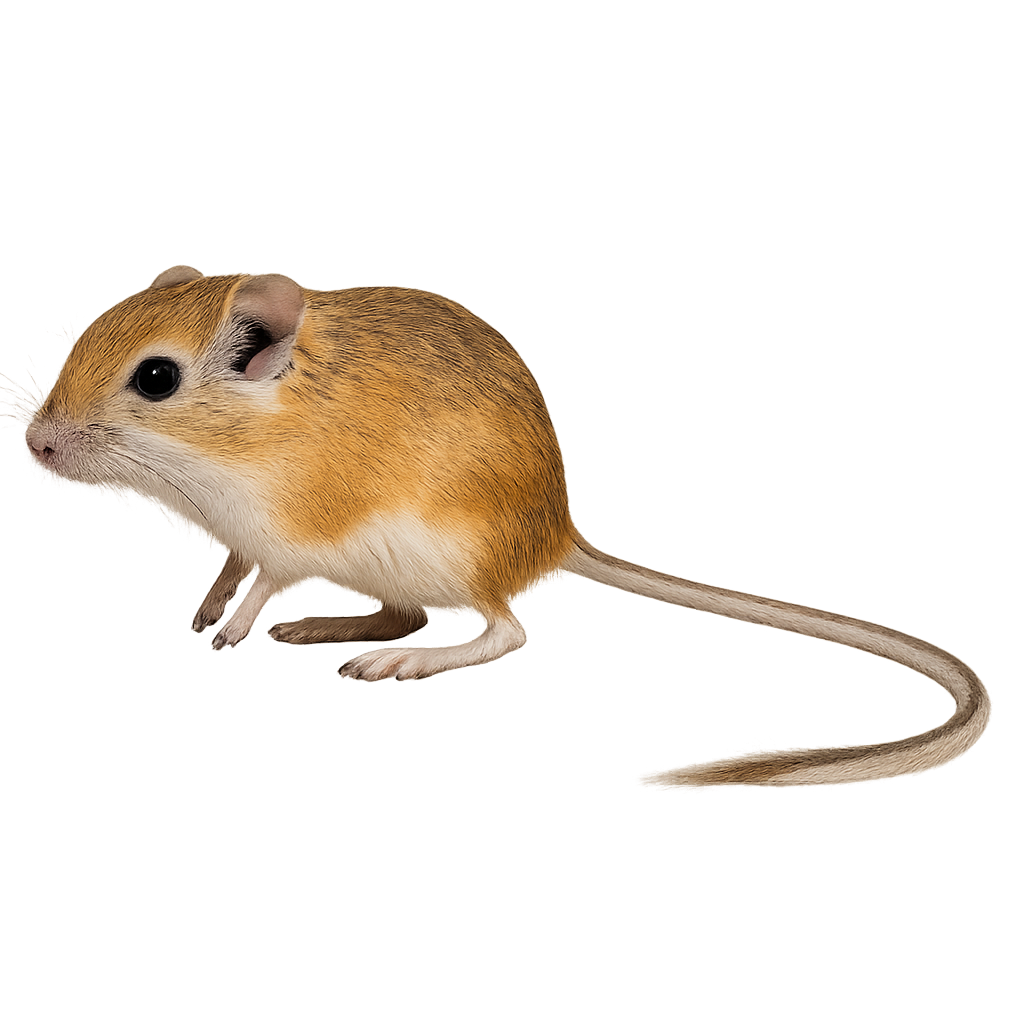
The Dipodomys deserti, or desert kangaroo rat, is a fascinating rodent inhabiting the arid regions of the western United States. This small mammal, weighing between 70 and 130 grams, is perfectly adapted to desert life. It has long hind legs that allow it to leap great distances, much like a kangaroo, hence its name. Its fur is generally sand-colored, providing excellent camouflage in its environment. The desert kangaroo rat is primarily nocturnal, allowing it to avoid the intense daytime heat. It mainly feeds on seeds, which it stores in its cheek pouches to transport back to its burrow.
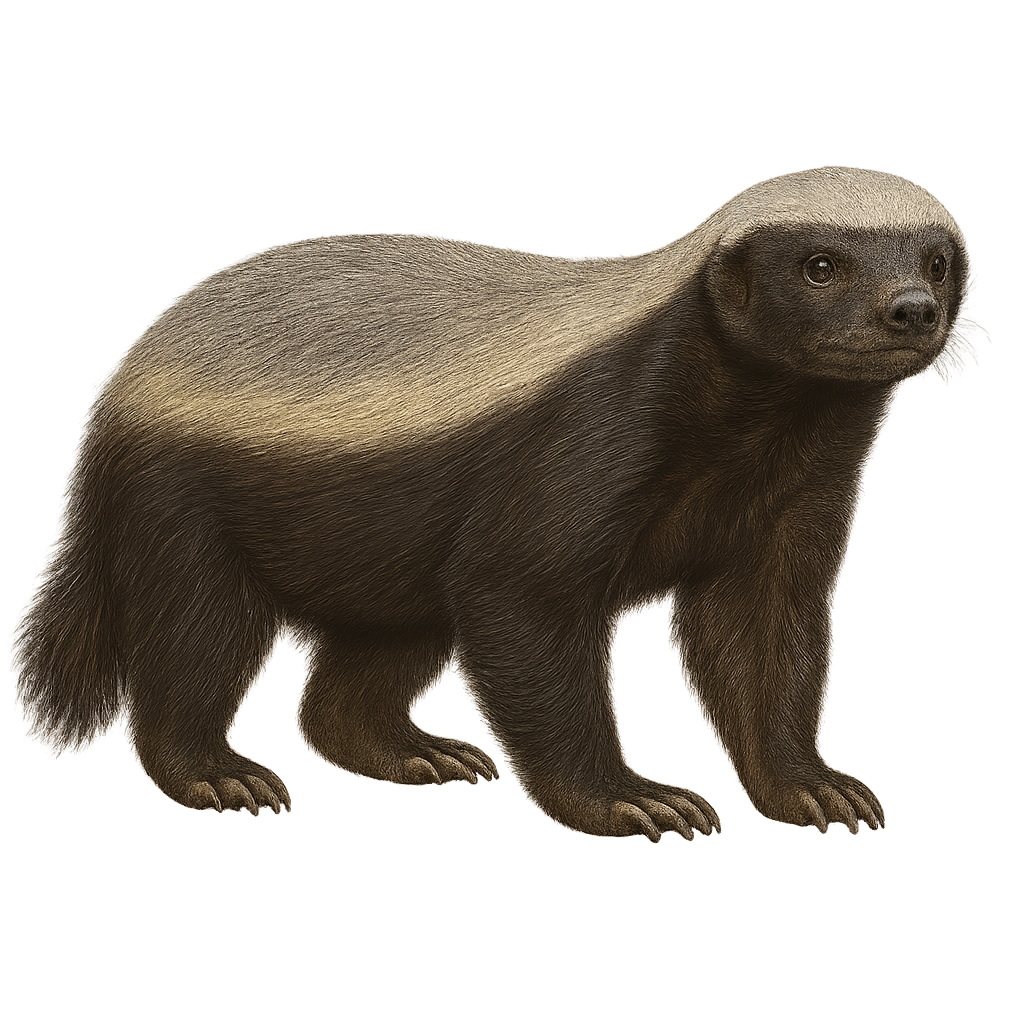
The honey badger, Mellivora capensis, is a carnivorous mammal known for its boldness and tenacity. It has a robust body, thick and loose skin that protects it from predators. Its fur is typically black with a white stripe on its back. This opportunistic predator feeds mainly on small animals, insects, and fruits. It is famous for its ability to attack larger prey and withstand bee stings and venomous snake bites. The honey badger is primarily solitary and fiercely defends its territory. It inhabits various environments, from savannas to forests, and can dig quickly to hide or search for food.
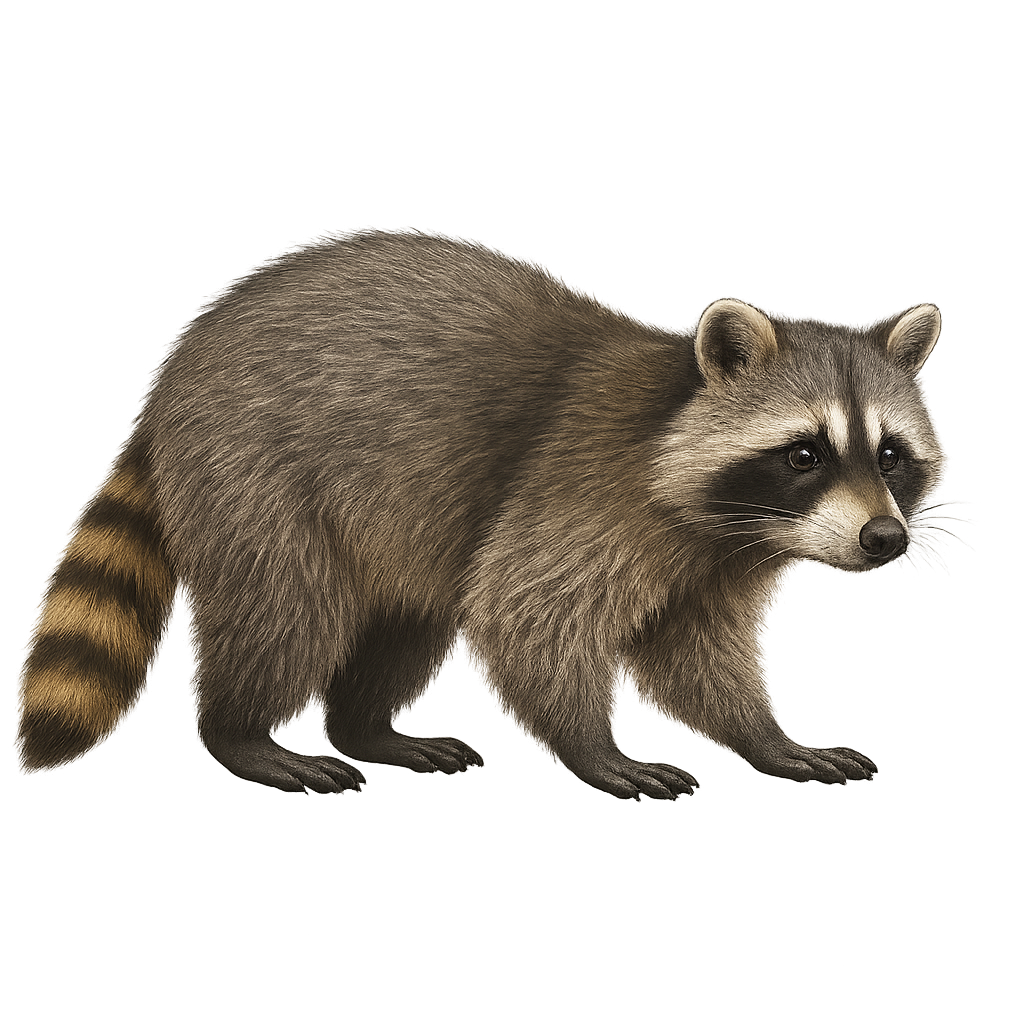
The Raccoon is a small omnivorous mammal native to North America, but it has now spread widely to other regions of the world, including Europe and Asia. It measures about 40 to 70 cm in length, with a tail of 20 to 40 cm, and weighs between 4 and 10 kg. Its fur is primarily gray, with a distinctive black mask around the eyes, giving it a unique appearance. The Raccoon is an excellent climber and feeds on fruits, nuts, small animals, insects, as well as food scraps when it lives near human settlements. It is known for its curious behavior and its habit of "washing" its food, although this gesture is actually a reaction to the sensation of moisture in its paws. While its population is widespread, this species can sometimes be seen as a pest, especially due to its tendency to rummage through trash and cause damage to homes.
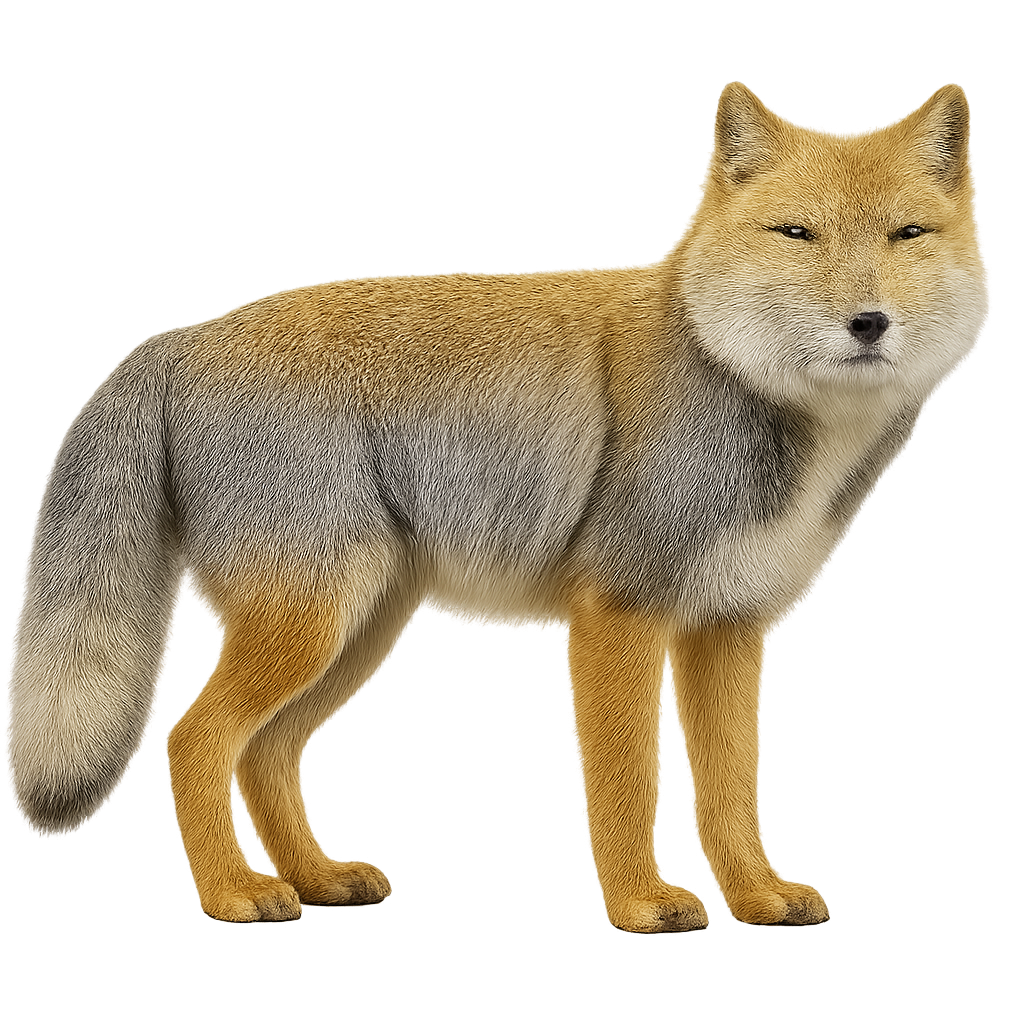
The Tibetan Fox is a small carnivore endemic to the mountainous regions of Tibet, Nepal, and northern India. It measures about 45 to 60 cm in length, with a tail of 30 to 40 cm, and weighs between 2 and 3 kg. Its fur is typically light gray to brown, with darker shades on the back and lighter underparts. It has large pointed ears and a long bushy tail. The Tibetan Fox is an opportunist, feeding on small mammals, birds, fruits, and berries. It primarily lives in dry and mountainous regions, where it digs burrows to protect itself from the cold. Although its population remains relatively stable, the Tibetan Fox is vulnerable to habitat loss and hunting.
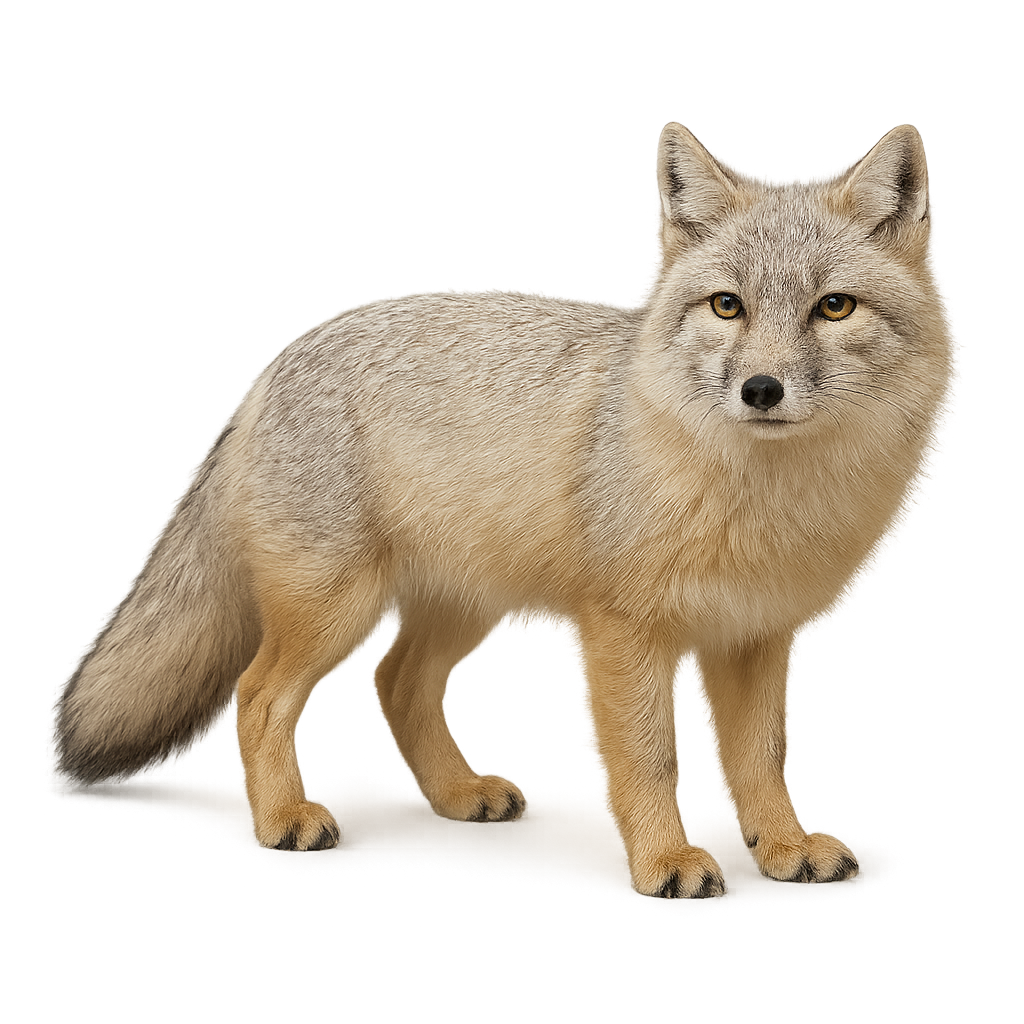
The corsac fox is a small canid 40–50 cm in body length, with dense grey-fawn winter fur and paler summer coat. It inhabits steppes and semi-deserts of Central Asia, feeding on small mammals, insects and wild fruits. During the breeding season, pairs dig or reuse a den to raise 4–8 kits.
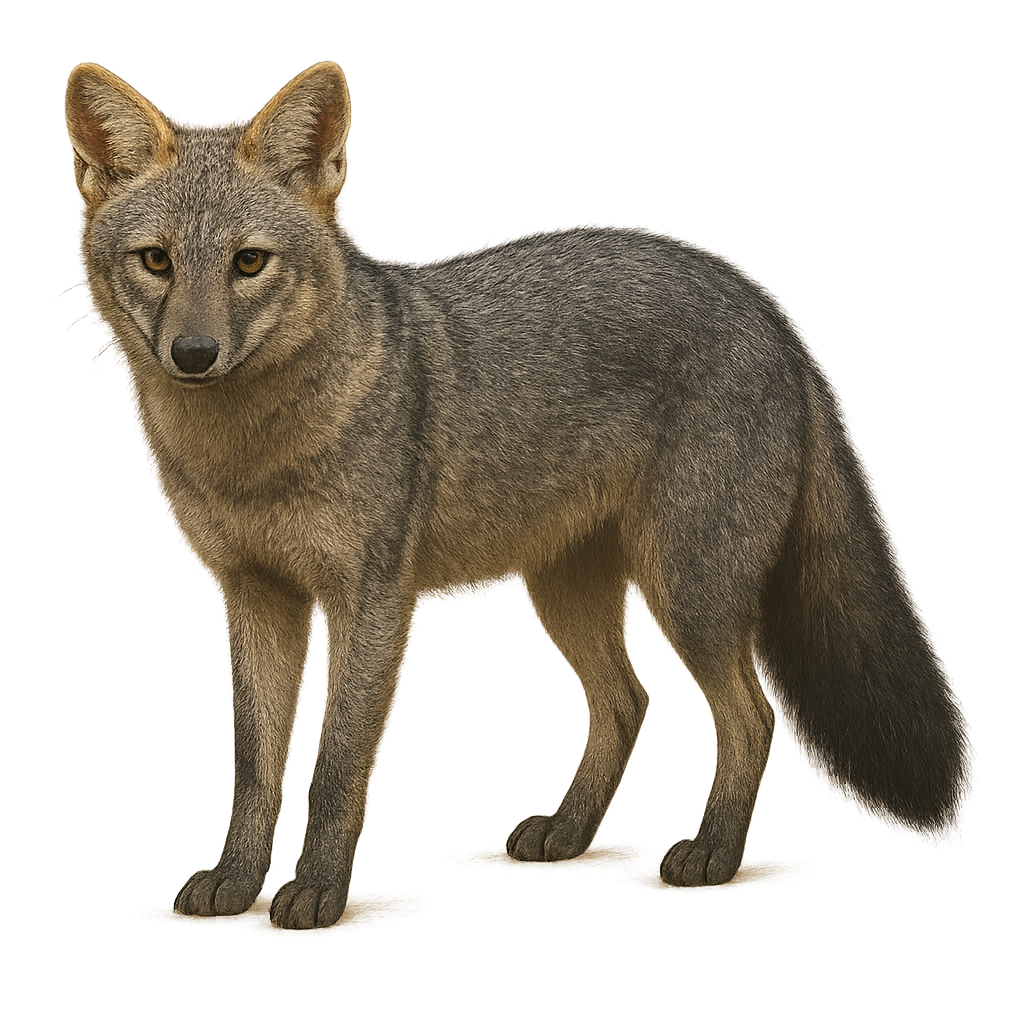
The crab-eating fox, or Cerdocyon thous, is a medium-sized canid, measuring about 60 to 70 cm in length with a bushy tail of about 30 cm. Its coat is generally gray with shades of brown and black, allowing it to blend into its natural environment. It is primarily nocturnal and crepuscular, feeding on a variety of foods, including fruits, insects, small mammals, and, as its name suggests, crabs. It is found in various habitats ranging from tropical forests to open savannas, mainly in South America. Although often solitary, it can form monogamous pairs during the breeding season.
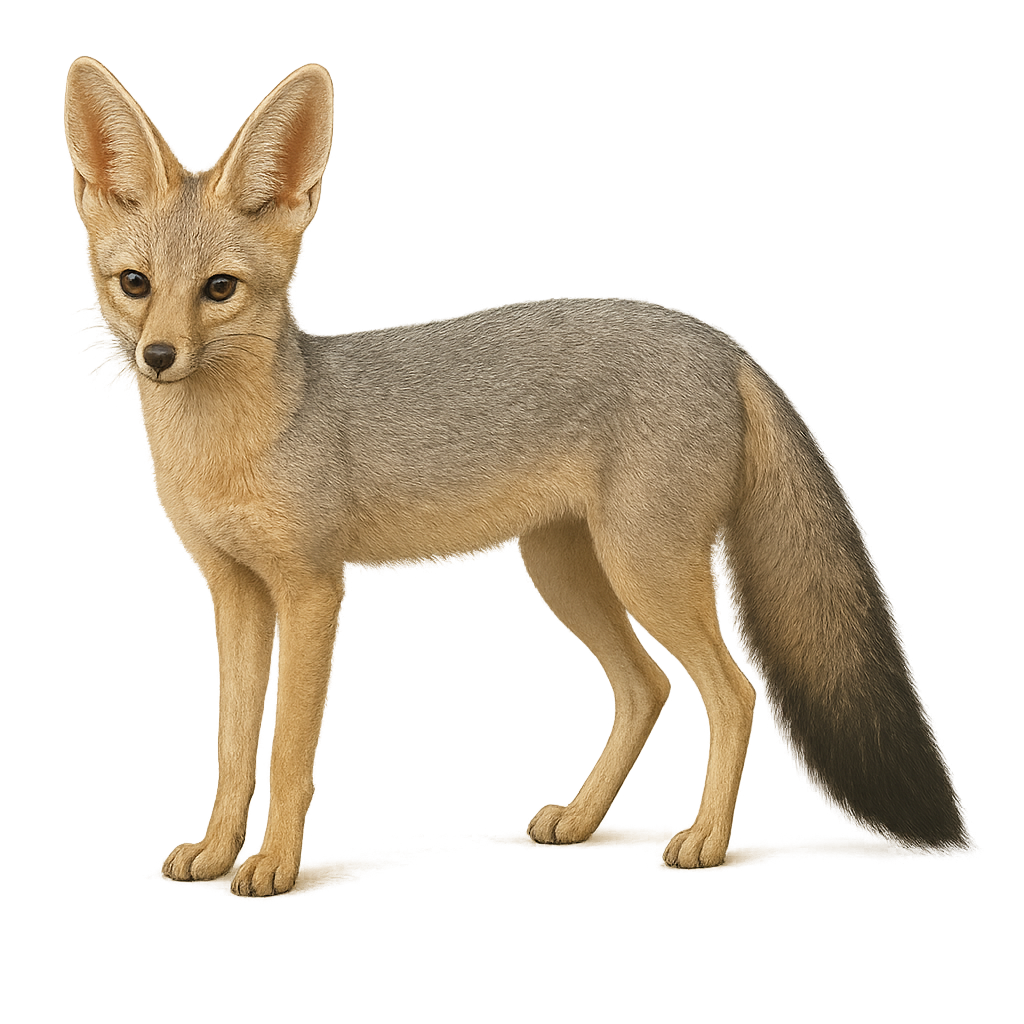
The Blanford's fox, or Vulpes cana, is a small canid primarily inhabiting the arid and mountainous regions of the Middle East. It is distinguished by its modest size, measuring about 40 cm in length, with a bushy tail almost as long as its body. Its fur is generally gray with shades of brown, allowing it to blend into its rocky environment. This fox is mainly nocturnal, helping it avoid the high daytime temperatures. It is omnivorous, feeding on small mammals, insects, fruits, and occasionally carrion. Although relatively unknown, it plays a crucial role in its ecosystem by regulating prey populations and dispersing seeds.