

Your wildlife photography guide.
Explore the mountain gazelle in detail, study its behavior, prepare your shots.
Where to observe and photograph the mountain gazelle in the wild
Learn where and when to spot the mountain gazelle in the wild, how to identify the species based on distinctive features, and what natural environments it inhabits. The WildlifePhotographer app offers tailored photography tips that reflect the mountain gazelle’s behavior, helping you capture better wildlife images. Explore the full species profile for key information including description, habitat, active periods, and approach techniques.
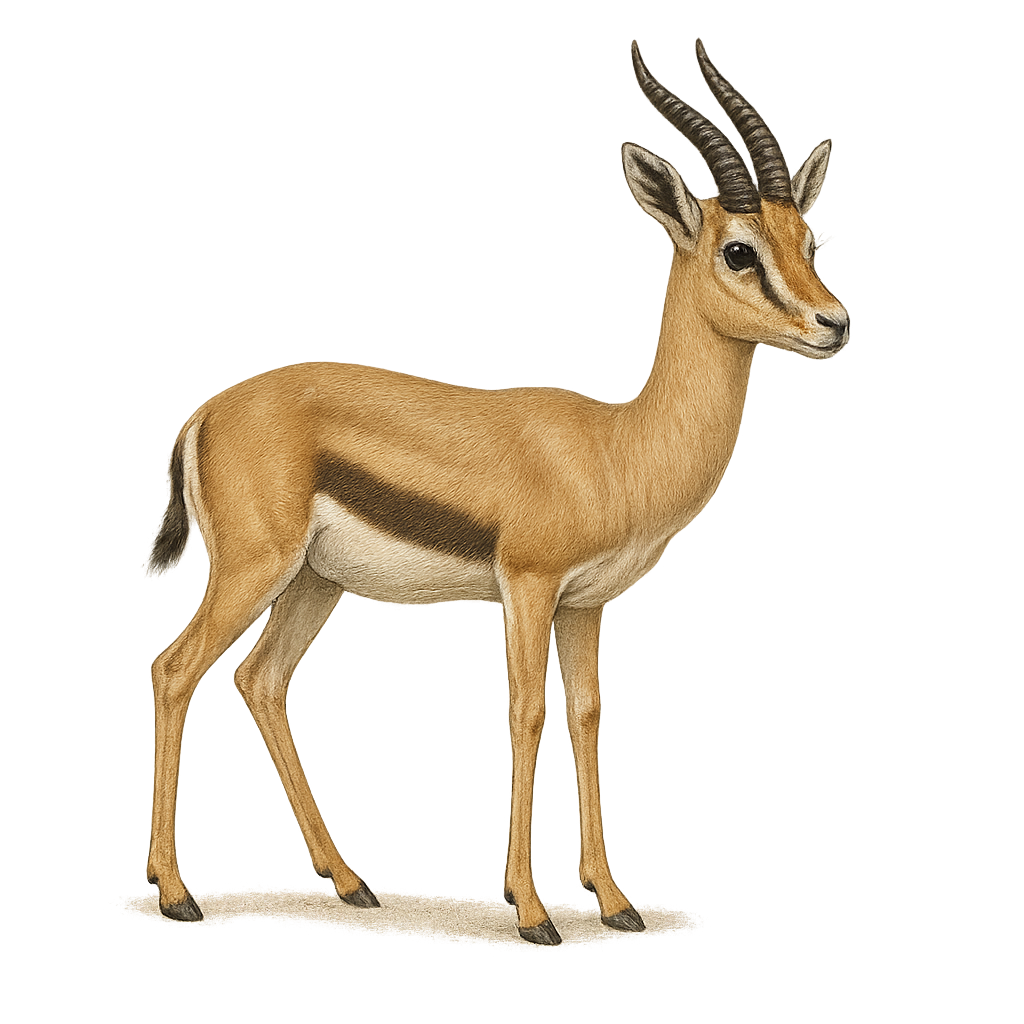
Mountain gazelle
Scientific name: Gazella gazella
IUCN Status: Vulnerable
Family: BOVIDAE
Group: Mammals
Sensitivity to human approach: Suspicious
Minimum approach distance: 30 m
Rut period: November to January
Gestation: 180-190 jours
Births: May to June
Habitat:
Deserts, savannas, grasslands
Activity period :
Primarily active during the day, with peak activity in the morning and late afternoon.
Identification and description:
The mountain gazelle, or Gazella gazella, is a graceful herbivorous mammal primarily inhabiting the arid and semi-arid regions of the Middle East. It is distinguished by its light brown coat, paler flanks, and lyre-shaped, ringed horns. Males are generally larger and have longer horns than females. This species is well adapted to its dry environment, capable of surviving with minimal water by extracting necessary moisture from its food. It is mainly active at dusk and dawn, avoiding the extreme daytime temperatures. The mountain gazelle is a social species, living in small groups, but can also be solitary. It is known for its speed and agility, allowing it to escape natural predators.
Recommended lens:
400 mm – adjust based on distance, desired framing (portrait or habitat), and approach conditions.
Photography tips:
To photograph the mountain gazelle, it is advisable to use a telephoto lens of at least 400mm to capture detailed images without disturbing the animal. Approach slowly and maintain a safe distance of about 30 meters. The best times for photography are early morning or late afternoon when the light is soft and the gazelles are more active. Be patient and discreet to observe their natural behavior.
From knowledge to field practice
A species profile helps you understand an animal. In the field, the challenge is often different. Remembering your own observations.
The WildlifePhotographer app allows you to:
• record your personal observations
• note locations, dates, and behaviors
• revisit your field references over time
• build a private and long-term field logbook
The app does not provide observation locations.
It helps you organize what you actually observe, with respect for wildlife.