
Your wildlife photography guide.
Explore the madagascar giant day gecko in detail, study its behavior, prepare your shots.
Where to observe and photograph the madagascar giant day gecko in the wild
Learn where and when to spot the madagascar giant day gecko in the wild, how to identify the species based on distinctive features, and what natural environments it inhabits. The WildlifePhotographer app offers tailored photography tips that reflect the madagascar giant day gecko’s behavior, helping you capture better wildlife images. Explore the full species profile for key information including description, habitat, active periods, and approach techniques.
Madagascar giant day gecko
Scientific name: Phelsuma grandis
IUCN Status: Least Concern
Family: GEKKONIDAE
Group: Reptiles
Sensitivity to human approach: Suspicious
Minimum approach distance: 3 m
Reproduction period: May to June
Incubation: 47–82 jours
Births: May to June
Habitat:
tropical forests, mangroves, shrublands
Activity period :
Active during the day when temperatures are favorable, often seen basking in the sun.
Identification and description:
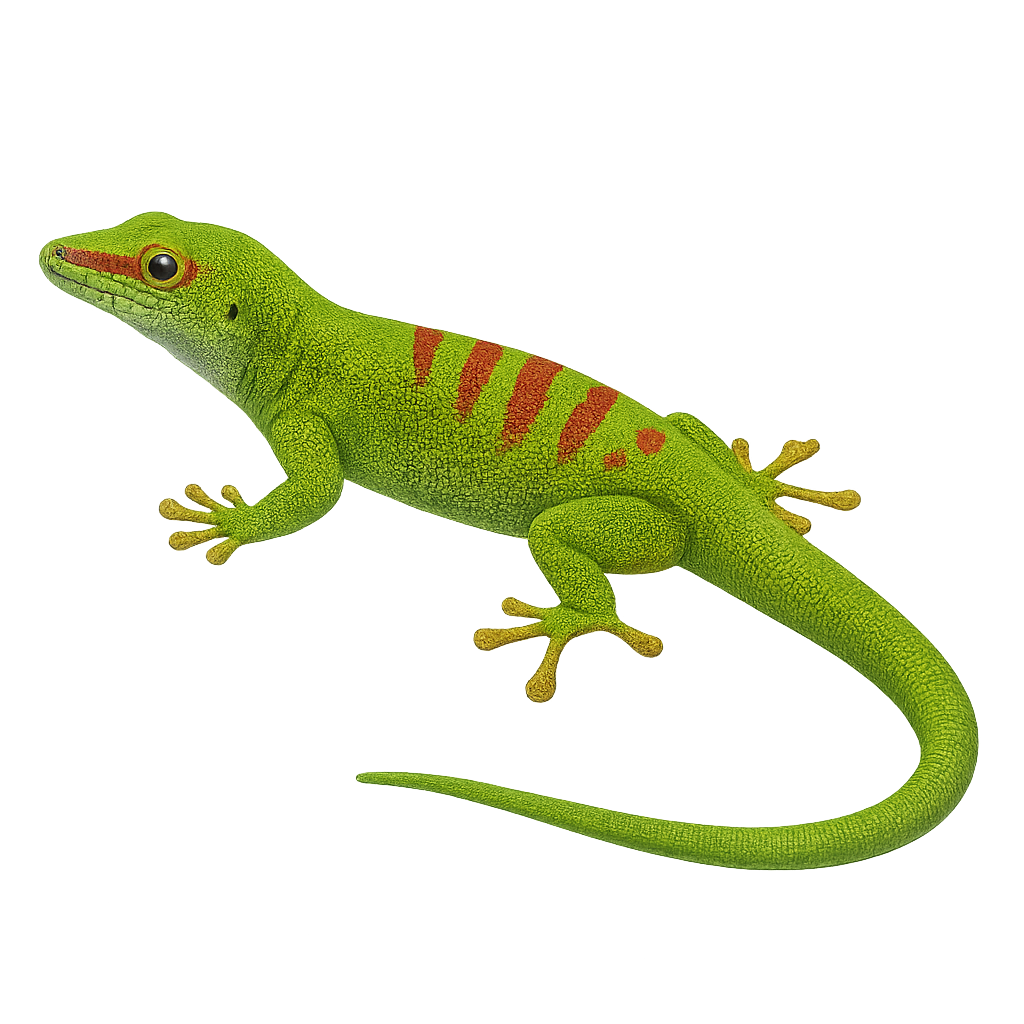
The Phelsuma grandis, or Madagascar giant day gecko, is a fascinating lizard native to Madagascar, known for its vibrant colors and impressive size, reaching up to 30 cm in length. Its skin is typically green with red and blue spots, allowing it to blend effectively into its natural habitat. This gecko is diurnal, meaning it is active during the day. It primarily feeds on insects, fruits, and nectar. In captivity, it is appreciated for its beauty and relatively docile behavior, although it requires a carefully controlled environment to thrive.
Recommended lens:
Macro – adjust based on distance, desired framing (portrait or habitat), and approach conditions.
Photography tips:
To photograph the Phelsuma grandis, choose times of the day when natural light is abundant, as this gecko is diurnal. Use a macro lens to capture the details of its colorful skin. Approach slowly to avoid startling it, and maintain a distance of at least 3 meters. A tripod can be useful to stabilize your camera, especially if using a significant zoom. Try to capture the gecko in its natural habitat to add context to your photos.
From knowledge to field practice
A species profile helps you understand an animal. In the field, the challenge is often different. Remembering your own observations.
The WildlifePhotographer app allows you to:
• record your personal observations
• note locations, dates, and behaviors
• revisit your field references over time
• build a private and long-term field logbook
The app does not provide observation locations.
It helps you organize what you actually observe, with respect for wildlife.