

Your wildlife photography guide.
Explore the bare-necked umbrellabird in detail, study its behavior, prepare your shots.
Where to observe and photograph the bare-necked umbrellabird in the wild
Learn where and when to spot the bare-necked umbrellabird in the wild, how to identify the species based on distinctive features, and what natural environments it inhabits. The WildlifePhotographer app offers tailored photography tips that reflect the bare-necked umbrellabird’s behavior, helping you capture better wildlife images. Explore the full species profile for key information including description, habitat, active periods, and approach techniques.
Bare-necked Umbrellabird
Scientific name: Cephalopterus glabricollis
IUCN Status: Vulnerable
Family: COTINGIDAE
Group: Birds
Sensitivity to human approach: Suspicious
Minimum approach distance: 10 m
Courtship display: March to May
Incubation: 26-28 jours
Hatchings: March to June
Habitat:
Humid forests, canopies, tropical areas
Activity period :
Primarily active during the day, with peak activity in the morning and late afternoon.
Identification and description:
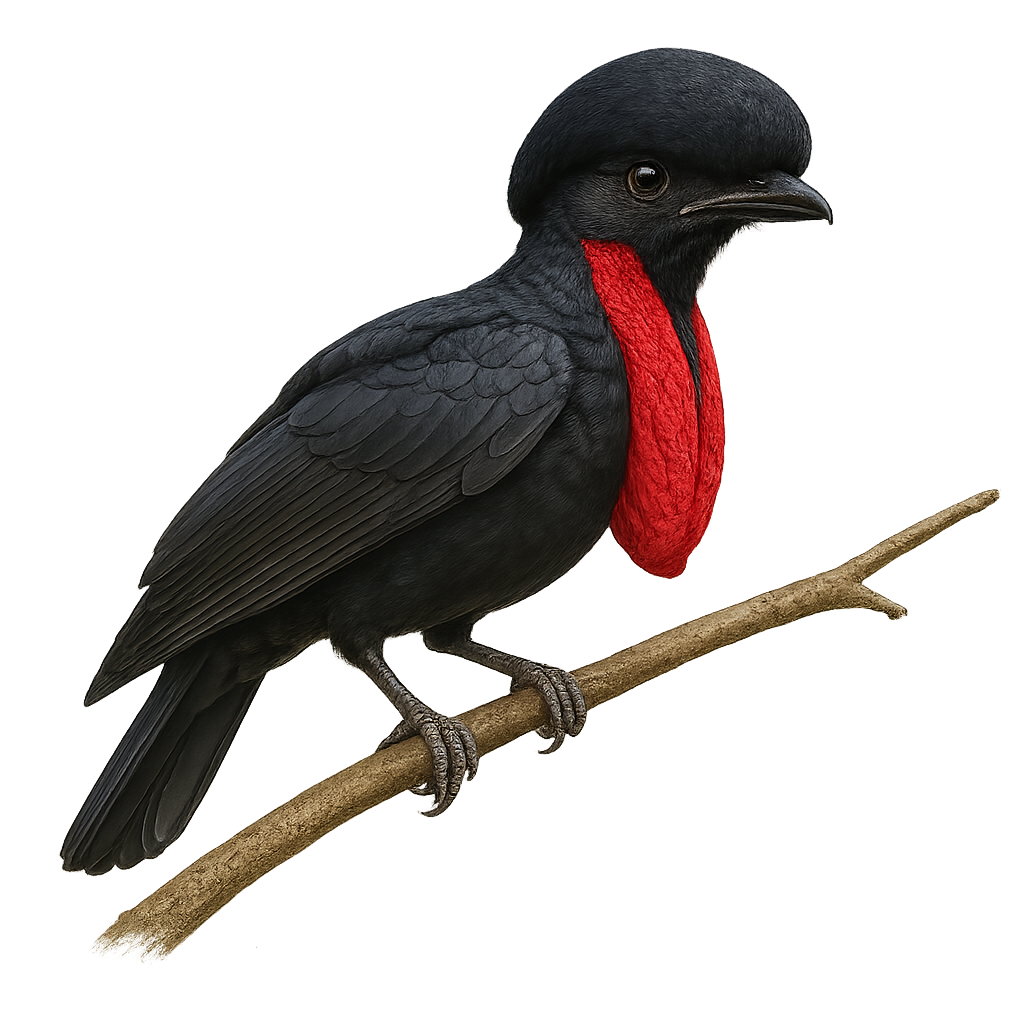
The Cephalopterus glabricollis, commonly known as the Bare-necked Umbrellabird, is a fascinating bird from the Cotingidae family. It is primarily found in the humid forests of Costa Rica and Panama. This bird is notable for its large size and glossy black plumage. Males feature a spectacular crest and a bare neck that turns bright red during the breeding season. They produce deep, resonant sounds to attract females. The females, more discreet, have less striking plumage. The Bare-necked Umbrellabird is an arboreal bird, spending most of its time in the canopy searching for fruits, its main diet. Unfortunately, it is threatened by deforestation, which reduces its natural habitat.
Recommended lens:
400 mm – adjust based on distance, desired framing (portrait or habitat), and approach conditions.
Photography tips:
To photograph the Bare-necked Umbrellabird, it is advisable to use a telephoto lens of at least 400mm to capture detailed images without disturbing the bird. Look for areas of the forest where fruits are abundant, as this bird is often attracted to these food resources. Be patient and discreet, as although this bird is suspicious, it can be observed during its diurnal activities. Prefer early morning hours to benefit from soft, natural light.
From knowledge to field practice
A species profile helps you understand an animal. In the field, the challenge is often different. Remembering your own observations.
The WildlifePhotographer app allows you to:
• record your personal observations
• note locations, dates, and behaviors
• revisit your field references over time
• build a private and long-term field logbook
The app does not provide observation locations.
It helps you organize what you actually observe, with respect for wildlife.