

Your wildlife photography guide.
Explore the wood frog in detail, study its behavior, prepare your shots.
Where to observe and photograph the wood frog in the wild
Learn where and when to spot the wood frog in the wild, how to identify the species based on distinctive features, and what natural environments it inhabits. The WildlifePhotographer app offers tailored photography tips that reflect the wood frog’s behavior, helping you capture better wildlife images. Explore the full species profile for key information including description, habitat, active periods, and approach techniques.
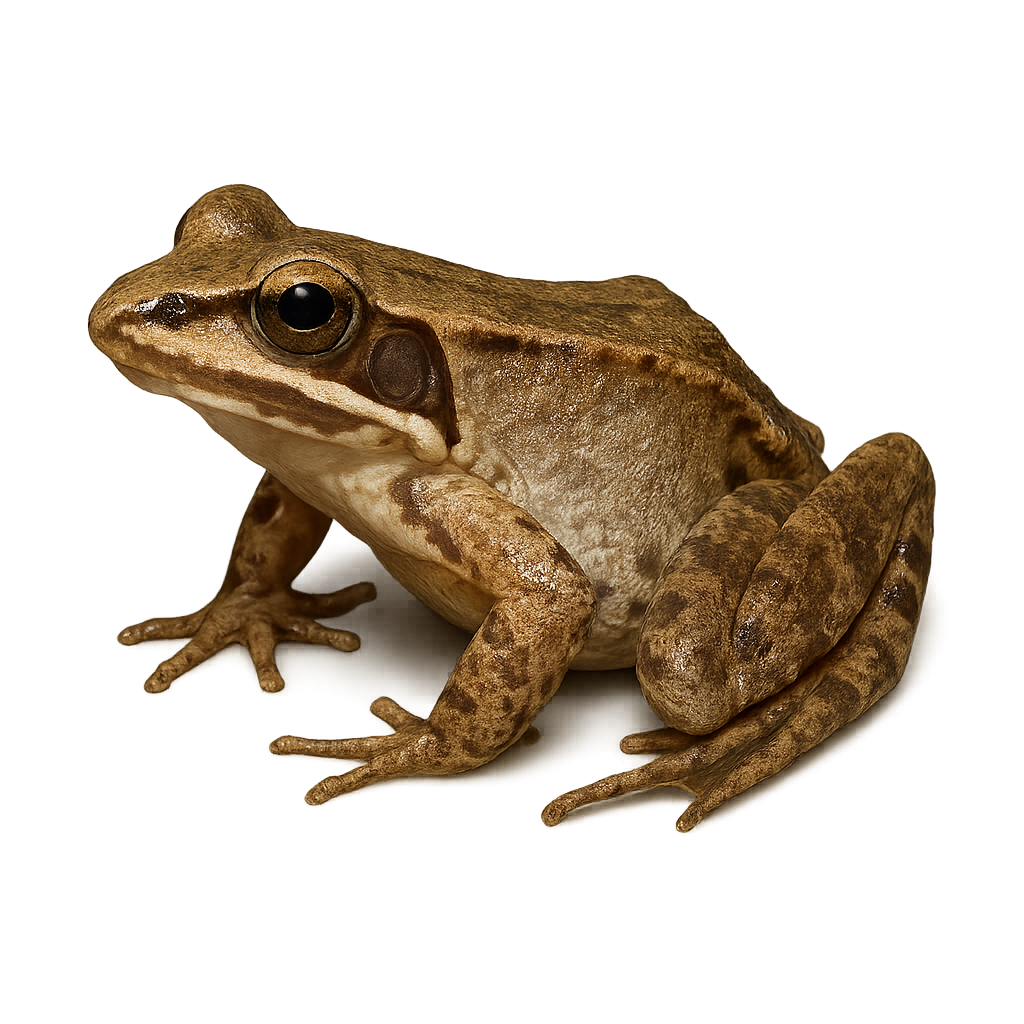
Wood Frog
Scientific name: Lithobates sylvaticus
IUCN Status: Least Concern
Family: RANIDAE
Group: Amphibians
Sensitivity to human approach: Suspicious
Minimum approach distance: 2 m
Reproduction period: February to May
Incubation: 9–30 jours
Births: February to May
Habitat:
Moist forests, swamps, wooded areas
Activity period :
Mainly active at night, generally discreet during the day.
Identification and description:
The wood frog, Lithobates sylvaticus, is a fascinating species belonging to the Ranidae family. It is easily recognizable by its brownish to reddish coloration and the dark band that runs across its eyes. This frog is particularly remarkable for its ability to survive in cold environments, notably due to its freeze tolerance. In winter, it enters a state of partial freezing, where up to 65% of its body water can turn into ice. It primarily inhabits moist forests, swamps, and wooded areas near ponds and streams. Its breeding period often coincides with the melting of snow, when temperatures begin to warm up.
Recommended lens:
Macro – adjust based on distance, desired framing (portrait or habitat), and approach conditions.
Photography tips:
To photograph the wood frog, it is advisable to use a macro lens to capture the details of its skin and distinctive eyes. Approach slowly to avoid scaring it, and prefer early morning or late hours for soft lighting. Moist forests and swamps provide an ideal setting for natural shots. Be patient and wait for it to settle on a leaf or rock to get an interesting background.
From knowledge to field practice
A species profile helps you understand an animal. In the field, the challenge is often different. Remembering your own observations.
The WildlifePhotographer app allows you to:
• record your personal observations
• note locations, dates, and behaviors
• revisit your field references over time
• build a private and long-term field logbook
The app does not provide observation locations.
It helps you organize what you actually observe, with respect for wildlife.