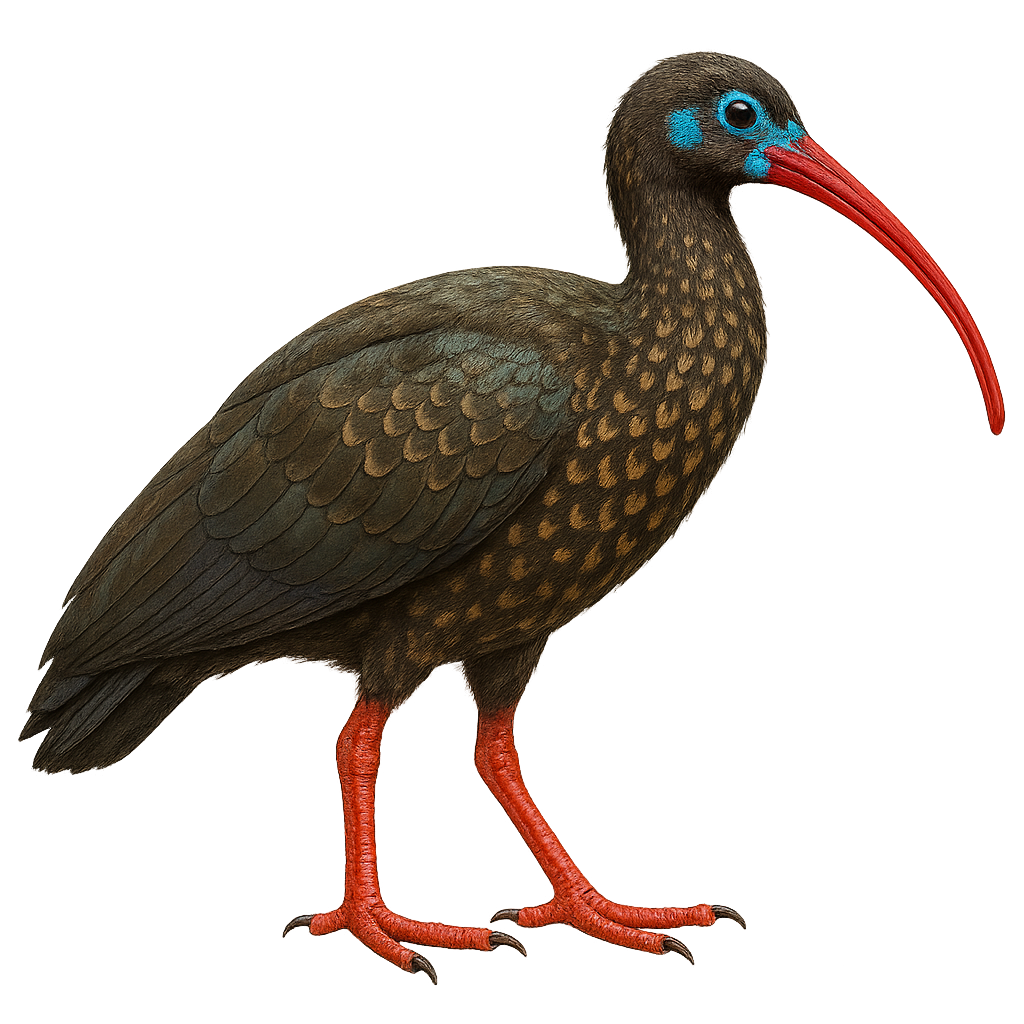
The Spot-breasted ibis, scientifically known as Bostrychia rara, is a fascinating bird belonging to the Threskiornithidae family. This bird is distinguished by its dark plumage and green iridescence on the head, giving it a unique and captivating appearance. It primarily inhabits wetlands, marshes, and dense tropical forests, where it feeds on small invertebrates, fish, and plant matter. Although not very shy, it remains suspicious of humans, making observation a challenge. Its breeding period is poorly documented, but it is known to build nests in trees, often in colonies. Its population is currently stable, but deforestation and habitat loss could threaten its future.
The Ctenosaura defensor, or Yucatán Spiny-tailed Iguana, is a lizard species endemic to Mexico, primarily found in arid and semi-arid regions. This reptile is recognizable by its tail covered with spiny scales, providing it with a unique appearance and protection against predators. Its coloration ranges from gray to brown, with darker patterns that allow it to blend effectively into its natural environment. The spiny-tailed iguana is mainly herbivorous, feeding on leaves, flowers, and fruits, although it may occasionally consume insects. It is diurnal and spends most of its time basking in the sun to regulate its body temperature.
The Marine Iguana is a unique species found exclusively on the Galápagos Islands. This iguana is the only reptile to have adapted to aquatic life, feeding on marine algae that it collects underwater while diving. It has a distinct morphology with a robust body and a long tail, allowing it to swim efficiently. Marine iguanas are often seen basking on rocks in the sun to regulate their body temperature after their dives into cold water. This thermal hibernation behavior is essential for their survival in the Galápagos environment.

The Black Iguana, also known as Ctenosaura similis, is a medium-sized terrestrial reptile, easily recognizable by its bright colors and distinctive scales. It measures between 40 and 60 cm in length, with a tail that can measure up to twice its body length, and weighs between 300 and 600 g. Its body is typically dark gray to black, with light spots and stripes that help it blend into its natural environment. The Black Iguana primarily inhabits dry and arid areas and dry forests in Central America, notably in Costa Rica, Nicaragua, and Honduras. It primarily feeds on fruits, leaves, and flowers but can also consume insects and small animals. Although it is an excellent climber, it prefers to spend most of its time on the ground or in shrubs. The Black Iguana is known for its ability to move quickly to escape predators and can also swim and dive into water for protection. While the species is generally considered not threatened, it is vulnerable to habitat destruction and illegal collection for the wildlife trade.
The rhinoceros iguana is a large herbivorous lizard endemic to the Caribbean, reaching 65–136 cm including tail, with a robust body and a head adorned with bony protrusions resembling horns. It inhabits dry forests, scrublands, and rocky coastal areas of Hispaniola and surrounding islands, feeding on leaves, flowers, and fruits. Solitary and territorial, breeding occurs in the spring, when males display head bobs and body push-ups to defend territory and attract females.
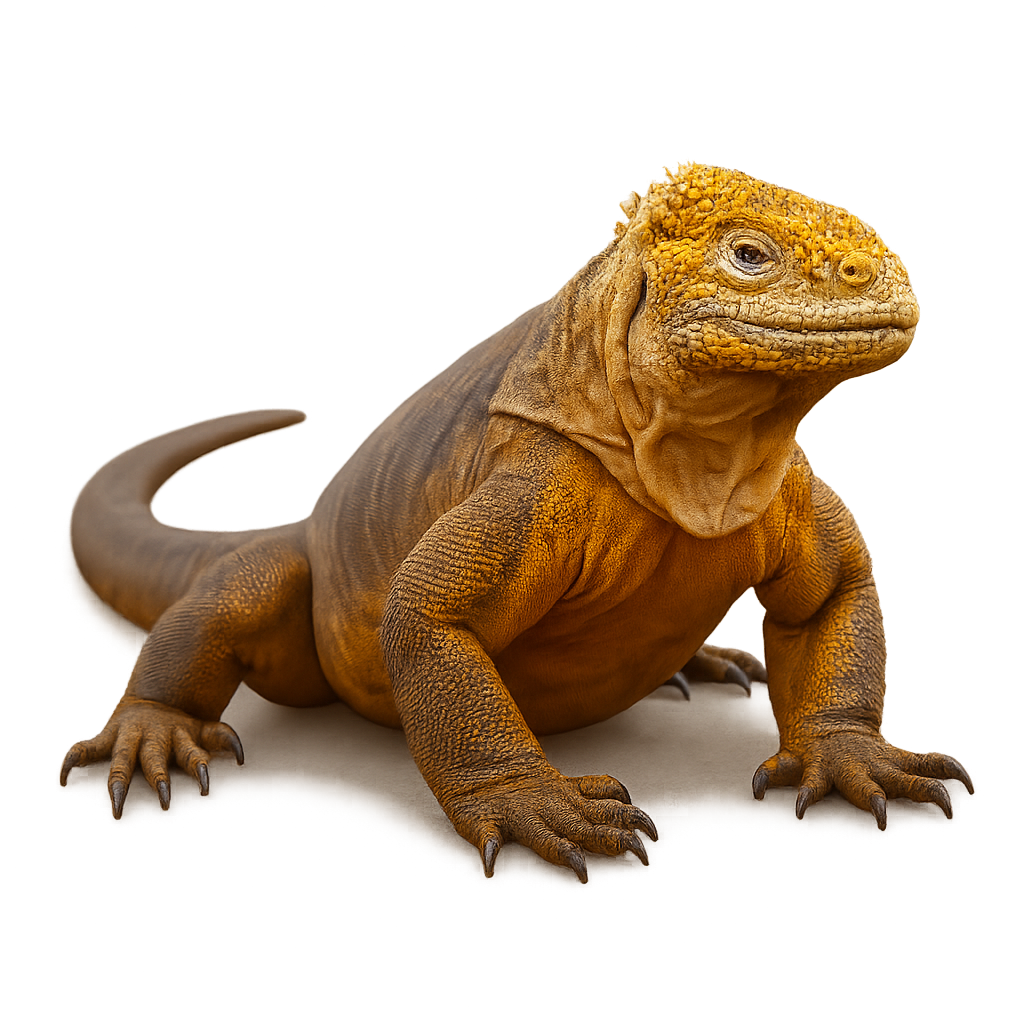
Native to the Galápagos Islands, the Galápagos land iguana is a unique species of iguana known for its large size and varying color from yellow to red. It primarily feeds on cactus, flowers, and succulents. The Galápagos land iguana is well adapted to its arid environment and is often seen basking in the sun. While relatively peaceful, this species is threatened by introduced predators and habitat loss.
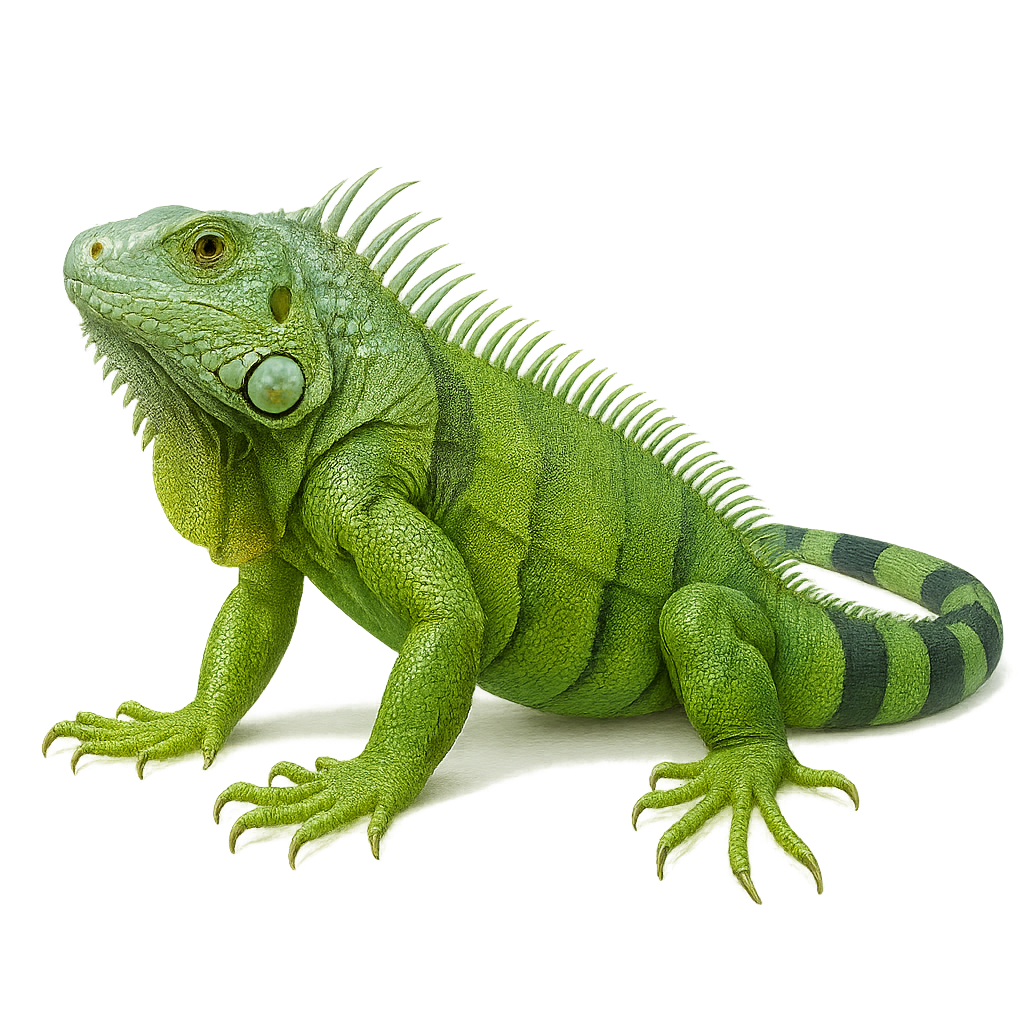
The Green Iguana is a large herbivorous reptile, easily recognizable by its long and sturdy body, as well as its bright green coloration. It measures between 1.5 and 2 meters in length, including its tail, and can weigh between 4 and 5 kg. Its body is covered with large scales and plates, and it has a crest running down its back. Its vibrant green color, especially in young individuals, becomes duller with age. The Green Iguana primarily inhabits tropical forests, mangroves, and wooded areas in Central and South America, as well as parts of the Caribbean. This reptile is primarily herbivorous, feeding on leaves, fruits, flowers, and sometimes young shoots. The Green Iguana is an excellent climber and spends much of its time in trees or resting on branches. While it is a widespread species, it is threatened by deforestation, illegal collection for the wildlife trade, and habitat loss.
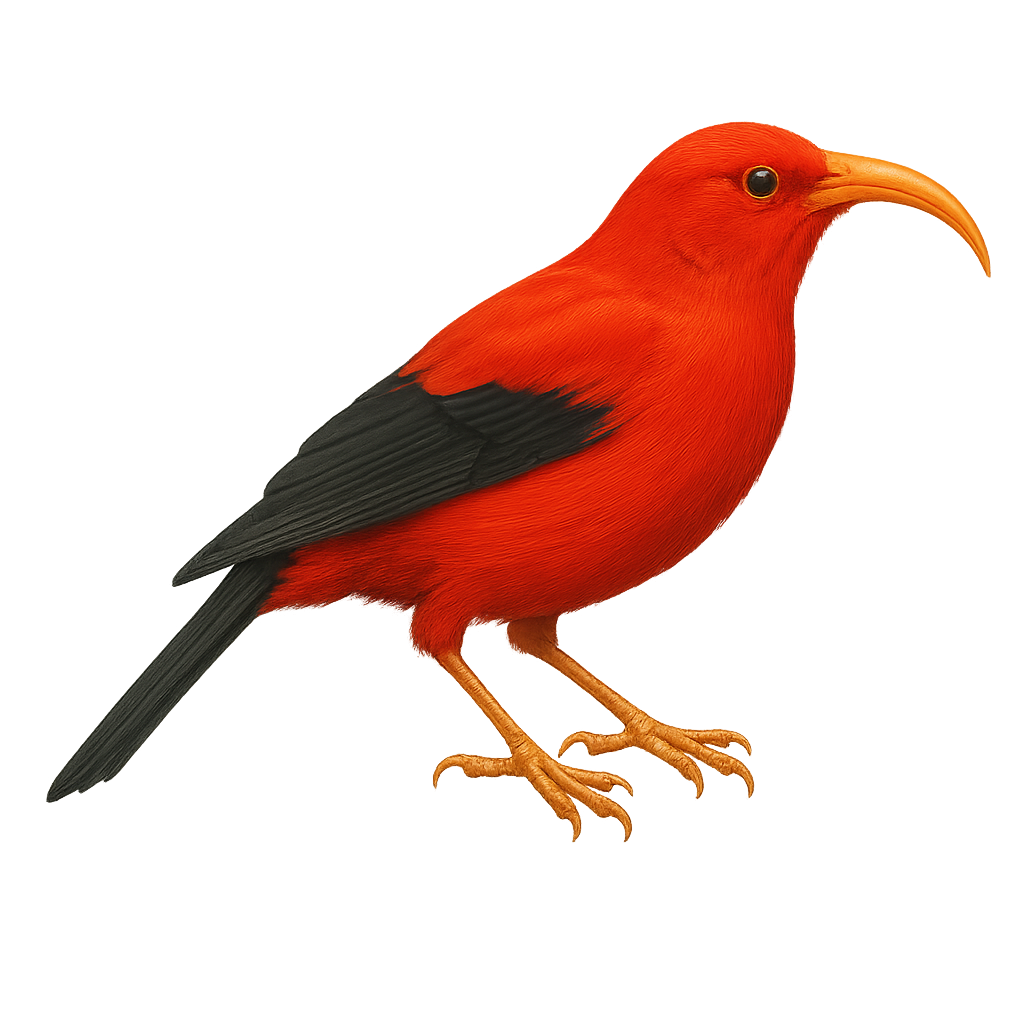
The iiwi, or Drepanis coccinea, is an iconic bird of the Hawaiian forests. With its bright red plumage and black wings, it is easily recognizable. This bird measures about 15 cm in length and has a curved beak, adapted for collecting nectar, its primary food source. The iiwi plays a crucial role in pollinating native plants. Unfortunately, it is threatened by habitat loss, avian diseases, and introduced predators. Conservation efforts aim to protect its natural habitats and control invasive species. The iiwi is often observed in wet forests at various altitudes, where it moves agilely in search of flowers.
Leucostethus argyrogaster is a species of amphibian belonging to the Dendrobatidae family. It is primarily found in the lowland tropical rainforests of South America, particularly in Peru and Ecuador. This frog is distinguished by its silver belly, contrasting with its brown or olive-green back. It typically measures between 2 and 3 cm in length. It is diurnal and spends most of its time foraging for food, mainly insects. Its skin secretes toxins, a common trait among its family members. Although its conservation status is not of concern, it is threatened by deforestation and habitat loss.
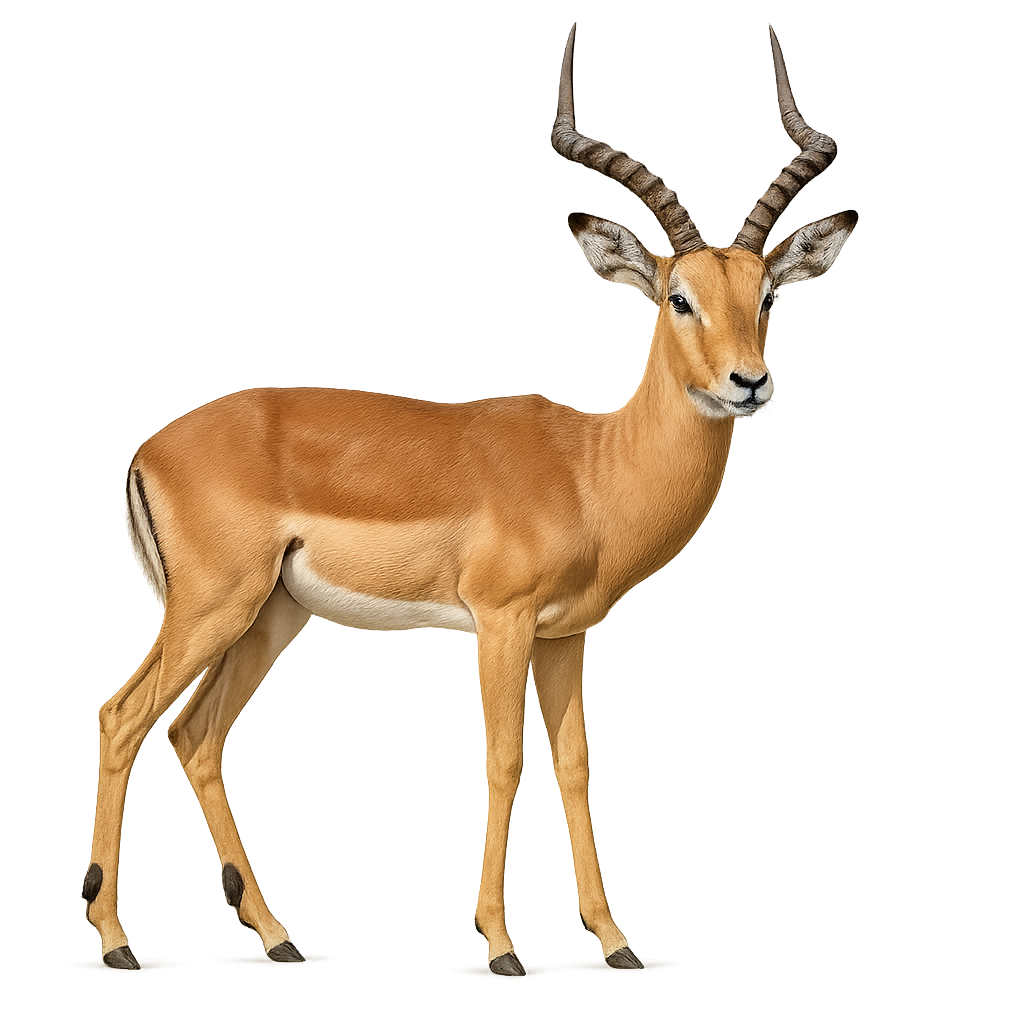
The Impala is a medium-sized, slender, and graceful antelope, easily recognizable by its elegant, curved horns and its light brown to reddish coat, with a white belly and tail. It stands about 70 to 90 cm at the shoulder, with a total length of 1.2 to 2 meters, and weighs between 40 and 75 kg. Males have long, fine, lyre-shaped horns that can reach up to 90 cm in length, while females, which lack horns, are generally smaller. The Impala primarily inhabits savannas and woodland grasslands in East and Southern Africa, where it forms complex social groups. It primarily feeds on grass, but may also eat leaves and fruits when grass is less abundant. The Impala is an excellent runner, capable of making long leaps to escape its predators. Although the Impala is quite widespread, it is vulnerable to habitat loss and excessive hunting.
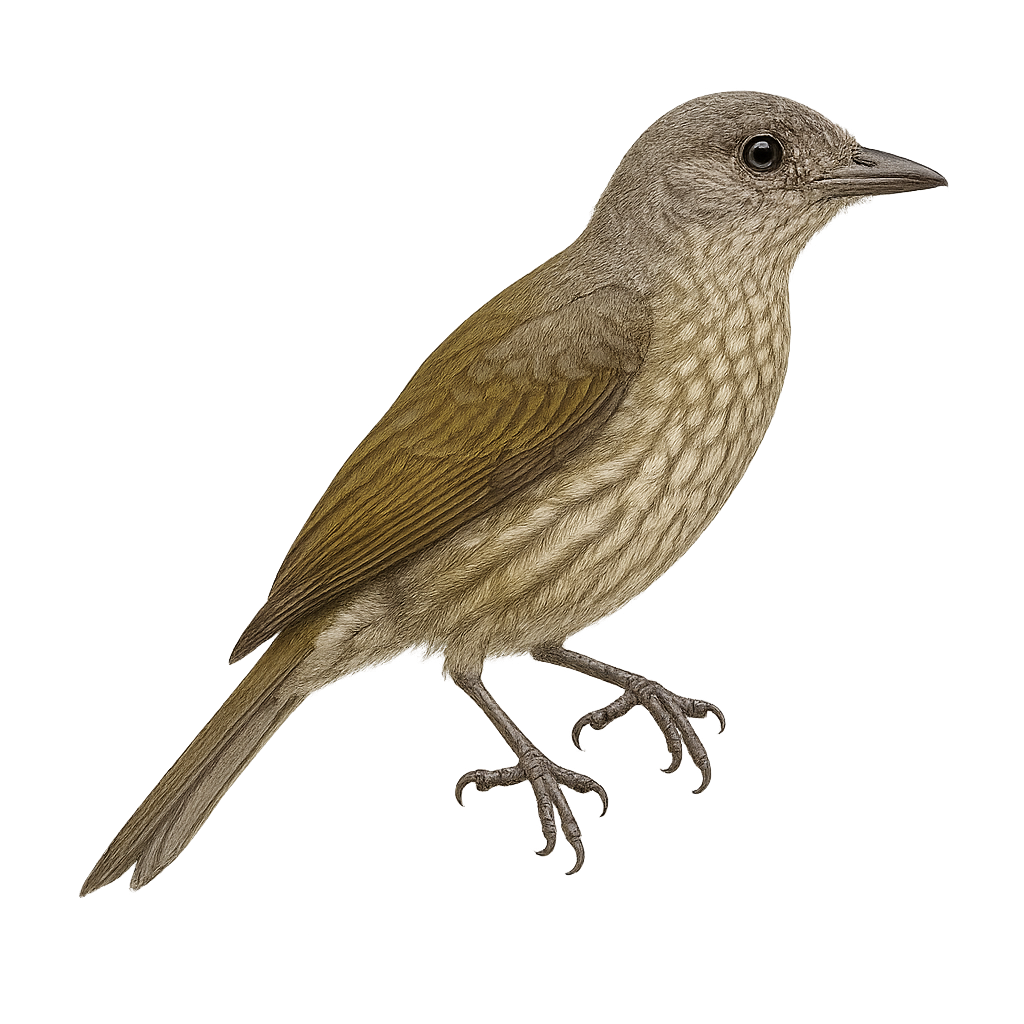
The Spotted Honeyguide, or Indicator maculatus, is a fascinating bird belonging to the family Indicatoridae. This small bird is primarily known for its unique behavior of guiding humans and animals to wild bee hives, from which it derives its name. It measures about 18 cm in length and features an olive-brown plumage with distinctive white spots on its wings and belly. Its natural habitat spans the tropical and subtropical forests of Central and West Africa. The Spotted Honeyguide is a diurnal bird, active mainly during the day, and feeds primarily on beeswax and bee larvae. Although its conservation status is currently considered "least concern," deforestation and habitat loss could pose long-term threats.
The Indri is one of the largest lemurs in Madagascar, known for its piercing call that echoes through the forest. With its thick fur and long arms, it primarily inhabits the tropical forests of eastern Madagascar. The Indri feeds mainly on leaves, fruits, and flowers, and remains loyal to a small territory which it defends with its songs. Due to deforestation and poaching, the Indri is critically endangered.
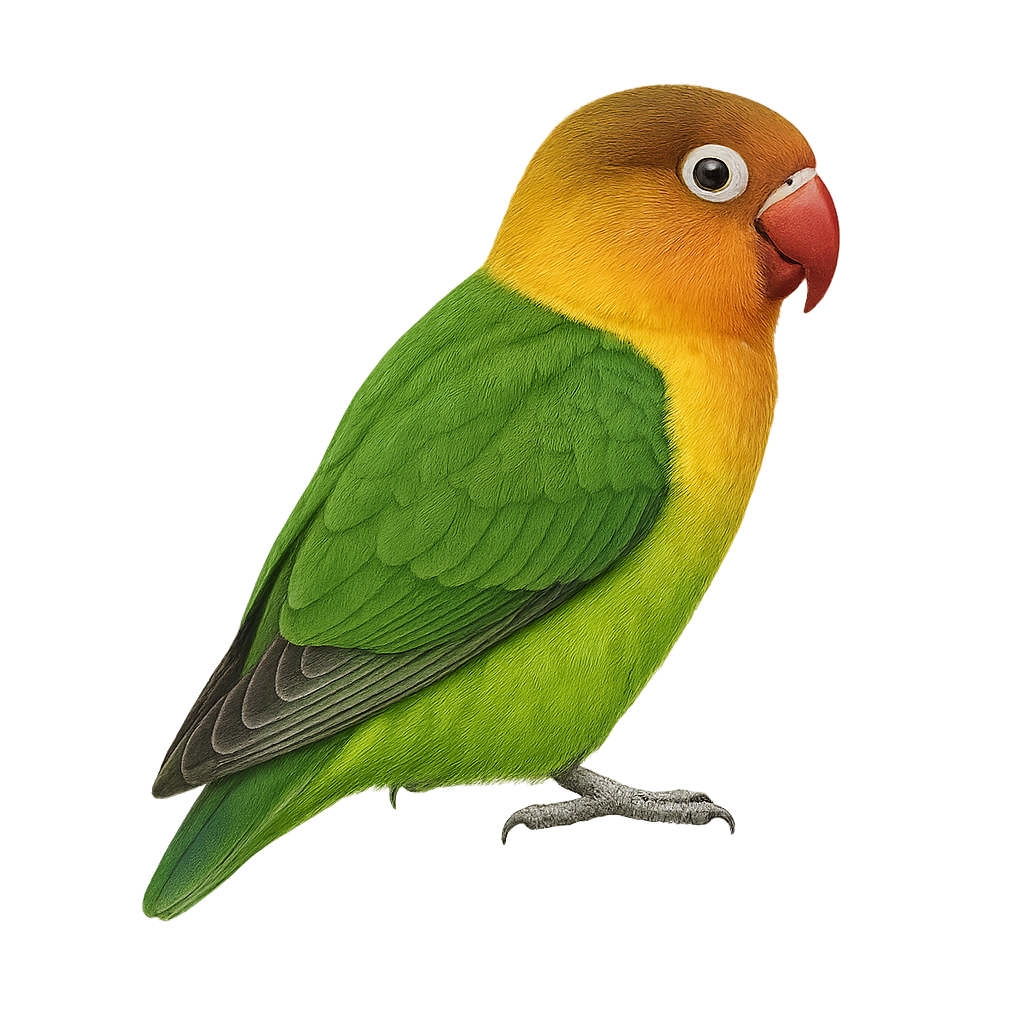
The Fischer's Lovebird is a small, colorful parrot native to northern Tanzania. It is easily recognizable by its bright green plumage, orange head, and red beak. Measuring about 14 cm in length, it is often seen in noisy flocks. These birds are known for their social behavior and ability to form strong bonds with their partners. They primarily inhabit savannas, woodlands, and grasslands, where they feed on seeds, fruits, and berries. Nesting usually occurs in tree cavities, and they are known for their ability to use various materials to build their nests.
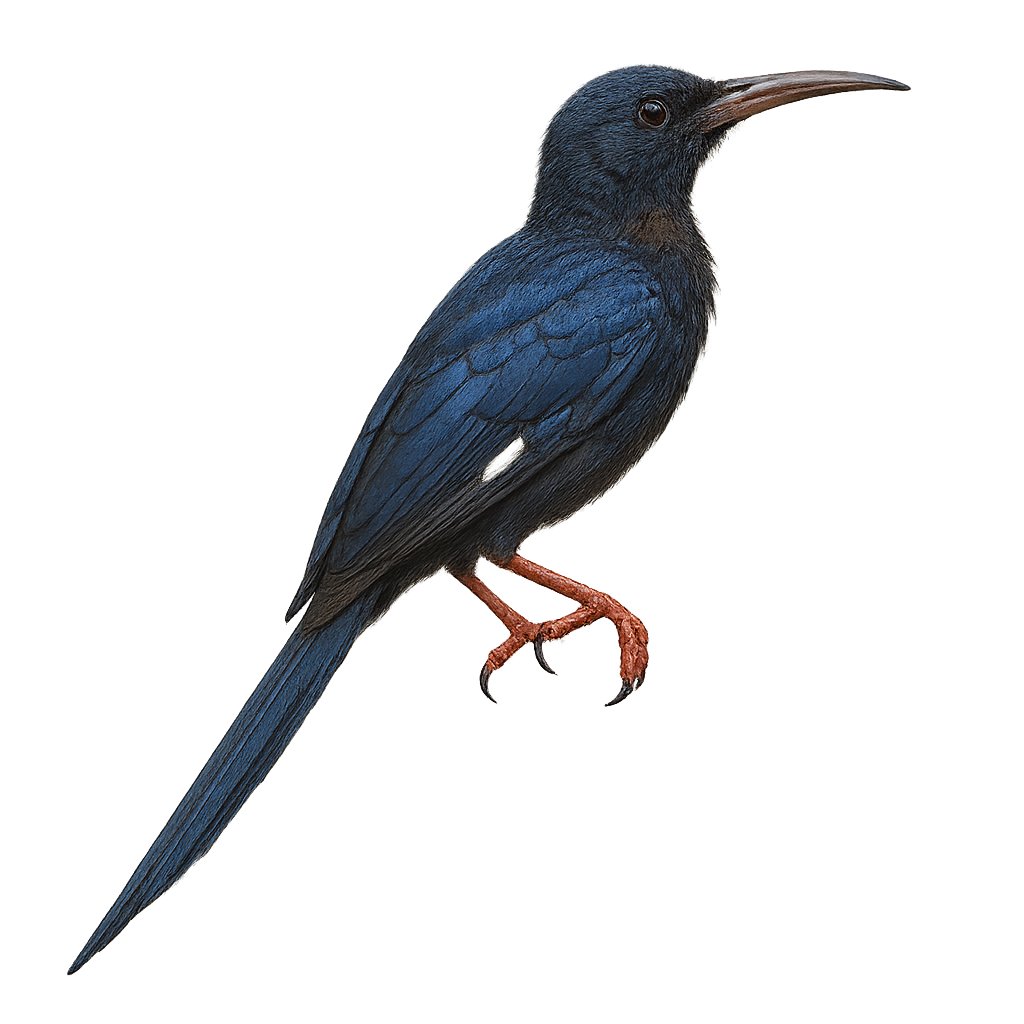
The Somali Hoopoe is a fascinating bird, recognizable by its glossy black plumage with metallic sheen and long curved beak. It primarily inhabits the arid and semi-arid regions of the Horn of Africa, notably in Somalia and parts of Ethiopia. This bird is often seen in small groups, feeding on insects it digs out of the ground with its beak. Although it is relatively not very shy, it remains cautious of potential threats. Its song is a mix of whistles and trills, often heard at dawn and dusk. The Somali Hoopoe plays an important role in its ecosystem by controlling insect populations.
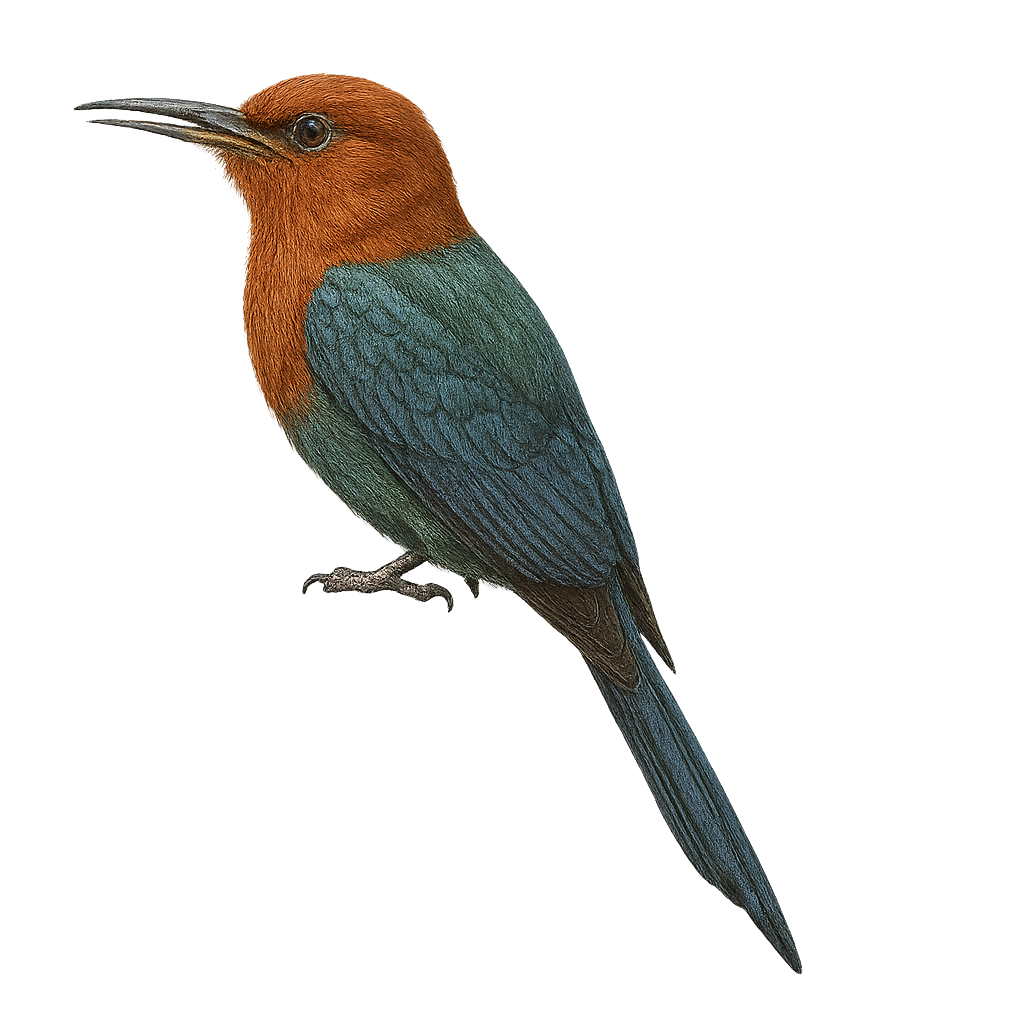
The Chestnut-headed Woodhoopoe is a fascinating bird, recognizable by its chestnut-colored head and iridescent plumage. It belongs to the Phoeniculidae family and is primarily found in the tropical forests of Central and East Africa. This bird measures about 30 to 35 cm in length, with a long, curved beak ideal for extracting insects and larvae from tree bark. Its social behavior is remarkable, often living in family groups that communicate through distinctive calls. The Chestnut-headed Woodhoopoe is a diurnal bird, active mainly in the morning and late afternoon. Although relatively tolerant of human presence, it prefers dense wooded areas where it can easily hide.
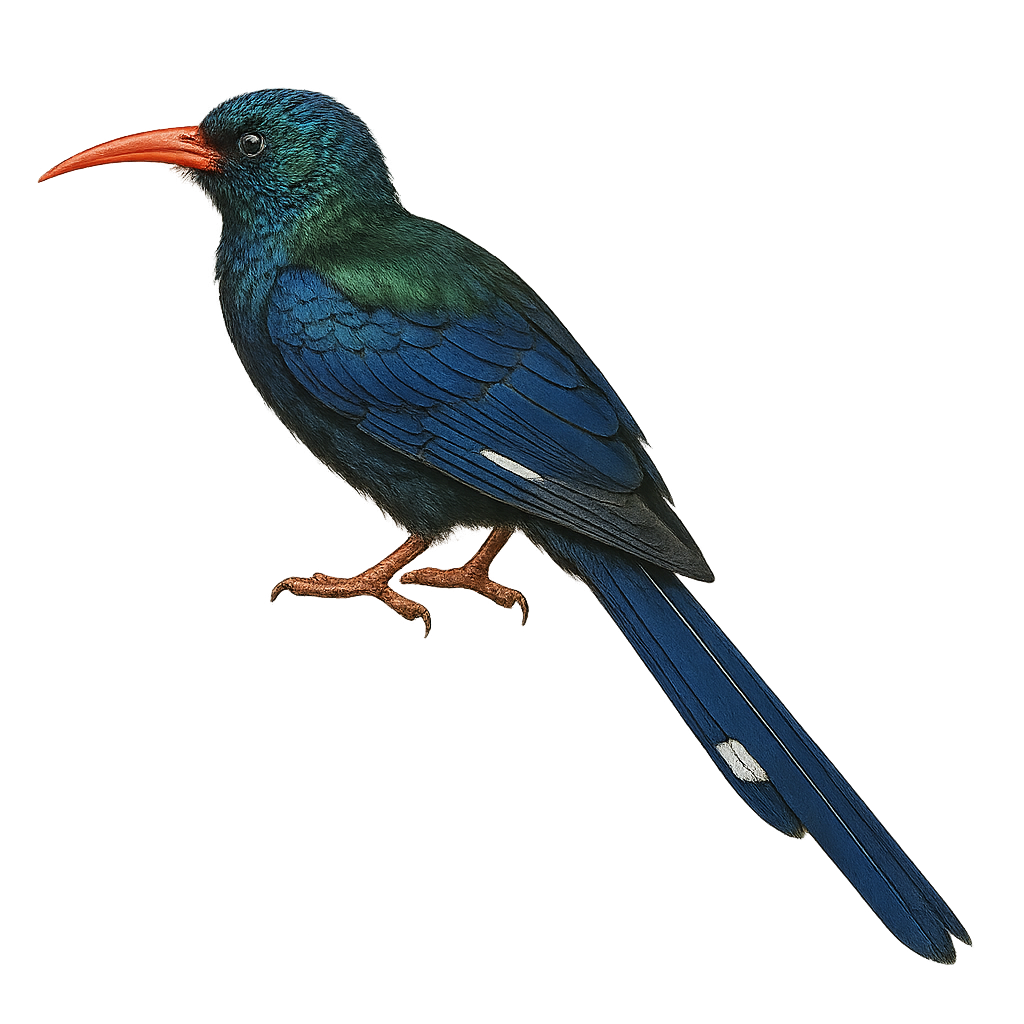
The Green Woodhoopoe, Phoeniculus purpureus, is a striking bird with metallic green plumage that shimmers with purple and blue hues. It has a long, curved bill perfect for probing tree bark for insects. This social bird lives in family groups of up to a dozen individuals and is found mainly in the wooded savannas and open forests of sub-Saharan Africa. Its call is a series of rhythmic, repeated cries often likened to laughter. The Green Woodhoopoe is diurnal, active mainly in the morning and late afternoon. Although not currently threatened, deforestation poses a potential risk to its natural habitat.

The Pyrenean Chamois, or Rupicapra pyrenaica, is a medium-sized ungulate, easily recognizable by its reddish-brown coat and curved horns. It measures about 70 to 80 cm at the shoulder, with a length of 1 to 1.2 meters, and weighs between 25 and 50 kg. Its body is compact and robust, adapted for mountainous terrain, with long and powerful legs, perfect for moving on steep slopes. The Pyrenean Chamois primarily inhabits the mountains of the Pyrenees, the northern region of Spain, and southern France. It prefers rocky slopes and wooded areas, where it feeds mainly on grasses, plants, berries, and young shoots. The Pyrenean Chamois is a shy and elusive animal, living in family groups during the winter, but often separating into small groups or remaining solitary during the summer. Although the species nearly disappeared in the early 20th century, conservation efforts have led to its recovery. The Pyrenean Chamois is currently classified as a species of least concern, but it remains vulnerable to hunting and habitat loss.
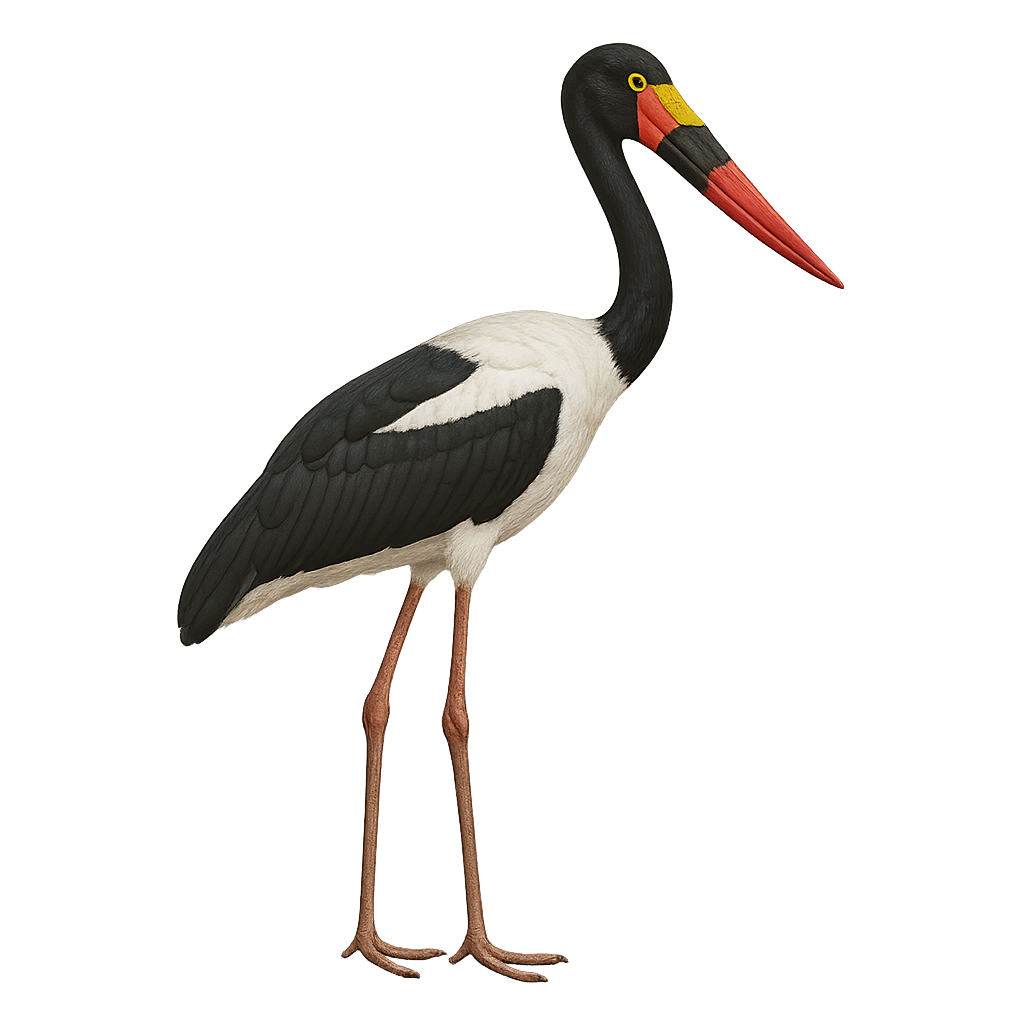
The Saddle-billed Stork is a large wading bird with distinctive black and white plumage and a bright red bill with a black band. It stands about 1.5 meters tall and has an impressive wingspan. Found mainly in sub-Saharan Africa's wetlands, it feeds on fish, frogs, and small reptiles. This majestic bird is often seen alone or in pairs, slowly patrolling shallow waters in search of prey. Although its conservation status is currently of least concern, habitat destruction poses a potential threat. The Saddle-billed Stork is a symbol of African wetland biodiversity and a fascinating sight for birdwatchers and nature enthusiasts.
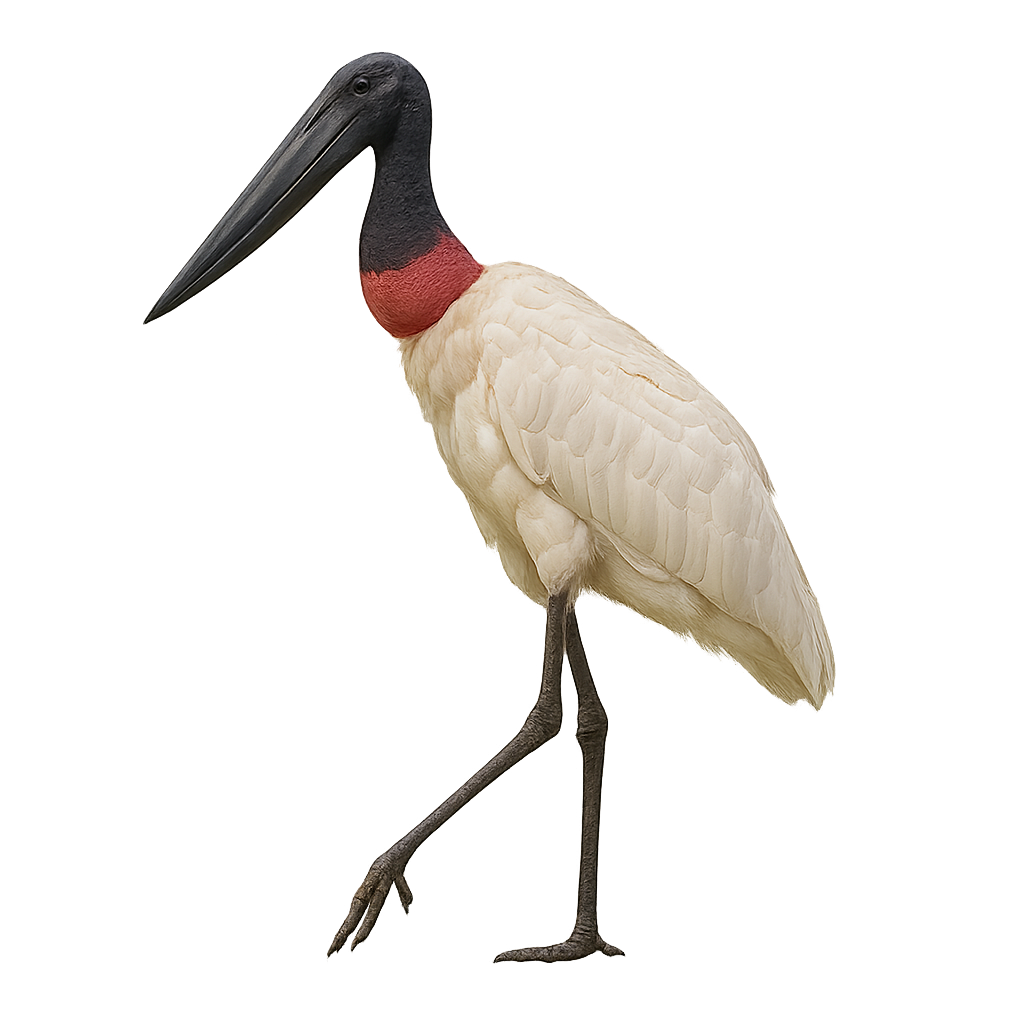
The Jabiru is a large stork species, easily identifiable by its striking white plumage and distinctive black neck. It is the largest member of the stork family in the Americas, reaching a height of 1.4 meters with an impressive wingspan of 2.6 meters. Its massive black bill is perfectly adapted for catching fish, its primary food source. It is mainly found in the wetlands of Central and South America, where it plays a crucial role in the ecosystem by regulating fish populations and other small aquatic animals. Despite its imposing size, the Jabiru is a rather discreet bird, often seen alone or in small groups.
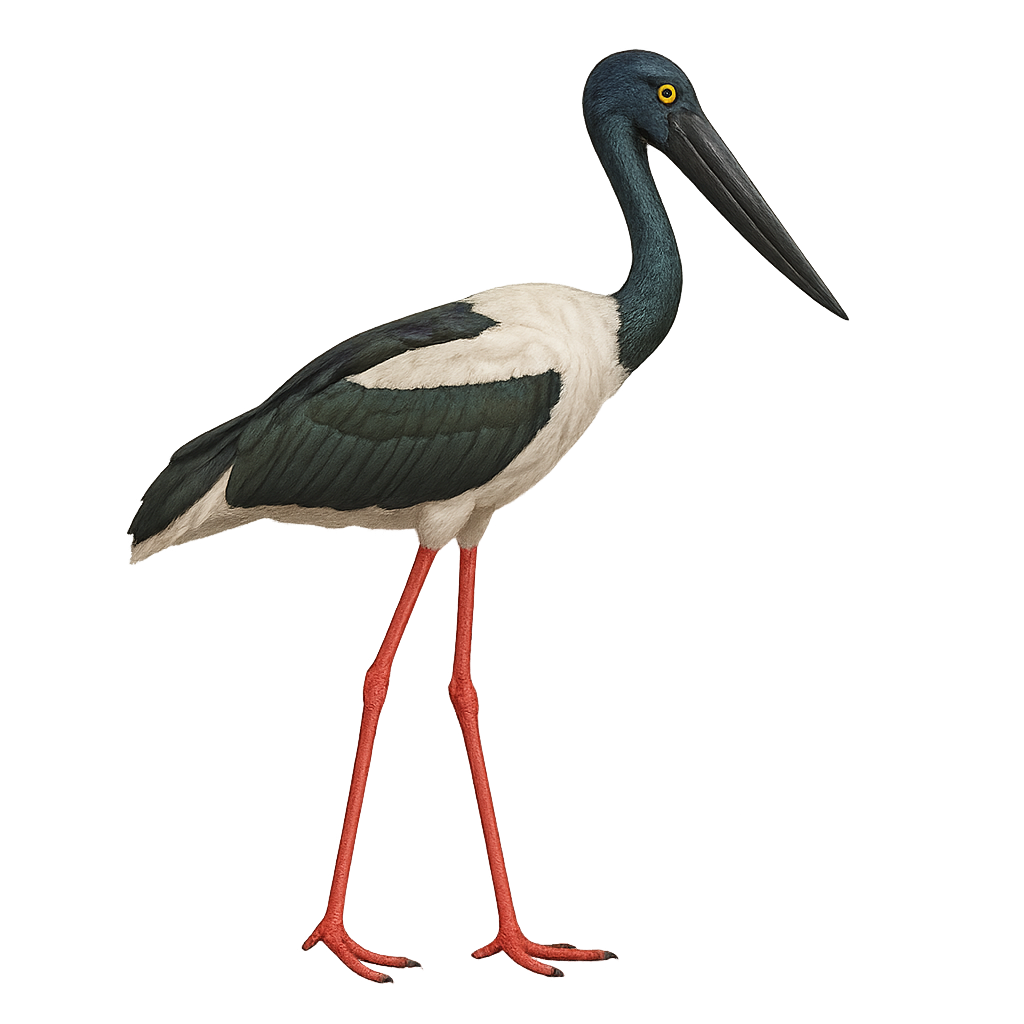
The Black-necked Stork, or Ephippiorhynchus asiaticus, is a large wader with distinctive plumage. It features a bright white body contrasted by an iridescent black neck and head. Its long red legs and massive black bill give it a majestic appearance. Found mainly in wetlands, marshes, and rivers of South and Southeast Asia, this stork is a solitary bird or lives in small groups, feeding primarily on fish, frogs, and aquatic insects. Although generally silent, it can produce bill-clattering sounds during courtship. Its population is declining due to habitat loss and pollution, but it is still present in several nature reserves.
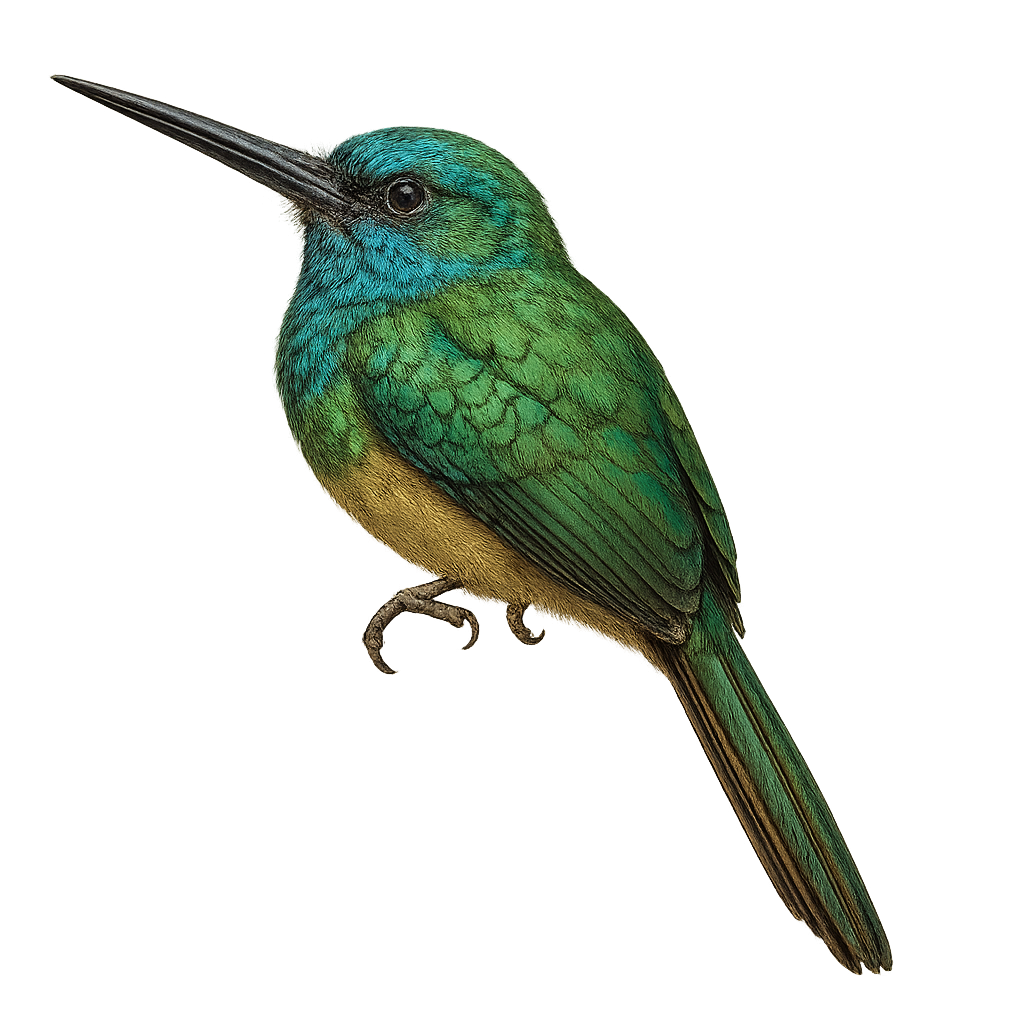
The Bluish-fronted Jacamar, scientifically known as Galbula cyanescens, is a captivating bird from the Galbulidae family. It is primarily found in the humid tropical forests of South America, particularly in Brazil and Bolivia. This bird is distinguished by its striking plumage, featuring shades of blue and green that catch the sunlight. It measures about 18 to 20 cm in length and has a long, slender beak, perfect for catching insects in flight. The Bluish-fronted Jacamar is often seen perched on branches, patiently watching for prey. Although relatively discreet, its melodious song can be heard throughout the canopy. It plays a crucial role in the ecosystem by regulating insect populations.
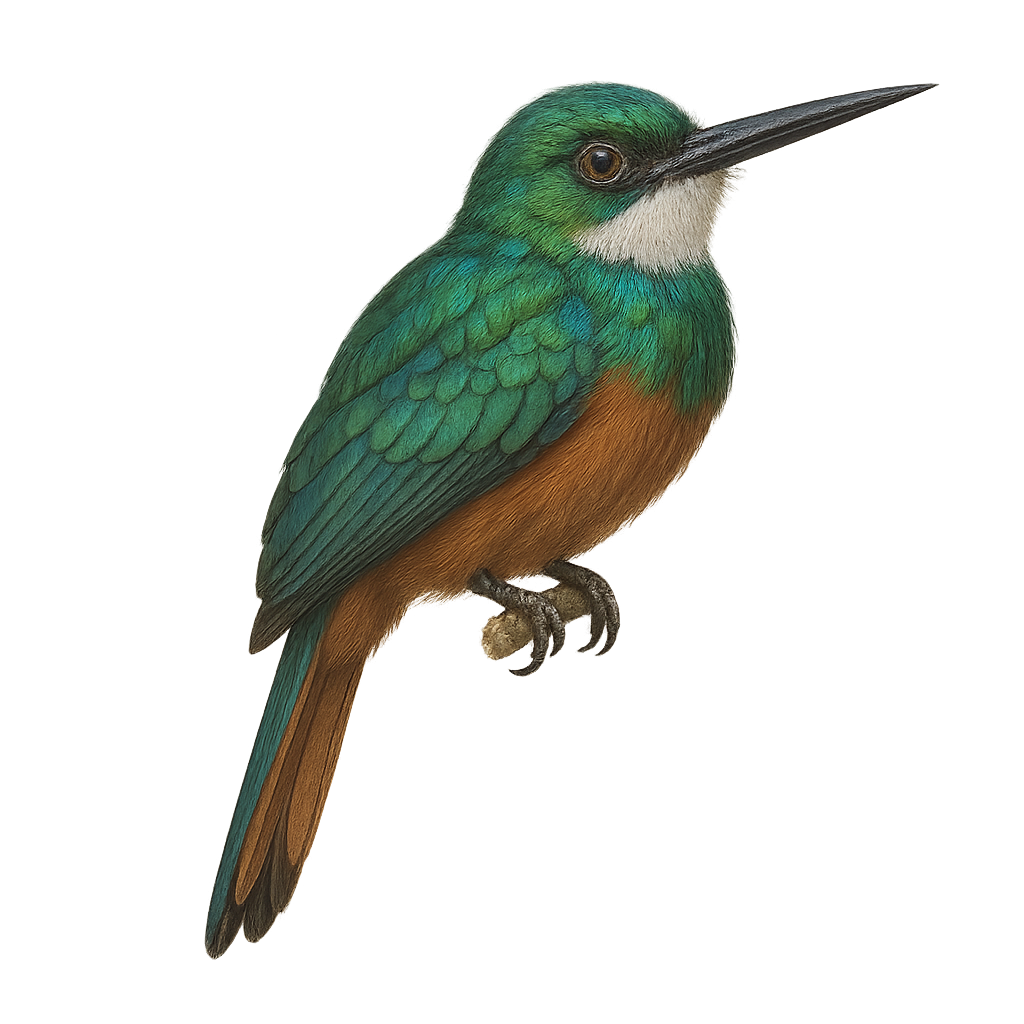
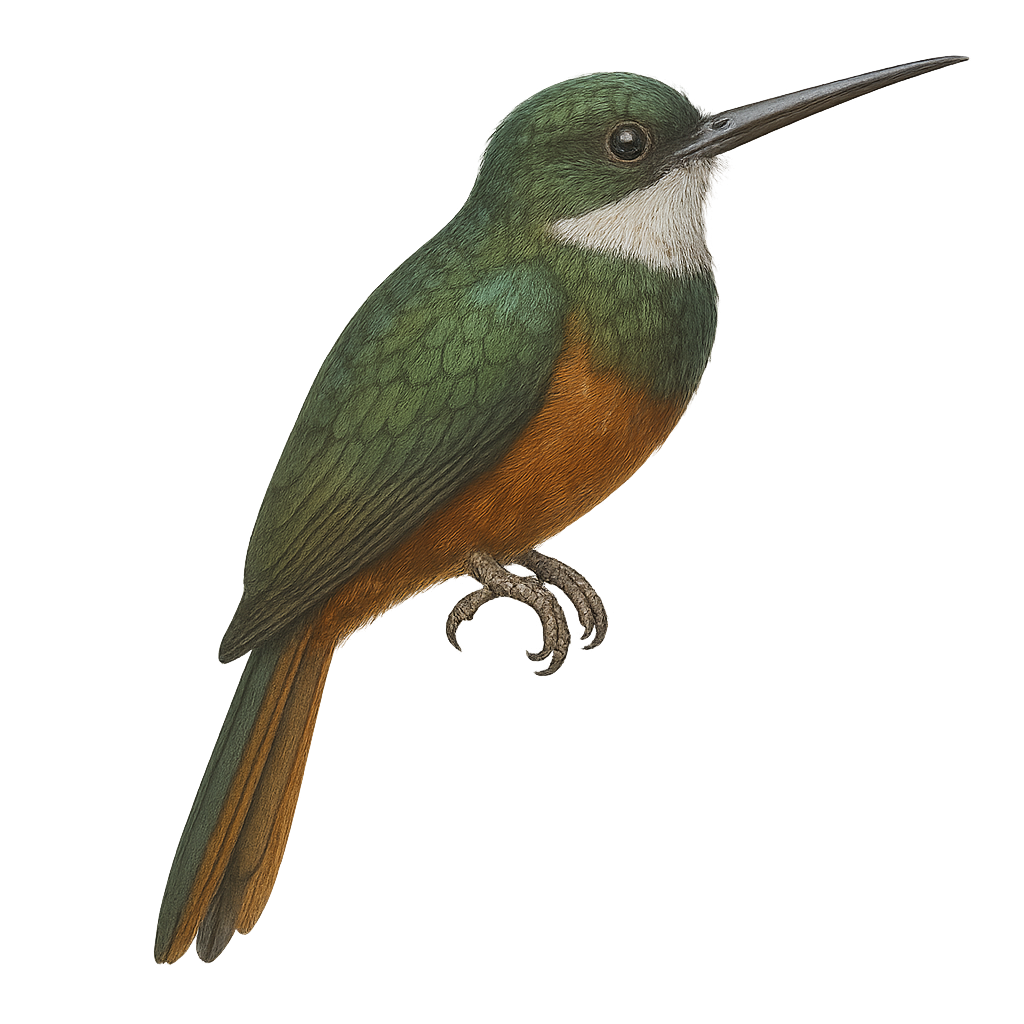
The Rufous-tailed Jacamar, or Galbula tombacea, is an elegant and colorful bird primarily found in the tropical forests of South America. It is recognizable by its metallic green plumage on the back and head, contrasting with its white throat and distinctive rufous tail. This bird measures about 25 cm in length and has a long, slender beak, perfect for catching insects in flight. It is often seen perched quietly on a branch, scanning its surroundings for prey. The Rufous-tailed Jacamar is a diurnal bird, active mainly during the day. It prefers dense forest habitats but can also be found in open wooded areas and forest edges.
The Rufous-tailed Jacamar is an elegant and colorful bird, easily recognizable by its metallic green plumage and long rufous tail. It primarily inhabits the dense tropical forests of Central and South America, where it feeds mainly on insects caught in flight with its long, slender bill. This bird measures about 25 cm in length and is often seen perched quietly on low branches, from where it surveys its territory. Although discreet, its melodious song can be heard throughout the canopy. The Rufous-tailed Jacamar is a sociable bird, often seen in small groups or pairs, and it plays an important role in controlling insect populations in its natural habitat.
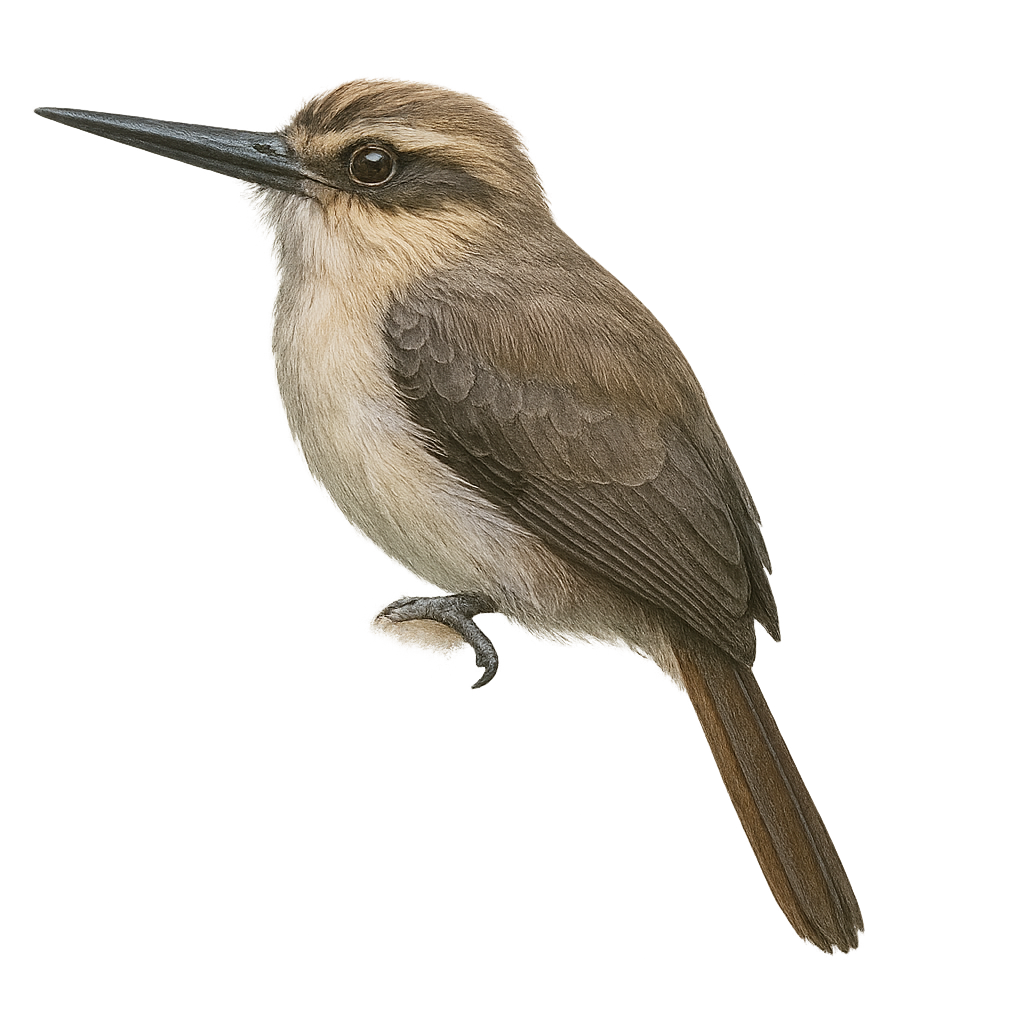
The Three-toed Jacamar is a fascinating bird, endemic to Brazil, distinguished by its bright plumage and long, slender beak. It primarily inhabits humid tropical forests and wooded areas, where it feeds mainly on flying insects. This bird is known for its ability to remain motionless for long periods, patiently waiting for its prey to come within reach. Although its habitat is limited, it adapts well to environmental changes, allowing it to survive in fragmented areas. Its population is currently stable, but deforestation continues to threaten its natural habitat.
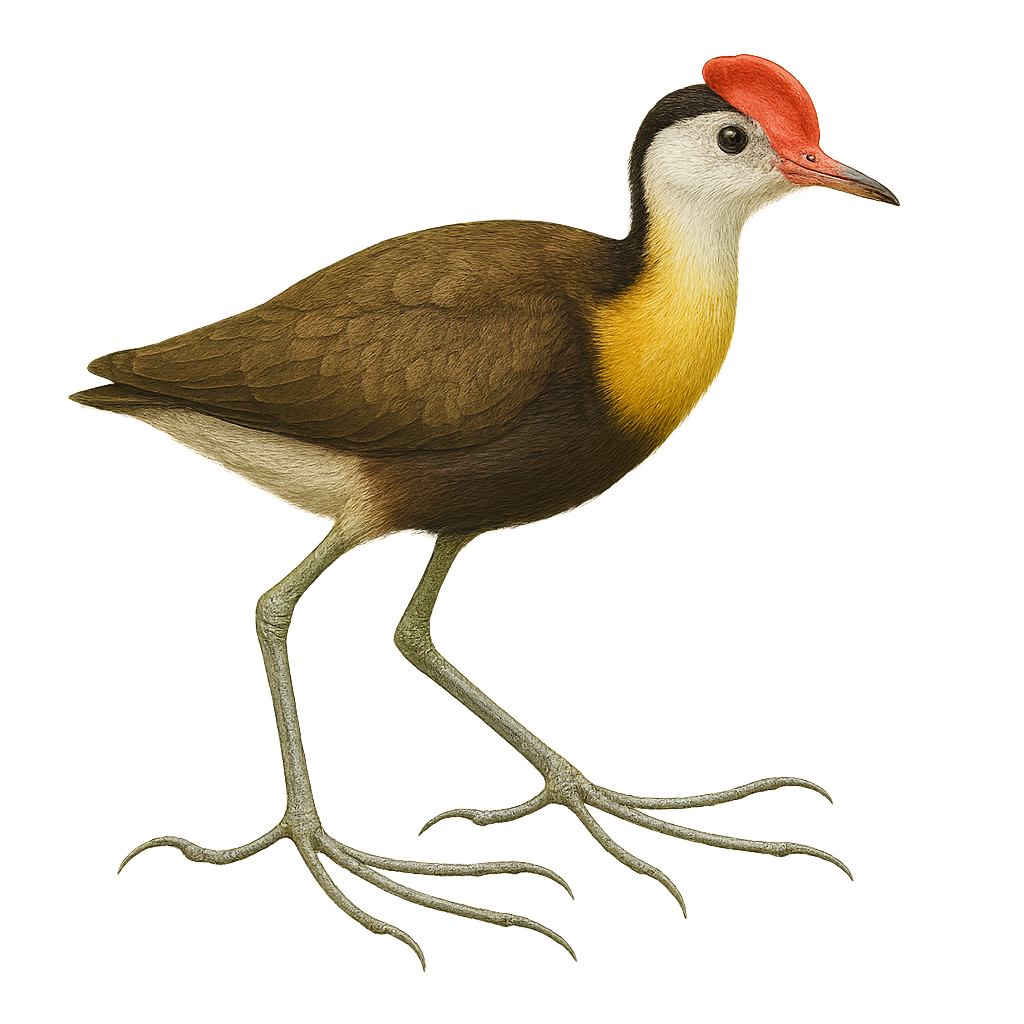
The Comb-crested Jacana, known for its long legs and slender toes, is a fascinating aquatic bird primarily inhabiting the wetlands of Australia and New Guinea. It is easily recognizable by its bright red comb and golden-brown plumage. This bird is an excellent swimmer and walker on water lilies, thanks to its long, thin toes that distribute its weight. The Comb-crested Jacana is polyandrous, meaning the female mates with several males, leaving them responsible for incubating the eggs and caring for the young. It primarily feeds on insects and other small invertebrates found on the water's surface.
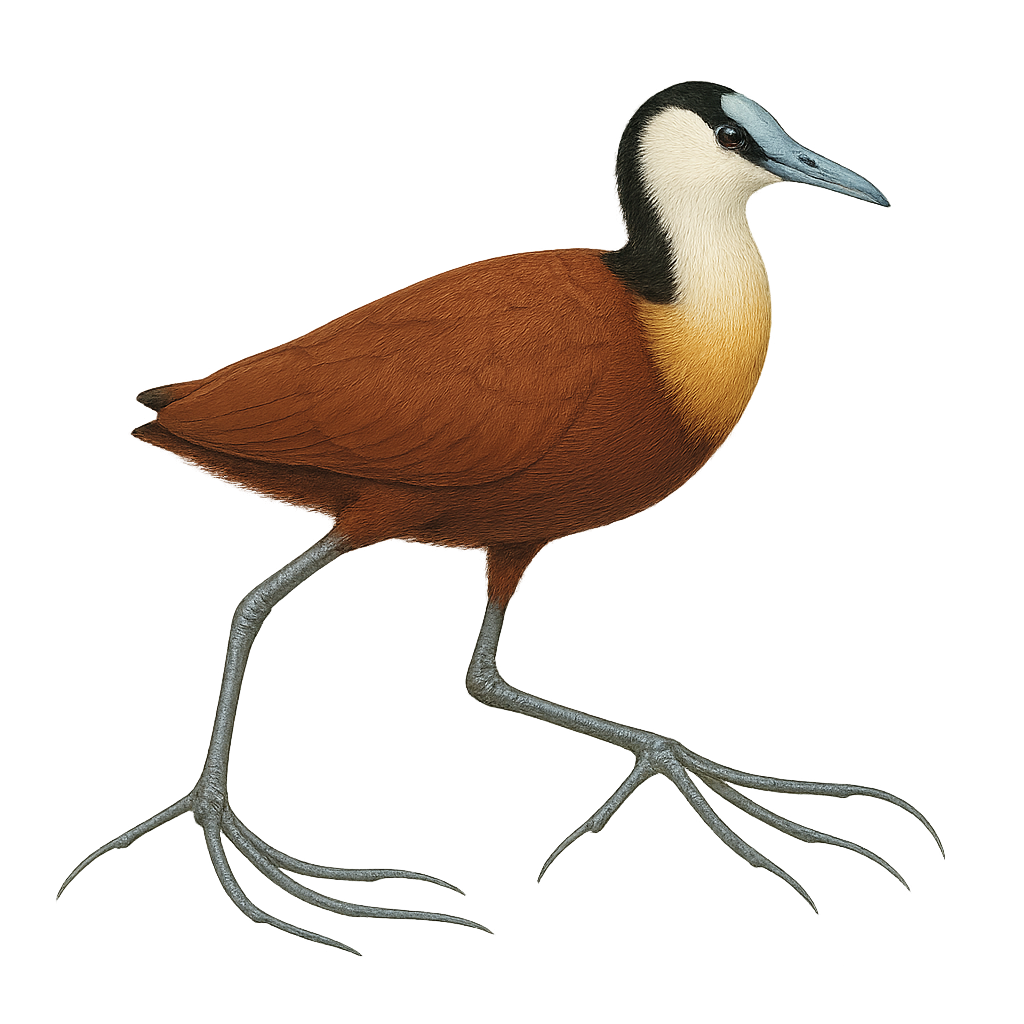
The African Jacana, Actophilornis africanus, is a water bird known for its ability to walk on lily pads due to its long toes and claws. It features a golden-brown chest and neck, contrasting with its dark brown back and black wings. The forehead is adorned with a pale blue frontal shield, and the beak is blue-grey. This bird is mainly found in the wetlands of sub-Saharan Africa, where it feeds on insects, mollusks, and seeds. The African Jacana is polyandrous, meaning the female mates with several males, who then take care of incubating the eggs and caring for the young. This species is an excellent indicator of the health of aquatic ecosystems.
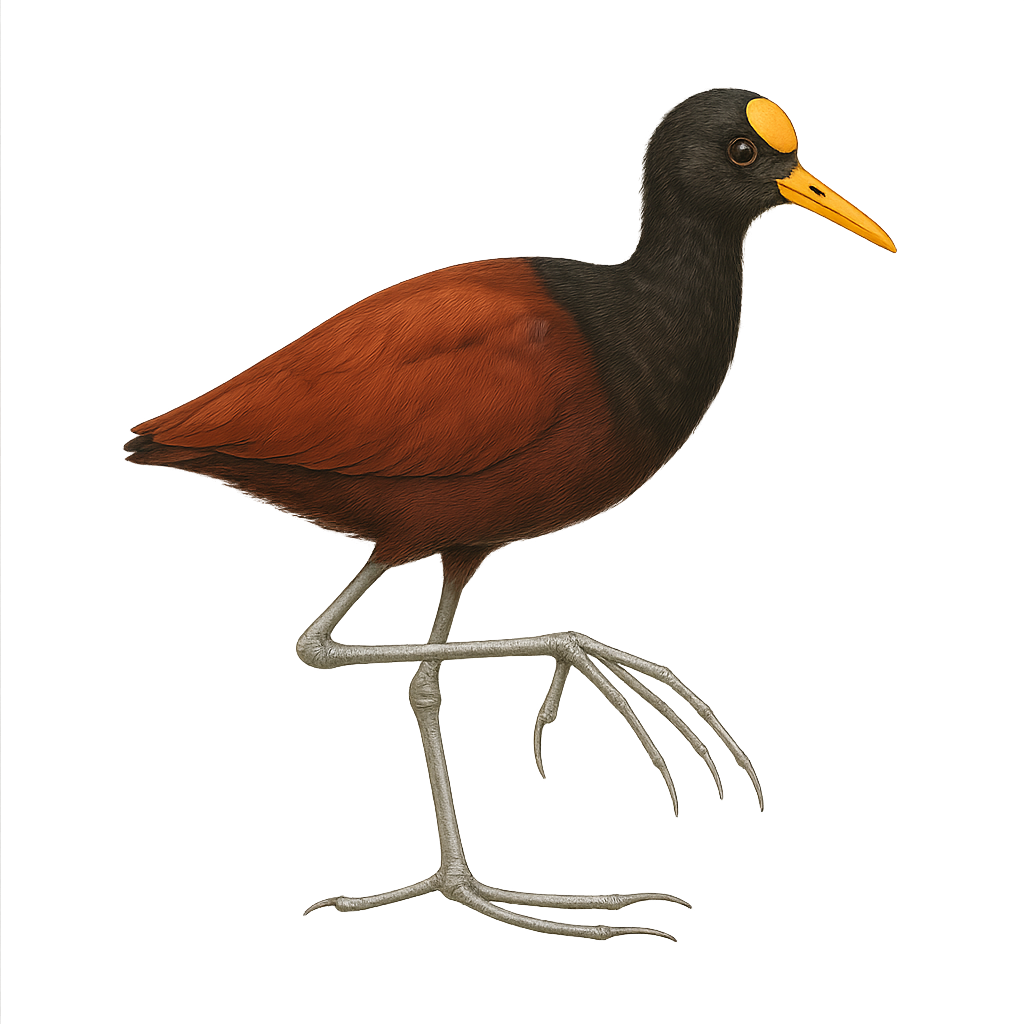
The Northern Jacana, or Jacana spinosa, is a waterbird known for its long legs and elongated toes, allowing it to walk effortlessly on lily pads and other floating vegetation. It features a reddish-brown plumage with bronze-tinted wings and a bright yellow bill extending into a frontal shield. This bird is primarily found in the wetlands of Central America and the southern United States. The Northern Jacana is noted for its polyandrous behavior, where the female mates with multiple males, each taking care of a nest. It feeds mainly on insects, small mollusks, and seeds found on the water's surface.
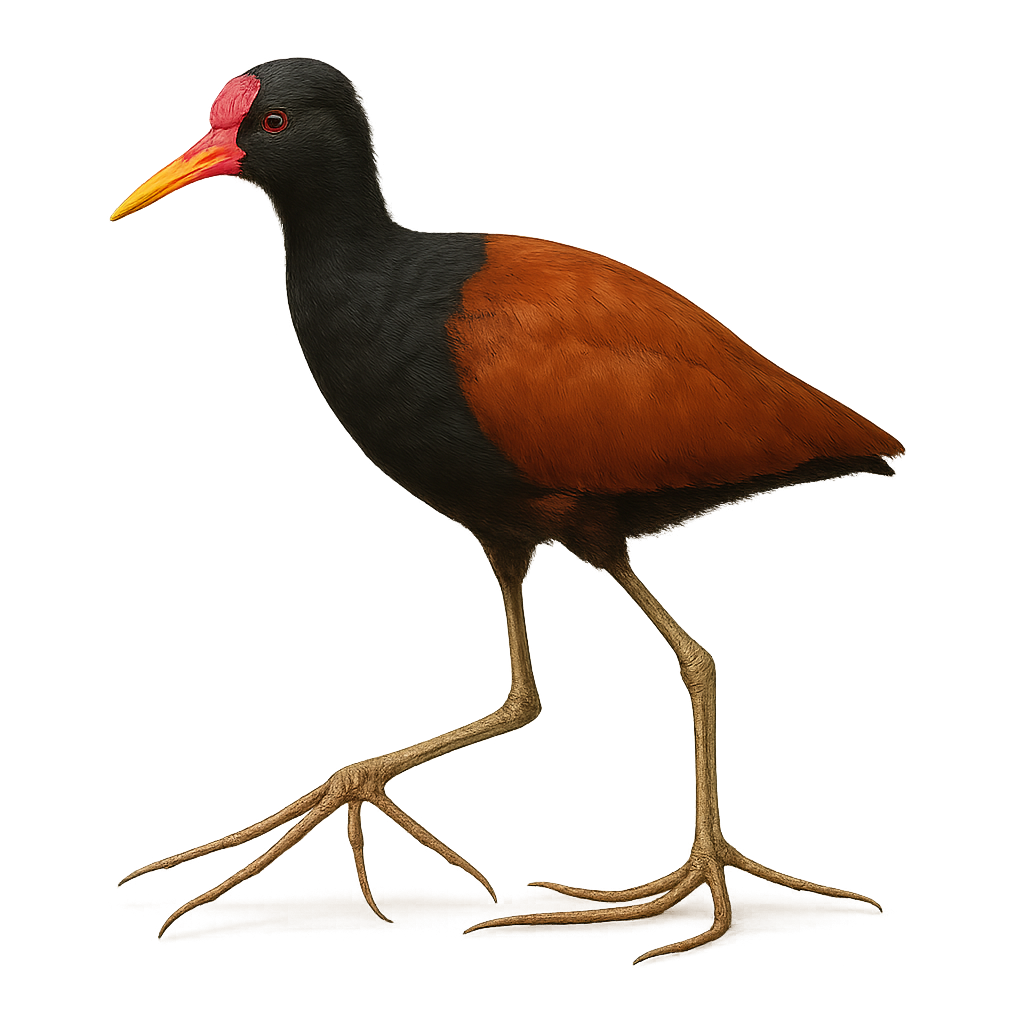
The Wattled Jacana, or Jacana jacana, is a striking water bird known for its long legs and elongated toes, allowing it to walk effortlessly on water lilies and other floating plants. Native to the wetlands of South America, this bird features dark brown to black plumage with wings that have greenish sheen and a bright yellow bill topped with a red wattle. Jacanas are known for their polyandrous behavior, where the female mates with multiple males, each responsible for incubating the eggs. They primarily feed on insects and small invertebrates found on the water's surface. Their call is a sharp, piercing cry, often heard at dawn and dusk.
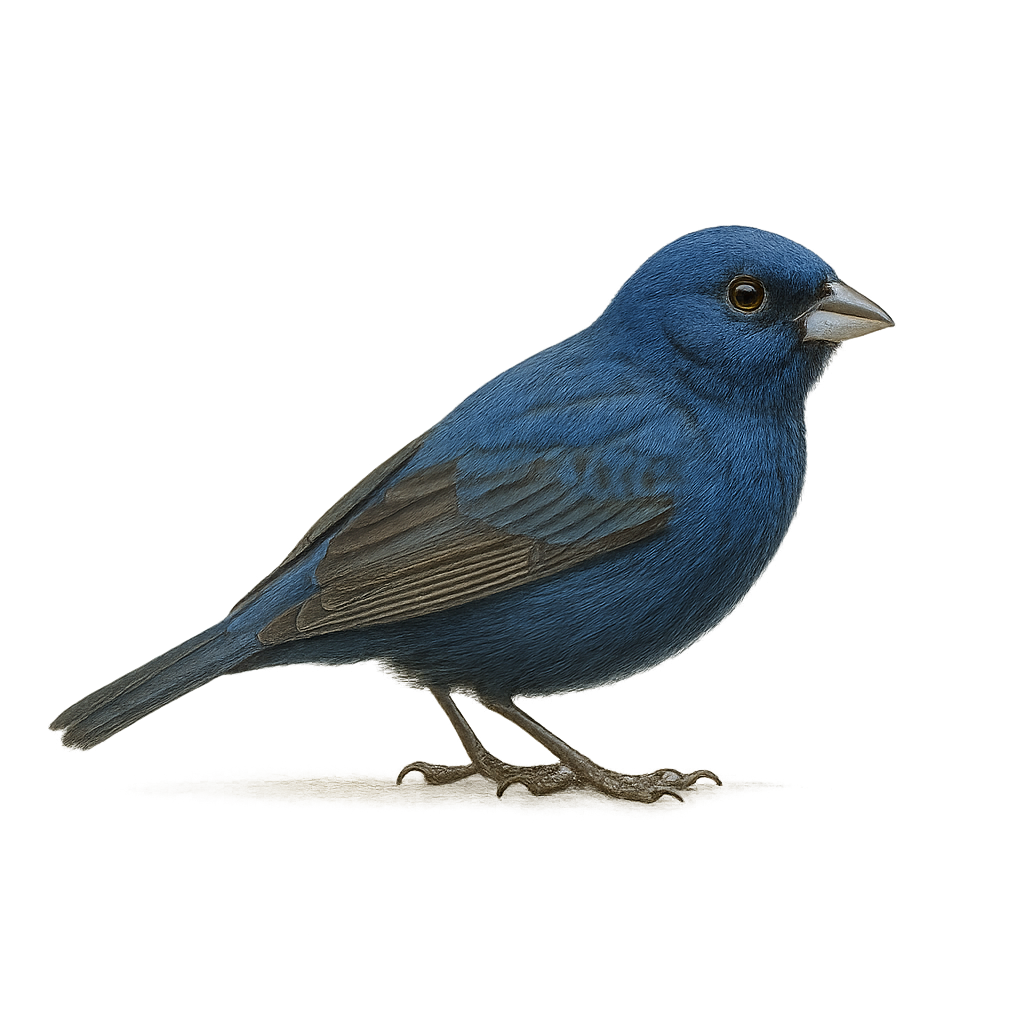
The Blue-black Grassquit, or Volatinia jacarina, is a small passerine bird in the Thraupidae family, primarily found in Central and South America. This bird is notable for the male's blue-black plumage, while the female displays more brownish tones. It is often seen in open areas, grasslands, and cultivated fields. Its song is a rapid, repetitive chirping. The Blue-black Grassquit is known for its spectacular courtship displays, where the male performs vertical jumps to attract the female's attention. Although quite common in its range, it is sensitive to environmental changes and habitat loss due to agricultural expansion.
The Jaguar is a large, robust, and powerful feline, easily recognizable by its spotted coat, characterized by dark rosettes on a golden or yellow background. It measures between 1.2 and 1.8 meters in length, with a tail of 60 to 80 cm, and weighs between 45 and 100 kg, with males generally being larger than females. Its body is massive and muscular, adapted for hunting in a variety of environments, from tropical forests to savannas. The Jaguar possesses one of the most powerful jaws in the animal kingdom, capable of piercing the thick skin of its prey, such as capybaras, deer, and even reptiles like caimans. It is also capable of swimming and often hunts aquatic animals. This feline primarily inhabits Central and South America, from southern Mexico to Argentina, preferring tropical forests, swamps, and riparian zones. While the species is still relatively widespread, it is threatened by deforestation, illegal hunting, and habitat loss.