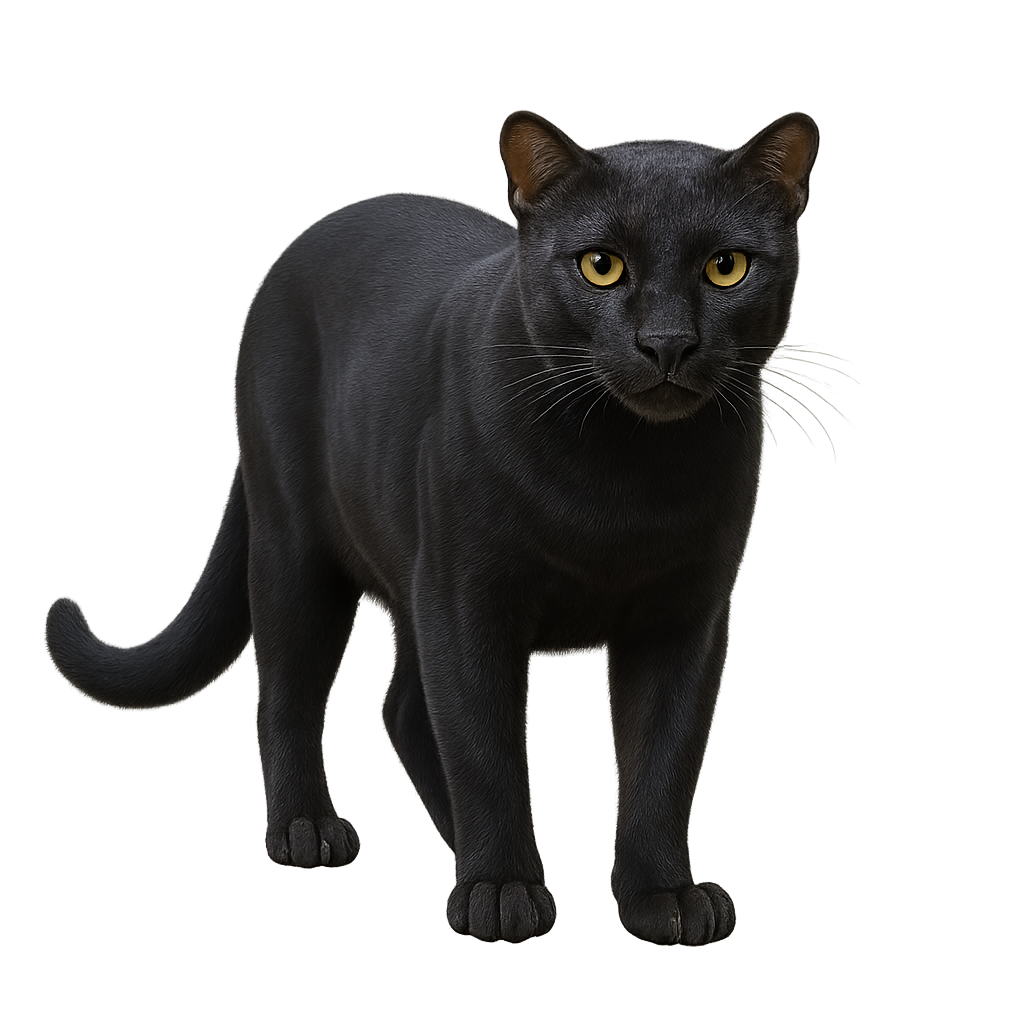
The jaguarundi is a slender wild cat of 50–60 cm (excluding tail), with short legs and uniform grey or reddish coat. A secretive, diurnal species, it inhabits tropical and deciduous forests, scrub and riparian thickets, preying on ground-feeding birds, small rodents and reptiles.
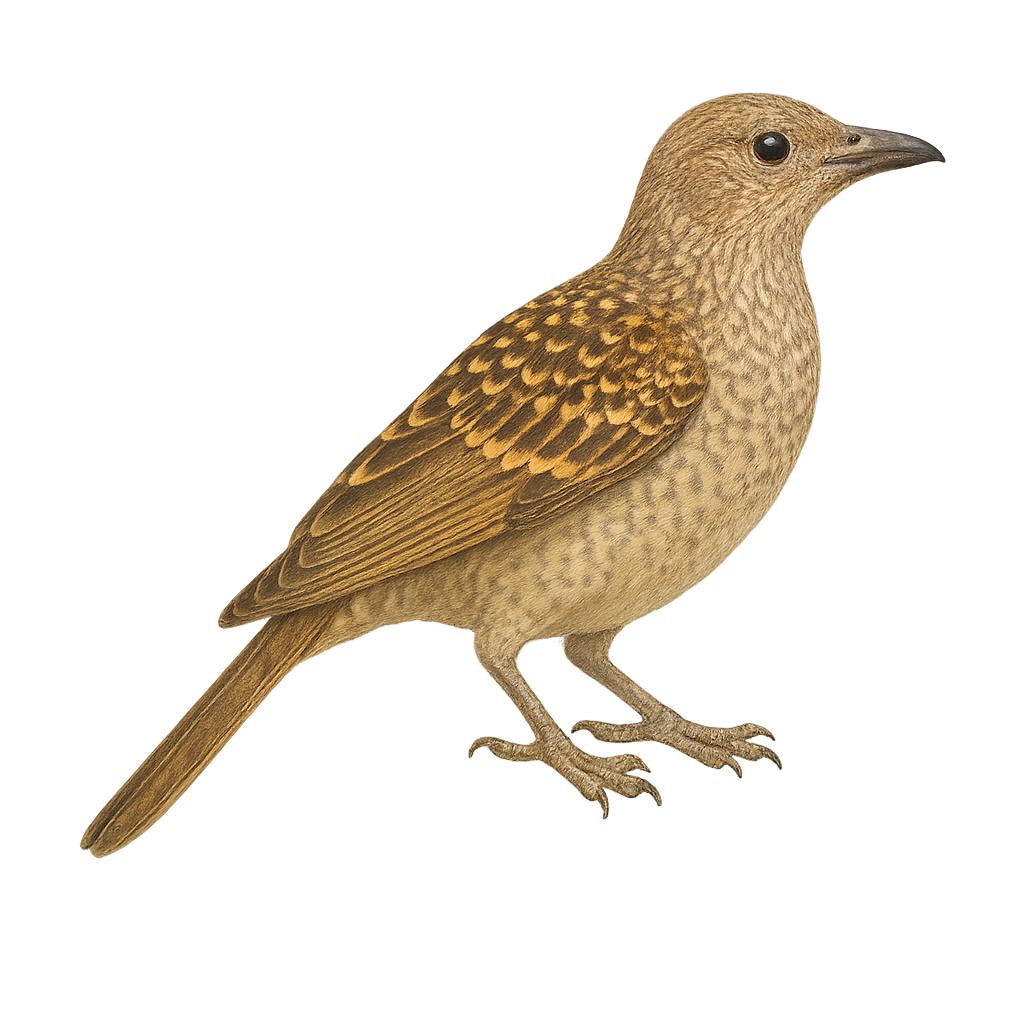
The Spotted Bowerbird, or Chlamydera maculata, is a fascinating bird native to Australia. It is renowned for its elaborate courtship behaviors, where the male constructs structures called bowers, decorated with various colorful objects to attract females. This medium-sized bird features a brown plumage speckled with white, with a distinctive pink patch on the back of its head. It primarily inhabits dry forests, savannas, and open woodland areas. The Spotted Bowerbird is diurnal, being most active in the morning and late afternoon. Although it is relatively tolerant of human presence, it remains cautious and prefers to keep its distance.
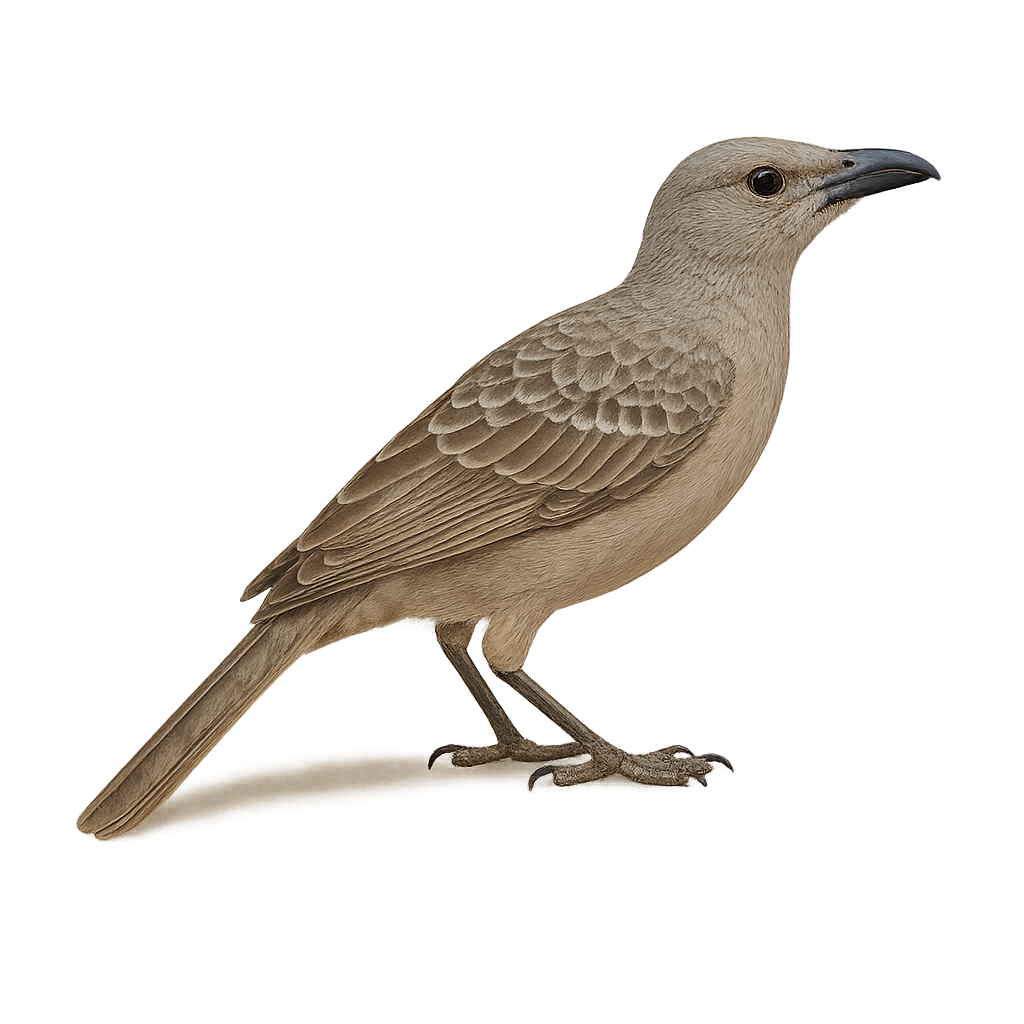
The Great Bowerbird, Chlamydera nuchalis, is a fascinating bird native to Australia, renowned for its unique courtship behavior. Males build elaborate bowers decorated with colorful objects to attract females. Their plumage is primarily gray-brown with a distinctive pink patch on the nape. These birds are mainly frugivorous but also consume insects and other small animals. They inhabit various environments, including open forests, savannas, and woodlands. Their song is varied and often mimics environmental sounds. Although their population is stable, deforestation poses a potential threat.
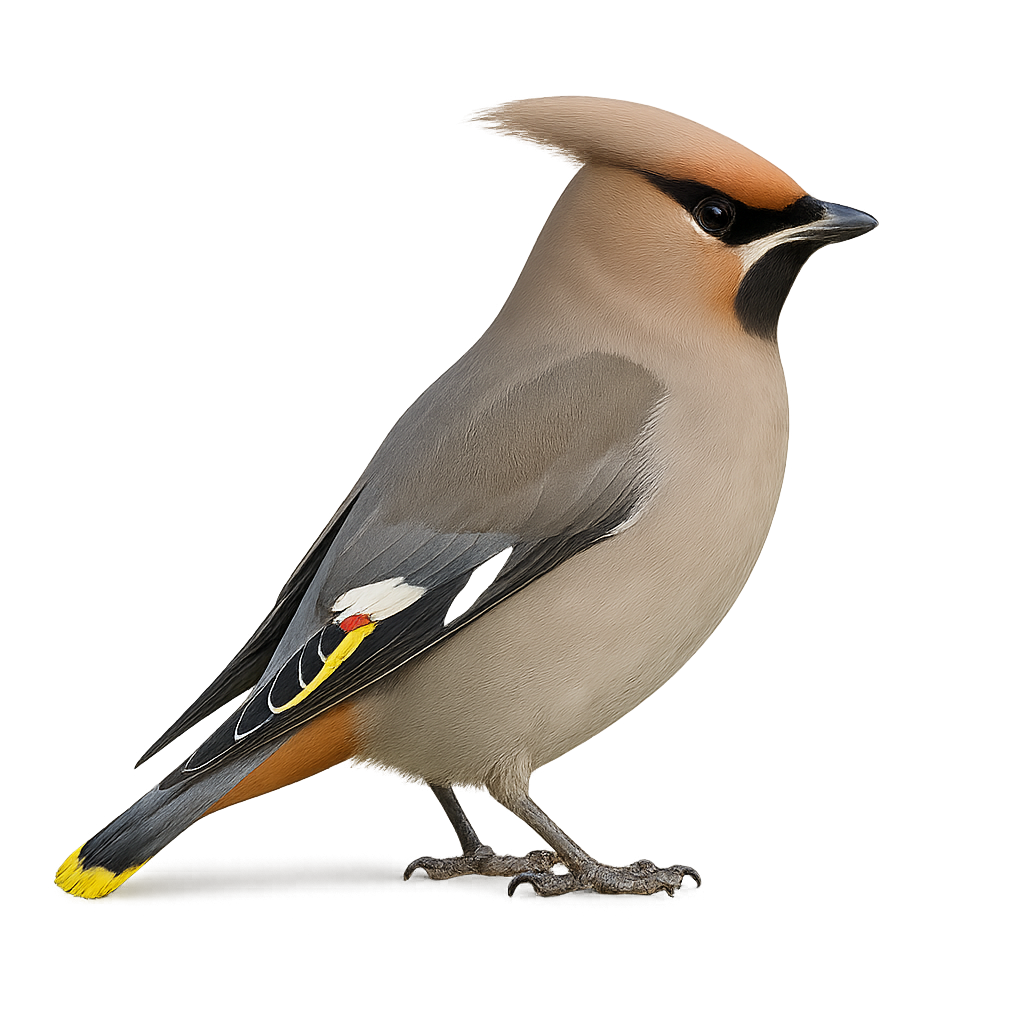
The Bohemian Waxwing is a small colorful bird, easily recognizable by its characteristic crest and the black edges of its feathers. It measures about 20 cm in length, with a wingspan of 30 to 35 cm, and weighs between 50 and 70 g. Its plumage is primarily light gray with bright yellow and red hues on its wings and tail, and it has red and yellow feathers decorating the tips of its plumage. The Bohemian Waxwing primarily inhabits the dense coniferous and deciduous forests of northern Europe and Asia, as well as North America. It is often found in groups, feeding primarily on berries, especially those from juniper and sea buckthorn trees, but it can also eat insects and seeds. This small passerine is also known for its soft call and social behavior, particularly during migration in groups. Although the species is not endangered, it is sensitive to climate change and the availability of its preferred food, berries.
The Cedar Waxwing is an elegant and sociable bird, easily recognizable by its sleek, silky plumage of grayish-brown with bright yellow accents on the tail. It also sports a distinctive crest and a black mask around the eyes. This passerine is often seen in flocks, feeding primarily on berries and fruits, making it a key player in seed dispersal. It is mainly found in open forests, orchards, and urban areas with fruit-bearing trees. Its ability to move in large flocks allows it to cover vast distances in search of food. The Cedar Waxwing is also known for its elaborate courtship displays, where partners exchange berries.
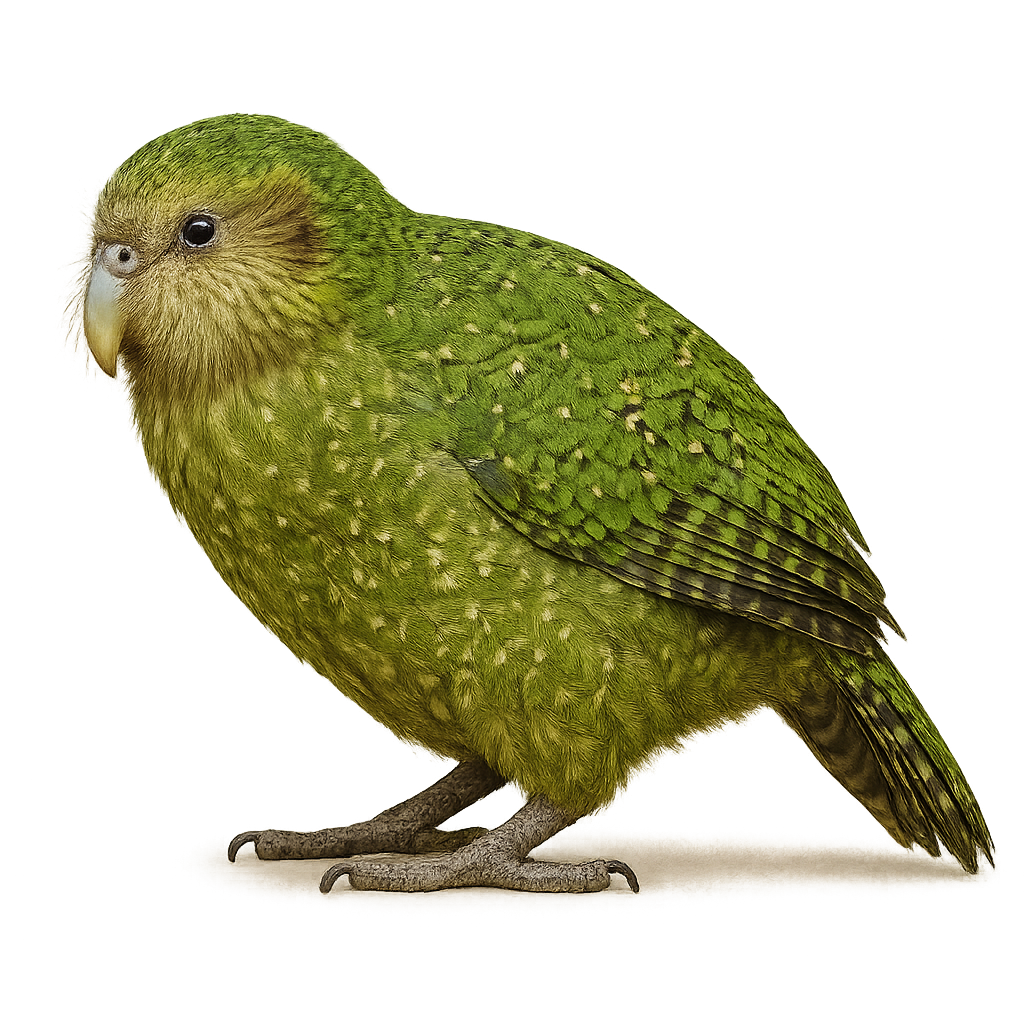
The Kakapo is a nocturnal and terrestrial parrot, easily recognizable by its moss-green plumage and large wings, although this bird cannot fly. It measures about 60 cm in length and weighs between 2 and 4 kg, making it the heaviest parrot. Its plumage is mainly green, with yellow and brown hues that help it blend into its natural environment. The Kakapo is found exclusively in New Zealand, where it prefers dense forests and mountainous areas. It is herbivorous and feeds on plants, fruits, seeds, and roots. Due to its inability to fly, it has developed excellent climbing skills and primarily moves by walking. The species has been severely threatened over the centuries by predation from introduced mammals and habitat loss. Today, the Kakapo is an extremely rare and critically endangered bird, with intense conservation efforts focused on protecting the remaining individuals.
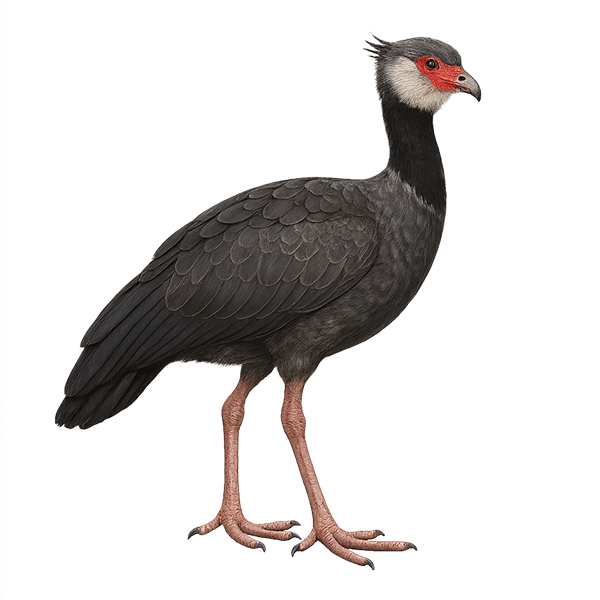
The Northern Screamer, or Chauna chavaria, is a waterbird from the Anhimidae family, mainly found in Colombia and Venezuela. This bird is recognizable by its dark gray plumage, long legs, and piercing call that echoes through the marshes and wetlands it inhabits. The Northern Screamer is an excellent swimmer and primarily feeds on aquatic plants. It is often seen in pairs or small family groups. Although its appearance is imposing, it is relatively not very shy and can be approached with caution. Its population is currently stable, but habitat destruction remains a potential threat.
The Kangaroo is an iconic marsupial, famous for its large size, powerful hind legs, and long tail. It typically measures between 1 and 1.8 meters in length, with a tail length of 80 to 100 cm, and can weigh between 18 and 90 kg, depending on the species. Its coat varies depending on the species but is generally gray or red, with dense fur that protects it from the extreme temperatures of Australia. The Kangaroo is an excellent jumper, capable of covering large distances with its powerful hind legs and its tail, which serves as a counterbalance when it moves. Herbivorous, it primarily feeds on grass, leaves, and young shoots. Kangaroos primarily inhabit open plains, forests, and savannahs in Australia. They are social animals, often living in groups called "mobs," although they can also be solitary. While the species is not endangered, it is sometimes threatened by habitat loss, bushfires, and competition with livestock.
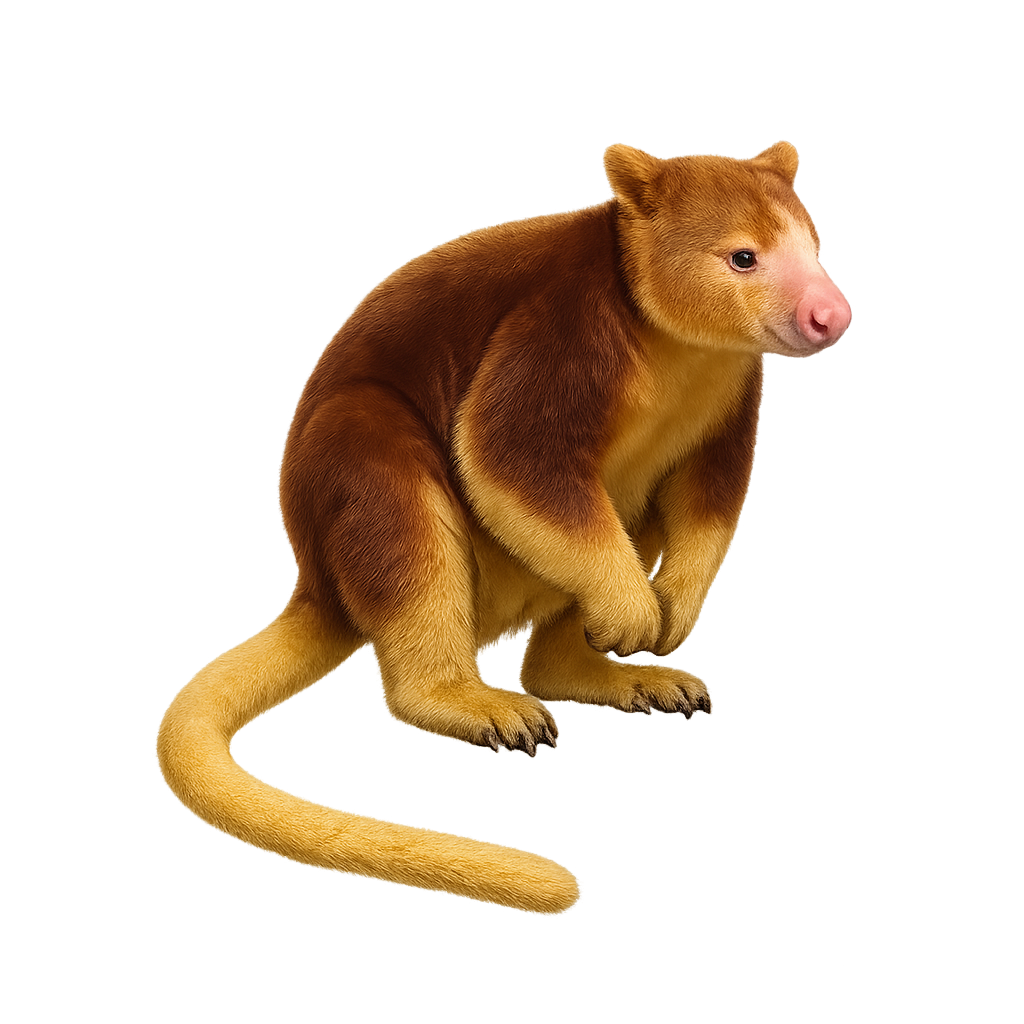
Matschie’s tree kangaroo is a medium-sized marsupial, 60–80 cm long (excluding tail), with reddish-brown fur and a long prehensile tail. Endemic to humid montane rainforests of the Huon Peninsula in Papua New Guinea (1000–3000 m), it spends most of its time in the canopy feeding on fruits, leaves, and insects. Solitary and elusive, it moves nimbly among branches thanks to strong limbs and a long tail.
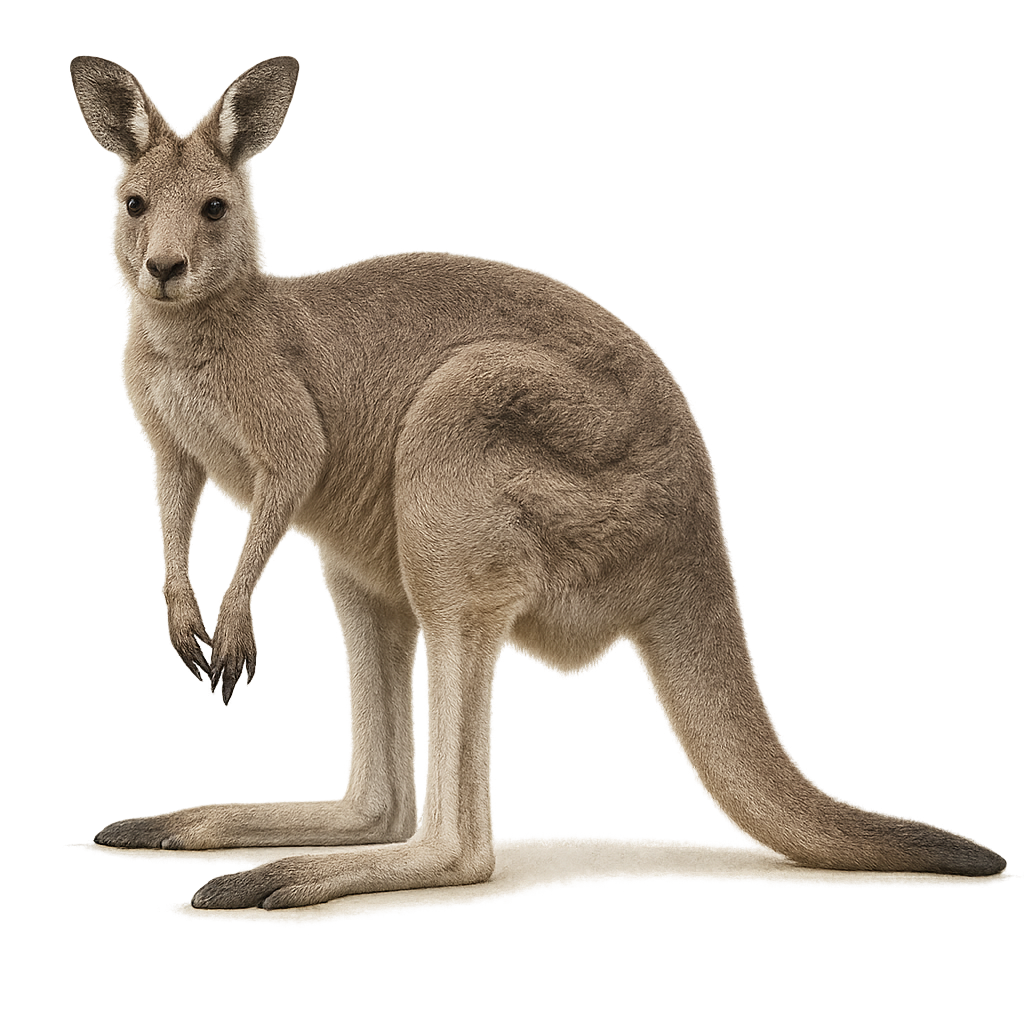
The Eastern Grey Kangaroo, or Macropus giganteus, is a prominent marsupial native to Australia, recognized for its large size and unique hopping locomotion. It has a grey-brown coat with a lighter belly. Males can reach up to 2 meters in height and weigh around 66 kg, while females are generally smaller. These kangaroos live in groups known as "mobs" and are primarily herbivorous, feeding on grasses and leaves. They possess powerful hind legs and a muscular tail used for balance. Although they are mostly active at dusk and dawn, they can also be seen during the day.
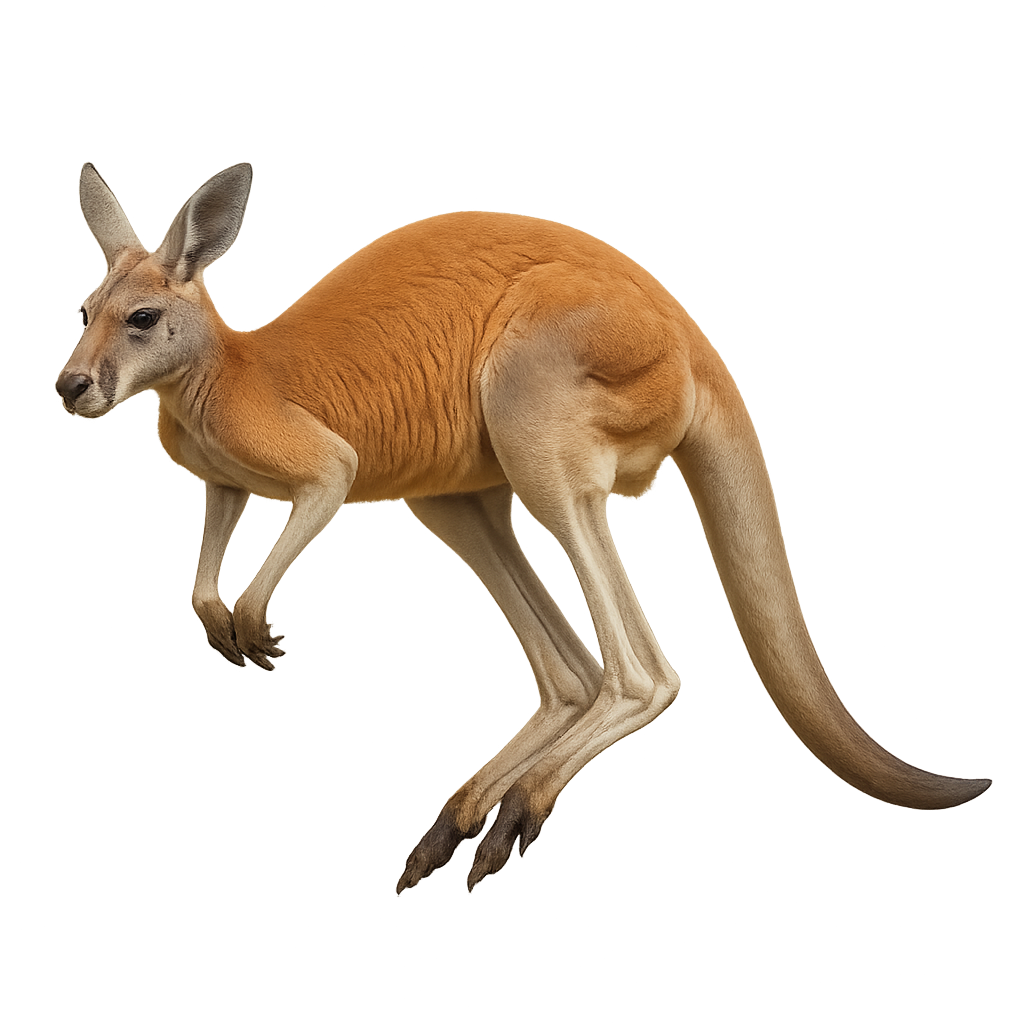
The Red Kangaroo is one of the most iconic and largest species of kangaroos in Australia. It is easily recognizable by its red-brown fur and large size, with adult males reaching over 2 meters in length, including their tail. The Red Kangaroo lives in the dry and semi-arid regions of the Australian Outback, where it primarily feeds on grasses and plants. This animal is an excellent jumper and uses its powerful hind legs to travel at high speeds, often performing impressive leaps. While it is mainly active at dusk and dawn, it can also adapt to the extreme temperatures of its environment.
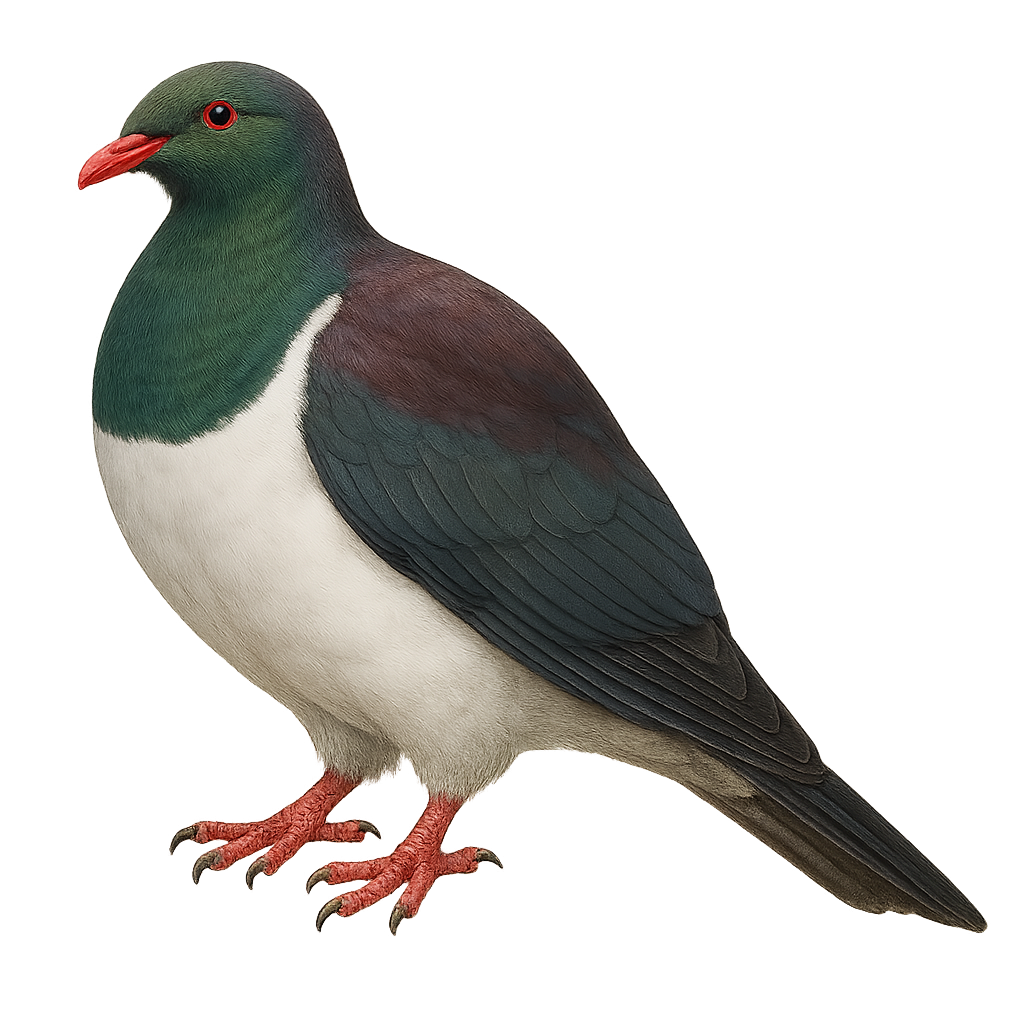
The kereru, or New Zealand pigeon, is an endemic bird of New Zealand, known for its iridescent plumage and large size. It features a dark green head and neck, a white belly, and metallic sheen on its back. Measuring about 50 cm in length, it is often seen in native forests, parks, and urban gardens. The kereru plays a crucial role in seed dispersal, aiding forest regeneration. Although its flight is powerful, it is often described as clumsy, making it easily identifiable. Its population is stable, but it remains vulnerable to introduced predators and habitat loss.
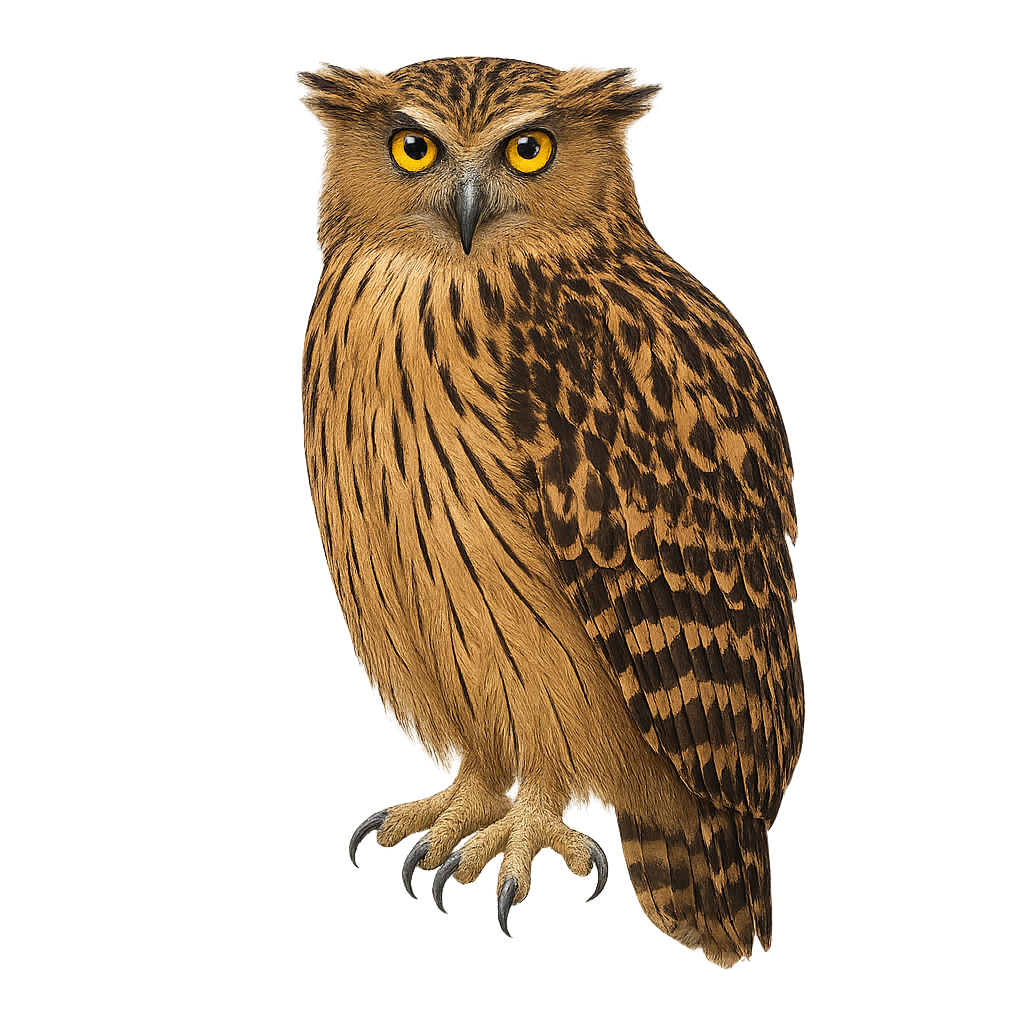
The Tawny Fish Owl, or Ketupa flavipes, is a medium-sized nocturnal raptor known for its piercing eyes and golden-brown plumage. It primarily inhabits dense forests and wetlands in Southeast Asia. This owl is a skilled hunter, feeding mainly on fish and small mammals. It uses its powerful talons to capture prey with precision. Although primarily nocturnal, it can sometimes be seen at dusk. Its population is stable, but it remains vulnerable to deforestation and water pollution. The Tawny Fish Owl is a symbol of wisdom and mystery in many Asian cultures.
The Kiang is a large wild equid, closely related to the horse, primarily found in the high plateaus and mountains of the Himalayas and Tibet. It stands about 1.3 to 1.5 meters at the shoulder and weighs between 300 and 400 kg. Its coat is typically brownish-red or gray-brown with lighter shades on the belly and around the legs, and it has a short and sparse mane. The Kiang has a broad head and a bushy tail, similar to that of a horse. It primarily inhabits arid regions and high-altitude grasslands, feeding on grasses and woody plants. Highly social, the Kiang lives in large groups that move together in search of food. Unlike other wild equids, it is more tolerant of cold conditions and can survive at extremely high altitudes, up to 5,000 meters. While the species is relatively abundant in its range, it can be threatened by habitat loss due to climate change and human pressure, particularly from grazing and hunting.
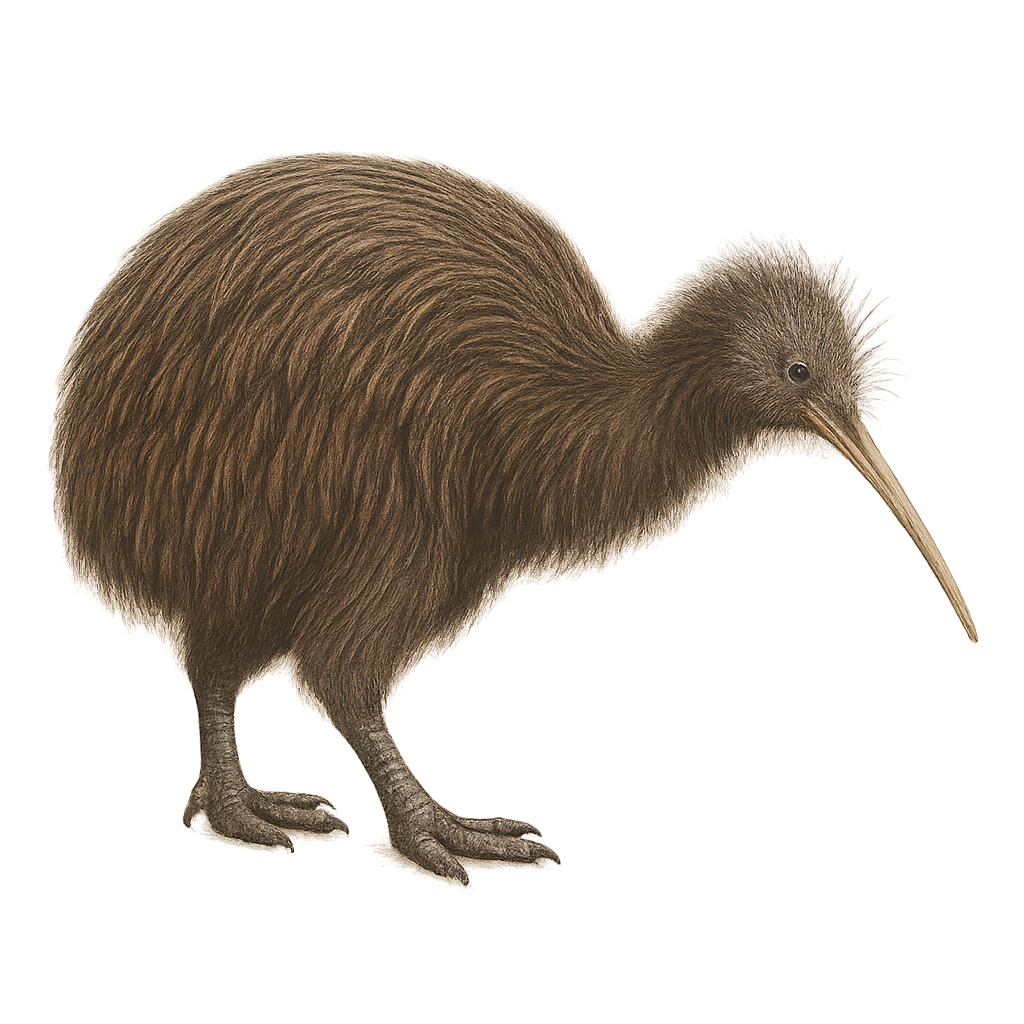
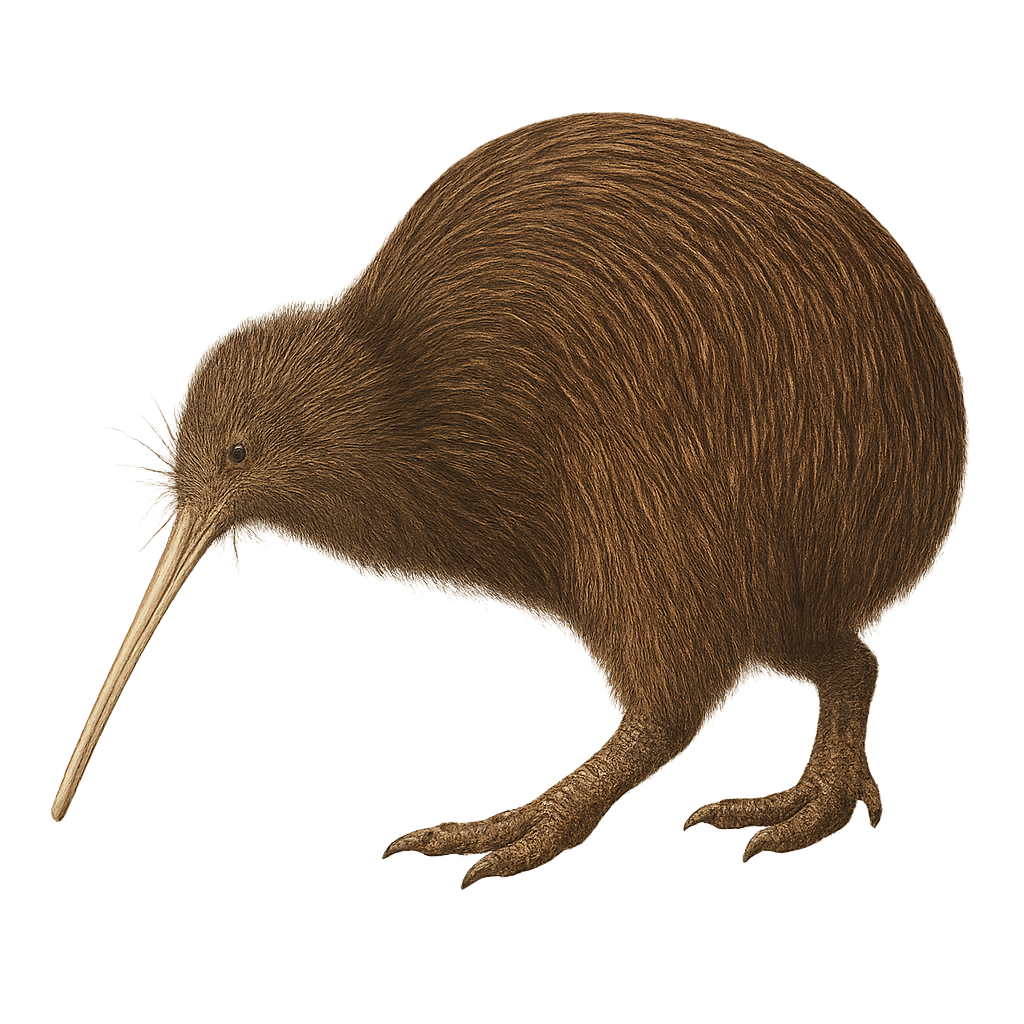
The Kiwi is a bird endemic to New Zealand, famous for its brown, fluffy plumage, small size, and long straight bill. It measures about 40 to 50 cm in height, with a wingspan of 60 to 80 cm, and weighs between 1 and 4 kg depending on the species. The Kiwi is one of the most distinctive birds in the world due to its unique appearance: it has small wings that do not allow it to fly, a long delicate nose, and short legs adapted for its terrestrial life. It primarily inhabits the forests, woods, and grasslands of New Zealand, where it feeds on earthworms, insects, fruits, and roots. The Kiwi is a nocturnal bird, feeding primarily at night and being particularly vulnerable to introduced predators such as rats, mustelids, and dogs. It is also threatened by the loss of its natural habitat, and several species of Kiwi are critically endangered. Active conservation, such as nest protection and predator elimination, is essential to ensure the survival of these iconic birds.
The Southern Brown Kiwi, or Apteryx australis, is a flightless bird endemic to New Zealand, known for its shaggy brown plumage. This medium-sized kiwi measures about 50 cm in length and weighs between 2 and 3.5 kg. It has a long, slender bill adapted for probing the ground for worms and insects. Nocturnal by nature, it is rarely seen during the day. Its natural habitat includes dense forests and scrublands. The Southern Brown Kiwi is monogamous, forming long-lasting pairs. The female typically lays one or two eggs per season, which the male incubates. Although protected, it is threatened by predation and habitat loss.
The North Island Brown Kiwi, or Mantell's Kiwi, is a flightless bird endemic to New Zealand. It is characterized by its shaggy brown plumage, long slender bill, and nostrils located at the tip of the bill. This nocturnal bird feeds primarily on invertebrates, which it detects using its exceptional sense of smell. It inhabits dense forests, scrublands, and grasslands. The North Island Brown Kiwi is monogamous, forming long-term pairs. The female typically lays one or two eggs per season, which the male incubates. Unfortunately, this species is threatened by introduced mammalian predators and habitat destruction.
Koala
Phascolarctos cinereus
The Koala is an iconic tree-dwelling marsupial from Australia, easily recognizable by its grey-silver fur, large round ears, and heart-shaped black nose. It measures about 60 to 85 cm in length and weighs between 4 and 15 kg, with males generally being larger than females. The Koala has powerful claws adapted for its tree-dwelling lifestyle, spending almost its entire life in trees and feeding primarily on eucalyptus leaves. Its diet is very specific, and while eucalyptus is an abundant food source, it is also toxic to most other animals, providing the Koala with some degree of protection from predators. The Koala is a nocturnal and solitary animal, spending the majority of the day sleeping in trees, seeking refuge in Australia's forested areas. It is a symbol of Australian wildlife, but its habitat is threatened by deforestation, bushfires, and disease, which has led to a decline in its population. Conservation efforts are underway to protect this marsupial and its natural habitat.
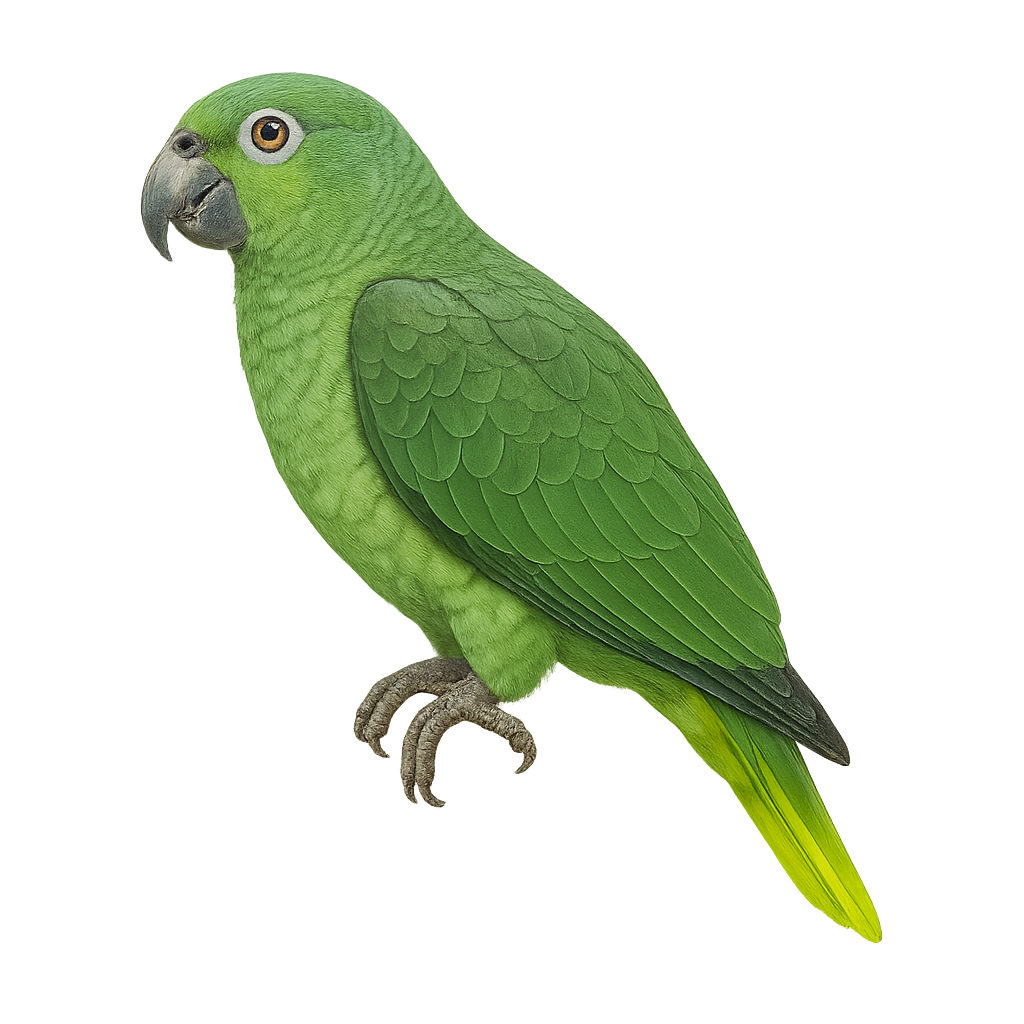
The Mealy Amazon, or Amazona farinosa, is a large parrot, measuring about 38 to 41 cm in length. Its plumage is primarily green, with bluish hues on the forehead and yellow touches on the wings. This species is known for its ability to mimic sounds and human voices, making it a popular pet bird. It mainly inhabits the tropical rainforests of Central and South America, where it feeds on fruits, seeds, and flowers. Although sociable, it can be noisy, especially in groups. The Mealy Amazon is currently classified as "Least Concern" by the IUCN, but it is threatened by deforestation and illegal trade.
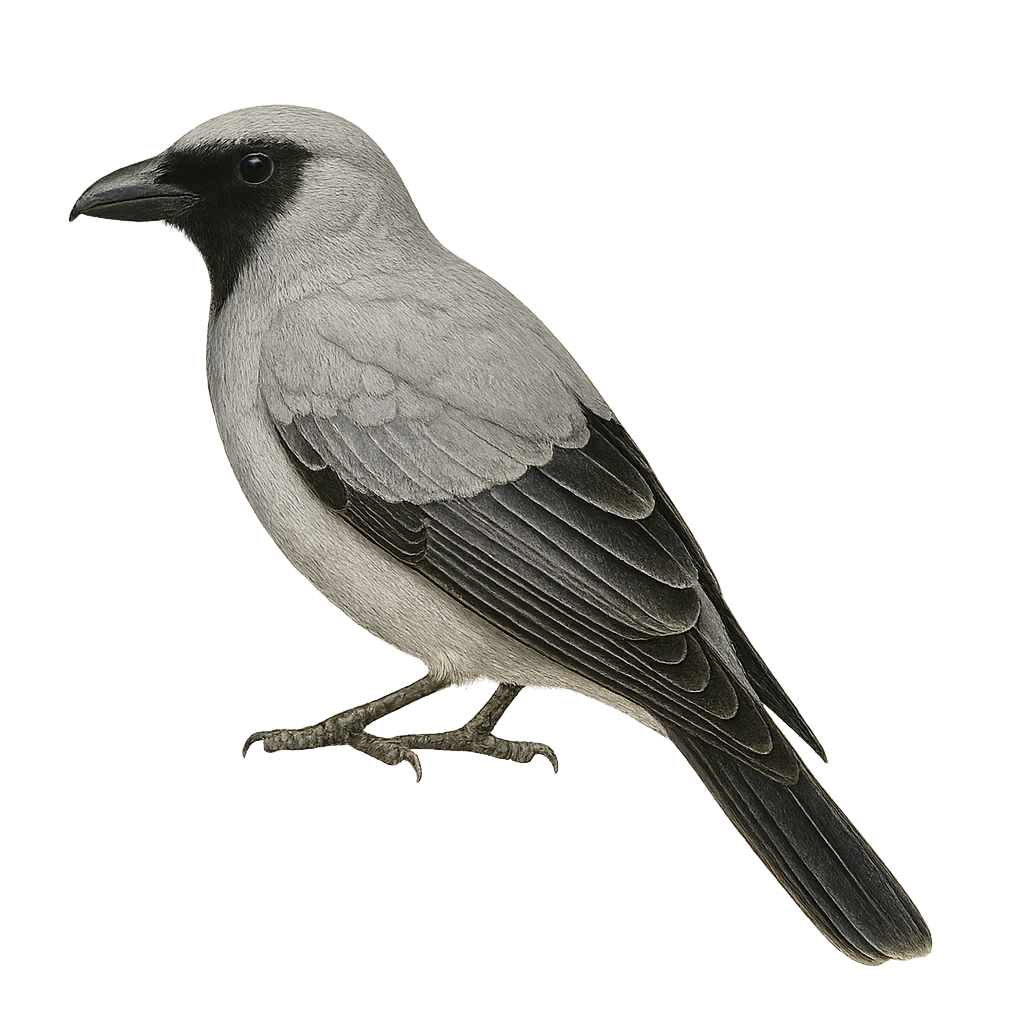
The Black-faced Cuckoo-shrike is a medium-sized bird, recognizable by its silver-grey plumage and distinctive black mask around the eyes. It is primarily found in Australia, where it inhabits various environments ranging from open forests to urban areas. This bird is known for its graceful flight and melodious calls. It primarily feeds on insects and fruits, often catching them in mid-air. Although generally solitary, it can be seen in small groups during migration. Its adaptability to different habitats makes it a resilient species, although habitat destruction may pose long-term threats.
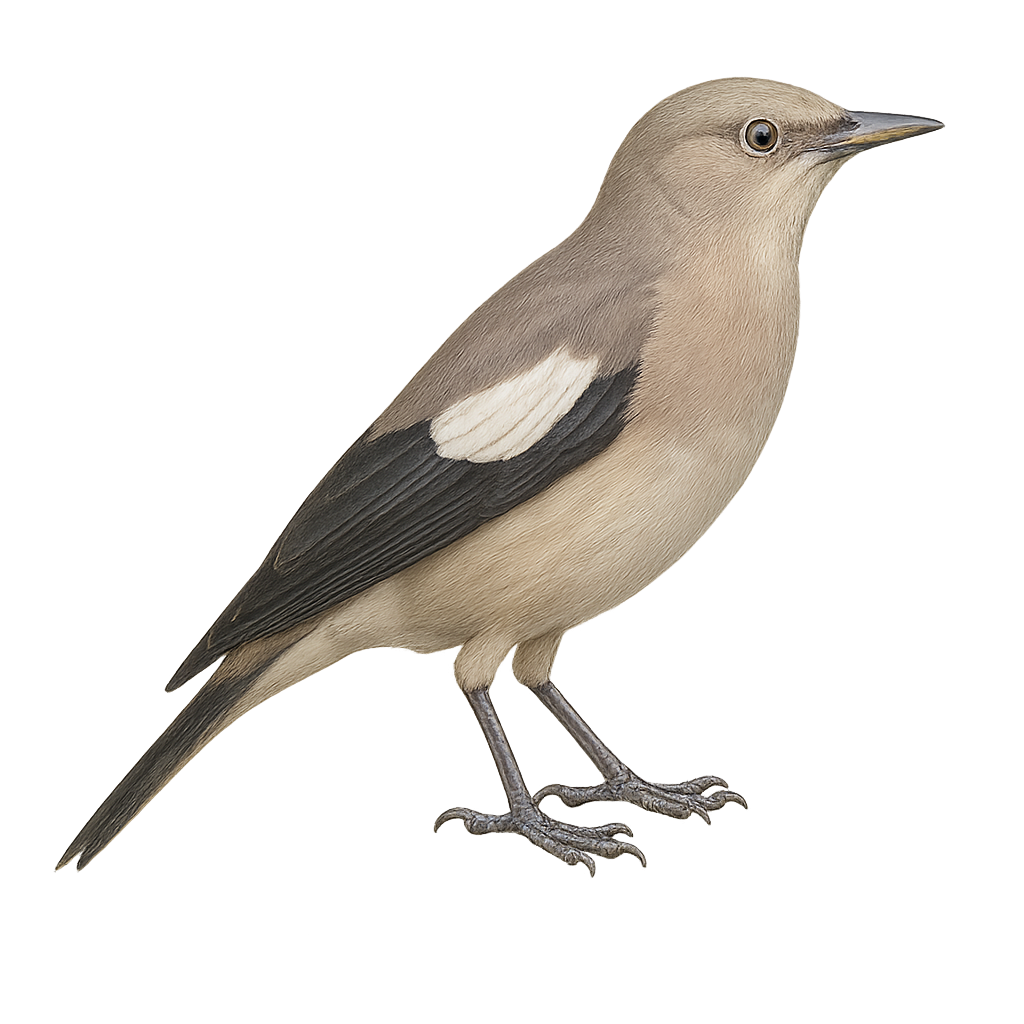
The White-cheeked Starling, or Sturnus sinensis, is a medium-sized bird belonging to the Sturnidae family. It is easily recognizable by its gray-brown plumage with distinctive white cheeks and a bright yellow bill. This bird is primarily found in East Asia, notably in China, Japan, and Korea. It inhabits various environments, from urban areas to open forests and farmlands. The White-cheeked Starling is a sociable bird, often seen in large flocks, especially outside the breeding season. It feeds mainly on insects, fruits, and seeds. Its song is varied and melodious, making it a favorite among birdwatchers.
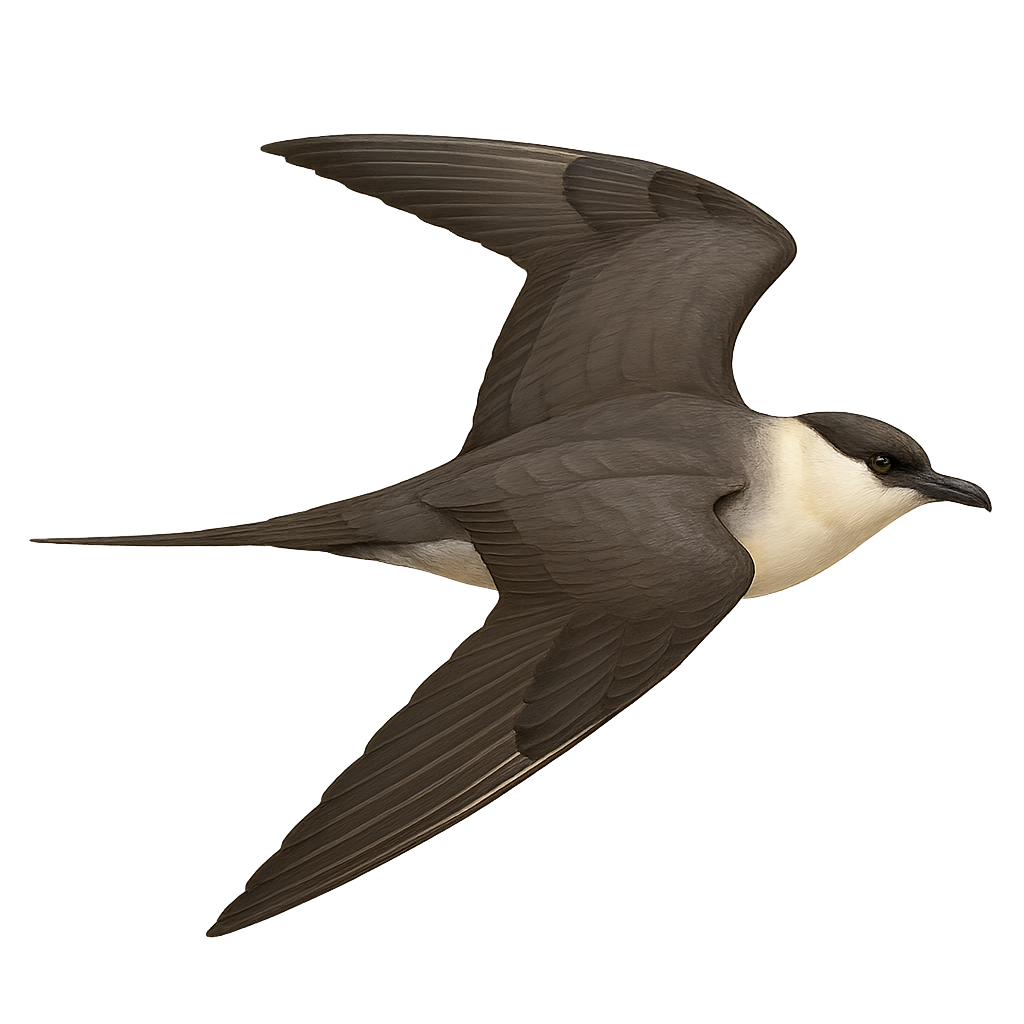
The Long-tailed Jaeger is an elegant and agile seabird, known for its distinctive long tail and slender wings. It is the smallest of the jaegers, measuring about 50 cm in length with a wingspan of 100 to 110 cm. Its plumage varies with the season, turning from dark brown in winter to lighter gray in summer, with white shades on the belly. This jaeger is a remarkable migrator, traveling long distances between its breeding grounds in the Arctic and its wintering areas in the southern hemisphere. It primarily feeds on fish and marine invertebrates but does not hesitate to harass other birds to steal their food.
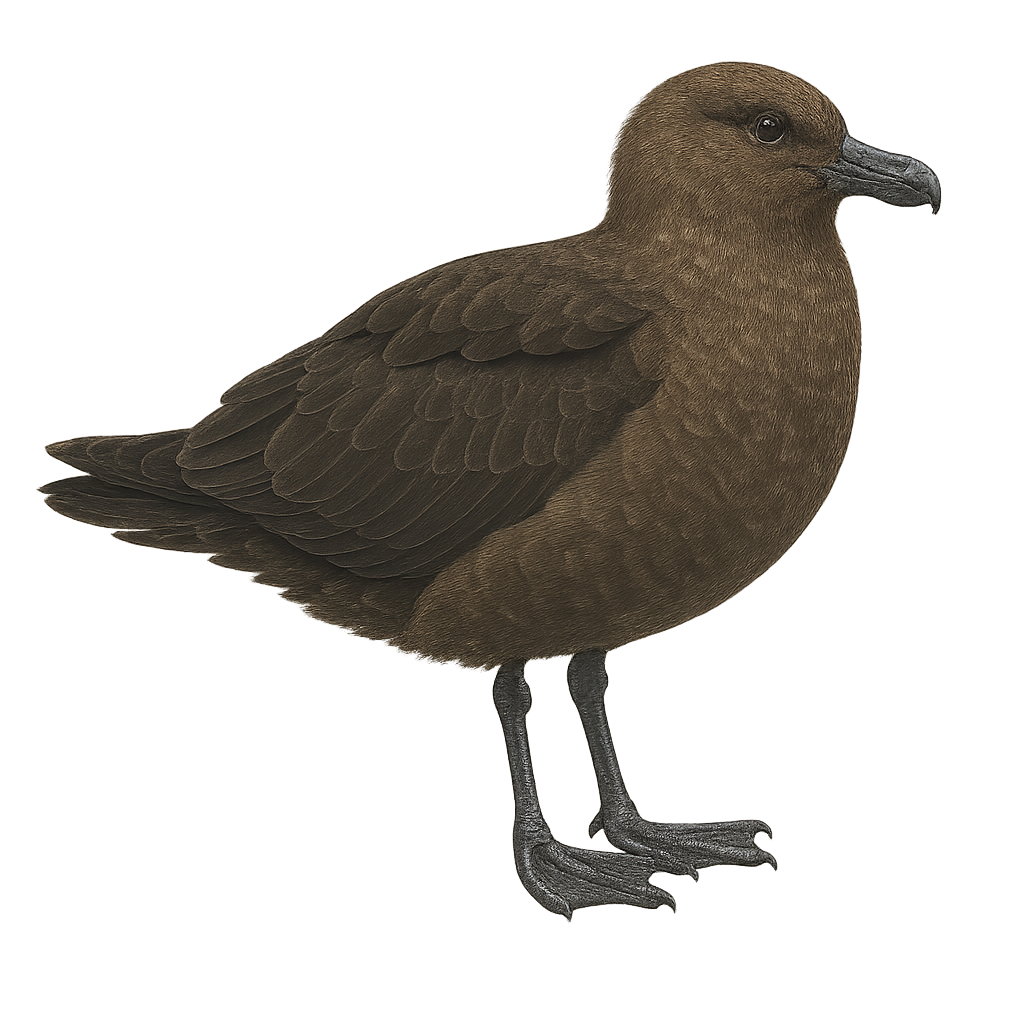
The South Polar Skua is a robust seabird, primarily recognized for its dark brown plumage and aggressive behavior. It breeds mainly in Antarctica and migrates to oceans worldwide during the austral winter. This bird is an opportunistic predator, feeding on fish, small birds, and carrion. It is also known for its kleptoparasitic behavior, stealing food from other seabirds. The South Polar Skua is well adapted to the extreme conditions of its breeding habitat, with a compact body and powerful wings that allow it to fly long distances. Its ability to survive in harsh environments makes it a fascinating subject of study for ornithologists.
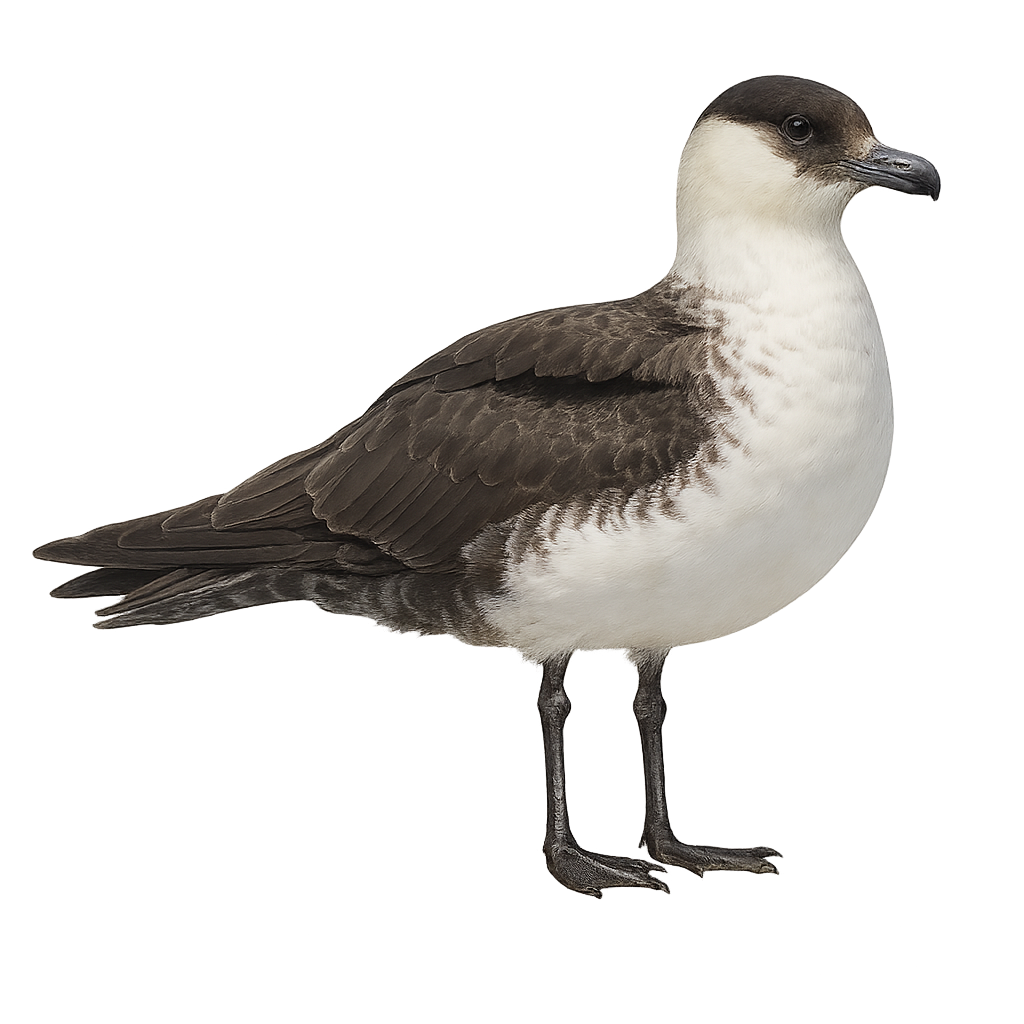
The Parasitic Jaeger, or Stercorarius parasiticus, is a medium-sized seabird, easily recognizable by its pointed wings and dark plumage. It measures about 45 to 50 cm in length, with a wingspan of 110 to 125 cm, and weighs between 300 and 450 g. Its plumage is typically dark brown or gray on the back, with a lighter belly. Adults have a distinctive feature: a forked tail with extended feathers, especially in males. The Parasitic Jaeger is a migratory bird that primarily inhabits the Arctic and subarctic regions but moves to more temperate zones during the winter. This bird is particularly known for its parasitic behavior, in which it chases other seabirds to force them to drop their catch, allowing the Jaeger to steal their food. The Parasitic Jaeger is also an excellent flyer, capable of traveling long distances. While the species is not endangered, it is sensitive to human disturbances and climate changes that affect its coastal habitat.
The Pomarine Jaeger is a medium-sized seabird known for its long, pointed wings and spatula-shaped tail. It has a dark brown plumage with lighter underparts and distinctive white wing markings. This agile predator is often seen chasing other birds to steal their food. It breeds mainly in Arctic regions and migrates to southern oceans in winter. Its preferred habitat includes coastal areas and open seas. The Pomarine Jaeger is an opportunistic bird, capable of adapting to various marine environments to survive.
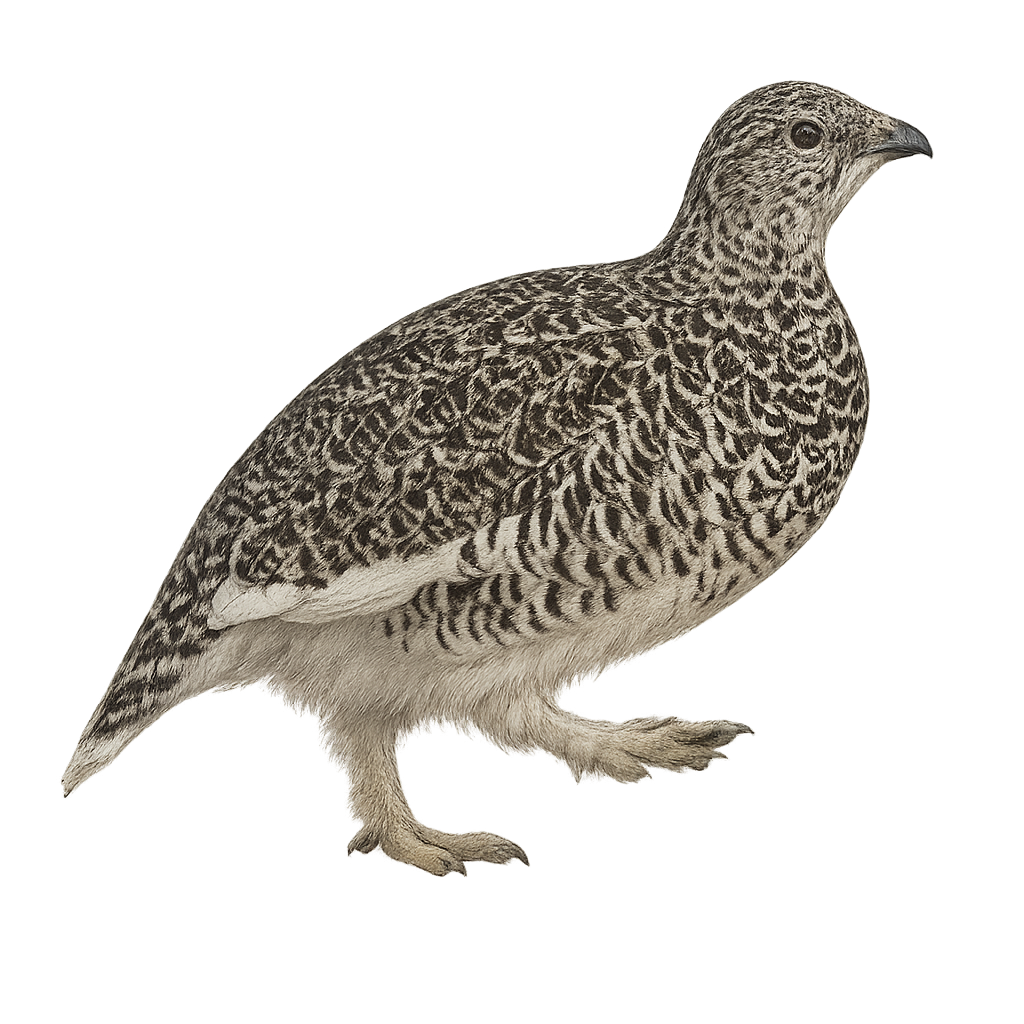
The White-tailed Ptarmigan is a bird from the grouse family, well adapted to alpine environments. It is notable for its white plumage in winter, which provides camouflage in the snow, and brown plumage in summer, blending with rocks and vegetation. This small bird, weighing about 300 to 400 grams, is primarily herbivorous, feeding on buds, leaves, and seeds. It is commonly found in the mountainous regions of North America, particularly in the Rockies. The White-tailed Ptarmigan is a sedentary bird, not migrating but moving according to climatic conditions and food availability.
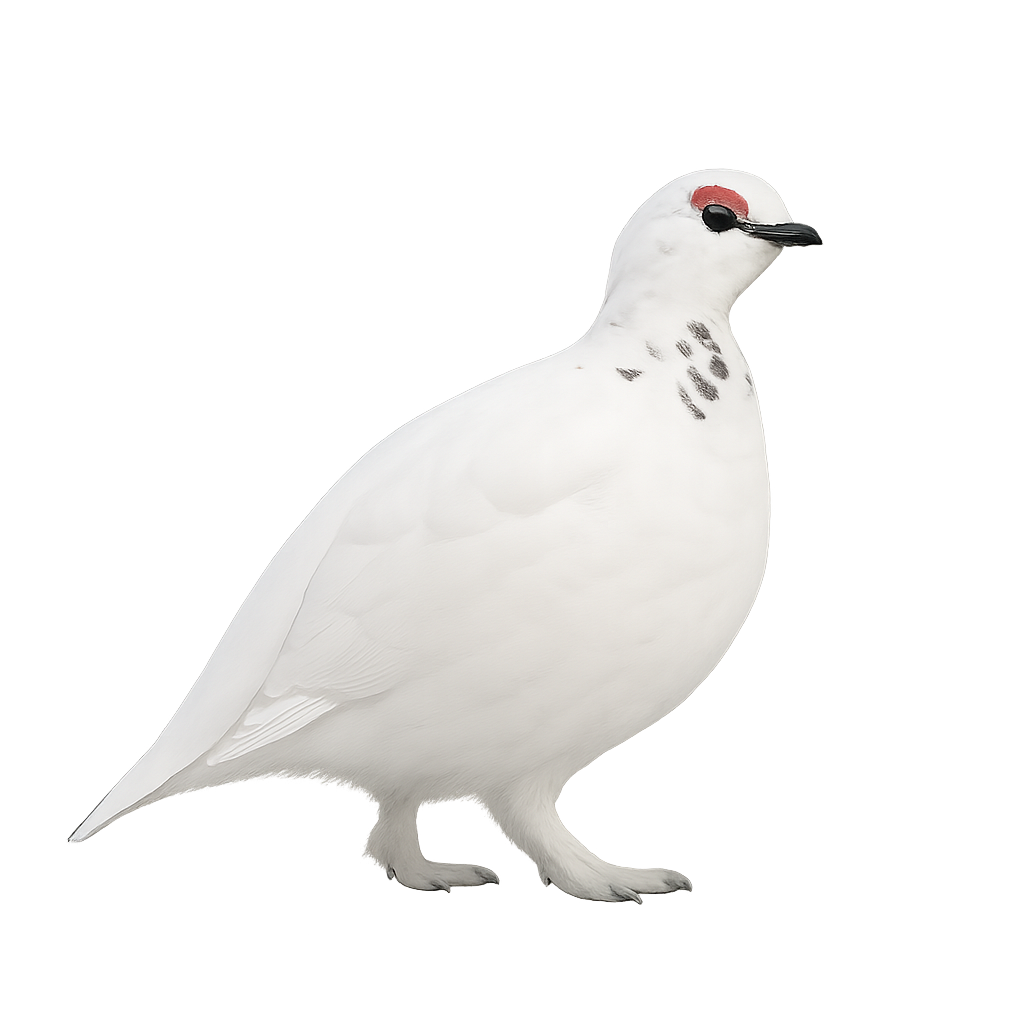
The Rock Ptarmigan is a mountain bird adapted to the harsh conditions of high peaks. It measures about 35 to 40 cm in length and weighs between 350 and 650 g. In winter, its plumage is entirely white, allowing it to blend into the snow, while in summer, it has a brown-red plumage with dark spots to better blend into the rocks and grasses of the mountains. The Rock Ptarmigan primarily inhabits mountainous regions of Europe, Asia, and North America at high altitudes, where it feeds on plants, seeds, berries, and young shoots. Due to its thick plumage and feather-covered legs, it is well adapted to cold conditions but is also vulnerable to climate change, particularly to the loss of its mountainous habitat. The species is protected in some areas but remains sensitive to human disturbances, such as mountain tourism and temperature changes.
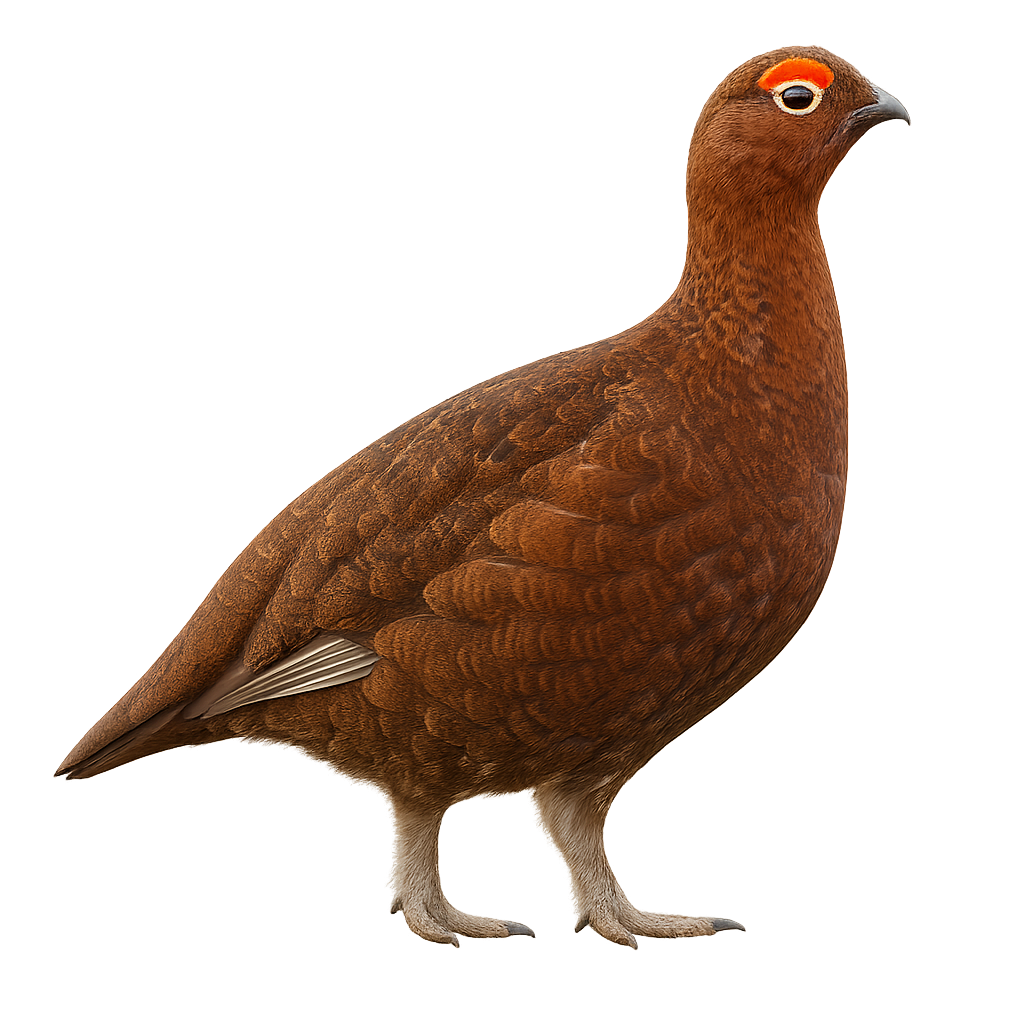
The Scottish Ptarmigan, or Lagopus lagopus scotica, is a subspecies of the Willow Ptarmigan, specifically found in the mountains of Scotland. It measures about 30 to 35 cm in length and weighs between 300 and 450 g. Its plumage changes with the seasons: in winter, it is entirely white, allowing it to blend perfectly into the snow, while in summer, it has a brown-red spotted plumage that makes it blend into the Scottish moorlands. The Scottish Ptarmigan inhabits the highlands, particularly in the northern mountains of Scotland, where it primarily feeds on plants, berries, seeds, and young shoots. Although it is a bird difficult to spot due to its excellent camouflage, it remains vulnerable to climate change and the loss of its natural habitat. The Scottish Ptarmigan is also threatened by predation from foxes and mustelids and by human activities, including tourism and land management.
The Willow Ptarmigan is a mountain bird, smaller than its cousin the Rock Ptarmigan, found in cold regions and forested areas of northern Europe and Asia. It measures about 30 to 35 cm in length and weighs between 250 and 400 g. Its plumage changes with the seasons: in winter, it is entirely white, allowing it to blend into the snow, while in summer, it has a brown-red spotted plumage, perfect for blending into the moors and shrubs. The Willow Ptarmigan primarily inhabits taiga and tundra regions, where it feeds on leaves, berries, and young shoots. It is often seen on the ground or in bushes, searching for food. While the species is not immediately threatened, it is vulnerable to disturbances from deforestation and climate change, which affect mountain ecosystems.
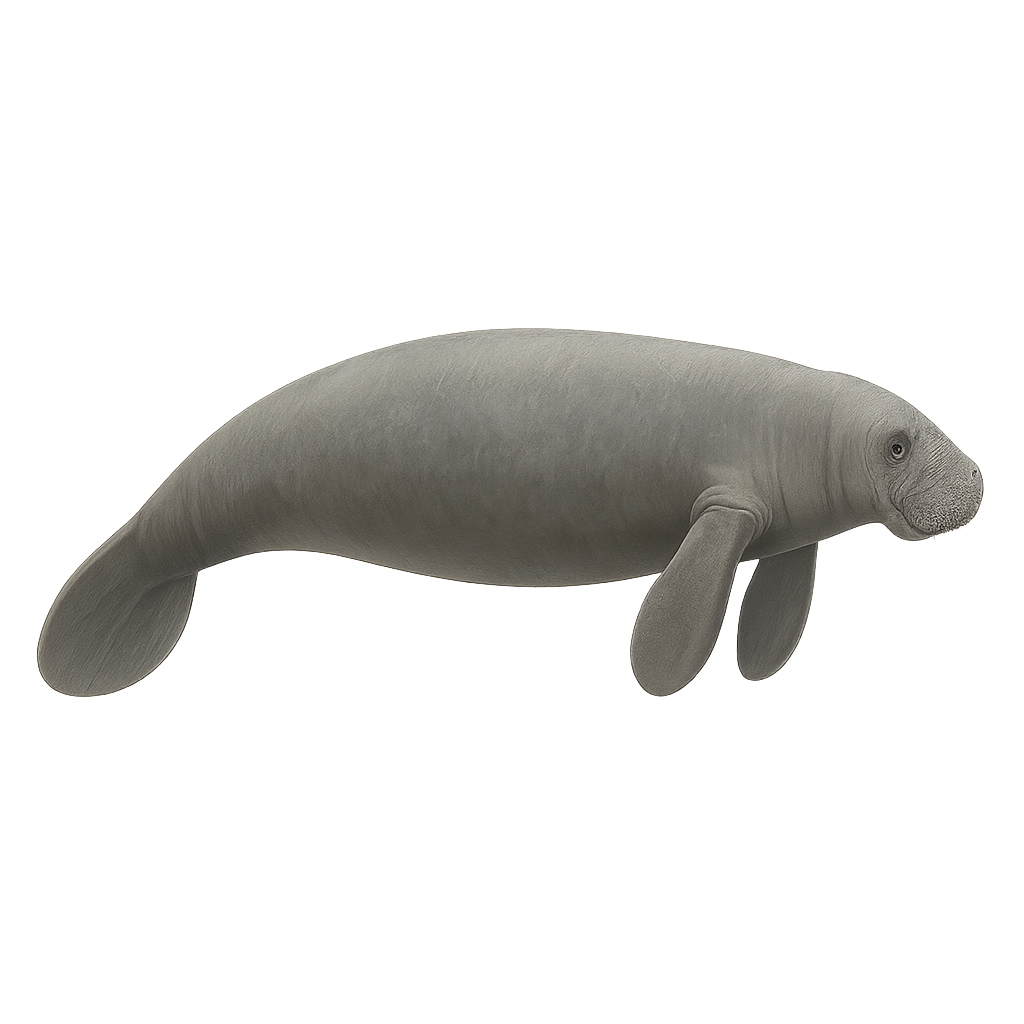
The West African manatee, or Trichechus senegalensis, is a fascinating aquatic mammal inhabiting the coastal waters and rivers of West Africa. Recognizable by its massive, streamlined body, thick gray skin, and paddle-shaped tail, it can grow up to 4 meters long and weigh around 500 kg. This peaceful herbivore primarily feeds on aquatic plants. Although often solitary, it can sometimes be seen in small groups. Unfortunately, the West African manatee is threatened by hunting, habitat degradation, and boat collisions. Conservation efforts are crucial to preserving this emblem of African aquatic biodiversity.