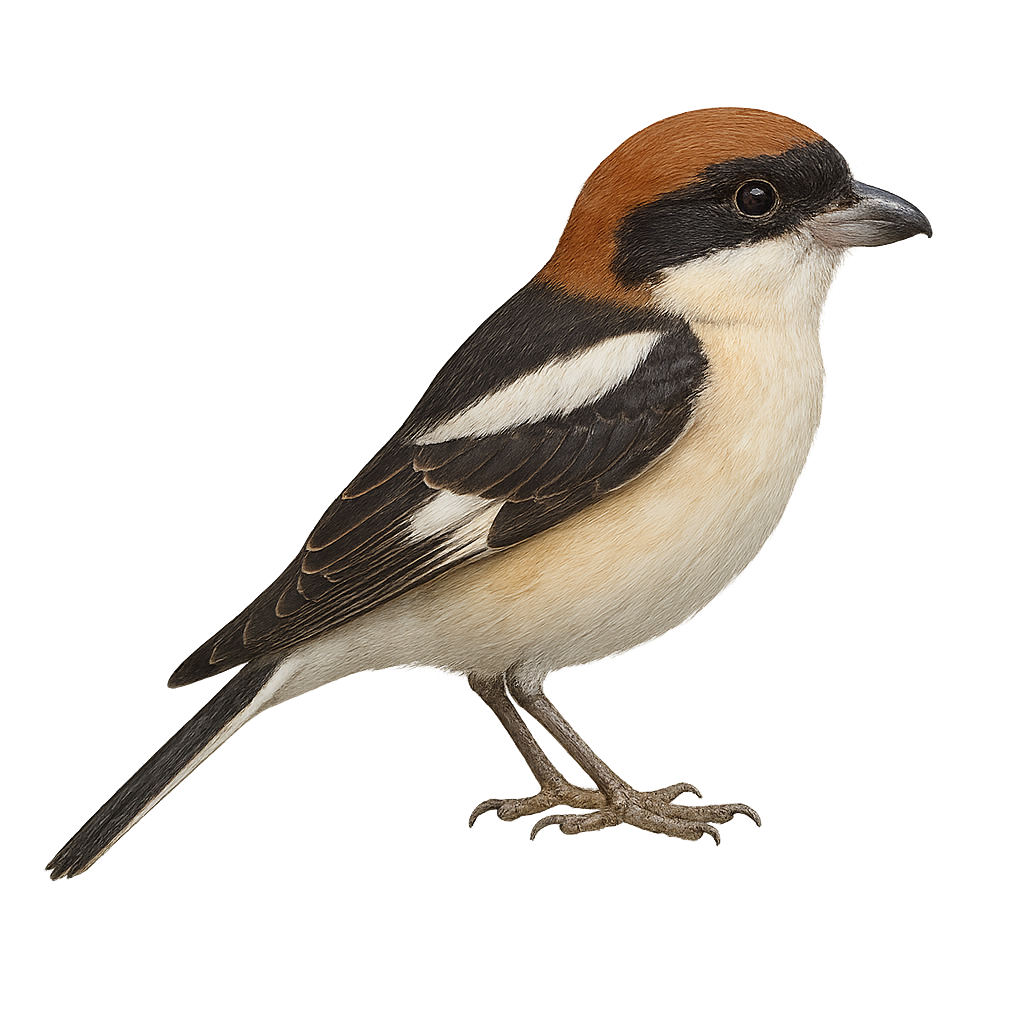
The lesser grey shrike is a medium-sized forest raptor (16–18 cm) with bluish-grey upperparts and pale pink underparts, marked by a broad pale wing patch. It inhabits woodland edges, grasslands, open farmland and scattered bushes, feeding mainly on small birds, insects and reptiles.
The rose-colored shrike is a small predatory bird found primarily in bushes, hedgerows, and open fields across Europe, the Middle East, and Central Asia. It is easily recognized by its light gray plumage, reddish head, and strong, hooked beak. This bird primarily feeds on insects, small birds, and rodents, which it captures by ambush and sometimes impales on branches with its beak. It is also known for its territorial behavior and constant vigilance.
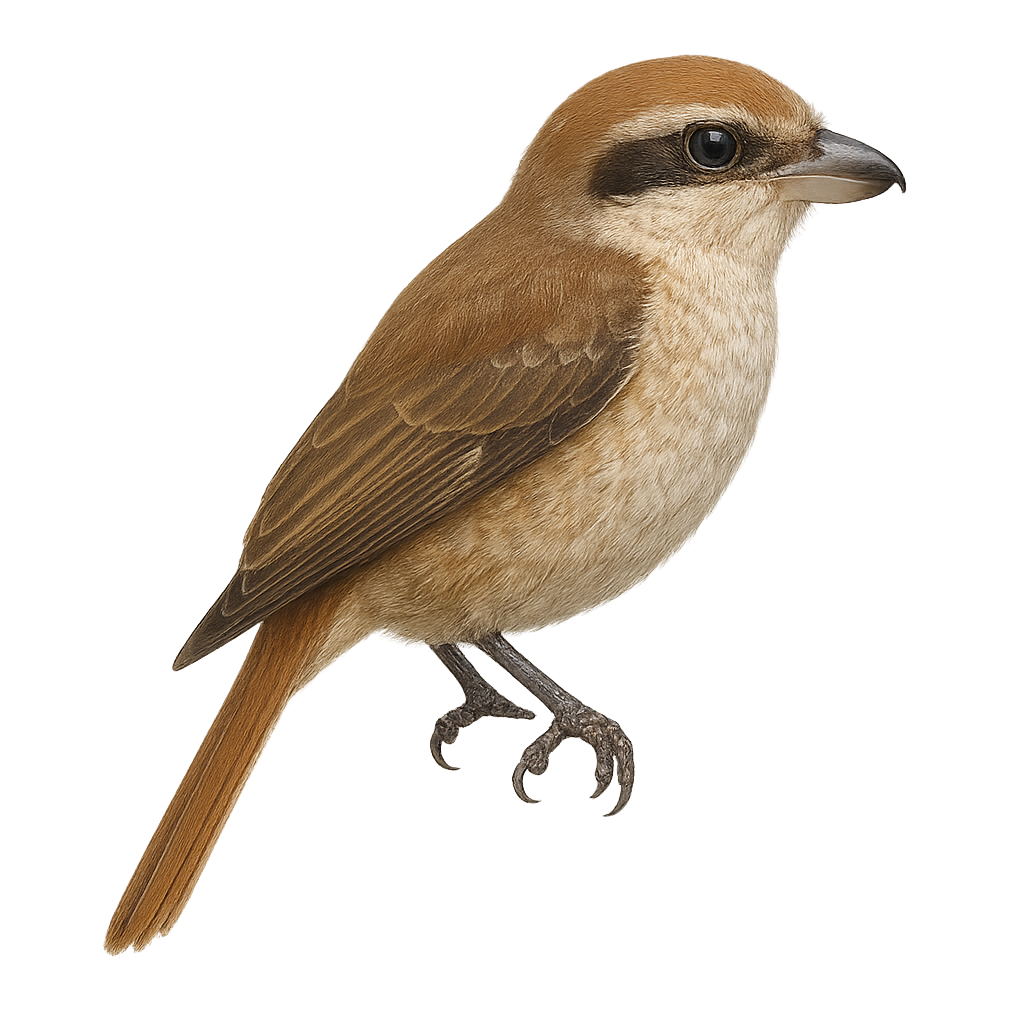
The Brown Shrike, or Lanius cristatus, is a medium-sized bird, about 20 cm long. It is recognizable by its brown plumage on the back and wings, with a lighter chest. Its head features a distinctive black mask around the eyes. This bird is often seen perched on branches or wires, scanning the ground for prey. Carnivorous, it primarily feeds on insects but can also capture small vertebrates. The Brown Shrike is migratory, breeding in northern Asia and wintering in Southeast Asia. It prefers open habitats such as grasslands and forest edges.
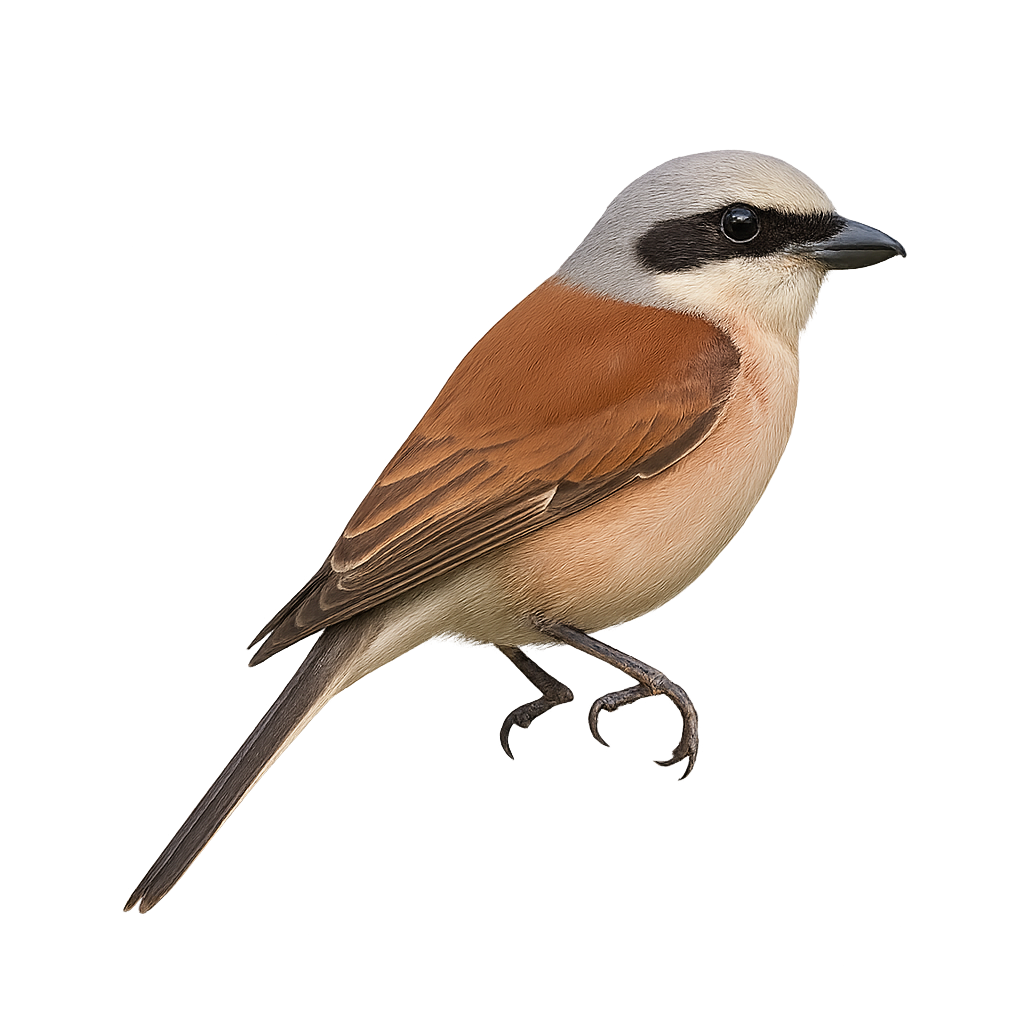
The Red-backed Shrike is a medium-sized bird primarily found in hedgerows, scrubland, and open meadows across Europe and Asia. It measures about 20 to 23 cm in length and weighs between 40 and 50 g. Its plumage is characterized by a silvery-gray head, a brown back, and a whitish breast. It also has a distinctive black stripe running through its eyes. The Red-backed Shrike is an excellent hunter, primarily feeding on small birds, insects, rodents, and sometimes small reptiles. It is known for its "impaling" behavior, where it spikes its prey on thorns or barbed wire to store it. While its population remains stable in some regions, it can be threatened by habitat loss, the destruction of hedgerows, and the intensification of agriculture.
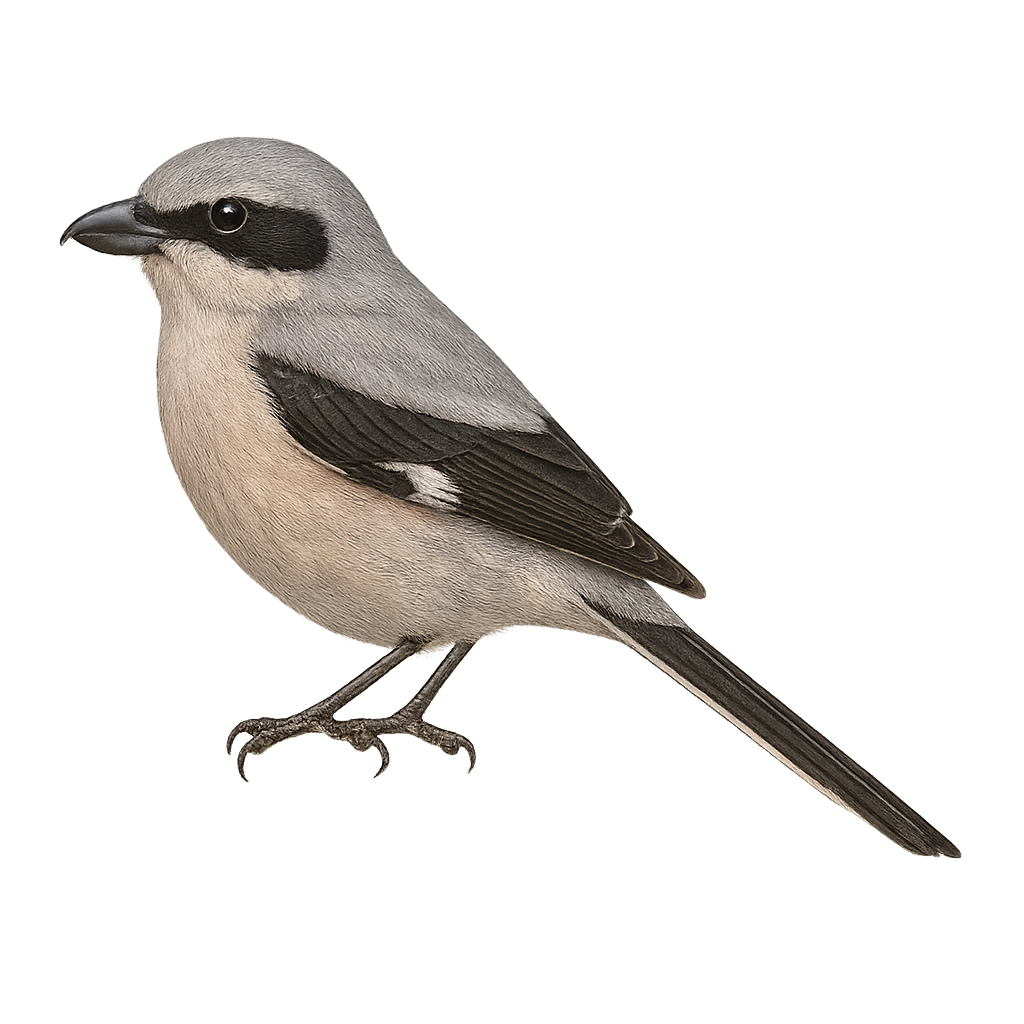
The great grey shrike is a small predatory passerine of 22–26 cm with pale grey-brown plumage, a black and white head marked by a broad mask, and pale underparts. It inhabits open habitats with scattered bushes, woodland edges and hedgerows, feeding on insects, small birds and rodents taken from perches.
The Southern Grey Shrike is a medium-sized bird, recognizable by its grey and white plumage, with black wings and a distinctive black band across the eyes. It is often seen perched on bushes or wires, watching for prey. This bird is a formidable predator, feeding mainly on insects, small mammals, and other birds. It is known for impaling its prey on thorns or barbed wire, a technique that allows it to store food. The Southern Grey Shrike is a territorial bird, often solitary, except during the breeding season when it forms pairs.
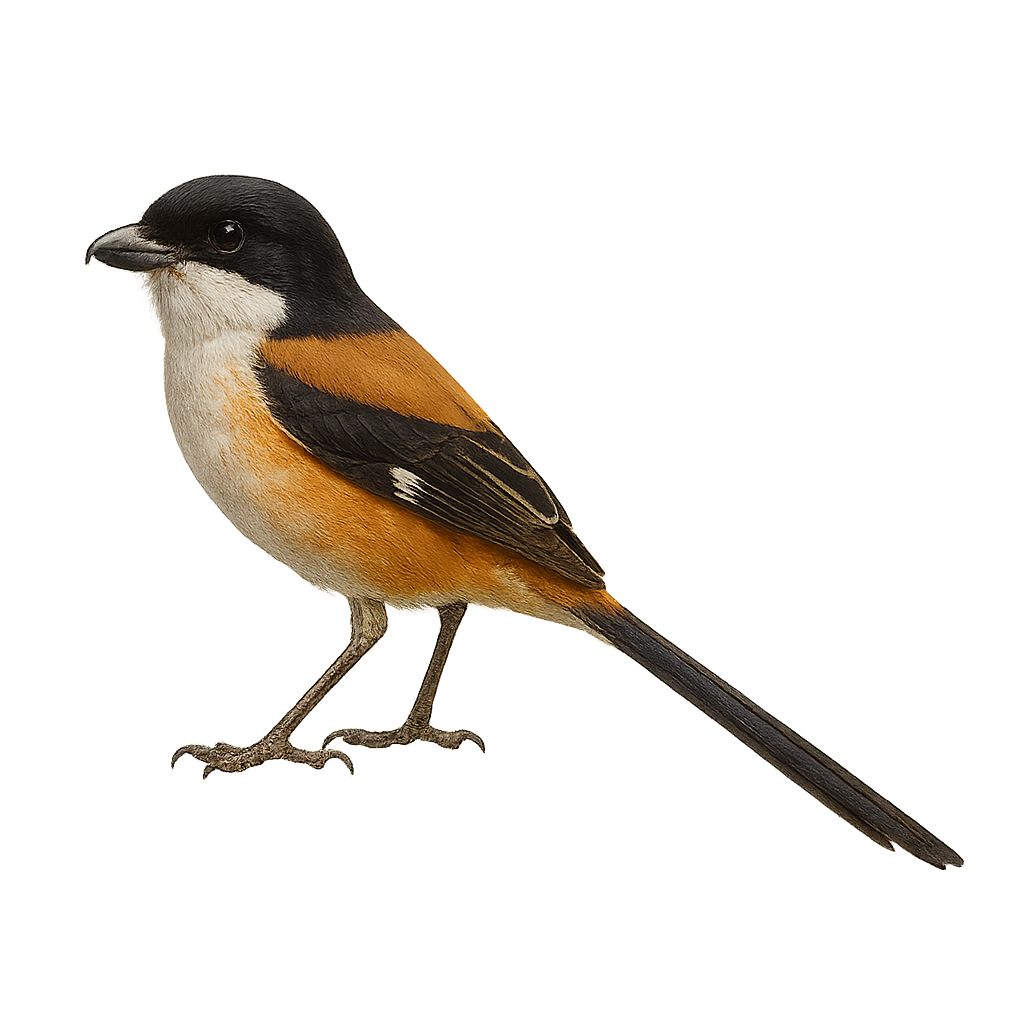
The Long-tailed Shrike is a medium-sized bird known for its distinctive long tail and striking plumage. It features a brown back, white belly, and a black head with a black facial mask. Often seen perched on branches or wires, it vigilantly watches over its territory. This bird is noted for its aggressive behavior towards intruders and its ability to capture prey larger than itself, often impaling them on thorns or barbed wire. The Long-tailed Shrike is an opportunistic predator, primarily feeding on insects, small birds, and rodents. It is widely distributed across Asia, particularly in India, China, and Southeast Asia, inhabiting various environments from open forests to agricultural areas.
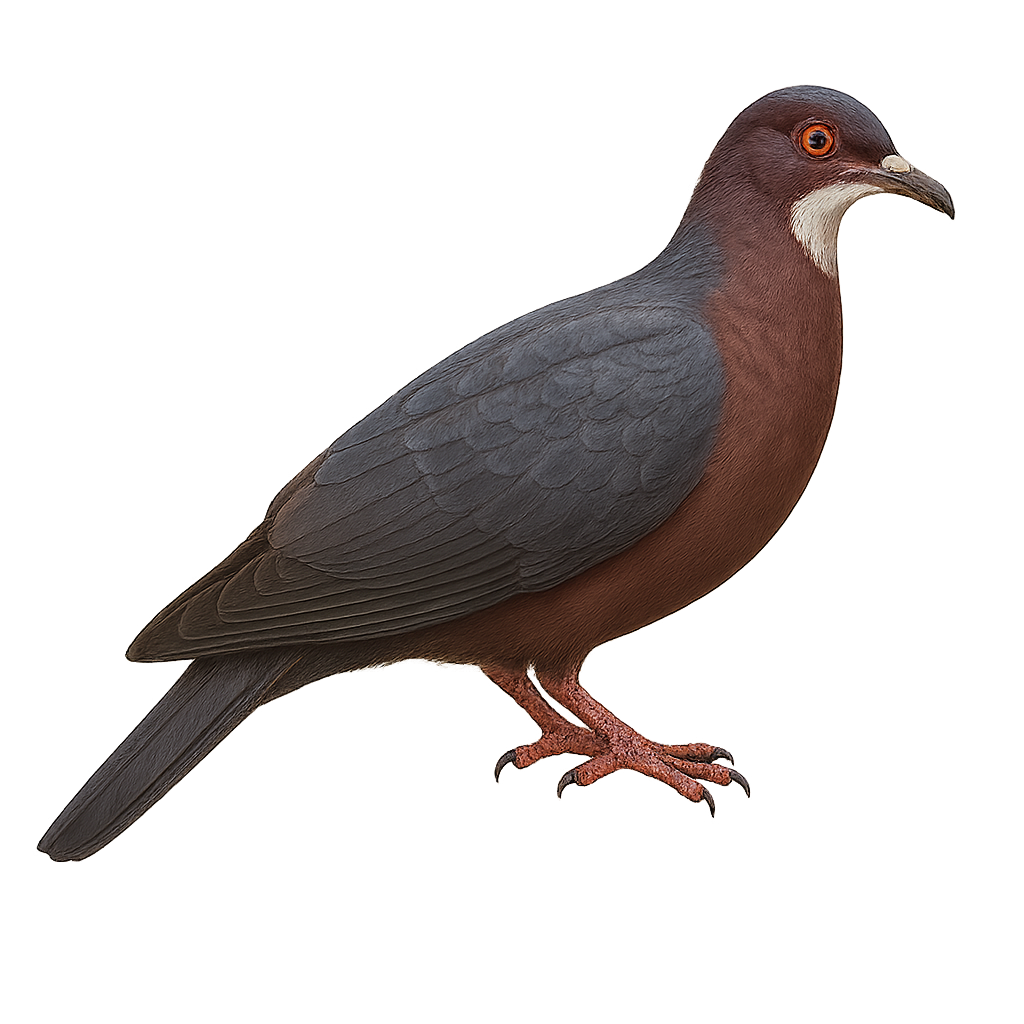
The White-throated Pigeon, or Columba vitiensis, is a medium-sized bird, measuring approximately 37 to 40 cm in length. It is distinguished by its white throat contrasting with its generally gray-blue plumage. The wings and tail are darker, and it has a slightly iridescent sheen on the neck. This bird is primarily arboreal, living in tropical and subtropical forests. It feeds mainly on fruits, seeds, and berries. The White-throated Pigeon is often observed alone or in small groups. It is widespread in the Pacific islands, notably in Fiji, Samoa, and New Caledonia. Although not considered threatened, deforestation poses a potential risk to its natural habitat.
The rock pigeon, or Columba livia, is a familiar bird in urban and rural environments. With typically gray plumage and iridescent neck feathers, it features two distinct black bands on its wings. Often seen in large flocks, it feeds on seeds, crumbs, and other food scraps. Highly adaptable, it thrives in various habitats, from coastal cliffs to bustling city centers. The rock pigeon is renowned for its homing ability, which humans have historically used for message delivery. Its prolific breeding, with multiple broods per year, contributes to its widespread global presence.
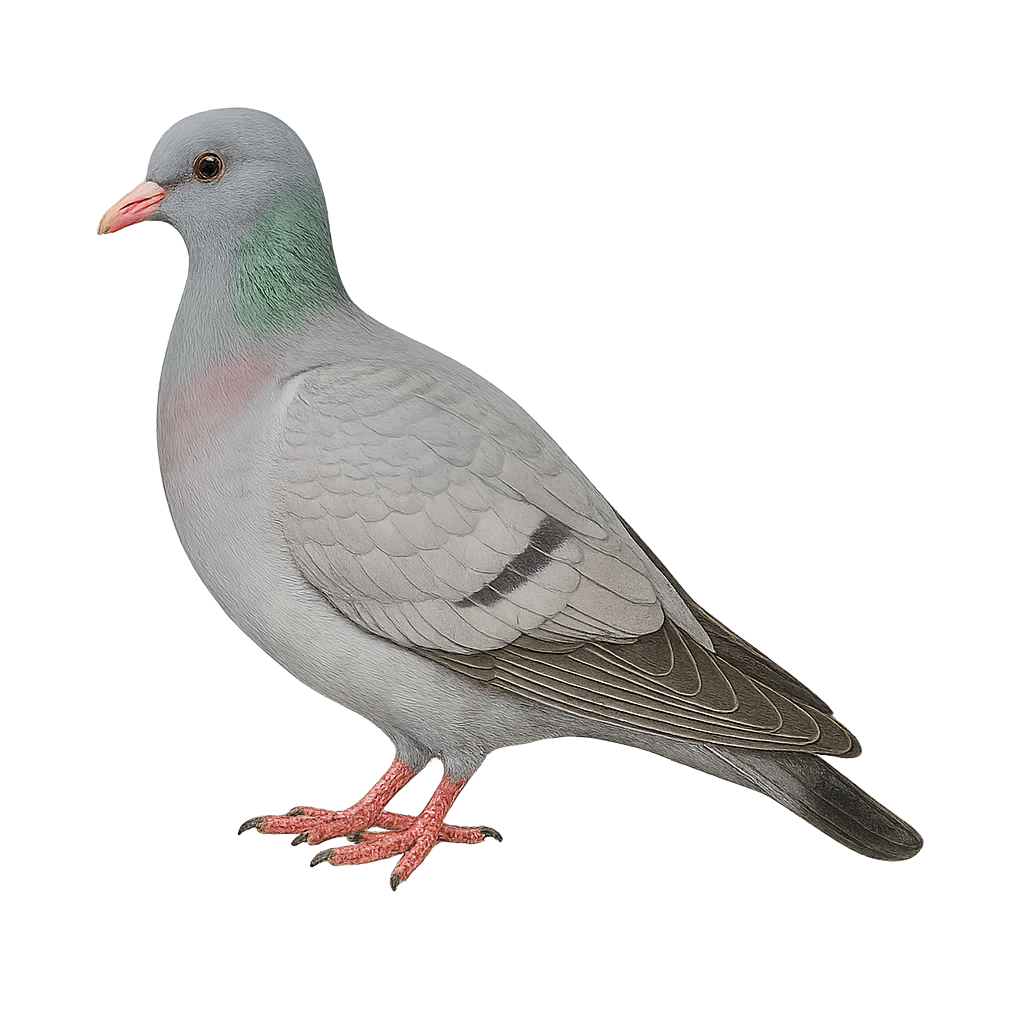
The Stock Dove, Columba oenas, is a medium-sized bird, measuring about 32 to 34 cm in length with a wingspan of 60 to 66 cm. It is characterized by its uniform blue-grey plumage, lacking the white markings seen in other pigeons. Its nape shows iridescent green and purple hues. It inhabits open woodlands, parks, and agricultural areas, often near water. The Stock Dove is a discreet bird, often seen in small groups. It feeds mainly on seeds, berries, and young shoots. Its call is a soft, repetitive cooing. It nests in tree cavities, sometimes in abandoned buildings.
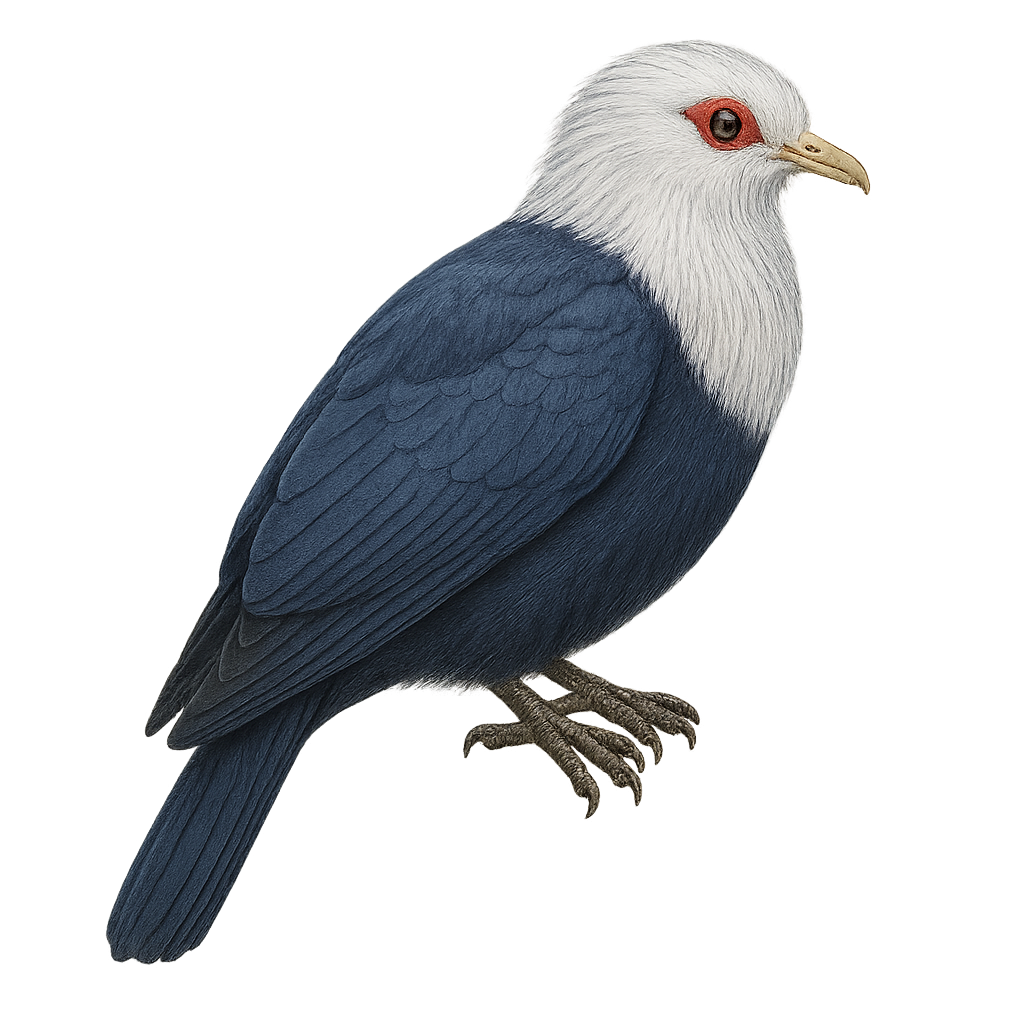
The Comoro Blue Pigeon, or Alectroenas sganzini, is an endemic bird of the Comoros, known for its striking blue plumage and distinctive red head. Measuring about 30 cm in length, it is characterized by its robust body and rounded wings. This bird prefers dense forests and wooded areas, where it primarily feeds on fruits, seeds, and small invertebrates. Although its habitat is limited, it adapts well to environmental changes. However, deforestation and hunting pose potential threats to its survival. Its suspicious nature makes it difficult to observe, but it is often heard due to its soft and melodious song.
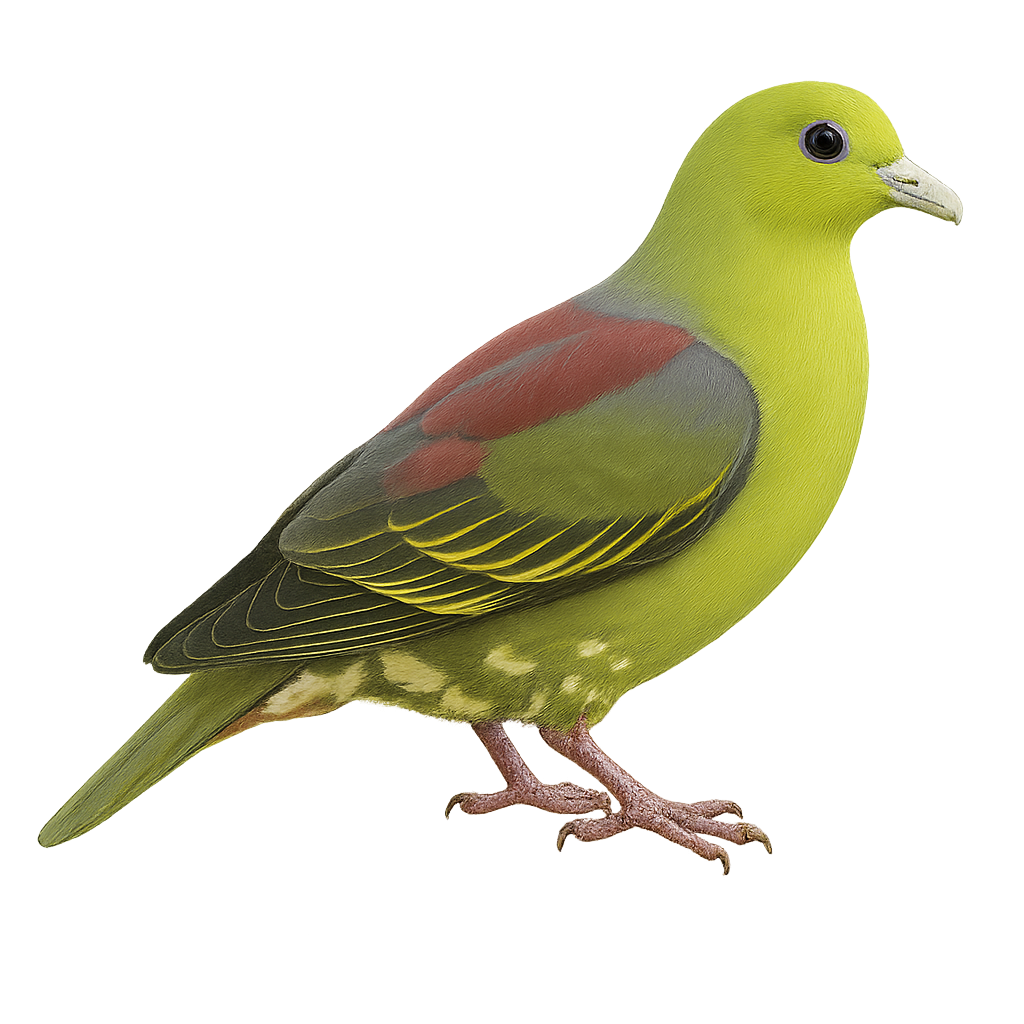
The Pompadour Green Pigeon, Treron pompadora, is a medium-sized bird belonging to the Columbidae family. It is primarily found in the tropical rainforests of South Asia, notably in India and Sri Lanka. This bird is distinguished by its bright green plumage, with shades of yellow and gray, and distinctive wing markings. Males and females exhibit slight sexual dimorphism, with males having brighter colors. The Pompadour Green Pigeon is frugivorous, feeding mainly on fruits and berries. It plays a crucial role in seed dispersal, thus contributing to forest regeneration. Although generally discreet, it can be observed in small groups, especially during the breeding season.
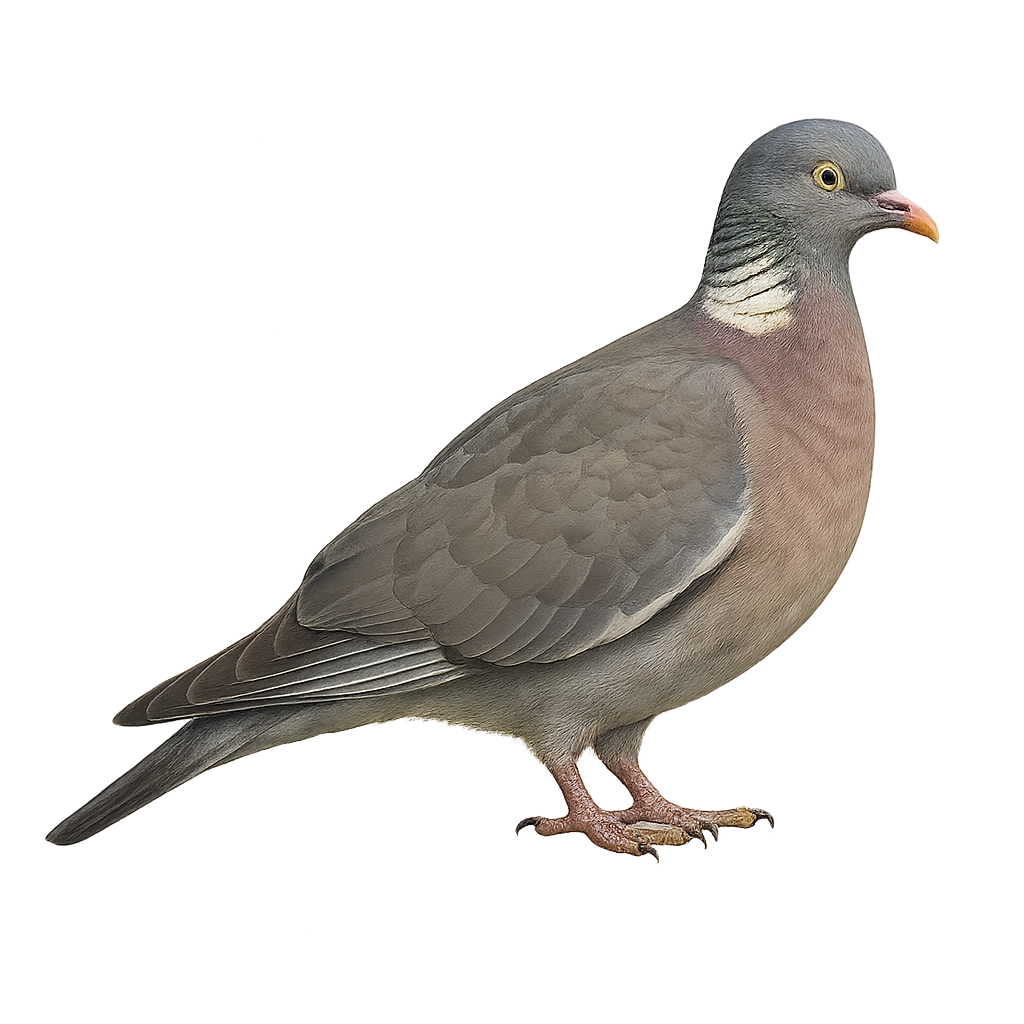
The Common Wood Pigeon, or Columba palumbus, is one of the largest pigeons in Europe, easily identifiable by its large size and distinctive white markings on its neck and wings. It has a grey-blue plumage with a pinkish breast and greenish neck sheen. Often seen in parks, gardens, and forests, it feeds mainly on seeds, fruits, and young shoots. Its flight is strong and direct, often accompanied by loud wing beats. The Wood Pigeon is also known for its soft, soothing cooing, which often echoes through woods and countryside.
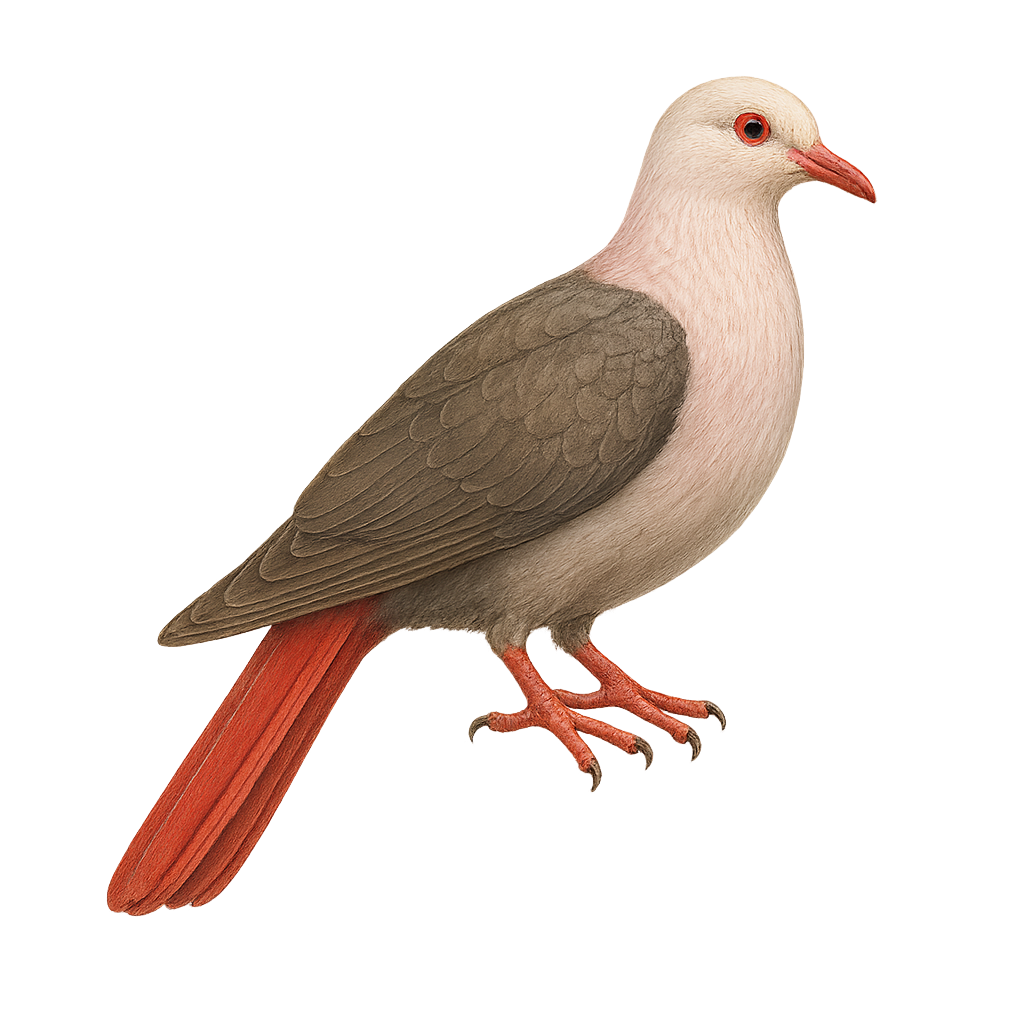
The Pink Pigeon, or Nesoenas mayeri, is an endemic species of Mauritius, known for its distinctive pale pink plumage and red-ringed eyes. Measuring about 36 cm in length, this bird features a reddish beak and pink legs. Once critically endangered, the Pink Pigeon has seen its population increase due to intensive conservation efforts. It primarily inhabits the island's native forests, feeding on fruits, seeds, and flowers. Although its population is rising, it remains vulnerable due to habitat loss and predation by introduced species. Captive breeding and reintroduction programs have been crucial for its survival.
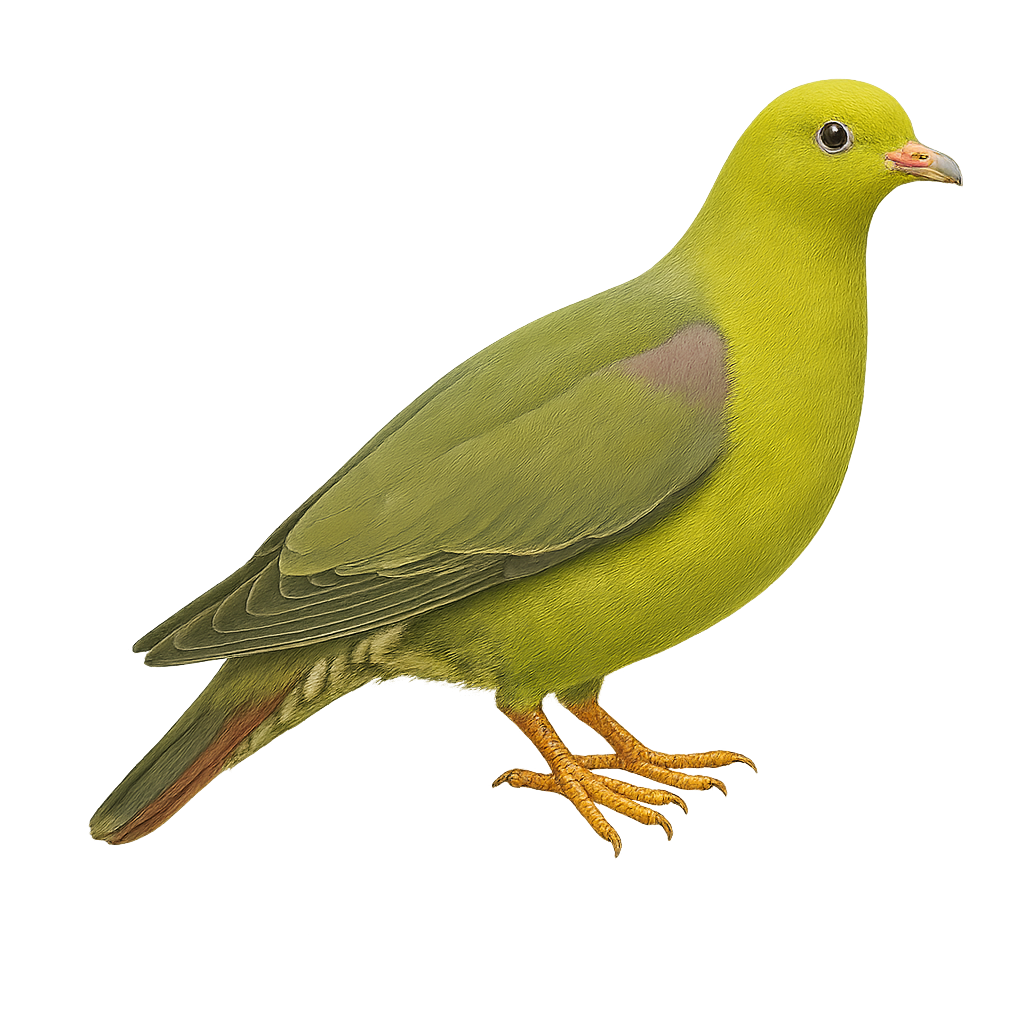
The Treron australis, or Madagascar Green Pigeon, is a bird species endemic to Madagascar. This pigeon is notable for its bright green plumage, which provides excellent camouflage in the island's tropical forests. It has a sturdy beak and short legs, well-suited to its arboreal lifestyle. The Treron australis primarily feeds on fruits, playing a crucial role in seed dispersal within its habitat. It is often seen in small flocks, moving quietly through the canopy. Although its conservation status is concerning due to deforestation, it remains relatively common in protected areas.
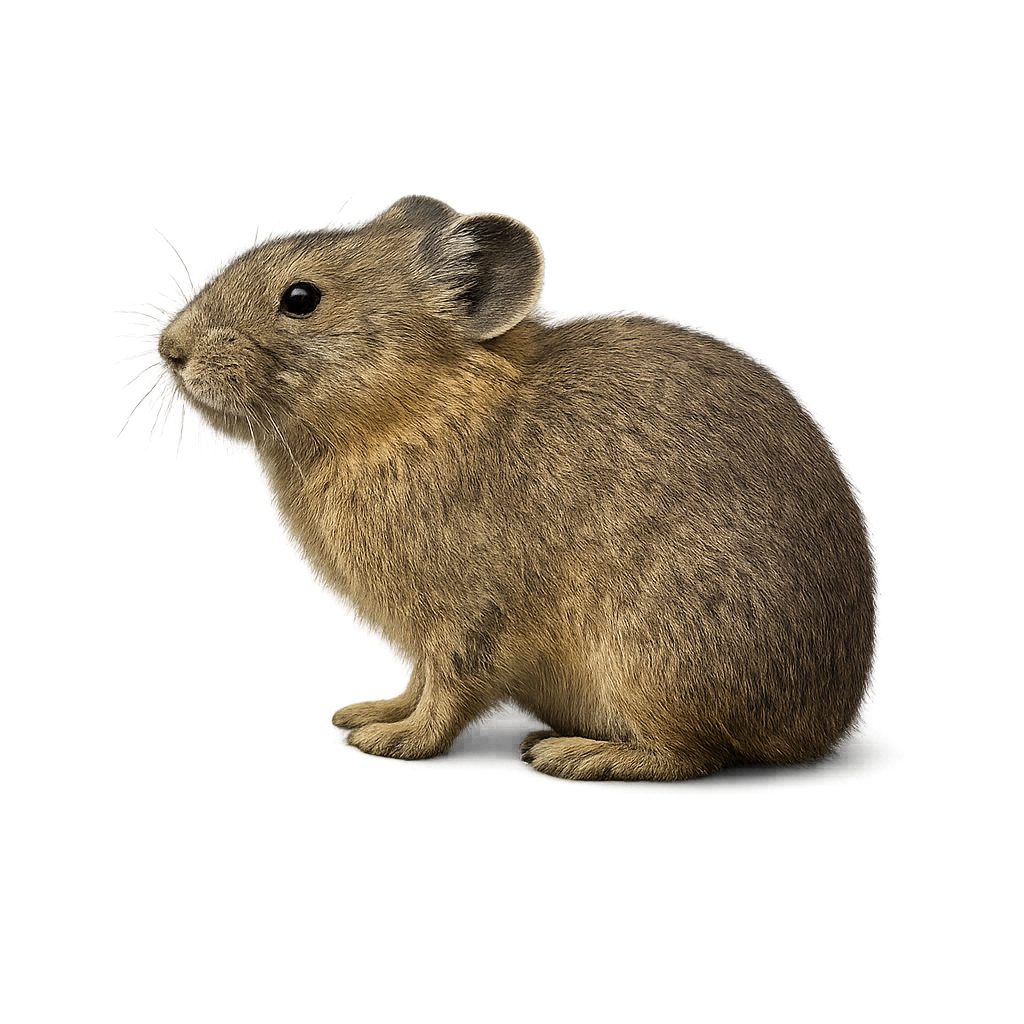
The American pika is a small lagomorph mammal, 15–23 cm in length, with a stocky body, short limbs, and small rounded ears, covered in brownish-gray fur. It inhabits alpine rocky slopes and talus fields of North America, from British Columbia to New Mexico, at elevations of 1400–3800 m, feeding on mosses, grasses, and leaves.
The chaffinch is a small songbird found primarily in Europe and Western Asia. It is easily recognizable by its colorful plumage, with a brown back, pink breast, and beige belly. This passerine bird feeds on seeds, berries, and insects, and is commonly seen in forests, gardens, and parks. The chaffinch is also known for its melodious song, which varies depending on the region and season.
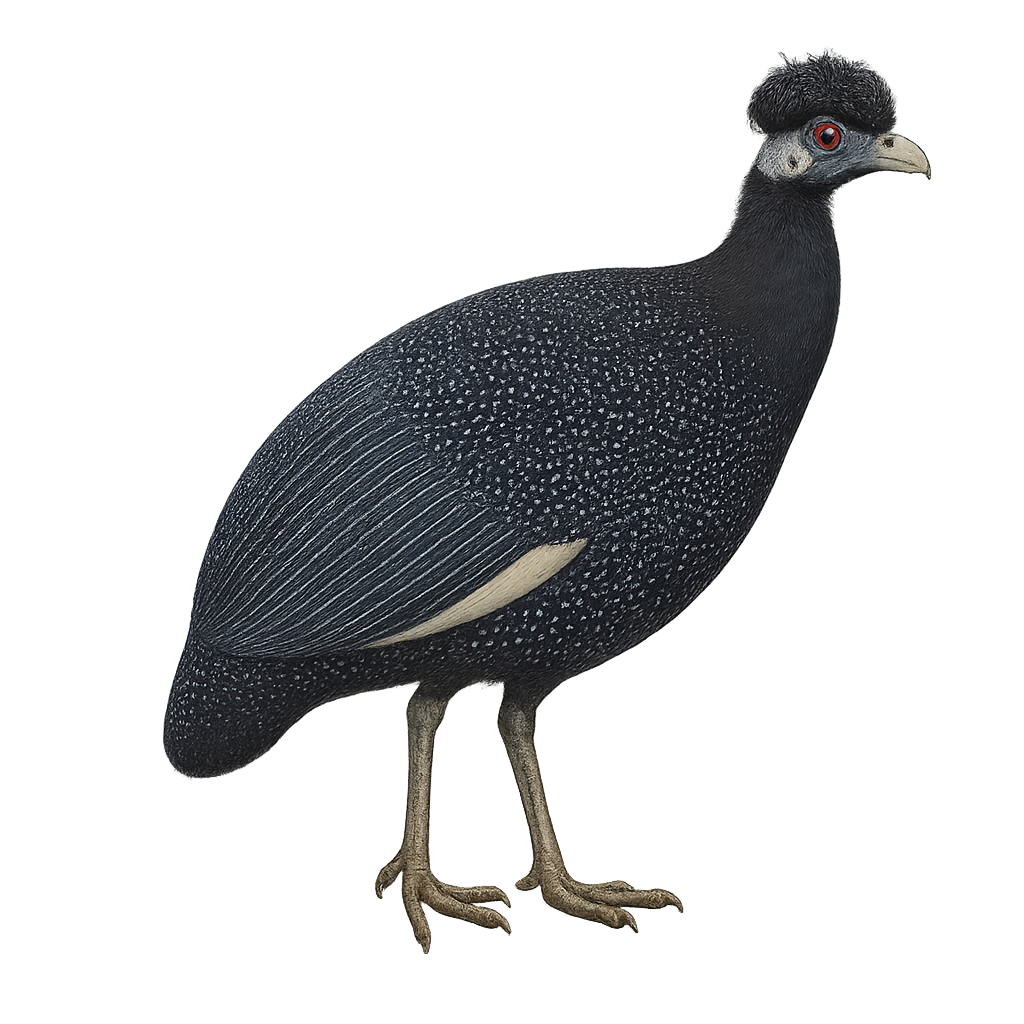
The Crested Guineafowl, or Guttera edouardi, is a medium-sized terrestrial bird known for its distinctive crest and black plumage dotted with white spots. It primarily inhabits the humid tropical forests of East Africa, moving in small groups in search of food. Its diet is varied, including seeds, insects, and small invertebrates. Although generally discreet, it can be noisy when disturbed. The Crested Guineafowl plays an important role in the ecosystem by helping control insect populations and dispersing seeds. Its ability to adapt to different habitats allows it to survive in changing environments, although deforestation poses a threat to some of its populations.
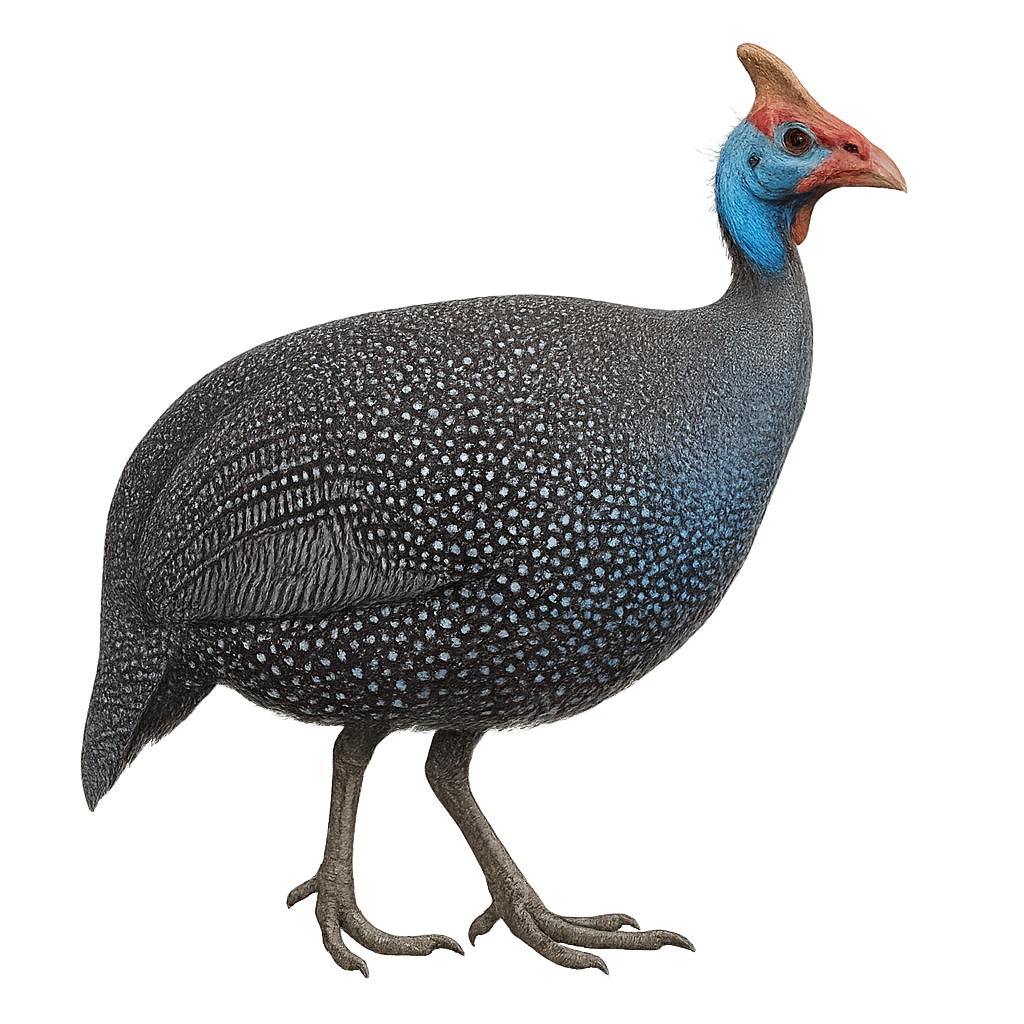
The helmeted guineafowl, Numida meleagris, is a terrestrial bird native to sub-Saharan Africa. It is easily identified by its black plumage speckled with white and its bare head topped with a bony casque. This social bird lives in groups and feeds mainly on seeds, insects, and small invertebrates. Known for its adaptability, it thrives in various habitats, from savannas to open forests. It plays a crucial role in controlling pest insect populations. Although often domesticated for its meat and eggs, it remains suspicious in the wild.
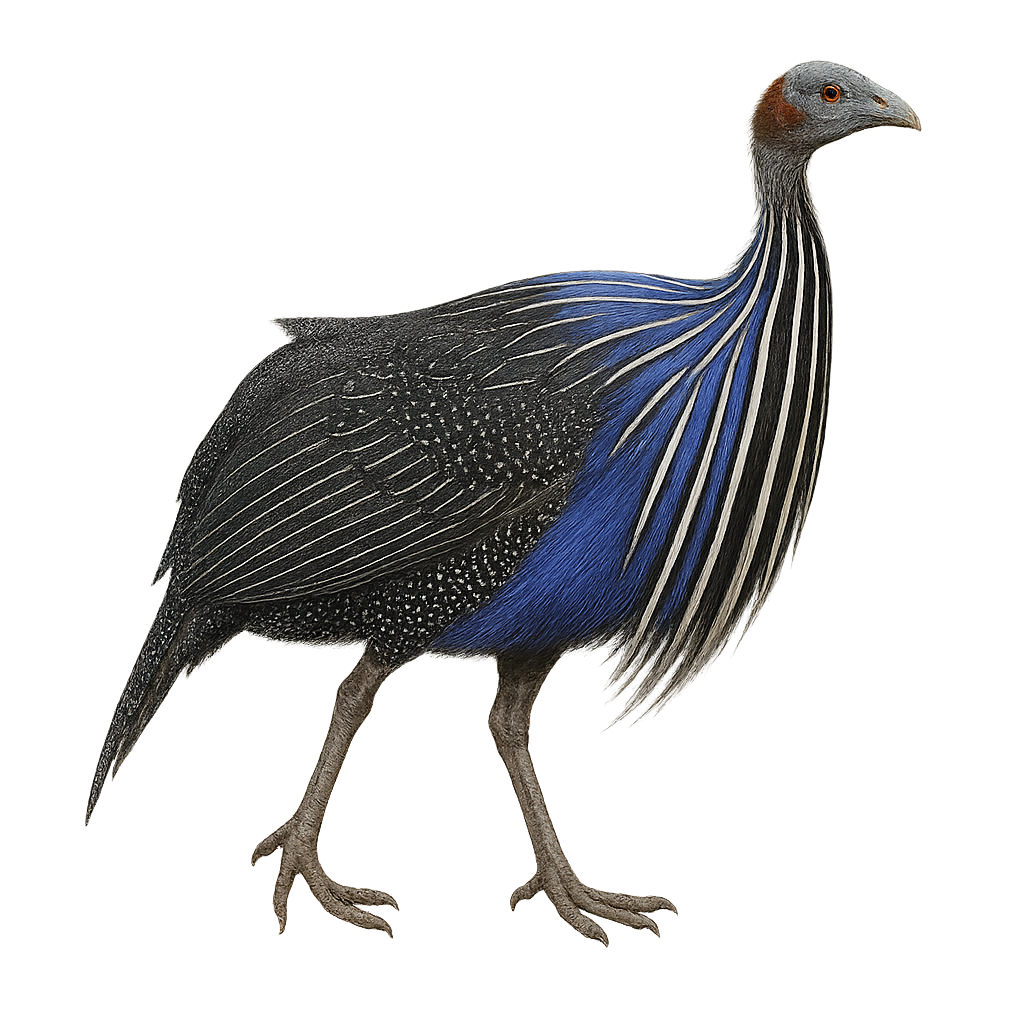
The Vulturine Guineafowl, Acryllium vulturinum, is a striking bird known for its vibrant plumage and graceful appearance. Native to the arid regions of East Africa, this bird is distinguished by its bare blue head, surrounded by a collar of black and white feathers. Its body is covered with bright blue feathers speckled with white spots, creating a striking contrast. It lives in social groups, often seen moving together in search of food. Although it prefers walking, it can fly short distances when threatened. Its distinctive call echoes through the savannas and dry forests it inhabits.
The Eastern Wood-Pewee, or Contopus virens, is a small passerine bird belonging to the Tyrannidae family. It is primarily found in the deciduous and mixed forests of North America, where it is recognized for its melodious and repetitive song. Modest in size, it features an olive-gray plumage on its back and lighter on its belly, with wings slightly barred with white. This migratory bird winters in Central and South America. It mainly feeds on insects, which it catches in flight with its skilled aerial acrobatics. The Eastern Wood-Pewee is often solitary and vigorously defends its territory during the breeding season. Although its habitat is threatened by deforestation, it is currently classified as Least Concern by the IUCN.
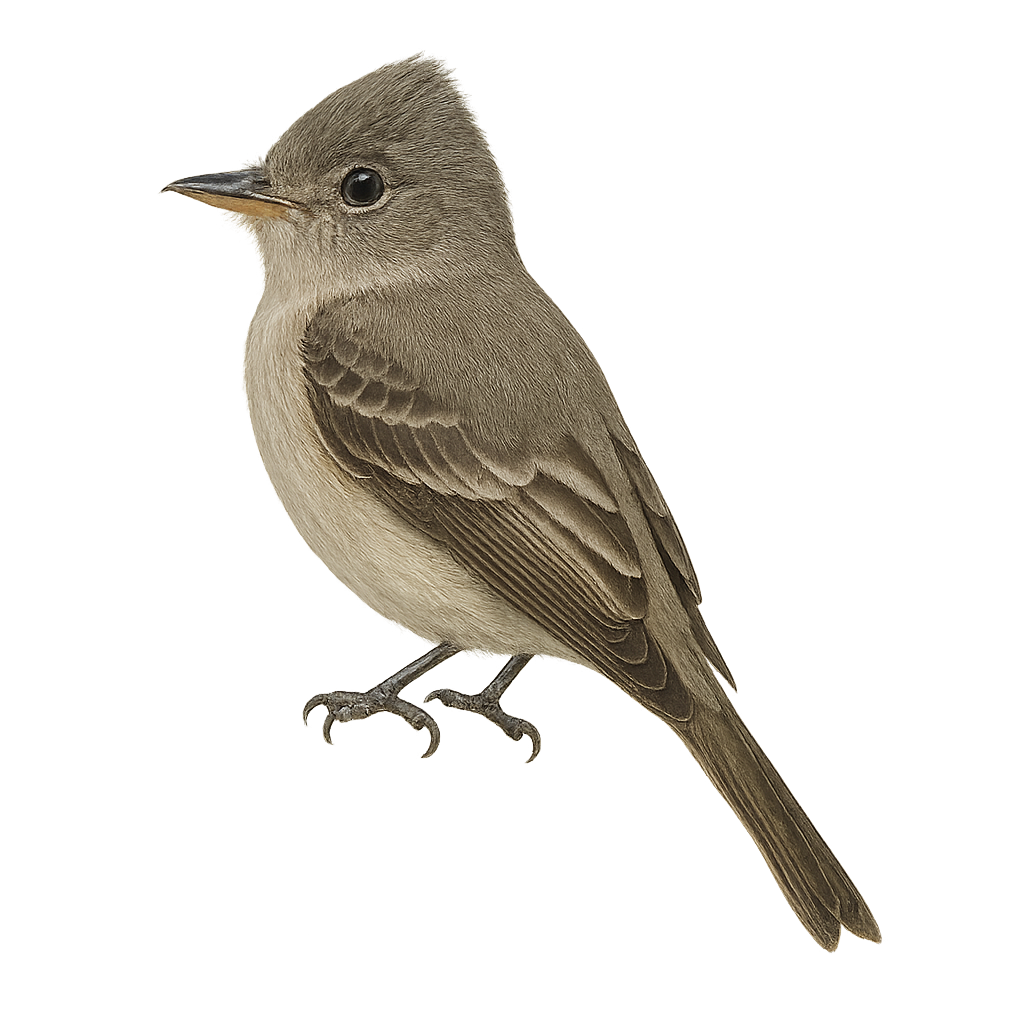
The Western Wood-Pewee, Contopus sordidulus, is a small passerine bird in the Tyrannidae family. It is primarily found in coniferous and mixed forests of North America, particularly in the mountainous regions of the western United States and Canada. This bird is easily recognizable by its gray-brown plumage, lighter belly, and slightly darker wings. It feeds mainly on insects, which it catches in flight thanks to its aerial hunting skills. The Western Wood-Pewee is a migratory bird, spending its winters in Central and South America. Its song is a melodious and repetitive whistle, often heard at dusk. Although relatively discreet, it plays an important role in controlling insect populations in its natural habitat.
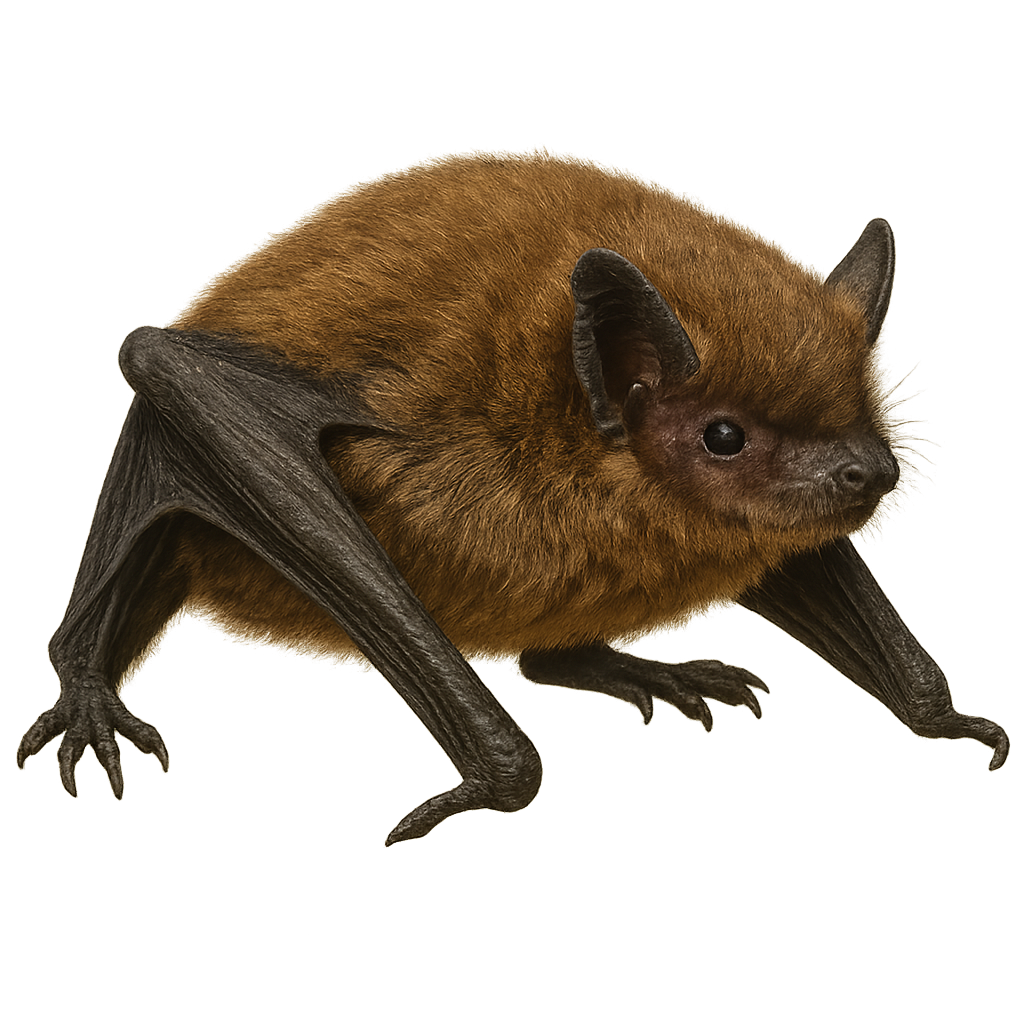
The common pipistrelle is a small bat widely distributed across Europe. It measures about 3.5 to 5 cm in length with a wingspan of 18 to 25 cm. Its fur is dark brown, and it is characterized by its short, rounded ears. Often seen flying at dusk, it hunts insects near water bodies or forests, using echolocation to navigate and capture prey. The common pipistrelle is an important indicator of ecosystem health, contributing to insect population control. It hibernates during winter in shelters like caves or abandoned buildings.
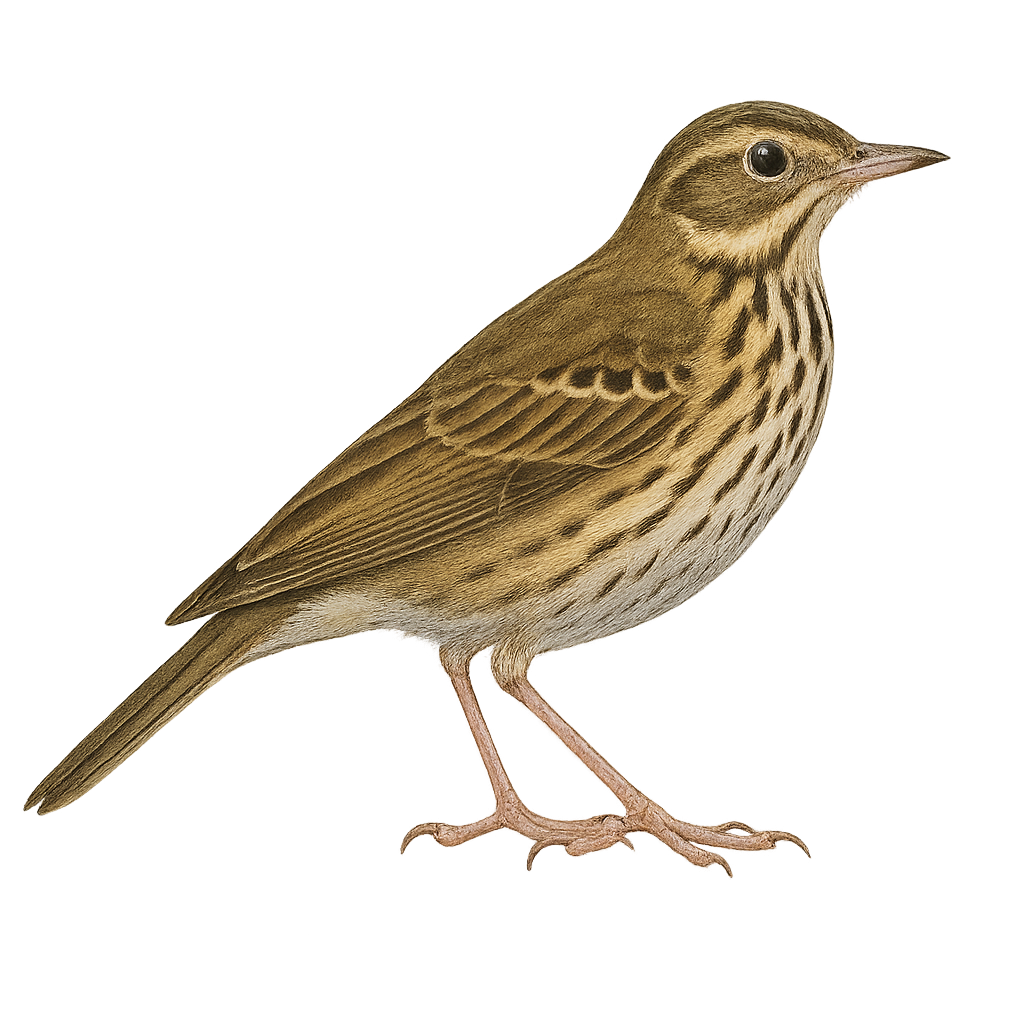
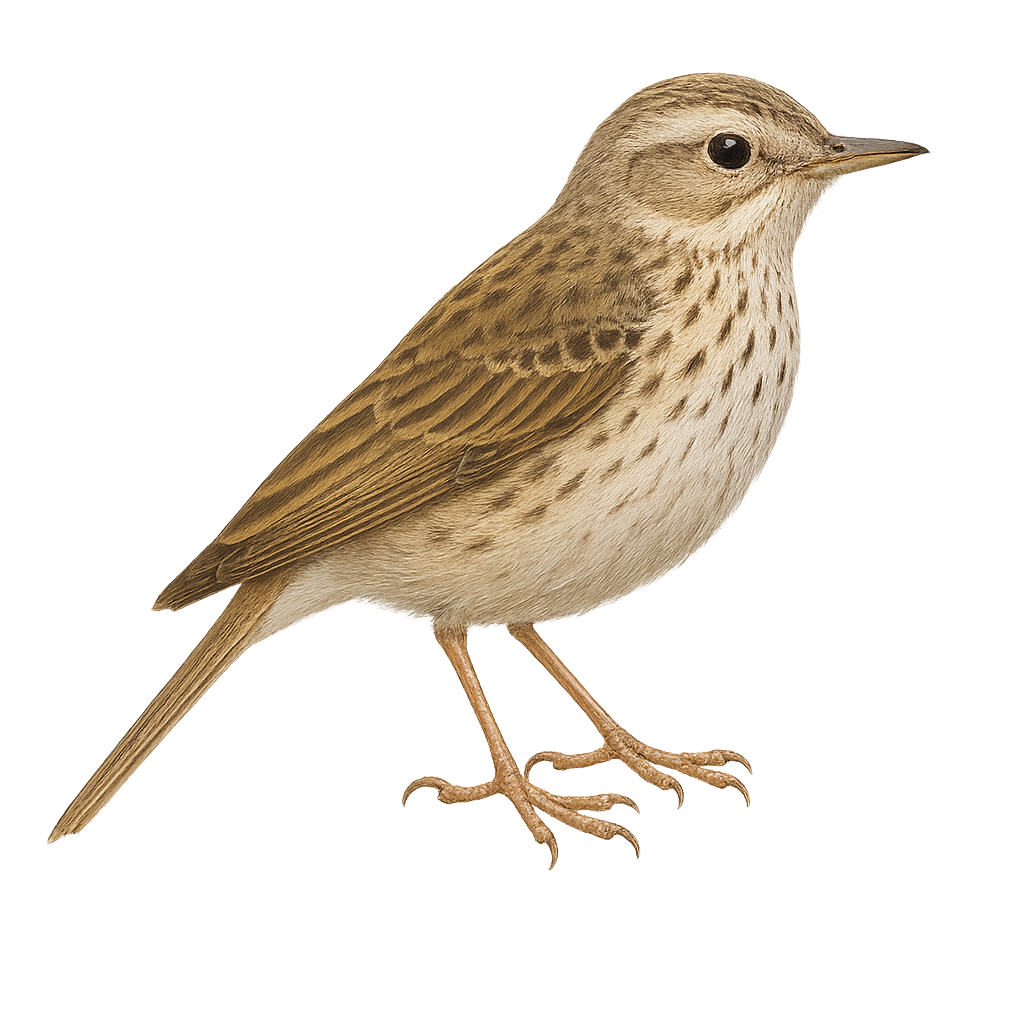
The Olive-backed Pipit, or Anthus hodgsoni, is a small passerine bird in the Motacillidae family. It is primarily found in wooded regions of Asia, including Siberia, China, and the Himalayas. This pipit is characterized by its olive-brown back and dark streaks on its breast, which help it blend into its forested habitat. A migratory bird, it winters in Southeast Asia. Its song is a key identification feature, often described as a melodious whistle. It primarily feeds on insects and small invertebrates found on the ground. The Olive-backed Pipit is a discreet bird, often difficult to spot due to its elusive behavior and cryptic plumage.
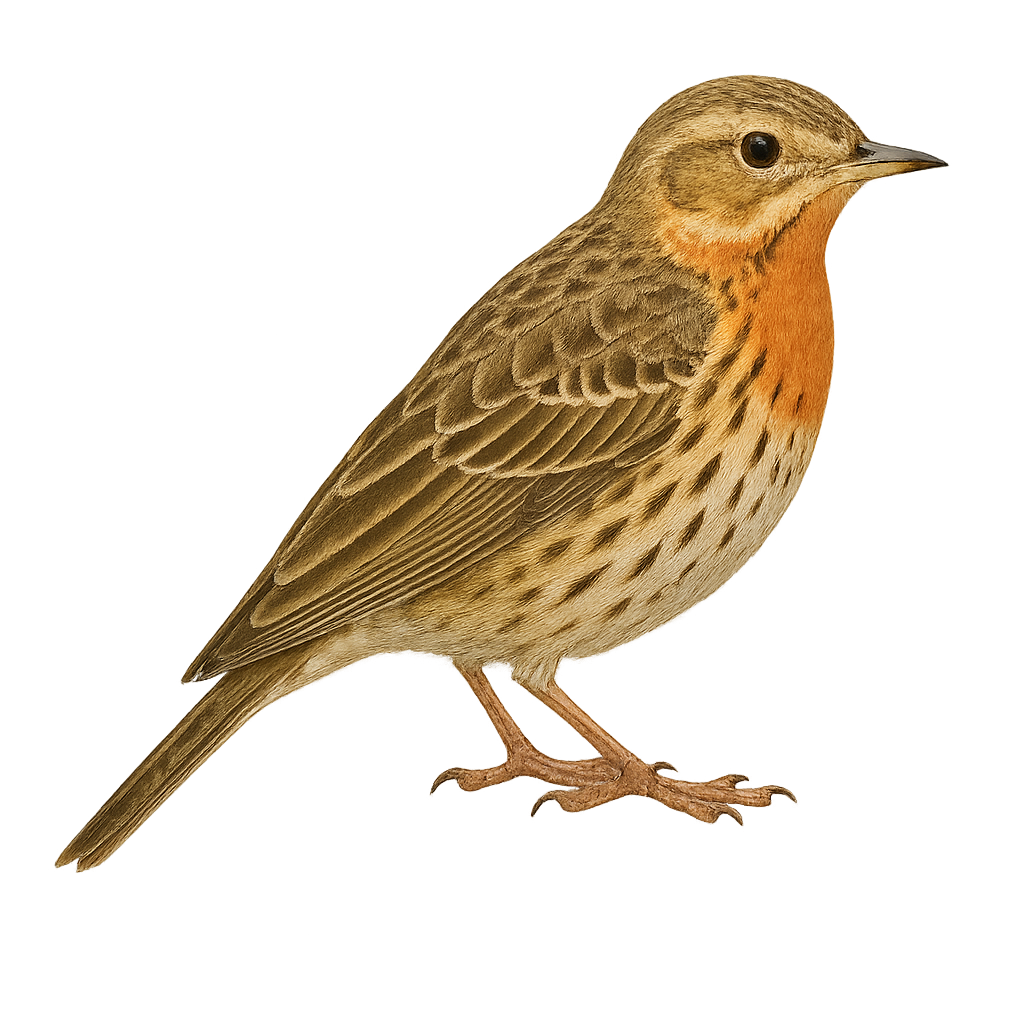
The Red-throated Pipit is a small migratory bird belonging to the Motacillidae family. It is easily recognizable by its reddish throat, which is particularly visible in males during the breeding season. This passerine measures about 14 to 15 cm in length, with a wingspan of 25 to 27 cm. Its plumage is brownish with dark streaks on the back and flanks, allowing it to blend effectively into its natural habitat. It primarily inhabits tundras and wet meadows in summer, while migrating to warmer regions in winter, notably in Africa and South Asia. Its song is a melodious trill often heard in the vast expanses where it nests.
The Berthelot's Pipit is a small bird endemic to the Canary Islands and Madeira. It is characterized by its light brown plumage with darker streaks on the back and paler underparts. This bird is often seen in open habitats such as moorlands, dunes, and rocky areas. It primarily feeds on insects and small invertebrates caught on the ground. The Berthelot's Pipit is a sedentary bird, well adapted to its insular environment. Its population is stable, although confined to a limited territory. Protecting its natural habitats is crucial for its long-term survival.
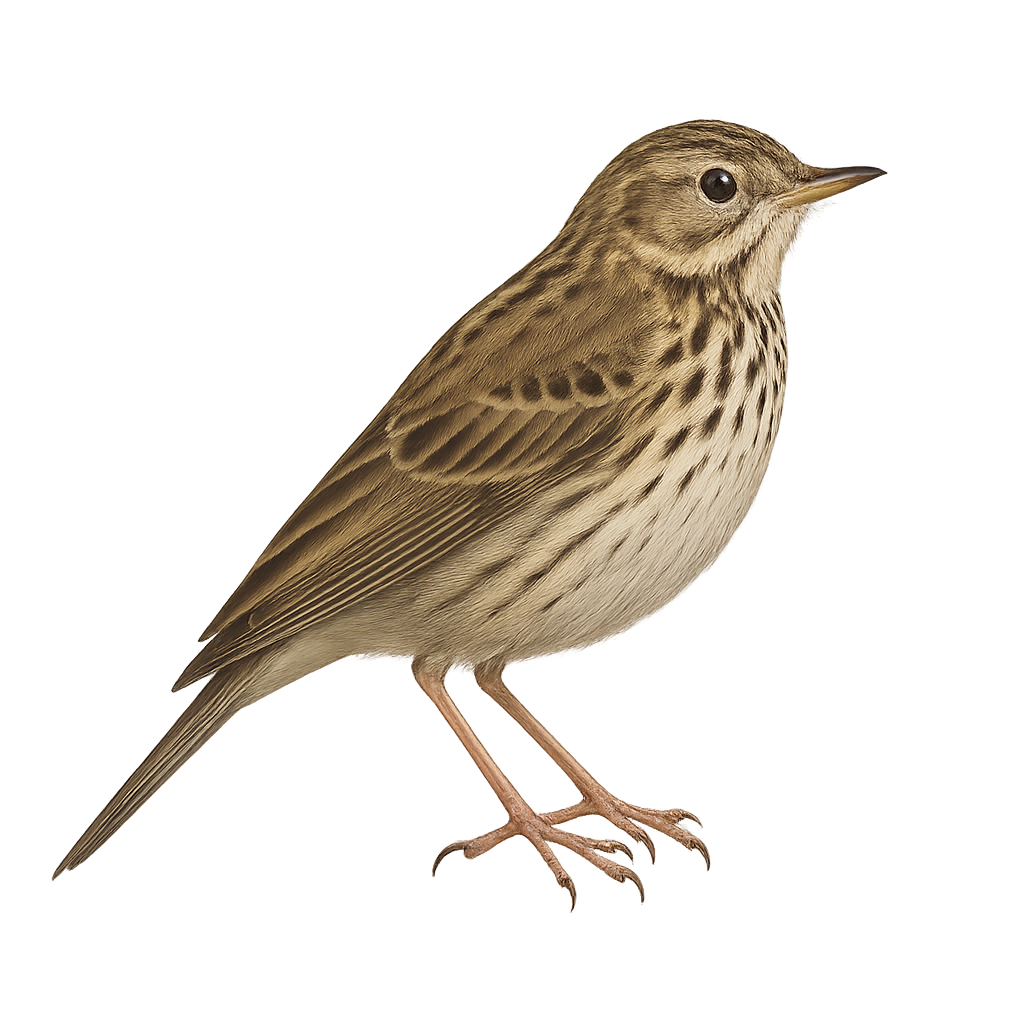
The tree pipit is a small passerine about 15 cm long with streaked brown upperparts and a pale breast. It inhabits woodland edges, open woodlands and hedgerows, feeding mainly on insects and seeds. During breeding, males sing in flight and from low perches to attract mates and defend territory.
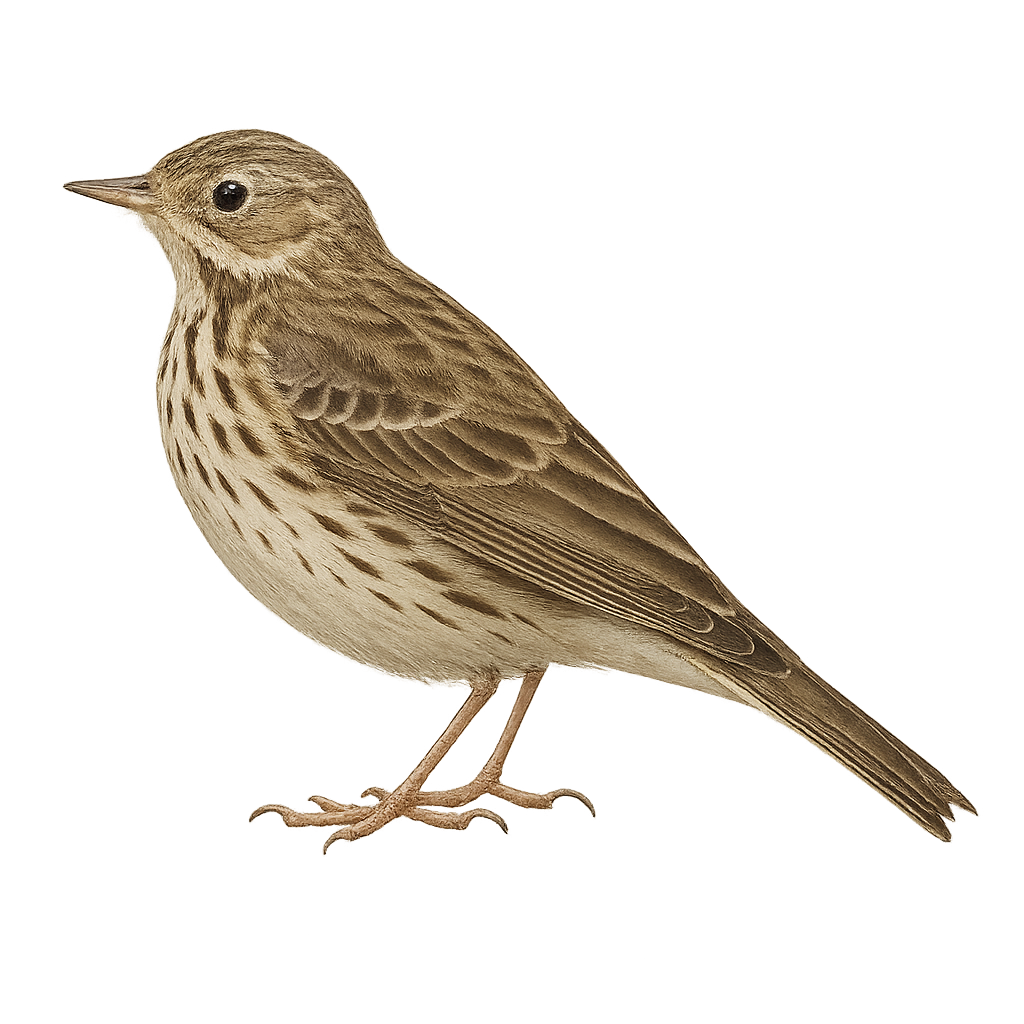
The meadow pipit is a small passerine bird found primarily in meadows, cultivated fields, and farmland across Europe and Asia. It is distinguished by its brown streaked plumage on its back and belly, as well as its furtive movement and melodious song. This bird primarily feeds on insects and seeds, which it searches for in tall grasses. During the breeding season, it performs song flights, a characteristic that makes it easy to spot in its habitat.
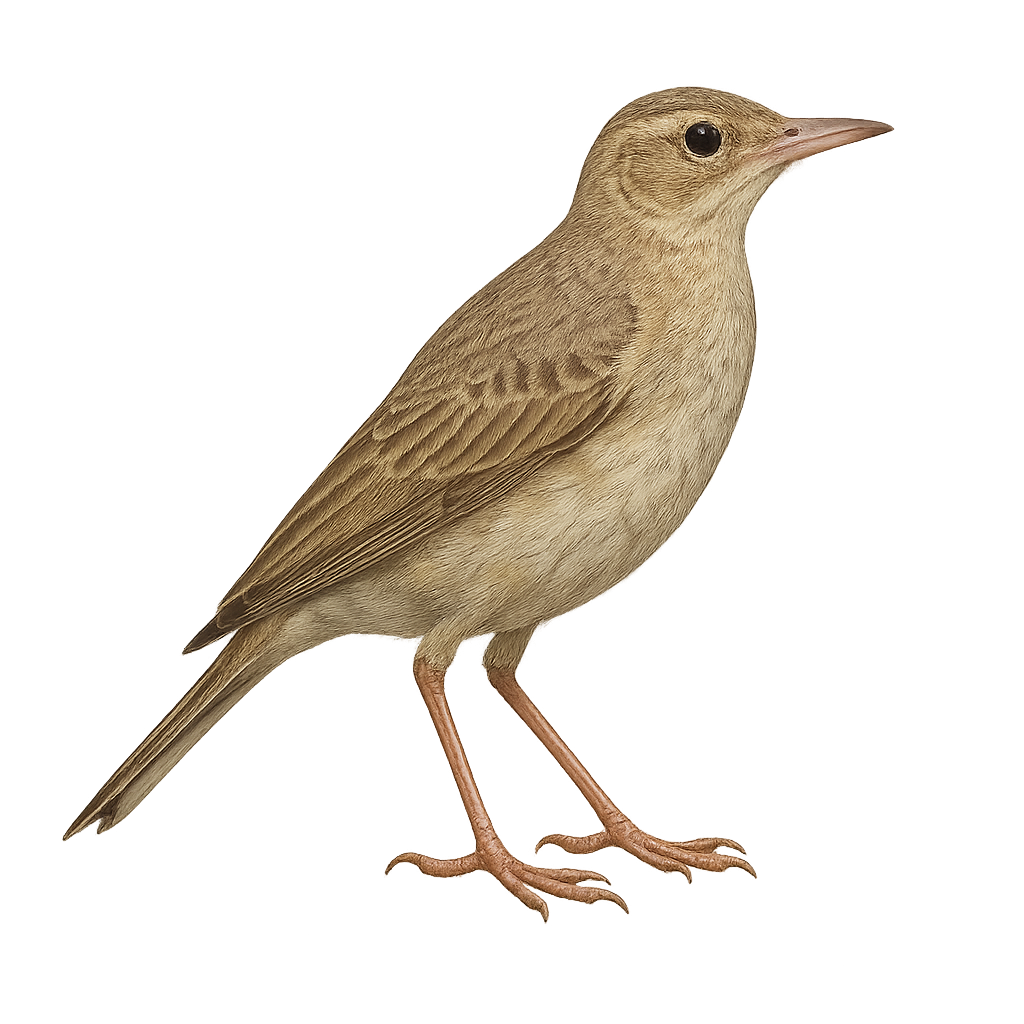
The tawny pipit is a small passerine of 16–17 cm with finely streaked sandy plumage and a pale breast. It inhabits open steppe, dry fallow land and garrigue, feeding mainly on insects and seeds picked from the ground. During breeding, males perform singing flights and sing from low perches to attract females and defend their territory.