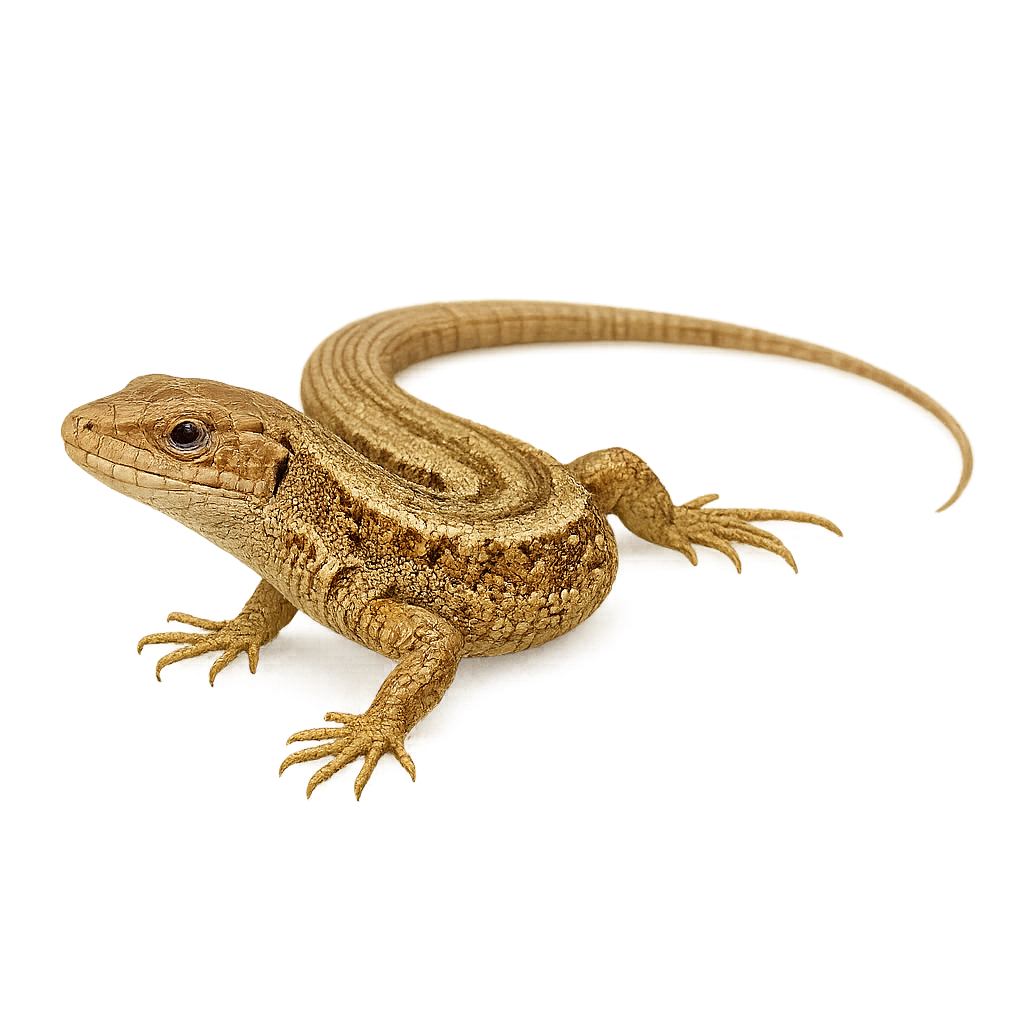
The viviparous lizard, Zootoca vivipara, is a small reptile common in Europe and Asia. It typically measures between 12 and 15 cm, including the tail. Its coloration ranges from brown to gray, often with dark patterns on the back. This lizard is unique among European reptiles as it is ovoviviparous, giving birth to live young rather than laying eggs. It inhabits various environments, from moist forests to alpine meadows, and can be found up to 3000 m in altitude. Primarily active during the day, it feeds on insects and other small invertebrates. Its ability to survive in cold climates is remarkable, and it hibernates during winter.
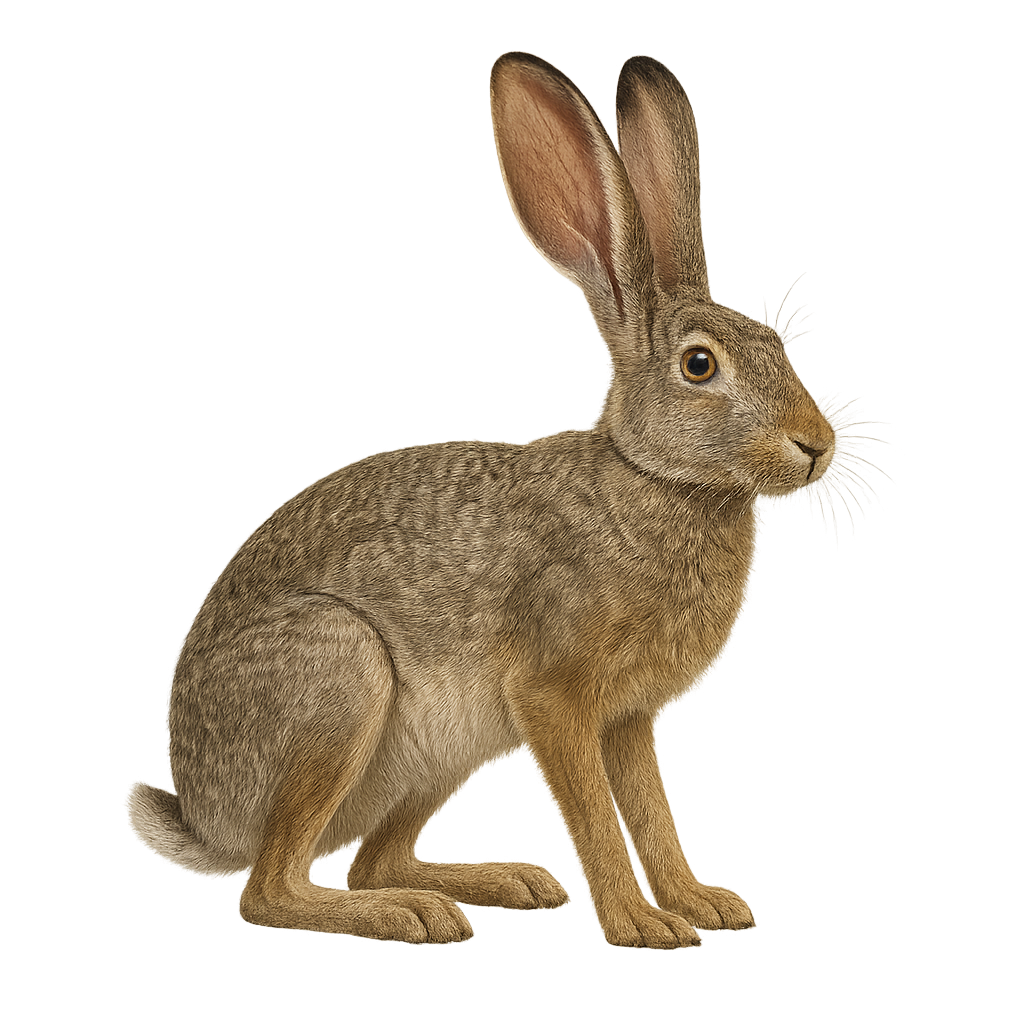
The Lepus microtis, commonly known as the scrub hare, is a medium-sized mammal found primarily in the savannas and grasslands of sub-Saharan Africa. This hare is easily recognizable by its long ears and grayish-brown fur, which helps it blend into its surroundings. It is mainly nocturnal, allowing it to avoid daytime predators. The scrub hare is an herbivore, feeding primarily on grasses, leaves, and young shoots. It has a remarkable ability to adapt, allowing it to survive in various habitats, from grassy plains to bushy areas. Although often solitary, it can sometimes be seen in small groups.
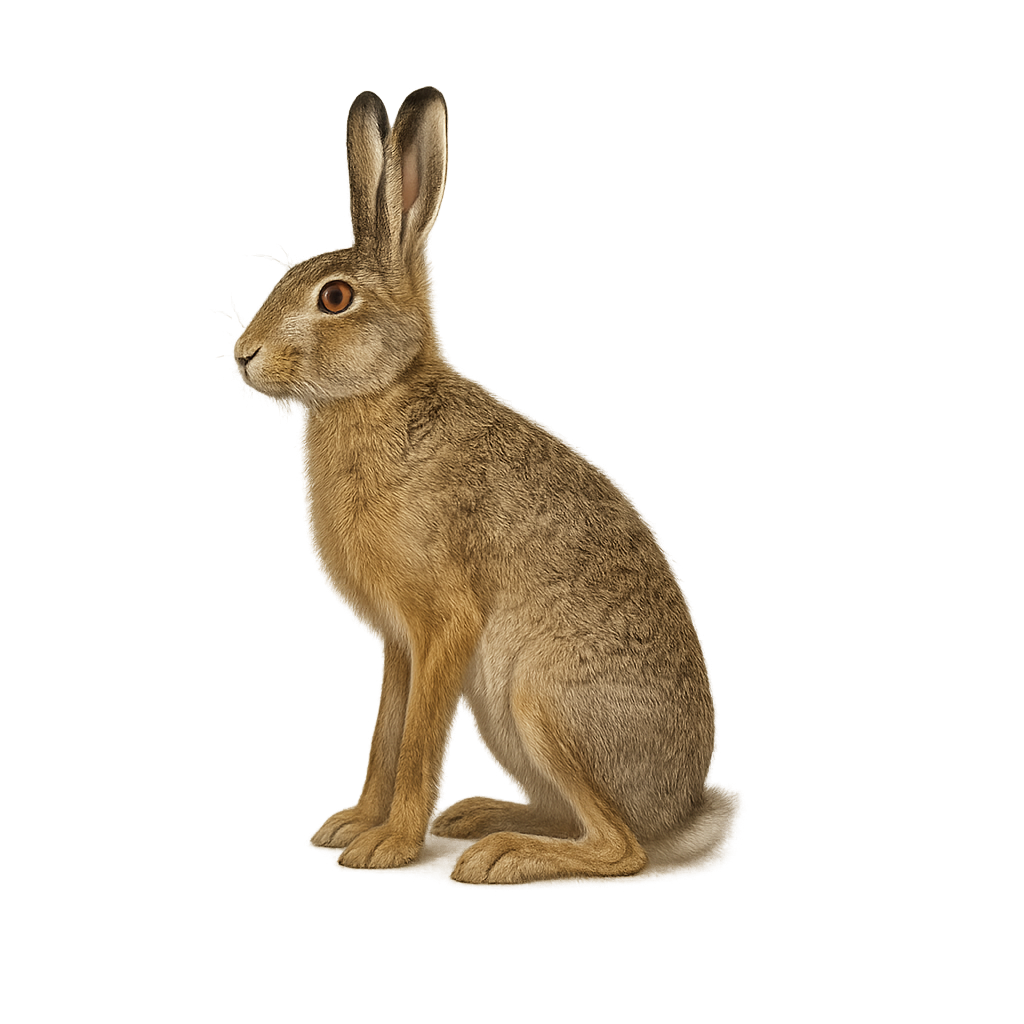
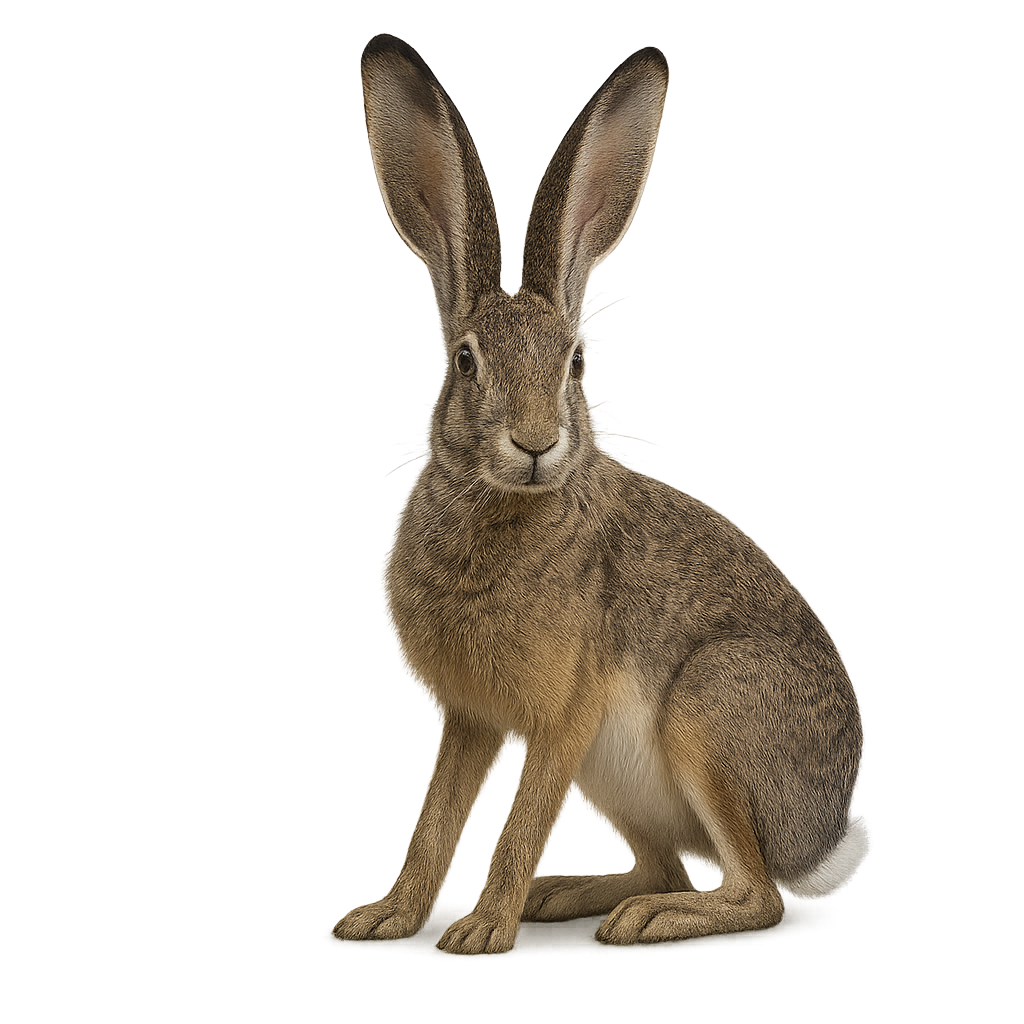
The European Hare is a large herbivorous mammal, easily recognizable by its long ears and powerful hind legs. It measures about 50 to 70 cm in length, with a short tail and a wingspan of 70 to 90 cm, and weighs between 3 and 5 kg. Its coat varies with the seasons: in winter, it becomes lighter, while in summer, it takes on a brown or gray hue, allowing it to blend effectively into fields and meadows. The European Hare is a solitary and territorial animal, primarily found in open areas such as fields, meadows, and sparse woodlands. It is particularly fast and agile, capable of running at speeds of over 60 km/h when pursued. This hare primarily feeds on grasses, leaves, fruits, and roots. Although the species is widespread in Europe, it faces threats from hunting, habitat loss, and human disturbances.
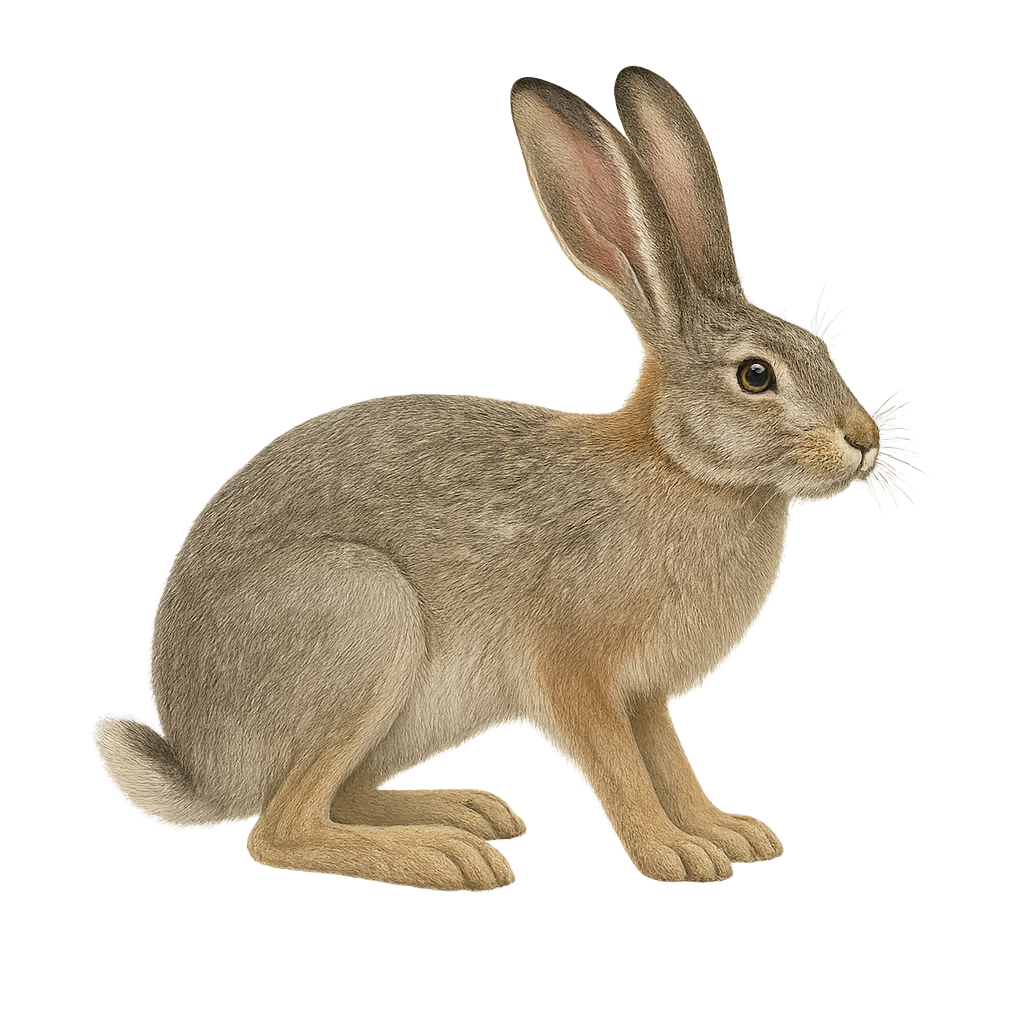
The Tolai hare, Lepus tolai, is a medium-sized mammal known for its long ears and strong hind legs. It has a gray-brown coat that helps it blend into its natural habitat, which mainly consists of steppes, semi-deserts, and open grasslands. This hare is well adapted to arid climates and can be found in regions ranging from Central Asia to Mongolia. It is primarily nocturnal, allowing it to avoid the high daytime temperatures. Although generally solitary, it can be seen in small groups during the breeding season. Its ability to run quickly is its main defense against predators.
The Lepus saxatilis, commonly known as the scrub hare, is a medium-sized mammal belonging to the Leporidae family. It is primarily found in Southern Africa, inhabiting savannas, grasslands, and rocky areas. This hare is recognizable by its brown-grey fur, which provides excellent camouflage, and its long ears that offer superb hearing. Mostly nocturnal, it feeds on grasses, leaves, and bark. Although often solitary, it can sometimes be seen in small groups. Its speed and agility are its main defenses against predators.
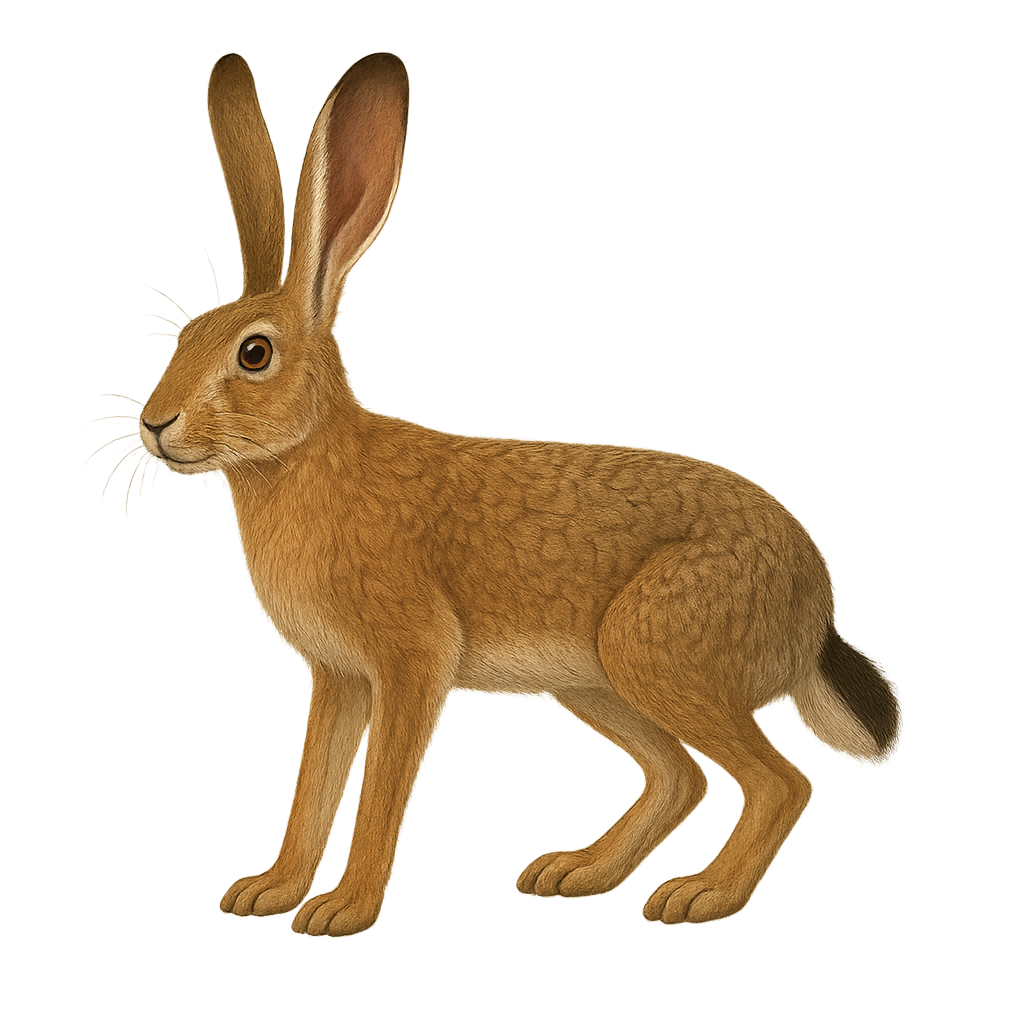
The Cape Hare is a large herbivorous mammal native to sub-Saharan Africa, particularly found in open areas, savannas, and semi-arid regions. It measures between 50 and 70 cm in length, with a tail of 10 to 12 cm, and weighs between 2 and 4 kg. Its coat is generally light brown or gray with a lighter belly, allowing it to blend effectively into its environment. The Cape Hare is a nocturnal and crepuscular animal, primarily feeding on plants, grasses, fruits, and roots. While it is a fast runner, reaching speeds of 50 to 60 km/h, it prefers discretion and often remains hidden during the day in bushes or tall grasses. This hare is also known for its ability to remain motionless and quickly adapt to its surroundings, making it difficult for predators to spot. While the species is relatively common, it can be threatened by habitat loss and hunting.
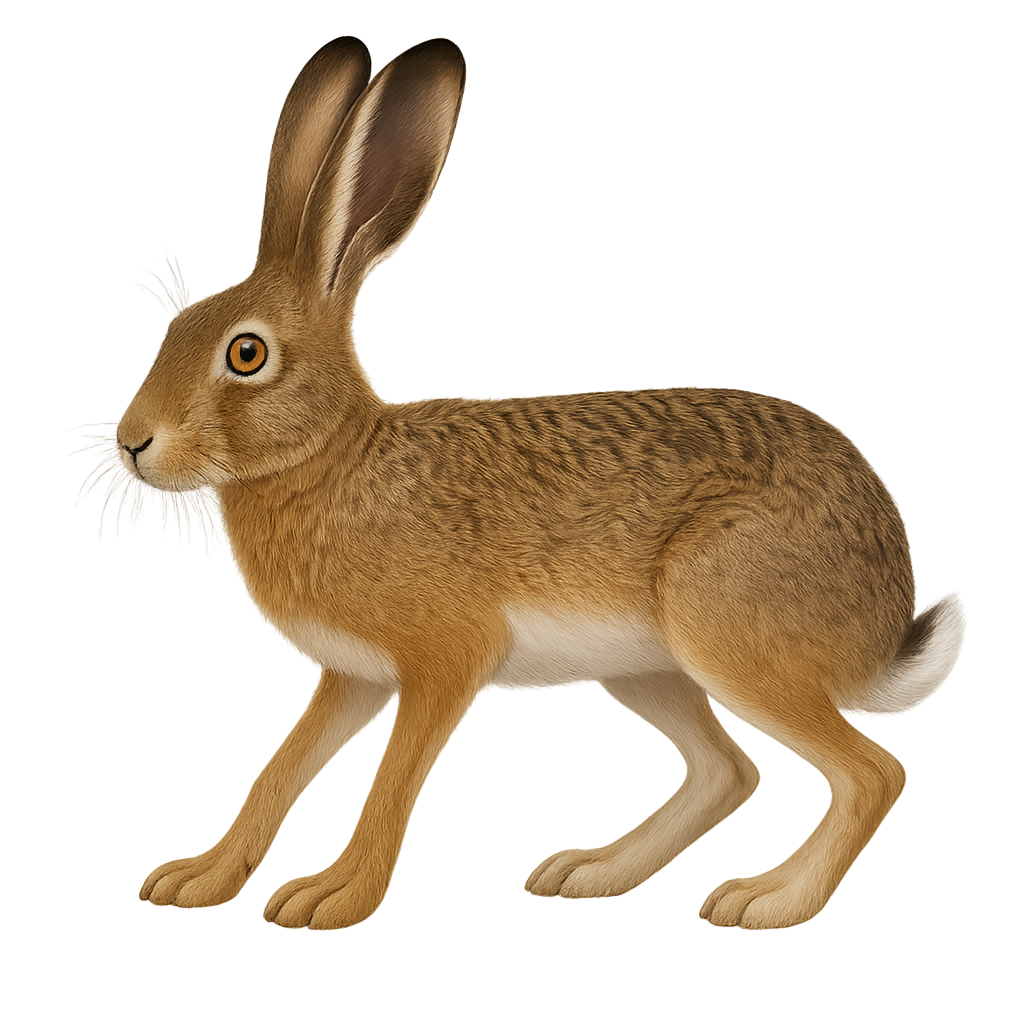
The Iberian Hare is a rodent endemic to the Iberian Peninsula, primarily found in Spain and Portugal. It measures between 50 and 60 cm in length, with a tail of 6 to 9 cm, and weighs between 2 and 3 kg. This hare is smaller than its European cousin, with a lighter coat, often gray-brown or light brown, with darker markings on the back and a paler hue on the belly. The Iberian Hare primarily inhabits open plains, oak forests, and meadows, where it feeds on vegetation, mainly grasses, roots, leaves, and sometimes young shrub shoots. It is a crepuscular and nocturnal animal, most active at dusk and during the night. While the species is not immediately endangered, it is threatened by habitat loss, hunting, and the introduction of predators such as foxes and dogs.
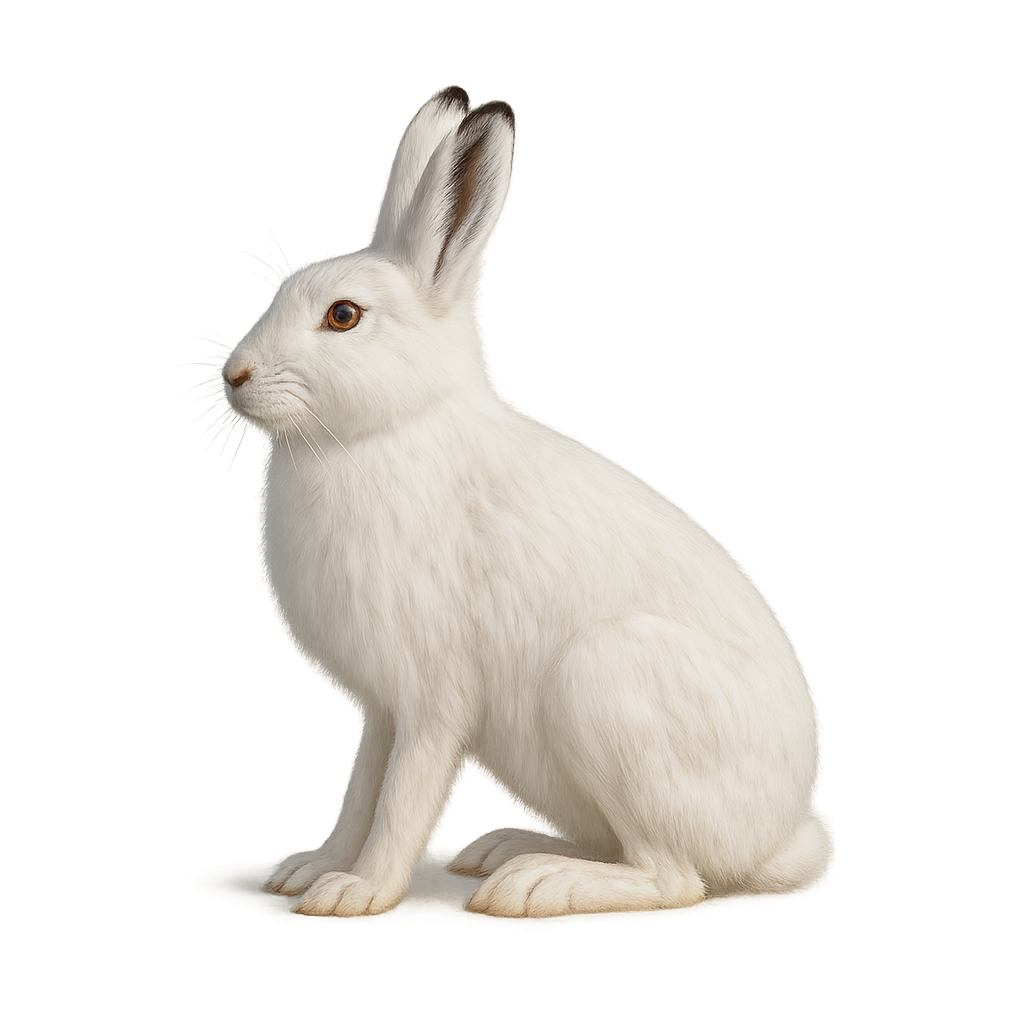
The Mountain Hare is a small mammal, easily recognizable for its ability to change color according to the seasons. In winter, its coat becomes completely white, allowing it to blend perfectly into the snow, while in summer, it has a brown or gray coat, with darker shades on its back and lighter hues on its belly. It measures about 50 to 70 cm in length, with a tail of 6 to 8 cm, and weighs between 2 and 4 kg. The Mountain Hare is primarily found in the cold, mountainous regions of Northern Europe, Northern Asia, and certain mountainous areas of North America. It is a herbivorous animal that feeds on a variety of vegetation, primarily grasses, roots, fruits, and young shoots. It is mainly active at dusk and during the night, hiding in bushes or under grasses during the day. Although it is quite resilient to cold temperatures, the species is threatened by habitat loss and climate changes affecting its natural environment.
The Lion is one of the largest land predators, often called the "king of the animals." It measures between 1.2 and 2.5 meters in length, with a tail of about 80 to 100 cm, and weighs between 120 and 250 kg, with males generally being larger and more massive than females. Male lions are easily recognizable by their majestic mane, which varies in color from light blonde to dark brown. Their coat is generally golden to light brown, with lighter patches on the belly and under the legs. Lions primarily live in Africa, with a small population in Asia (particularly in Gir National Park, India). They prefer open savannas, grasslands, and light forests. The lion is a social predator that typically hunts in groups, with females doing most of the hunting. Their diet consists mainly of large herbivores such as zebras, gazelles, and buffaloes. While the lion is an iconic species, it is threatened by habitat loss, human conflicts, and the depletion of its natural prey.
The Asiatic lion, or Panthera leo persica, is a subspecies of lion found primarily in the Gir Forest of India. Smaller than its African counterpart, it is distinguished by a less developed mane and a distinctive belly fold. Asiatic lions live in groups called prides, consisting of a few females and their cubs, while adult males are often solitary or in small groups. They primarily hunt ungulates such as sambar and chital. Although their population has increased due to conservation efforts, they remain endangered due to habitat loss and poaching.
The Steller sea lion is the largest otariid, with males reaching up to 3.3 m in length and weighing 600–1000 kg, with thick chestnut fur and a large head. It inhabits rocky shores and temperate coastal waters of the North Pacific, feeding mainly on fish, squid and crustaceans. During the breeding season, dominant males arrive in May to establish territories and harems, and females give birth to a single pup on shore in June–July.
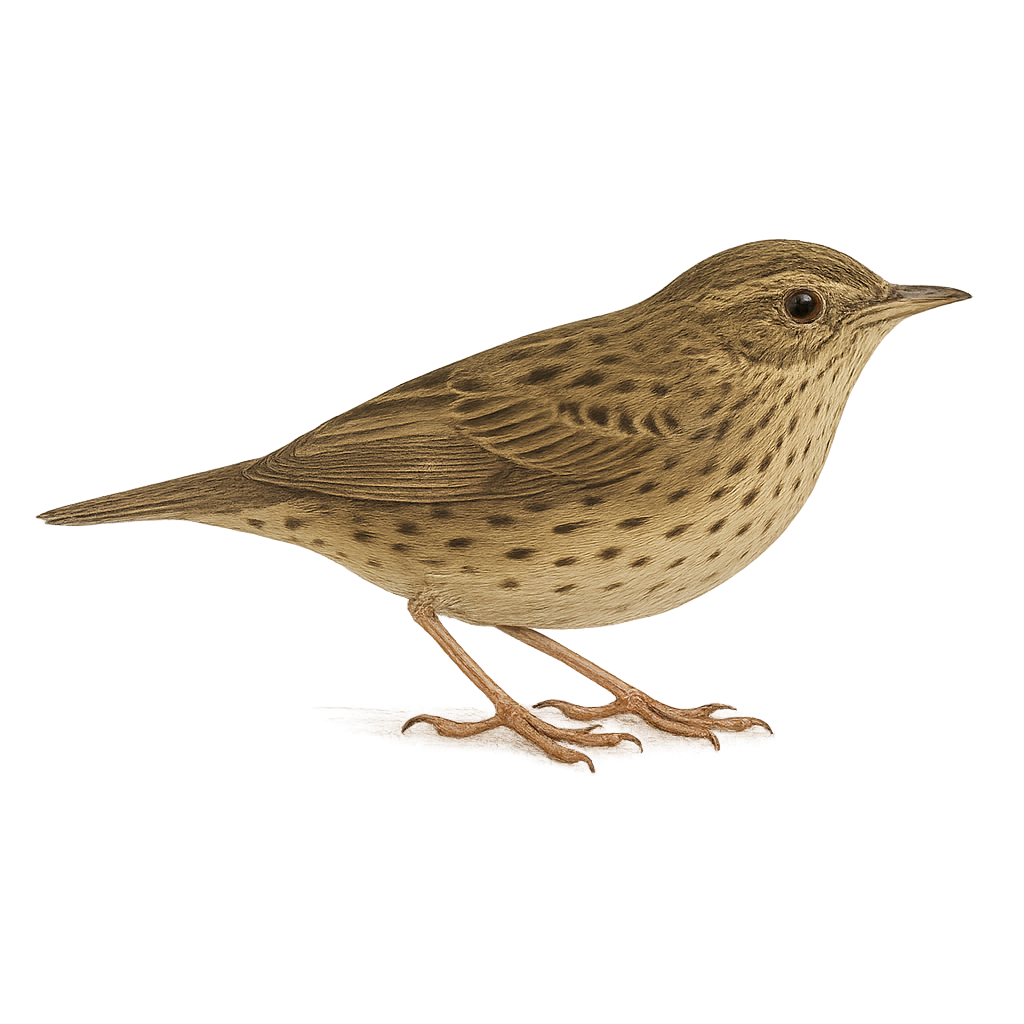
The Lanceolated Warbler is a small, elusive bird belonging to the Locustellidae family. It is characterized by its brownish plumage, finely streaked with black, which allows it to blend into its natural habitat. This bird prefers wetlands, meadows, and marshes, where it primarily feeds on insects and small invertebrates. Its song is a rapid, monotonous trill, often heard at dusk. The Lanceolated Warbler is migratory, spending its summers in Eurasia and winters in Southeast Asia. Although its conservation status is currently "least concern," it is threatened by habitat destruction due to intensive agriculture and wetland drainage.
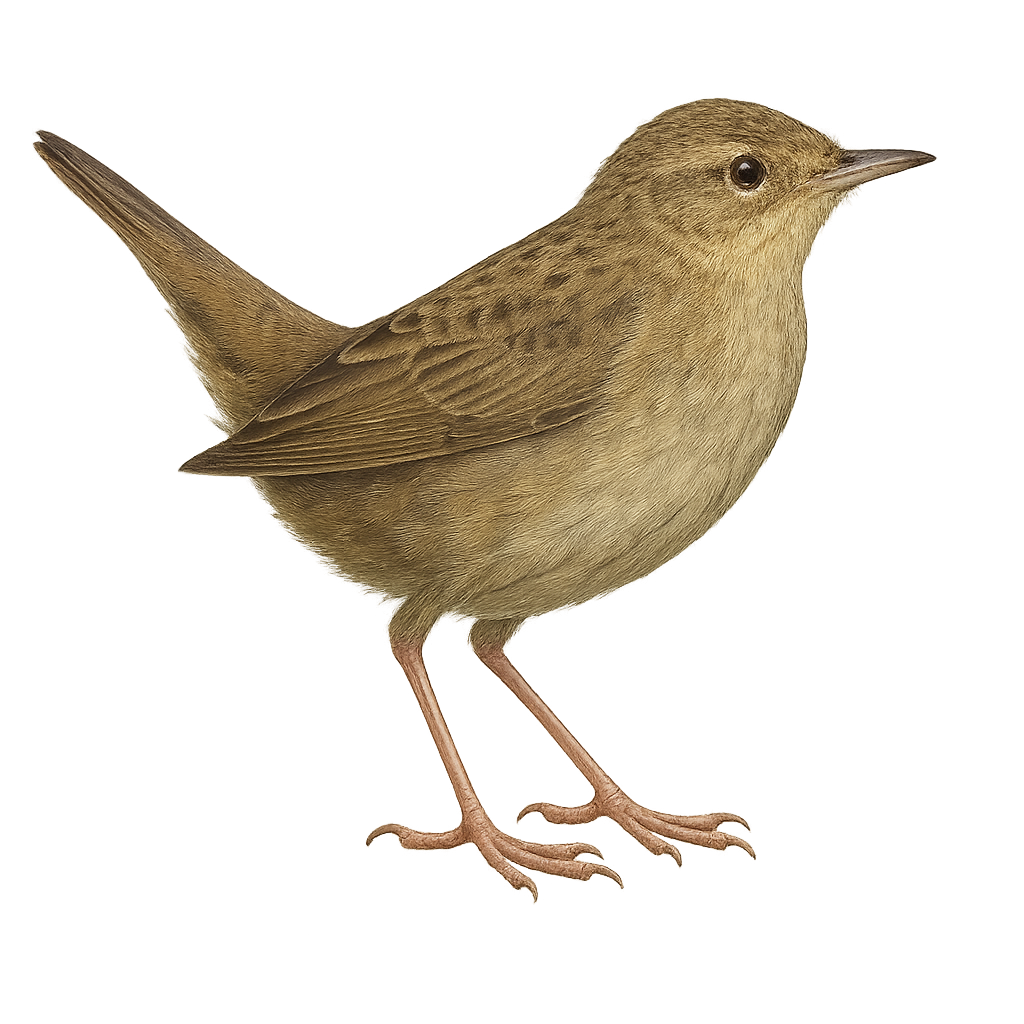
The common grasshopper warbler is a small passerine about 13 cm long with streaked brown upperparts and long undertail coverts. Secretive in dense grassy vegetation and low scrub at water margins, it feeds on insects gleaned from foliage. During breeding, the male sings from a low branch or elevated grass stem to defend its territory and court the female.
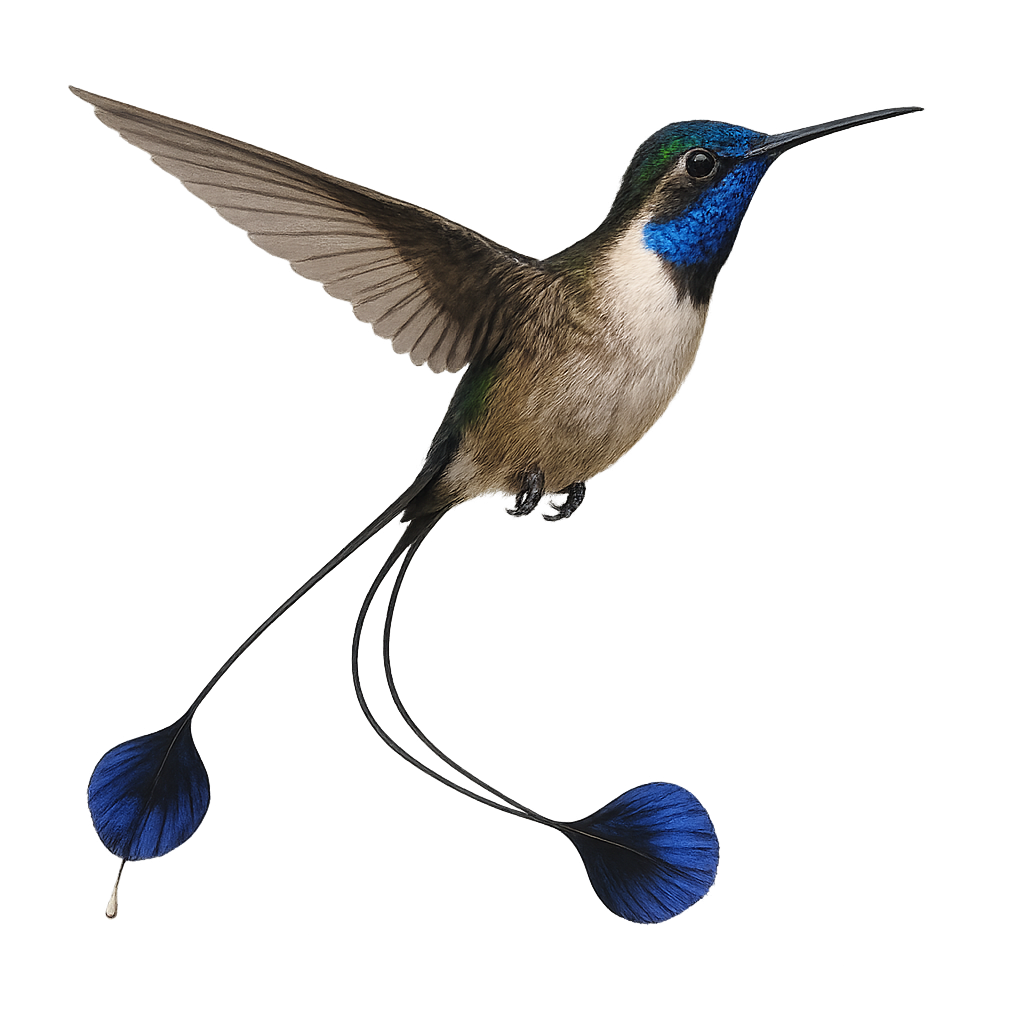
The Marvelous Spatuletail, or Loddigesia mirabilis, is a fascinating and rare bird endemic to Peru. This hummingbird is famous for its spectacular tail feathers, which end in racket-shaped spatules. Males display vibrant plumage with bright colors, while females are more subdued. They primarily inhabit cloud forests and wooded areas at altitudes between 2100 and 2900 meters. Their diet mainly consists of nectar, which they extract while hovering, and insects. Their behavior is generally suspicious, making them a challenge for birdwatchers and photographers to observe.
The Gray Dormouse is a small nocturnal rodent, closely related to the Common Dormouse, found mainly in Europe in forests, hedgerows, and gardens. It measures between 10 and 15 cm in length, with a tail of about 8 to 12 cm, and weighs between 40 and 100 g. Its coat is generally light gray or brown-gray, with lighter shades on the belly and dark eyes that give it a lively expression. The Gray Dormouse is an excellent climber and is primarily arboreal. It feeds on fruits, seeds, nuts, and sometimes insects and small worms. This rodent is known for its ability to hibernate during the winter, retreating into natural cavities or nests made of leaves and moss to survive the cold temperatures. While it is relatively common, it is threatened by habitat loss, deforestation, and disturbances caused by human activity.
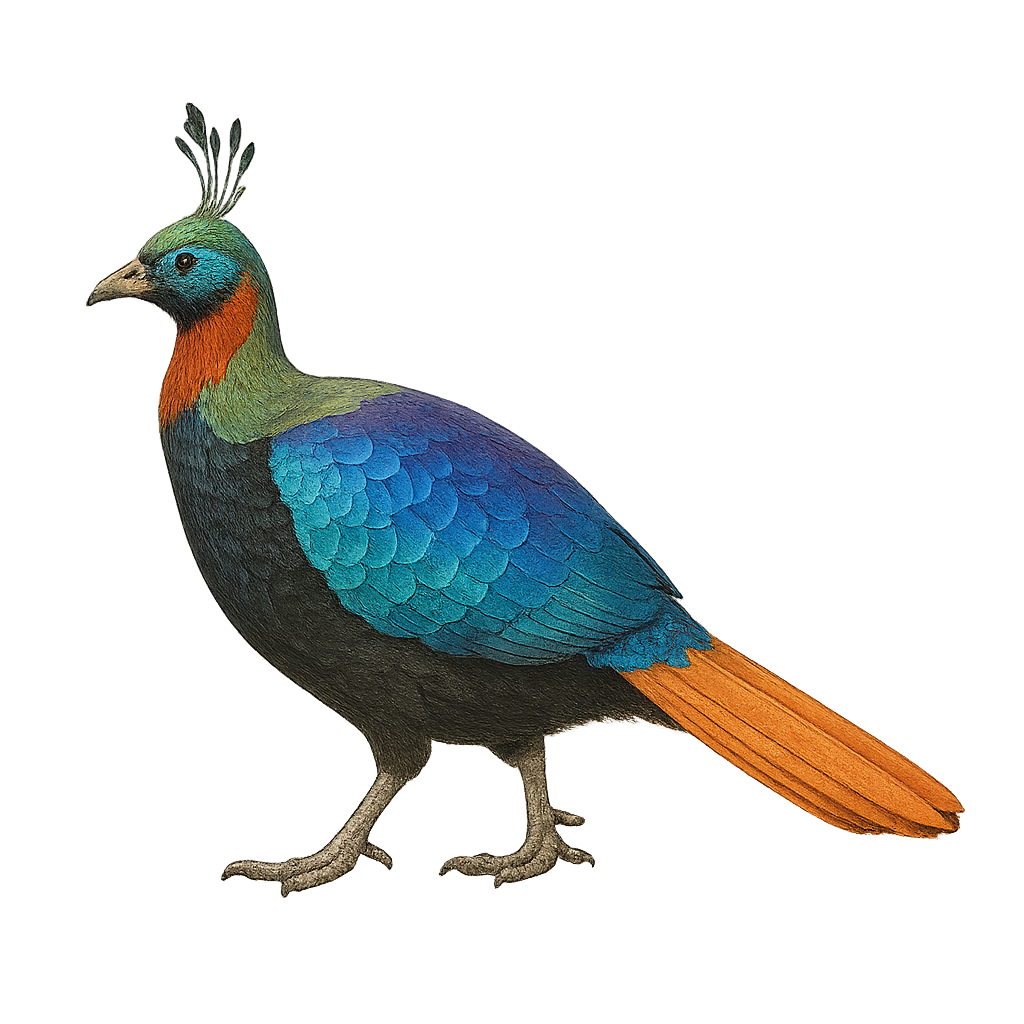
The Himalayan Monal, or Lophophorus impejanus, is a striking bird native to the mountainous regions of the Himalayas. Known for its iridescent plumage, the male displays a dazzling array of metallic blues, greens, and purples, while the female is more subdued with mottled brown feathers for camouflage. These birds inhabit coniferous forests and alpine meadows, feeding on roots, tubers, and insects. Although capable of flight, they prefer to walk or run on the ground. Their call is a sharp, resonant cry that echoes through the mountain valleys.
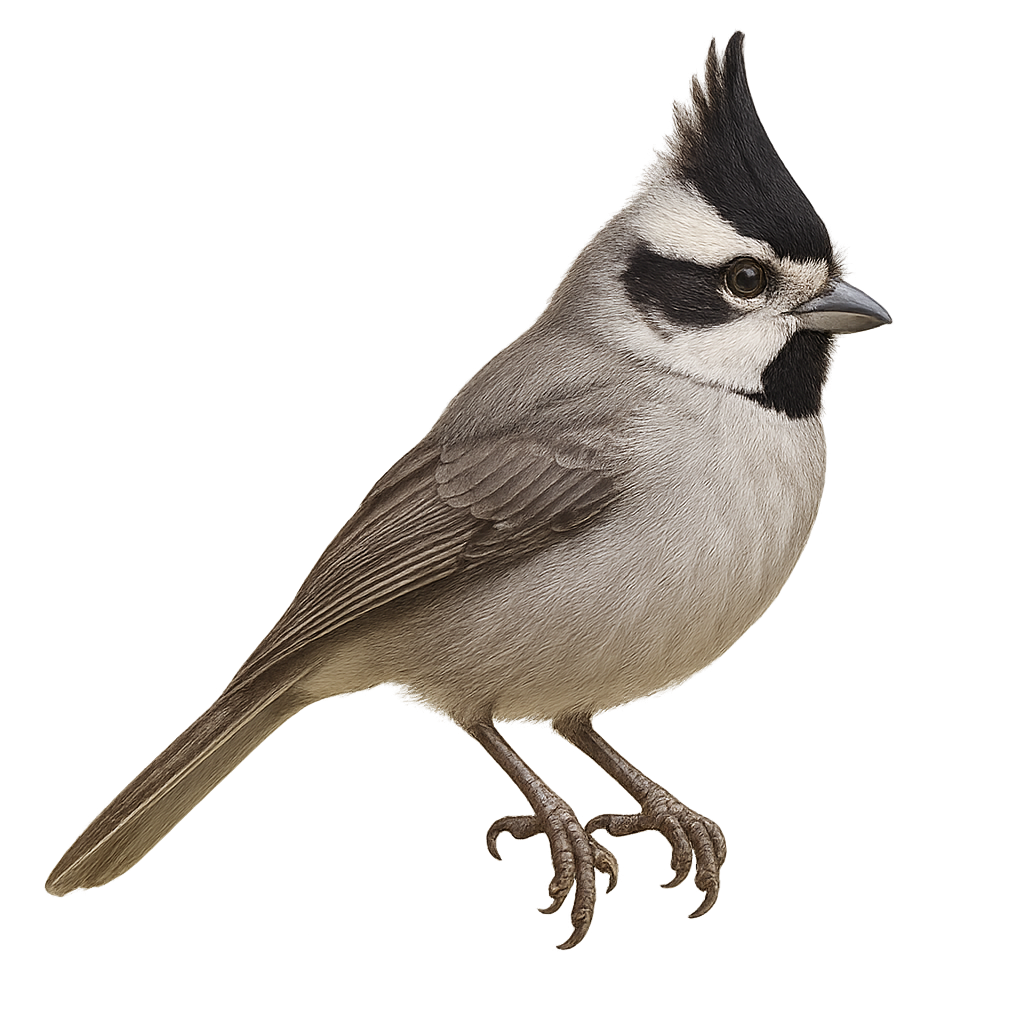
The Grey-hooded Sierra Finch, or Lophospingus pusillus, is a small passerine bird belonging to the Thraupidae family. It is primarily found in the arid and semi-arid regions of South America, particularly in Argentina, Bolivia, and Paraguay. This bird is distinguished by its characteristic grey crest and brownish plumage. It measures about 14 cm in length and feeds mainly on seeds and insects. The Grey-hooded Sierra Finch is often seen in small groups, moving around in search of food. Although relatively discreet, its melodious song can be heard from a distance. The species is currently classified as of least concern by the IUCN but remains sensitive to environmental changes.
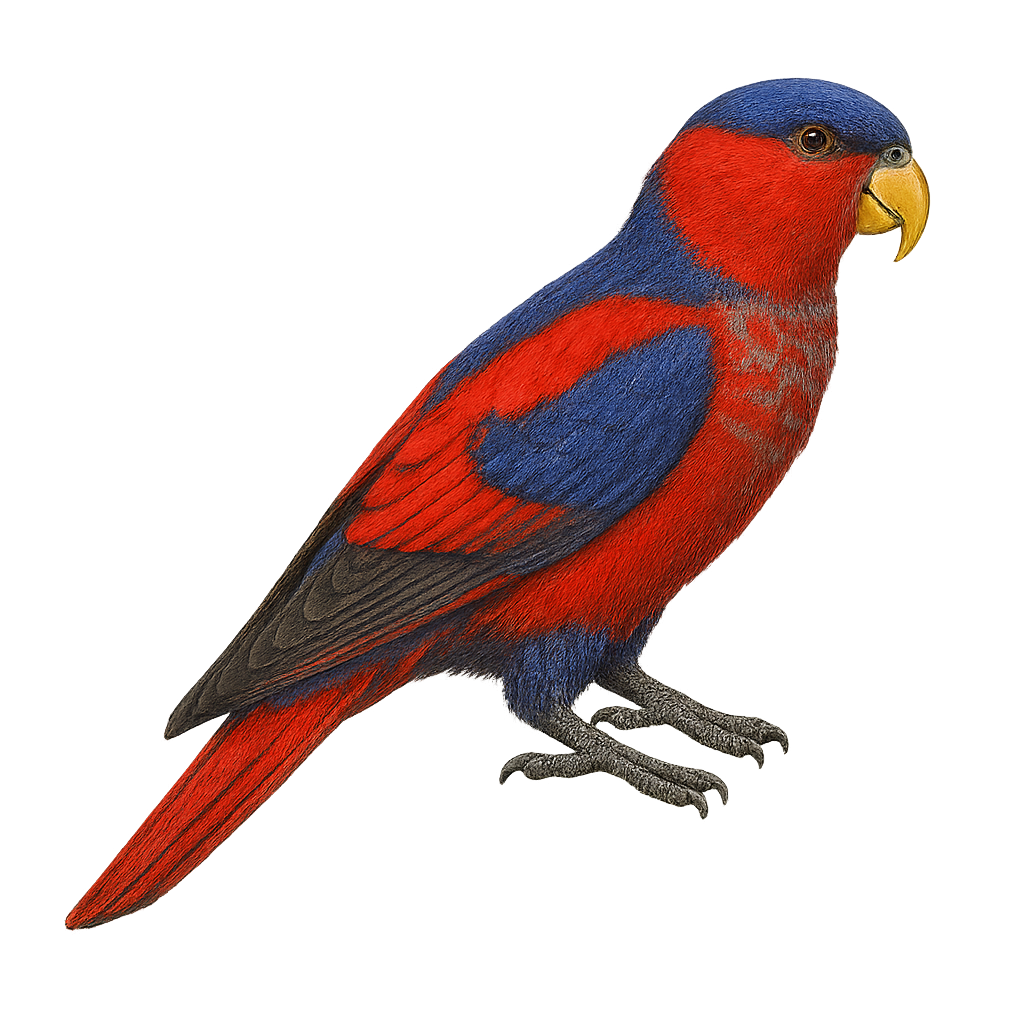
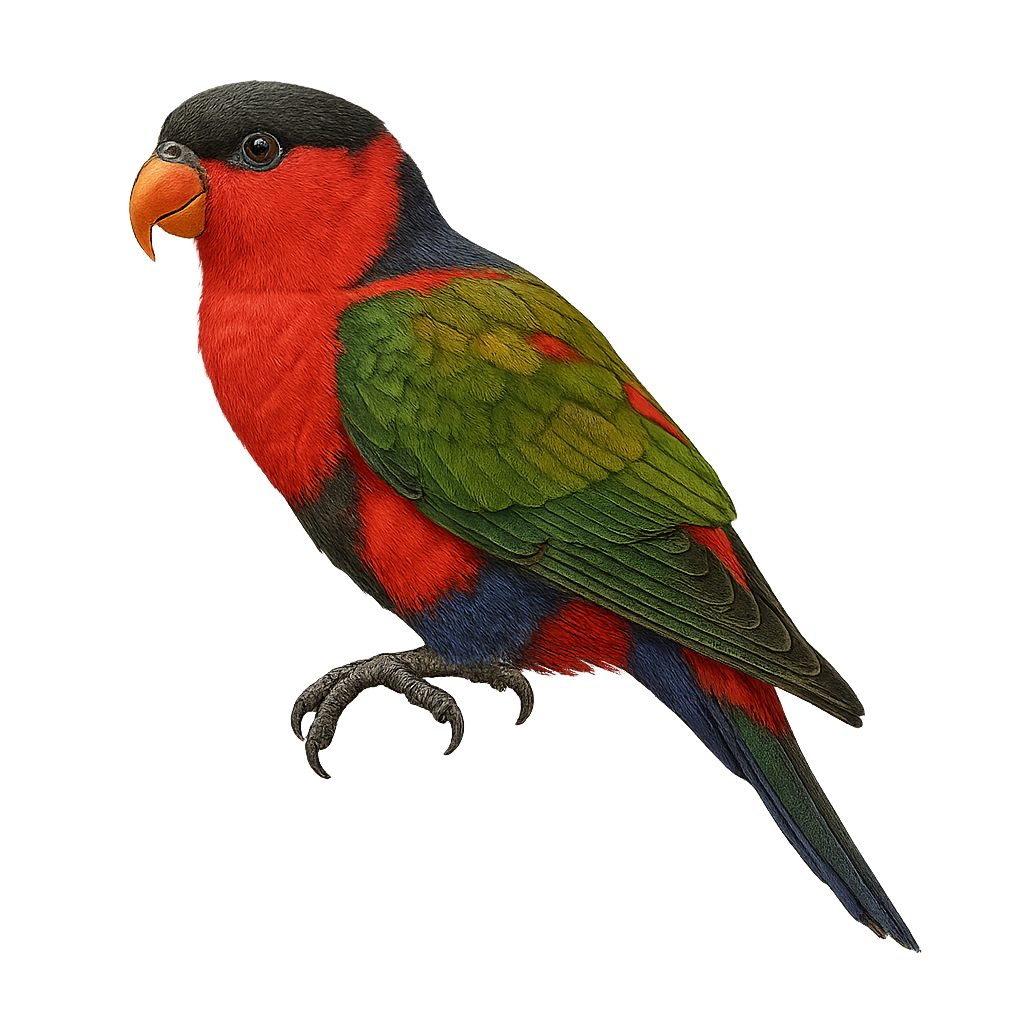
The Red-and-blue Lory, or Mesitornis variegatus, is a vibrant and fascinating bird endemic to the Talaud and Sangihe Islands in Indonesia. This parrot boasts a striking plumage, predominantly red with shades of blue on its wings and tail. Its beak is a vivid orange, contrasting with its dark, expressive eyes. Measuring about 30 cm in length, it is known for its liveliness and intelligence. The Red-and-blue Lory primarily inhabits tropical rainforests, where it feeds on nectar, fruits, and flowers. Unfortunately, this species is critically endangered, mainly due to habitat loss and illegal trade in exotic birds.
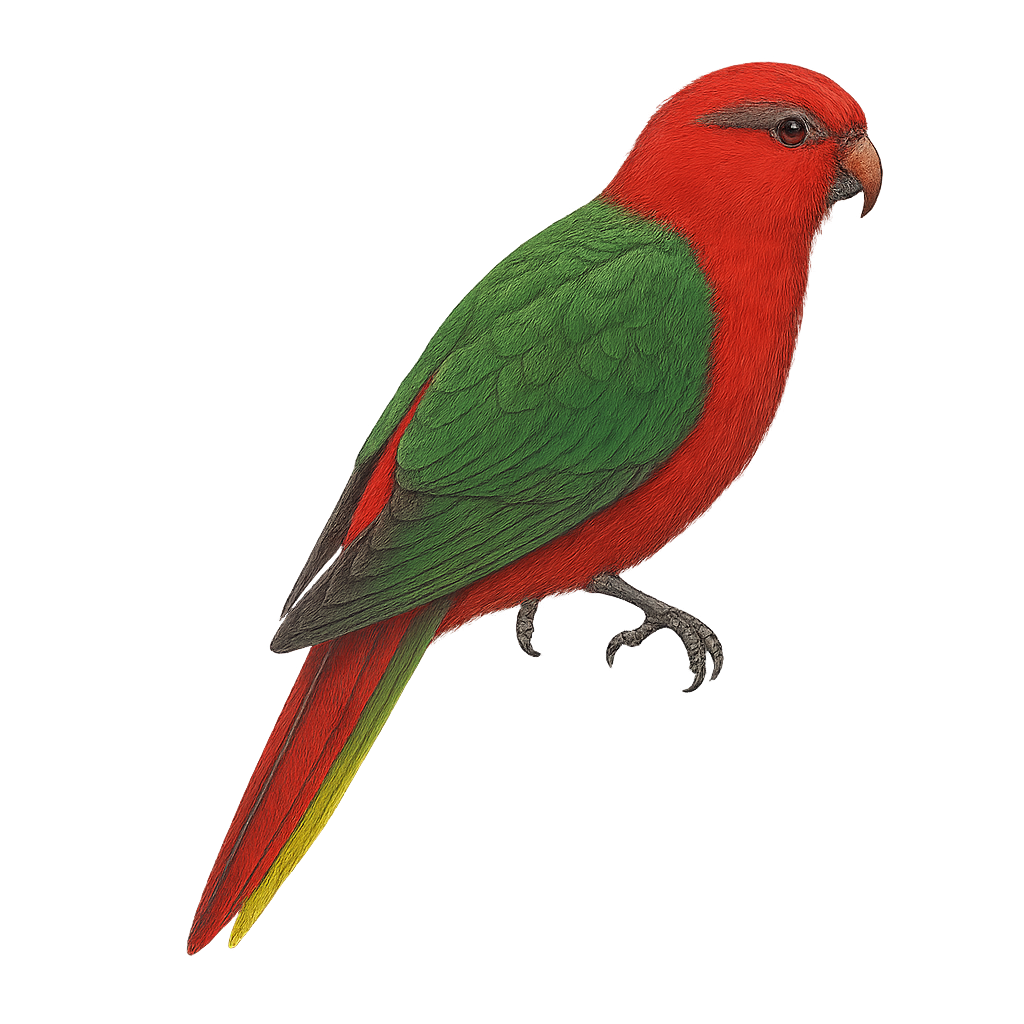
The Josephine's Lorikeet, or Charmosyna josefinae, is a small, colorful parrot native to the tropical forests of New Guinea. It is distinguished by its vibrant plumage, primarily green with touches of red and blue. This lorikeet is particularly adapted to arboreal life, feeding mainly on nectar and pollen, but also on fruits and insects. Its curved beak is ideal for accessing flowers, and its social behavior often makes it visible in small groups. Although its habitat is threatened by deforestation, it remains relatively common in protected areas. Its ability to fly quickly and its distinctive call make it a fascinating bird to observe.
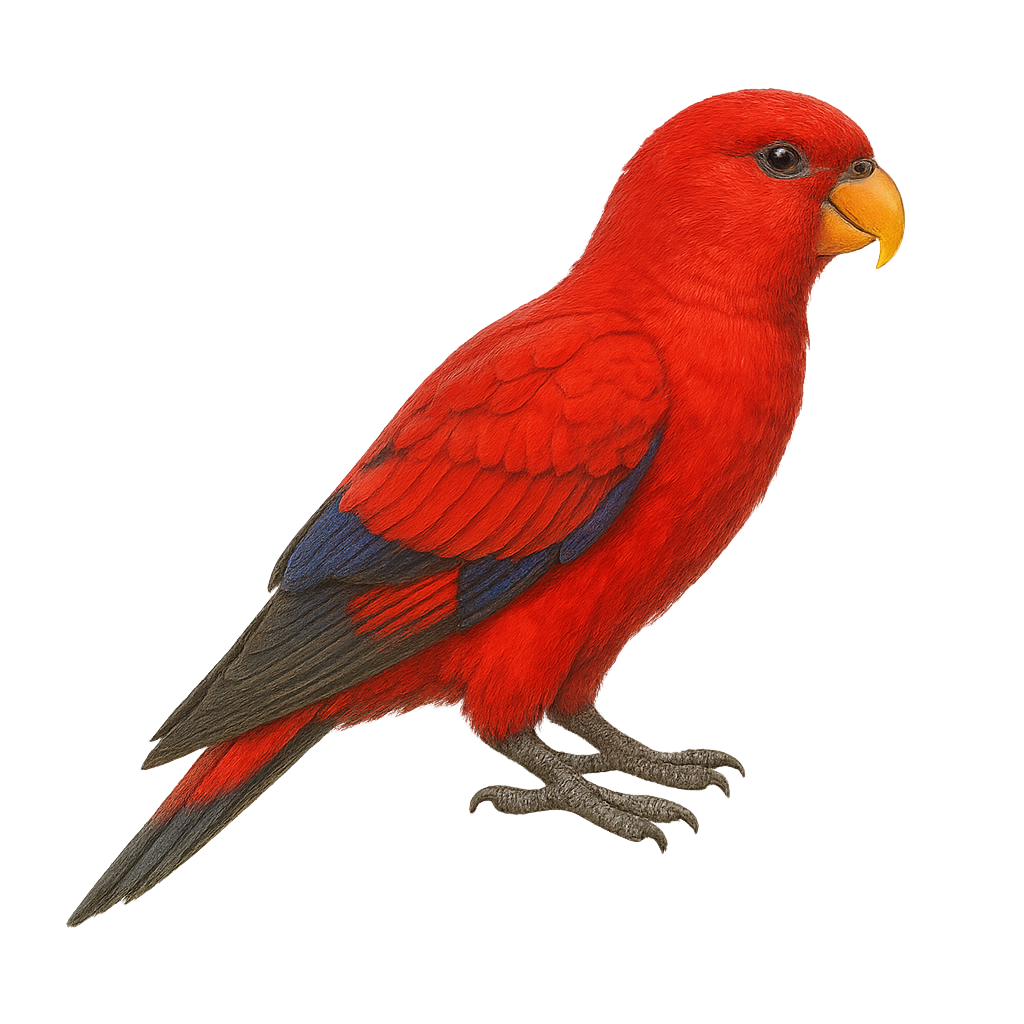
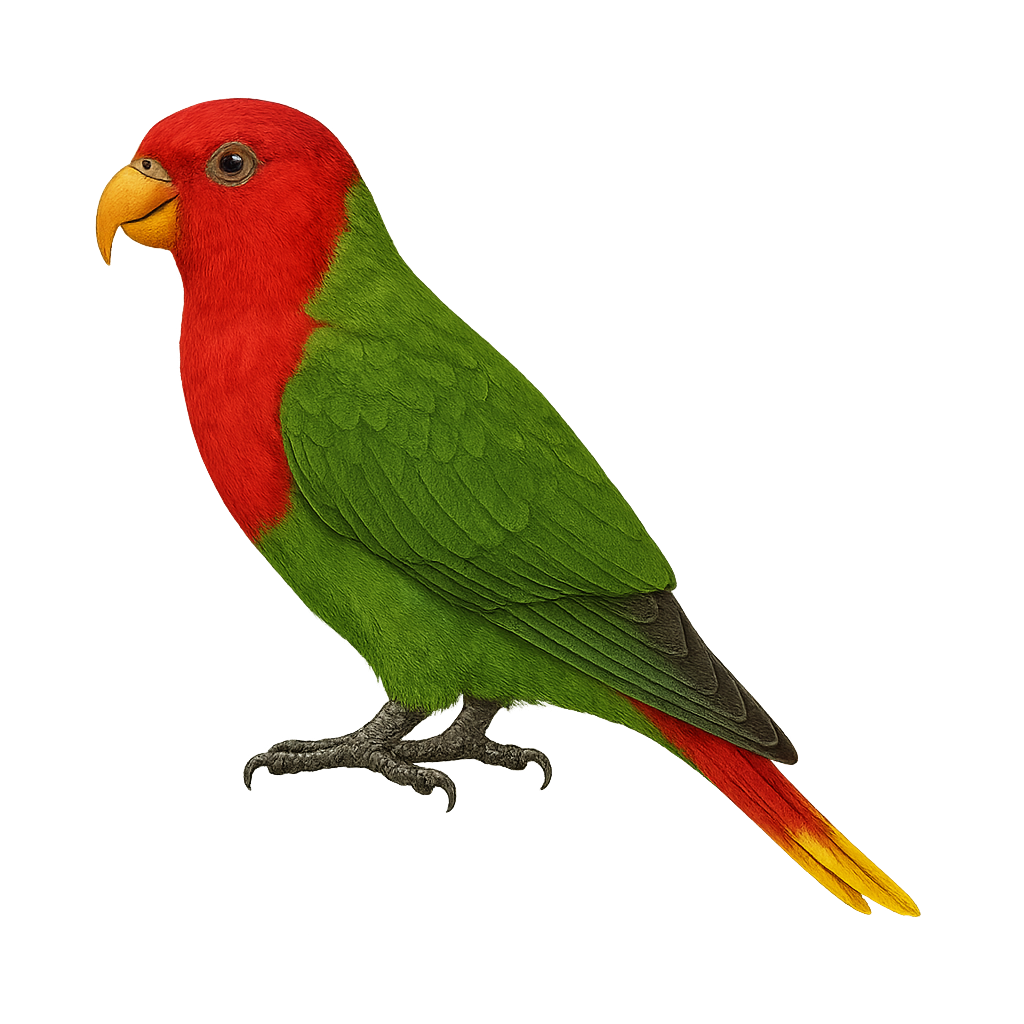
The Red Lory, or Trichoglossus borneus, is a vibrant parrot native to the Moluccas in Indonesia. This lory is known for its striking red plumage, highlighted with blue and black on its wings and tail. Measuring about 30 cm in length, it has a strong, curved beak, perfect for feeding on nectar, fruits, and flowers. Sociable and noisy, it lives in groups and frequents tropical rainforests, mangroves, and plantations. Its flight is fast and direct, often accompanied by loud calls. Although popular in the pet trade, its wild population is threatened by deforestation and trapping.
The Papuan Lorikeet, Charmosyna pulchella, is a small, colorful parrot native to New Guinea. This stunning bird features a vibrant plumage with shades of green, red, and blue, making it easily recognizable. It measures about 18 cm in length and is characterized by its tapered tail and pointed wings. The Papuan Lorikeet is a sociable bird, often seen in small groups, feeding primarily on nectar, pollen, and fruits. It inhabits tropical rainforests, forest edges, and occasionally gardens. Although relatively common in its natural habitat, preserving its environment is crucial for its long-term survival.
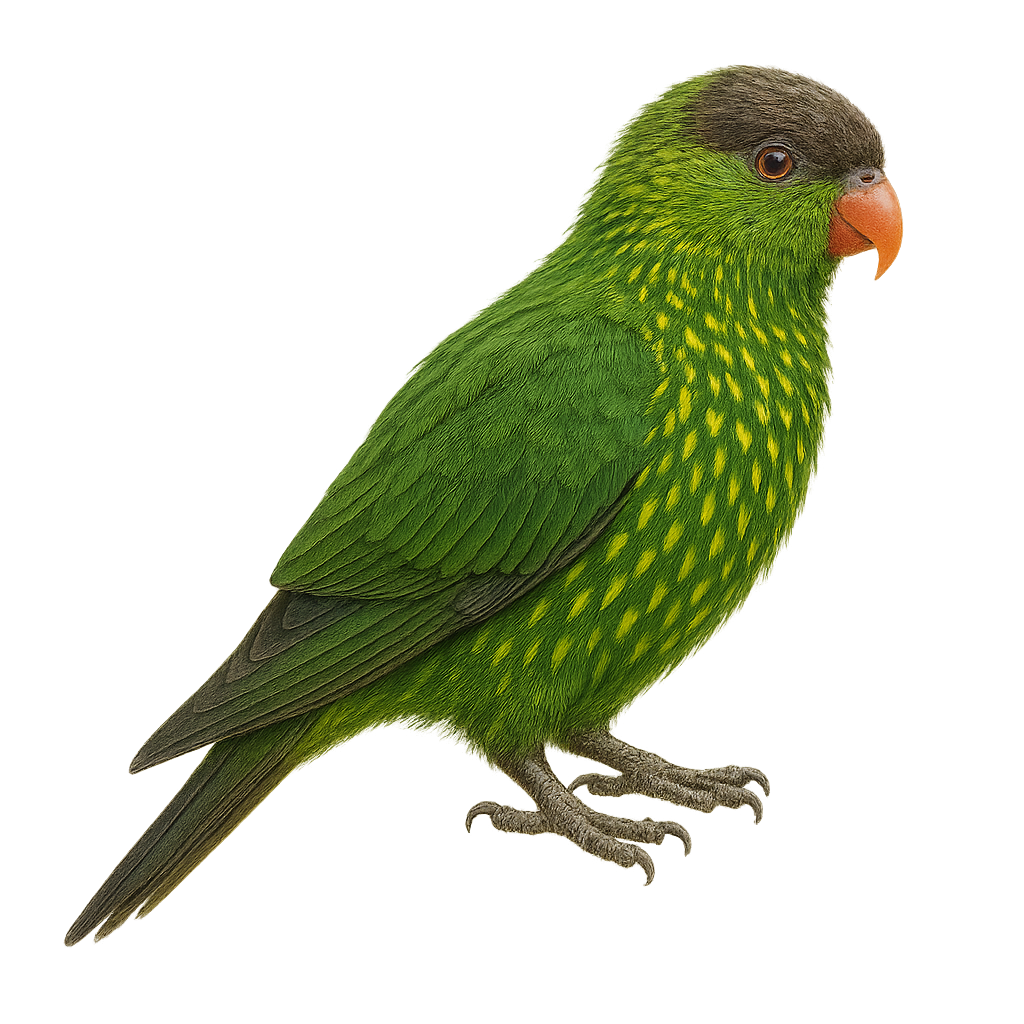
The Striated Lorikeet, Charmosyna multistriata, is a small, colorful parrot native to the tropical forests of New Guinea. This lorikeet is distinguished by its bright green plumage adorned with fine red and yellow stripes on its belly, and a vivid orange beak. It measures about 18 cm in length and weighs between 30 and 40 grams. Its natural habitat includes lowland and mid-altitude rainforests, where it primarily feeds on nectar, pollen, and fruits. Although its conservation status is concerning due to deforestation, it remains relatively common in some areas. The Striated Lorikeet is known for its sociability and tendency to move in small, noisy groups.
The Rainbow Lorikeet, or Lorius lory, is a colorful parrot native to the tropical forests of New Guinea and surrounding islands. This stunning bird is distinguished by its vibrant plumage, blending shades of red, blue, green, and yellow. It measures about 25 to 30 cm in length and weighs between 130 and 200 grams. The Rainbow Lorikeet is known for its curved beak and brush-tipped tongue, adapted to its diet mainly consisting of nectar and fruits. Sociable and noisy, it often lives in groups and is renowned for its aerial acrobatics. Its ability to mimic sounds also makes it a popular bird in captivity.
The European Golden Oriole is a brightly colored bird, easily recognizable by its striking plumage. The male is particularly vivid yellow with black wings, while the female has a more subdued plumage, mainly olive green and yellow. It measures about 25 cm in length and weighs between 40 and 60 g. This migratory passerine bird primarily inhabits open forests, orchards, and hedgerows, mostly in Europe, and migrates to North Africa for the winter. The European Golden Oriole is known for its melodious and powerful song, consisting of clear and repetitive notes. Its diet is primarily insectivorous, feeding on caterpillars, wasps, and other insects, but it also consumes fruits such as berries. This bird is discreet and hard to observe as it spends most of its time high up in trees. While its population is stable in some regions, it is threatened by deforestation, the loss of its natural habitat, and the reduction of its food sources due to pesticide use.
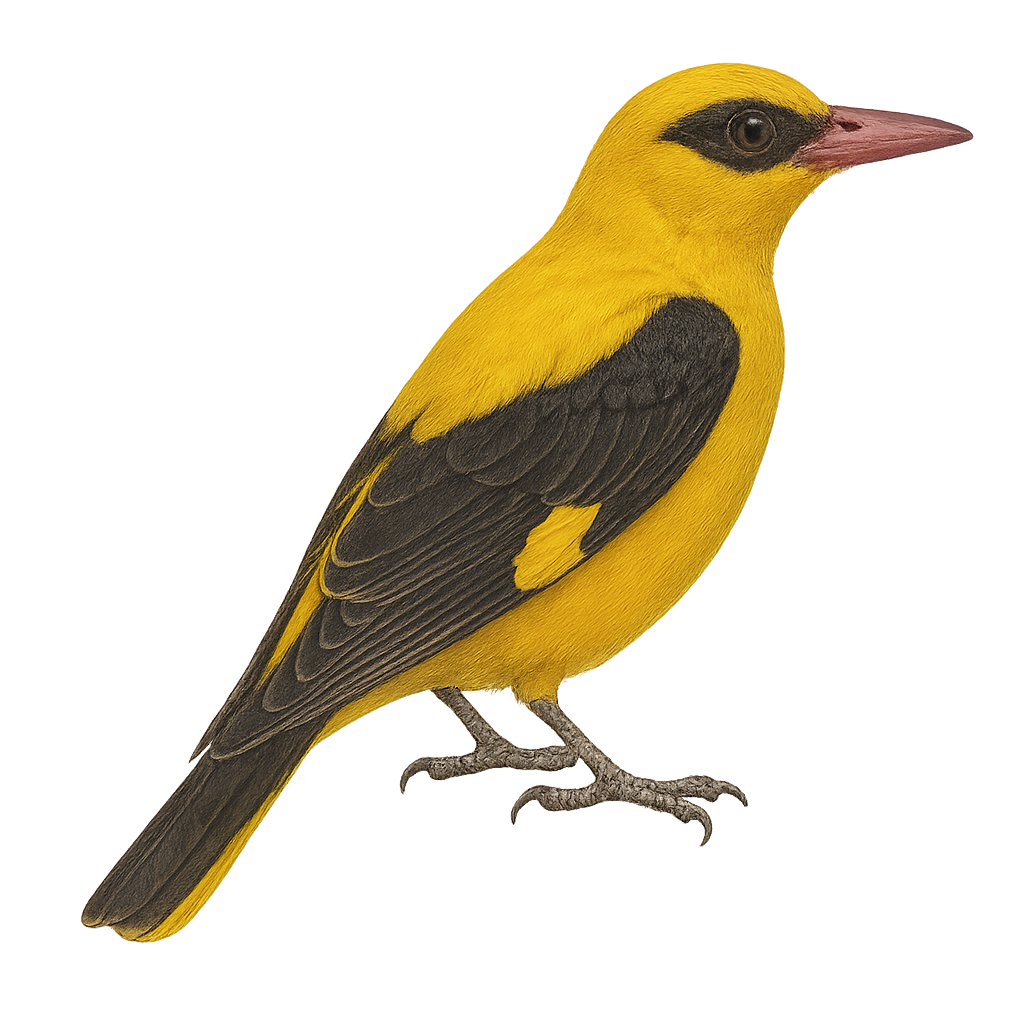
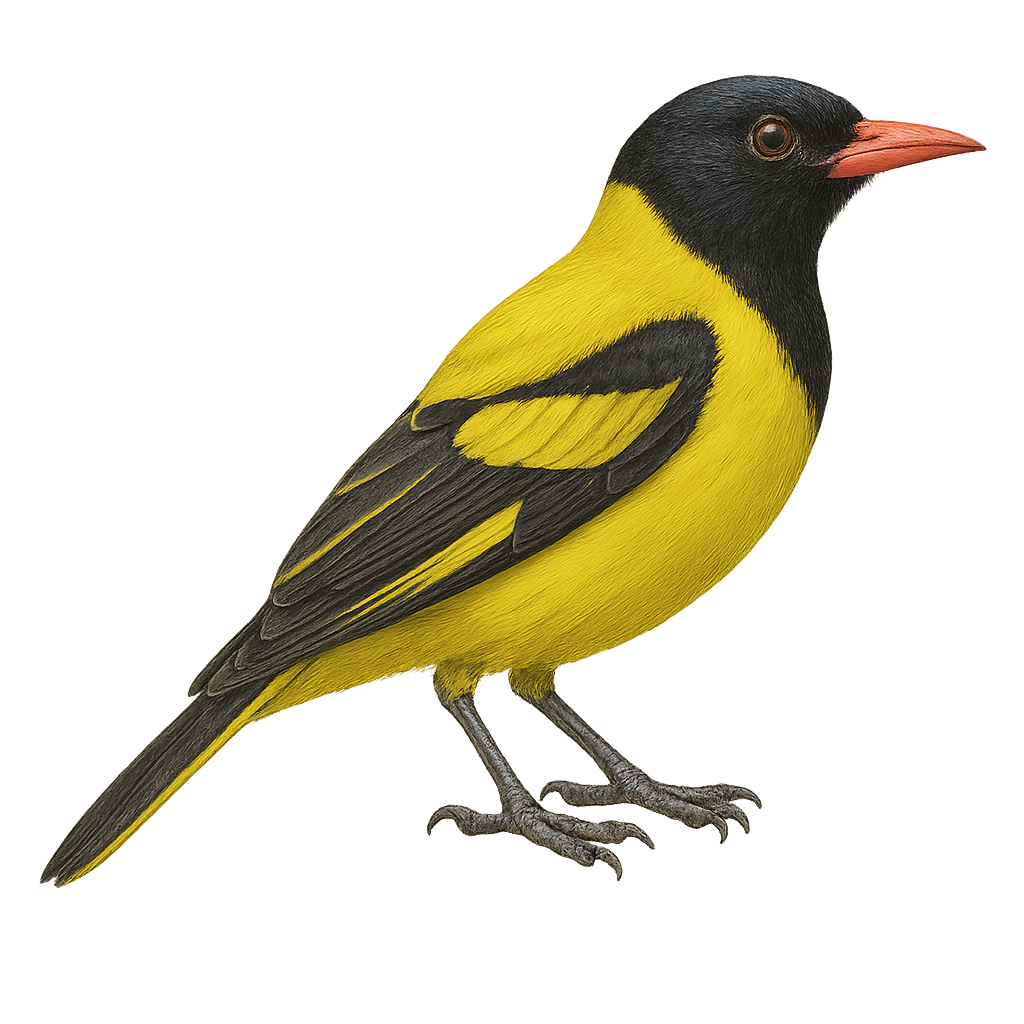
The Black-naped Oriole, or Oriolus chinensis, is a striking bird with bright yellow plumage, primarily yellow with black wings and tail. It is distinguished by a black patch on the nape, hence its English name. This bird is often seen in the tropical and subtropical forests of Asia, where it feeds mainly on fruits, insects, and small invertebrates. Its melodious and fluid song is a delight for birdwatchers. The Black-naped Oriole is a partial migratory bird, moving according to the seasons to find food resources. Although generally solitary, it can be observed in small groups during migration.
The Percival's Oriole is a fascinating bird primarily inhabiting the tropical and subtropical forests of East Africa. Recognizable by its striking plumage, it features a vibrant mix of colors, including shades of yellow, black, and sometimes green. This oriole is a medium-sized bird, measuring about 20 to 25 cm in length. It is known for its melodious and complex song, often heard at dawn. The Percival's Oriole is a sociable bird, often seen in small groups or pairs. It mainly feeds on insects, fruits, and nectar, playing a crucial role in the pollination of many plants. Although relatively common in its natural habitat, deforestation and habitat loss pose potential threats to its population.
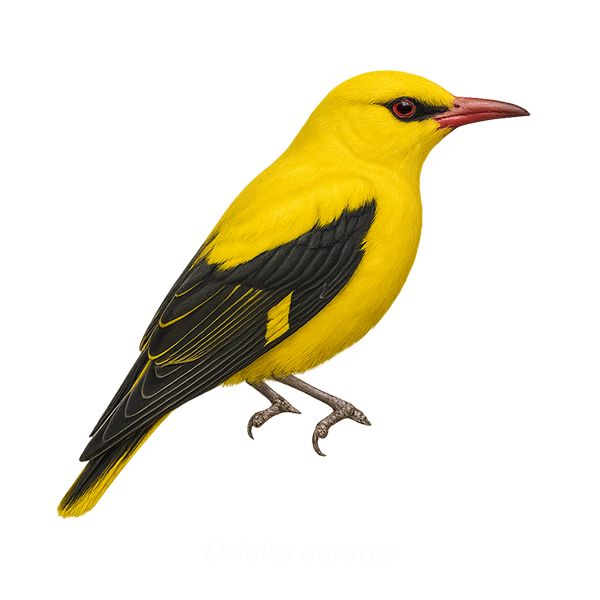
The African Golden Oriole, or Oriolus auratus, is a medium-sized bird known for its striking plumage and melodious songs. It features bright yellow plumage with black wings, making it easily recognizable. This bird is primarily found in sub-Saharan Africa, where it inhabits open forests, wooded savannas, and bushy areas. The African Golden Oriole is a partial migrant, moving seasonally to find food resources. It feeds mainly on insects, fruits, and nectar. Its song is a soft whistle, often heard during the breeding season. Although its habitat is threatened by deforestation, it is currently listed as "Least Concern" by the IUCN.
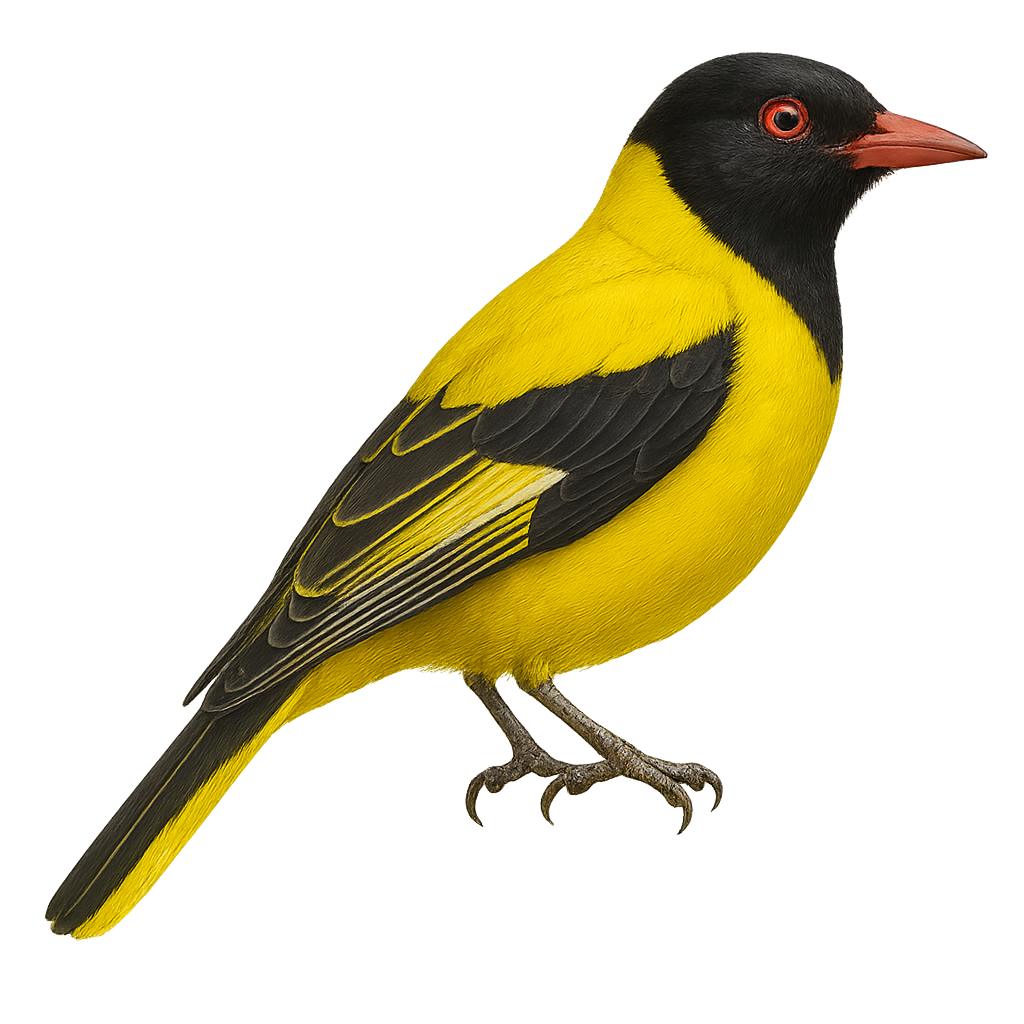
The African Golden Oriole, scientifically known as Oriolus larvatus, is an elegant and colorful bird found primarily in sub-Saharan Africa. It is easily recognizable by its bright yellow plumage contrasted with a distinctive black head. This bird prefers wooded habitats and open forests, where it primarily feeds on fruits, insects, and nectar. The African Golden Oriole is a diurnal bird, most active in the morning and late afternoon. It is often seen alone or in small groups, and its melodious song is an indicator of its presence. Although generally discreet, it can be observed moving between trees in search of food.
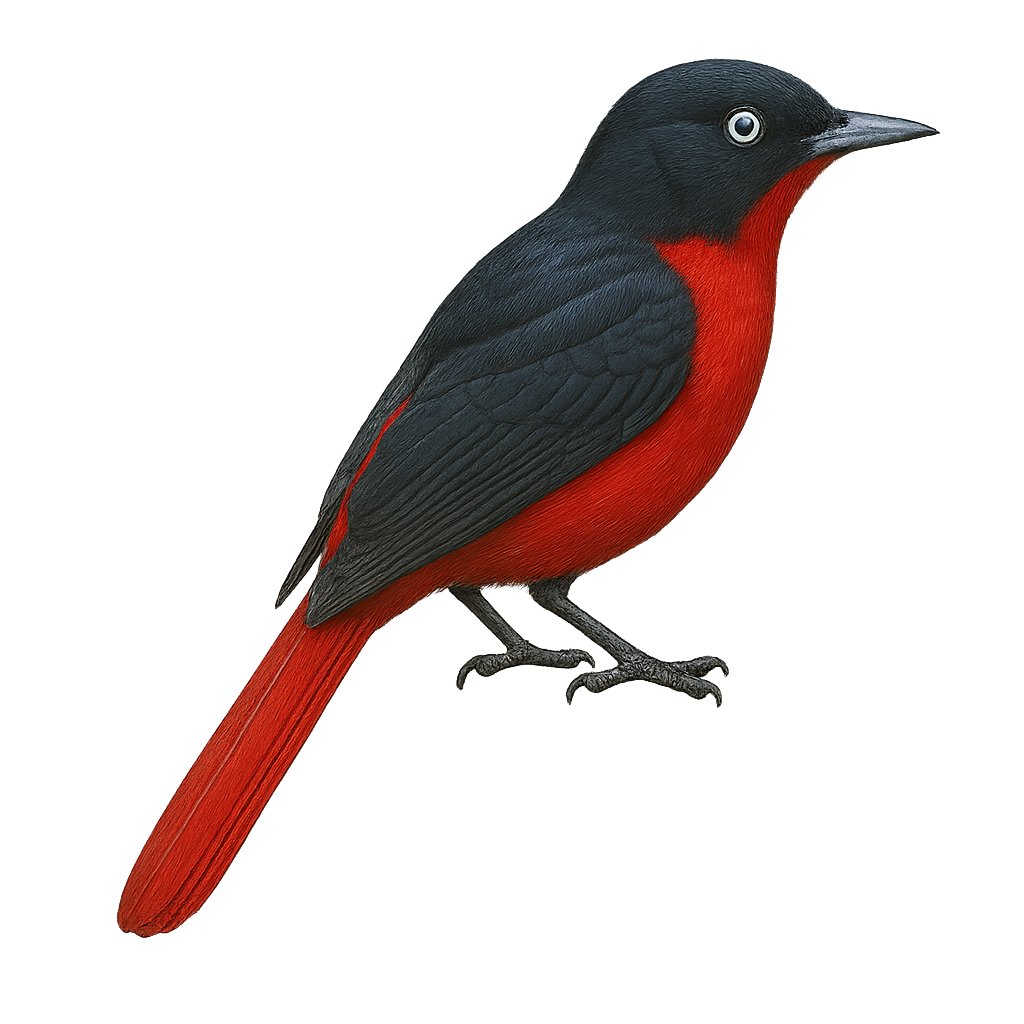
The Maroon Oriole, or Oriolus traillii, is a striking bird known for its vibrant plumage and elusive presence in the forests of Southeast Asia. With colors ranging from bright red to deep black, it blends skillfully into dense foliage. This bird is primarily arboreal, feeding on fruits, insects, and nectar. Its melodious song often echoes through the trees, although spotting it remains a challenge for birdwatchers. The Maroon Oriole is a partial migrant, moving according to seasons to find food resources. It builds suspended nests, often well-hidden, where it carefully raises its young.
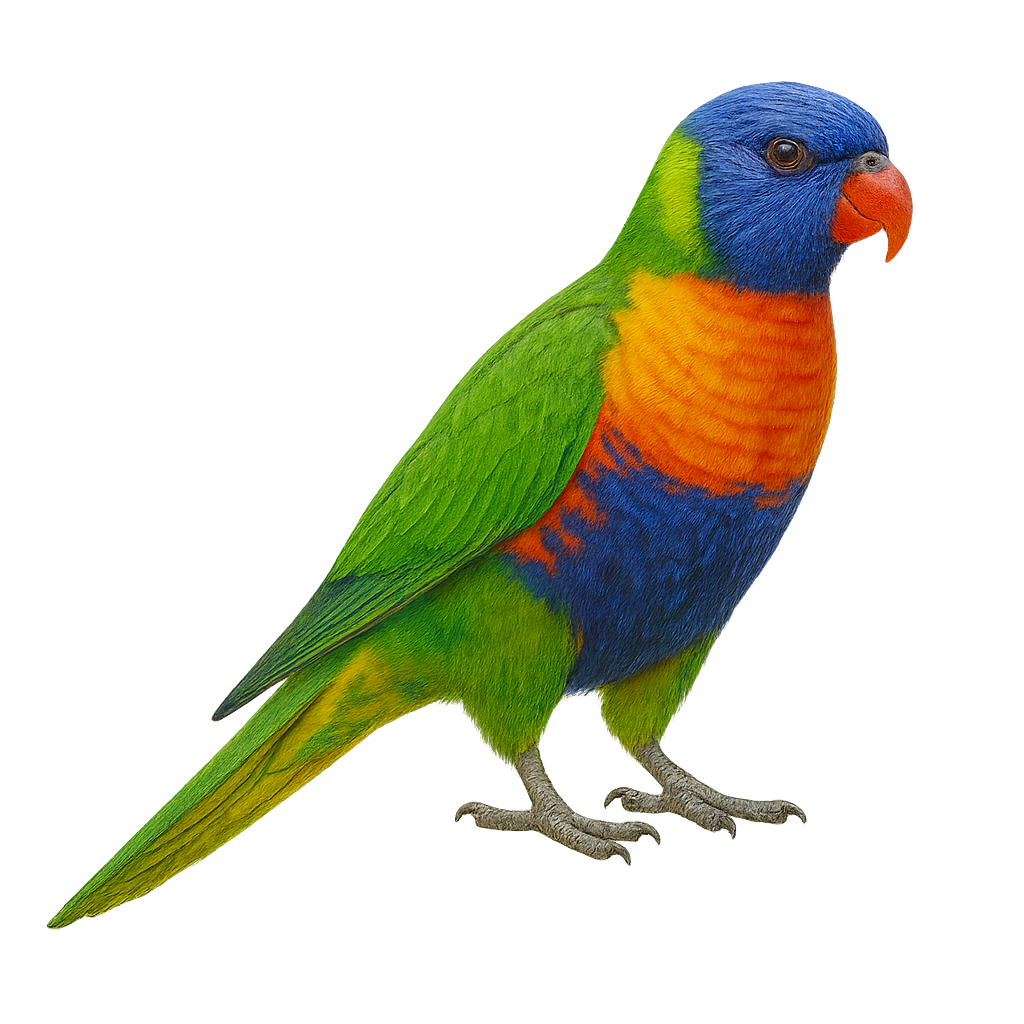
The Rainbow Lorikeet, or Trichoglossus moluccanus, is a vibrant and dynamic bird native to Australia and surrounding islands. It is easily recognizable by its bright plumage, which includes shades of blue, green, red, and yellow. This medium-sized parrot measures about 25 to 30 cm in length and weighs between 75 and 157 grams. Known for its curved beak and brush-tipped tongue, it primarily feeds on nectar and pollen. Sociable and noisy, it often lives in groups and is very active, swiftly moving from tree to tree. The Rainbow Lorikeet is also appreciated for its ability to mimic sounds and interact with humans.