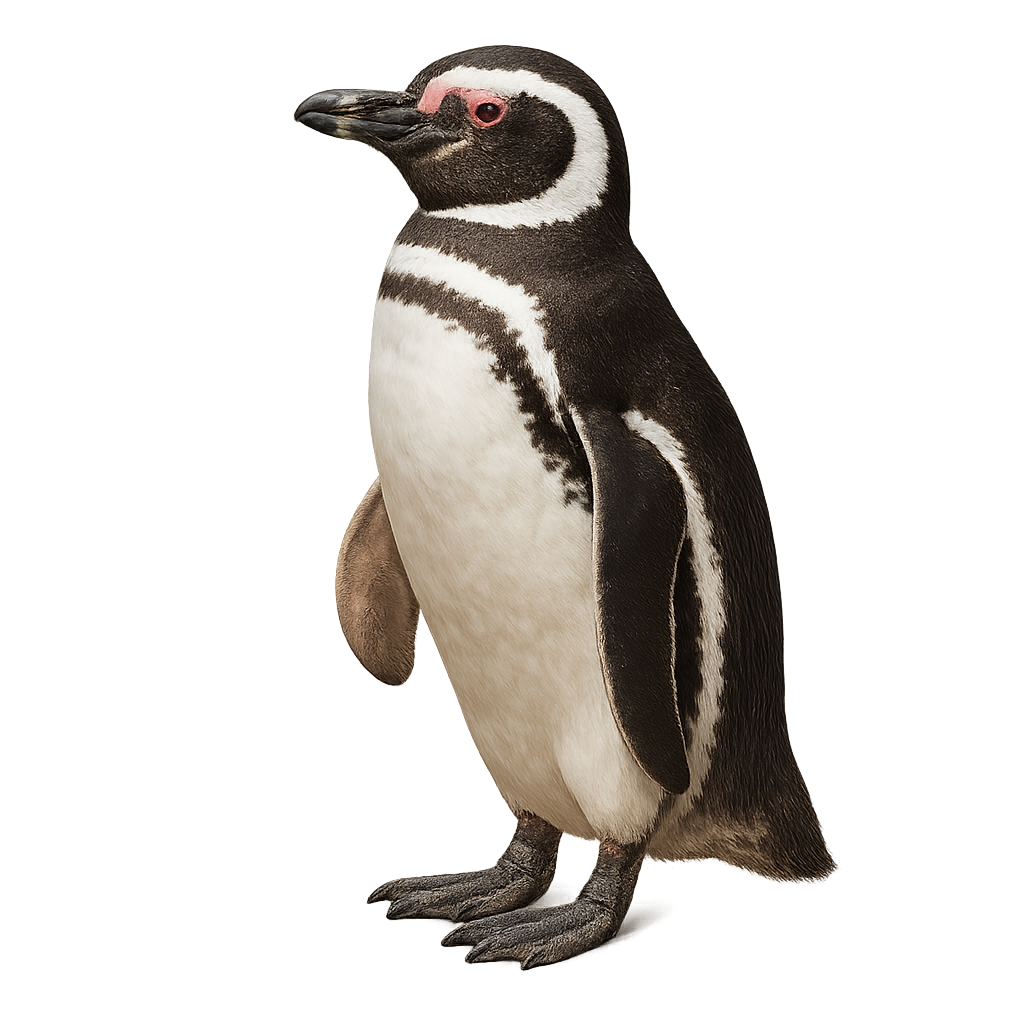
The Magellanic Penguin, Spheniscus magellanicus, is a species of penguin found primarily along the coasts of South America, particularly in Argentina, Chile, and the Falkland Islands. This medium-sized penguin stands about 70 cm tall and weighs between 3 and 6 kg. It is easily recognizable by its black and white plumage, with two distinctive black bands around its neck and chest. Magellanic Penguins are marine birds that primarily feed on fish and crustaceans. They are known for their long annual migrations, sometimes traveling thousands of kilometers to find breeding and feeding grounds. Although they are socially tolerant, they can be aggressive when defending their nests.
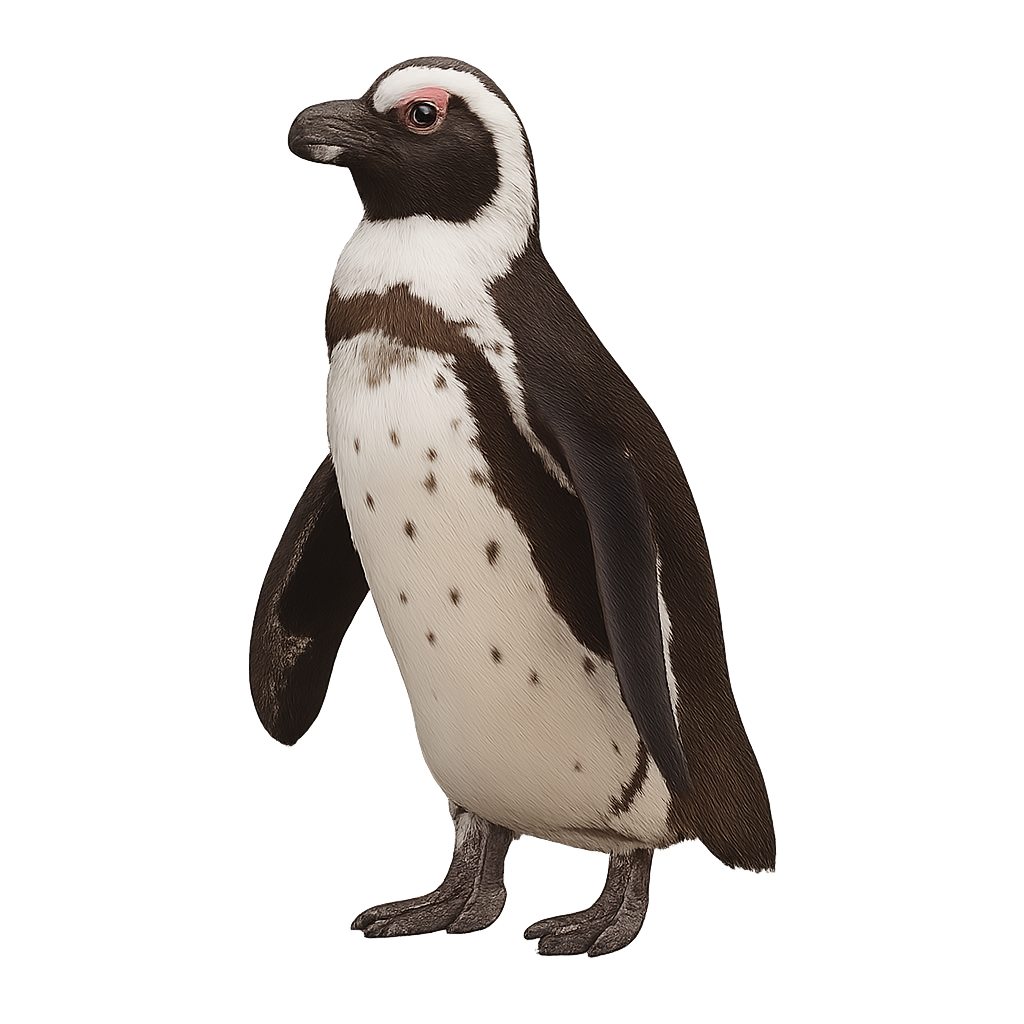
The African penguin, also known as the Jackass penguin, is a species of penguin found along the southwestern coast of Africa, primarily in South Africa and Namibia. It is easily recognizable by its black-and-white plumage and the large pink band around its eyes. This penguin is an excellent swimmer, feeding mainly on fish and crustaceans. While it is an iconic species of the region, it is endangered due to habitat loss, pollution, and overfishing.
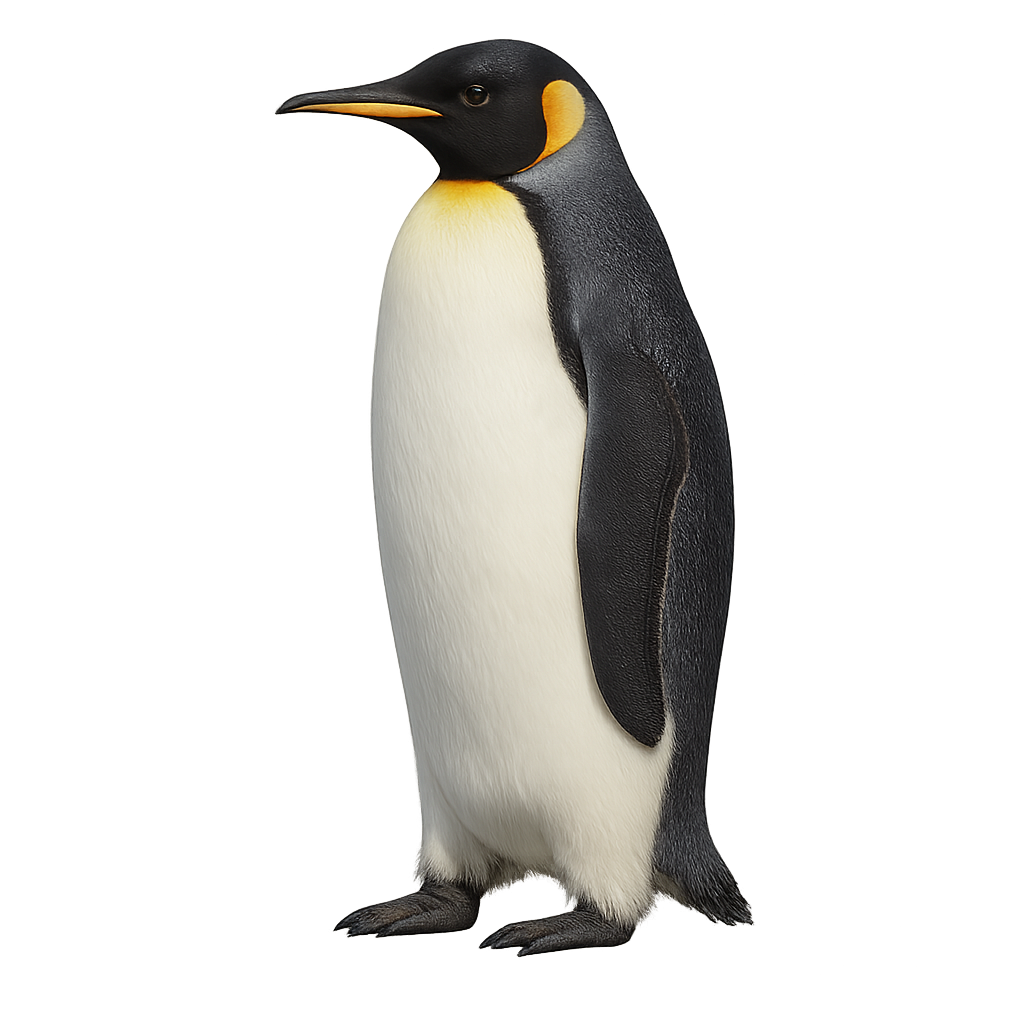
The emperor penguin is the largest penguin species, standing 1.1–1.3 m tall and weighing 22–45 kg, with striking black-and-white plumage, a pale yellow breast and orange patches at the bill’s base. Endemic to Antarctica, it breeds on sea ice during the austral winter, forming vast colonies to shelter from cold and marine predators. Following courtship displays in April–May, the female lays a single egg which she transfers to the male for incubation before returning to sea to feed.
The Little Blue Penguin, also known as the Fairy Penguin, is the smallest of the penguin species, measuring about 30 to 40 cm in height and weighing between 1 and 1.5 kg. It has a distinctive blue-gray plumage on its back and wings, with a white belly. Its beak is short and dark, and its feet are pink or gray. The Little Blue Penguin primarily lives along the coasts of New Zealand and Australia, inhabiting colonies on beaches, islands, and cliffs. Unlike other penguins, the Little Blue Penguin is capable of swimming at impressive speeds, allowing it to hunt fish, crustaceans, and squid underwater. Although it is an excellent swimmer, it also spends time on land, where it digs burrows or hides in shrubs to protect itself from predators. While its population remains relatively stable, it faces threats such as climate change, predation by introduced animals, and habitat disruption.
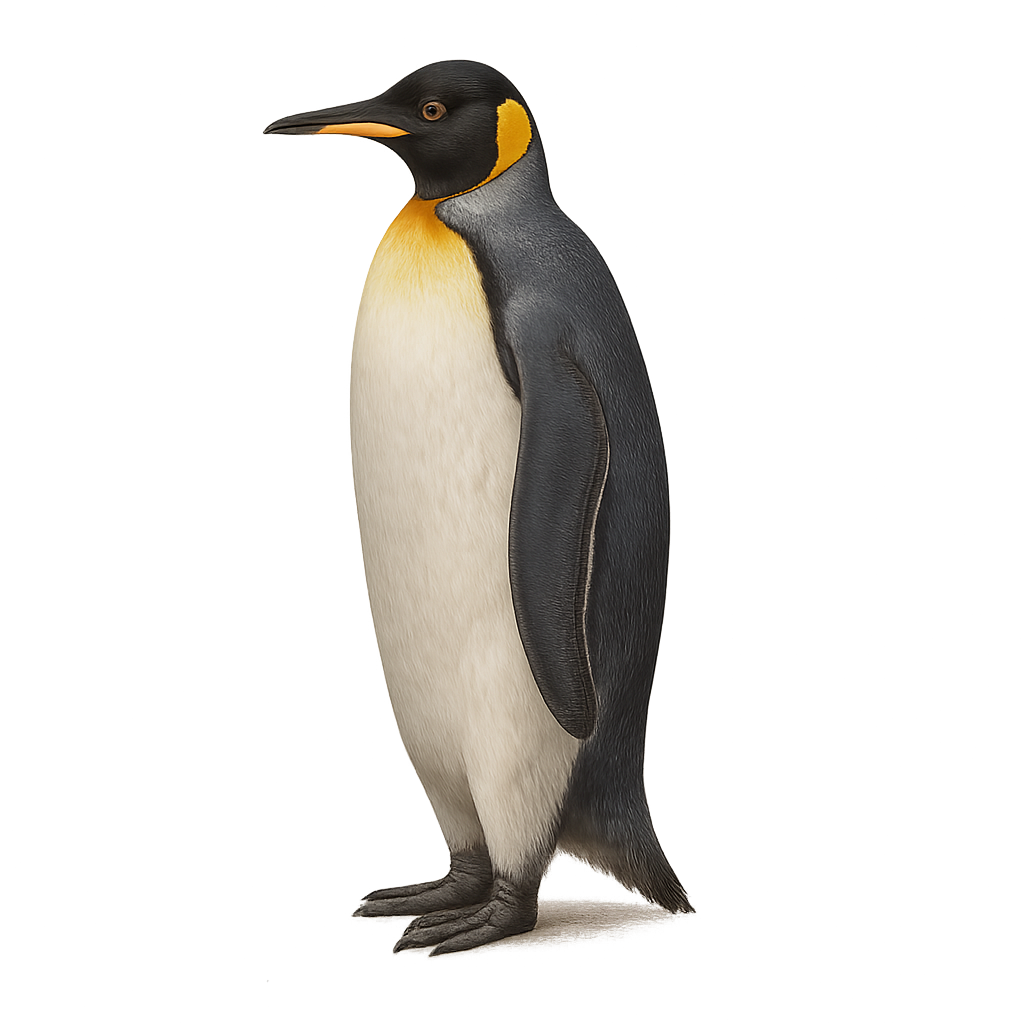
The King penguin is the second largest species of penguin, after the emperor penguin. It primarily lives on subantarctic islands and the coasts of Antarctica. This penguin is easily recognizable by its distinctive black and white plumage and its bright orange coloring on the sides of the head and neck. It primarily feeds on fish, krill, and squid, which it captures by diving into the water. The King penguin is a social species, living in dense colonies, and is known for its spectacular courtship displays.
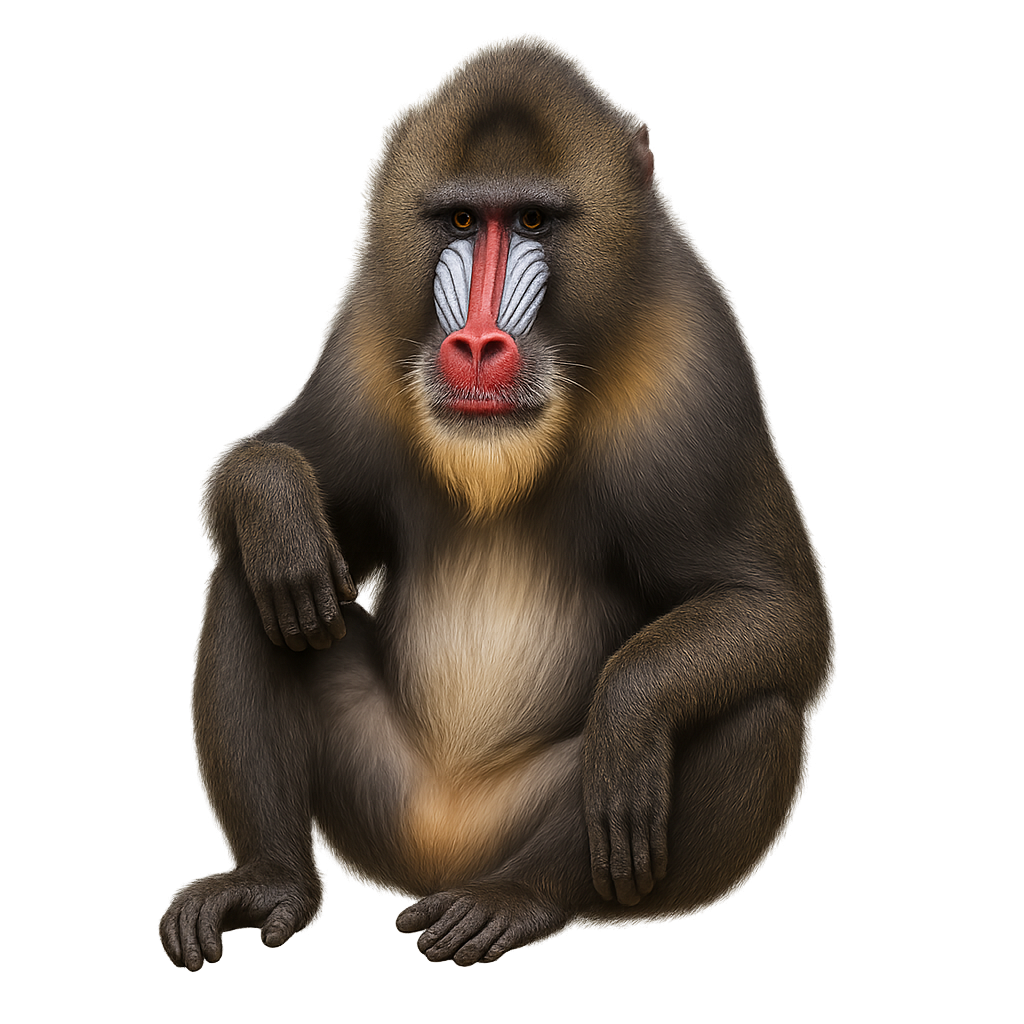
The mandrill, Mandrillus sphinx, is a fascinating primate known for its spectacular appearance and complex social behaviors. Native to the tropical forests of Central Africa, it is primarily found in Gabon, Cameroon, and Equatorial Guinea. Males are particularly recognizable due to their colorful faces, with vivid shades of blue and red, and their yellow manes. Females and juveniles are more discreet, with less vibrant colors. Mandrills live in social groups called hordes, which can number up to several hundred individuals. They primarily feed on fruits, seeds, insects, and small animals. Although their habitat is threatened by deforestation, they are still relatively numerous in some protected areas.
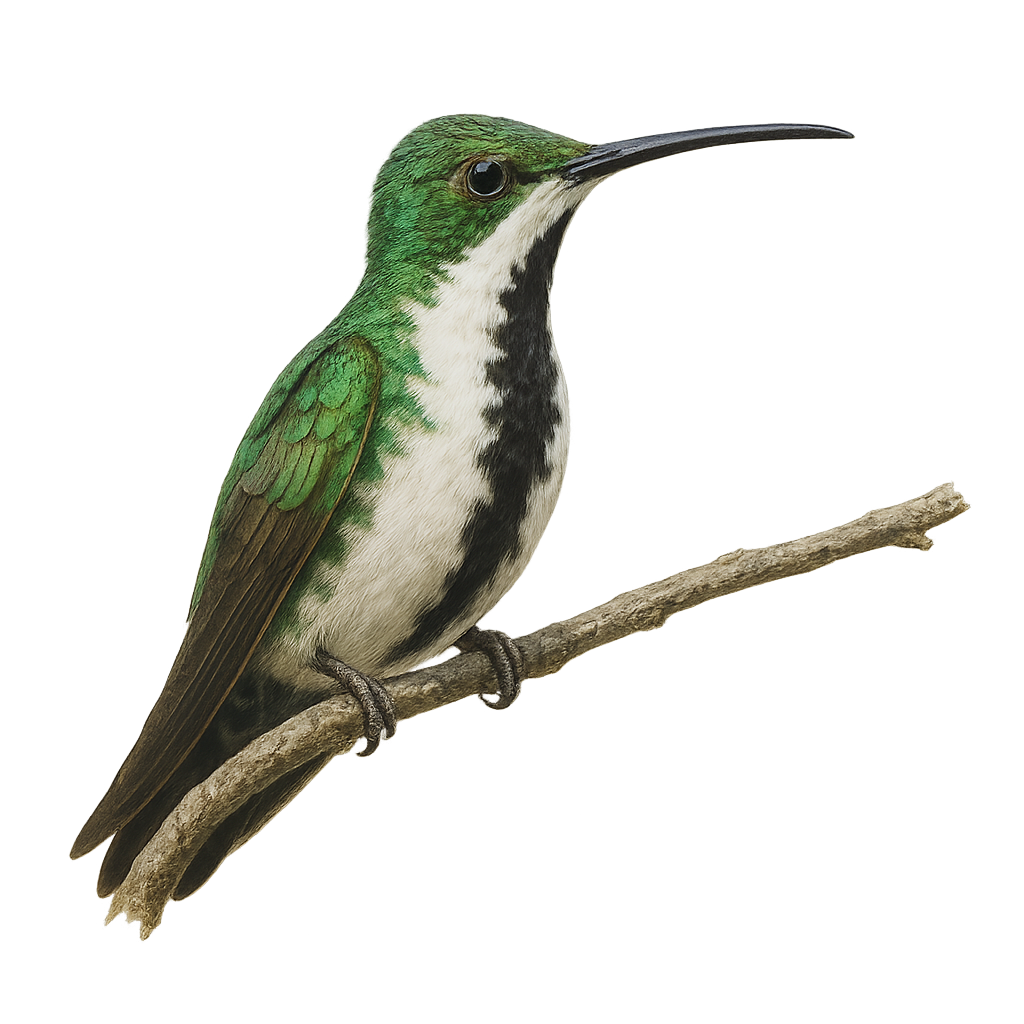
The Black-throated Mango is a medium-sized hummingbird, easily recognizable by its black throat and metallic green plumage. Males have a distinctive black stripe running from the throat to the abdomen, while females feature a central white stripe bordered by black. It is primarily found in South America, inhabiting a range of environments from tropical forests to urban gardens. This hummingbird is an important pollinator, feeding mainly on nectar, but also consumes small insects to supplement its diet. Its rapid flight and agile movements make it a fascinating sight to behold.
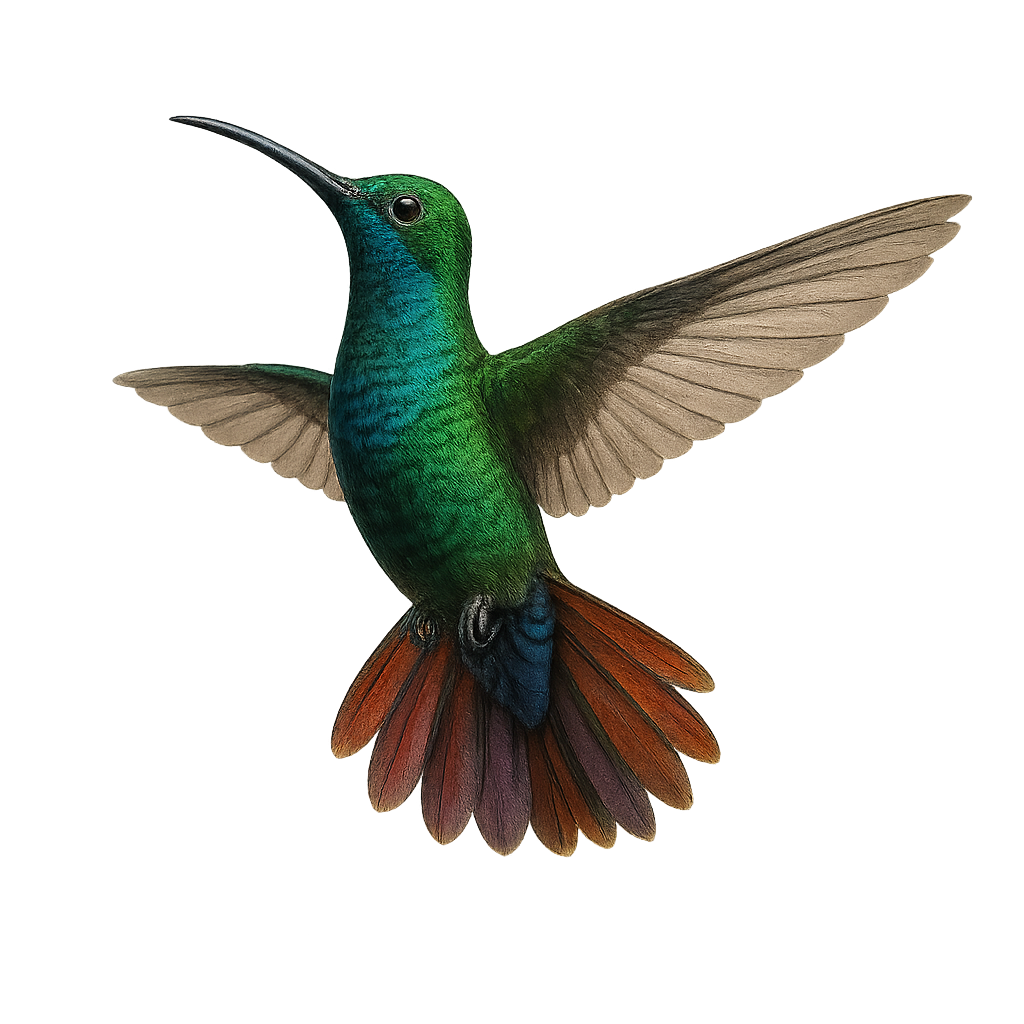
The Green-throated Mango is a medium-sized hummingbird known for its iridescent emerald green throat and metallic plumage. It primarily inhabits tropical rainforests, mangroves, and open wooded areas in South America, particularly in Guyana, Brazil, and Venezuela. This hummingbird is often seen hovering around flowers to feed on nectar, playing a crucial role in pollination. It can also catch small insects in flight to supplement its diet. Although its habitat is threatened by deforestation, it remains relatively common within its range.
The White-tailed Sabrewing is a medium-sized hummingbird known for its emerald green plumage and distinctive white tail. It primarily inhabits the tropical rainforests of Central America, from southern Mexico to Panama. This hummingbird is a crucial pollinator, feeding on flower nectar with its long, curved bill. It is often seen hovering, beating its wings at an impressive speed. Although generally solitary, it can be observed in small groups during the breeding season. Its song is a mix of high-pitched chirps and trills.
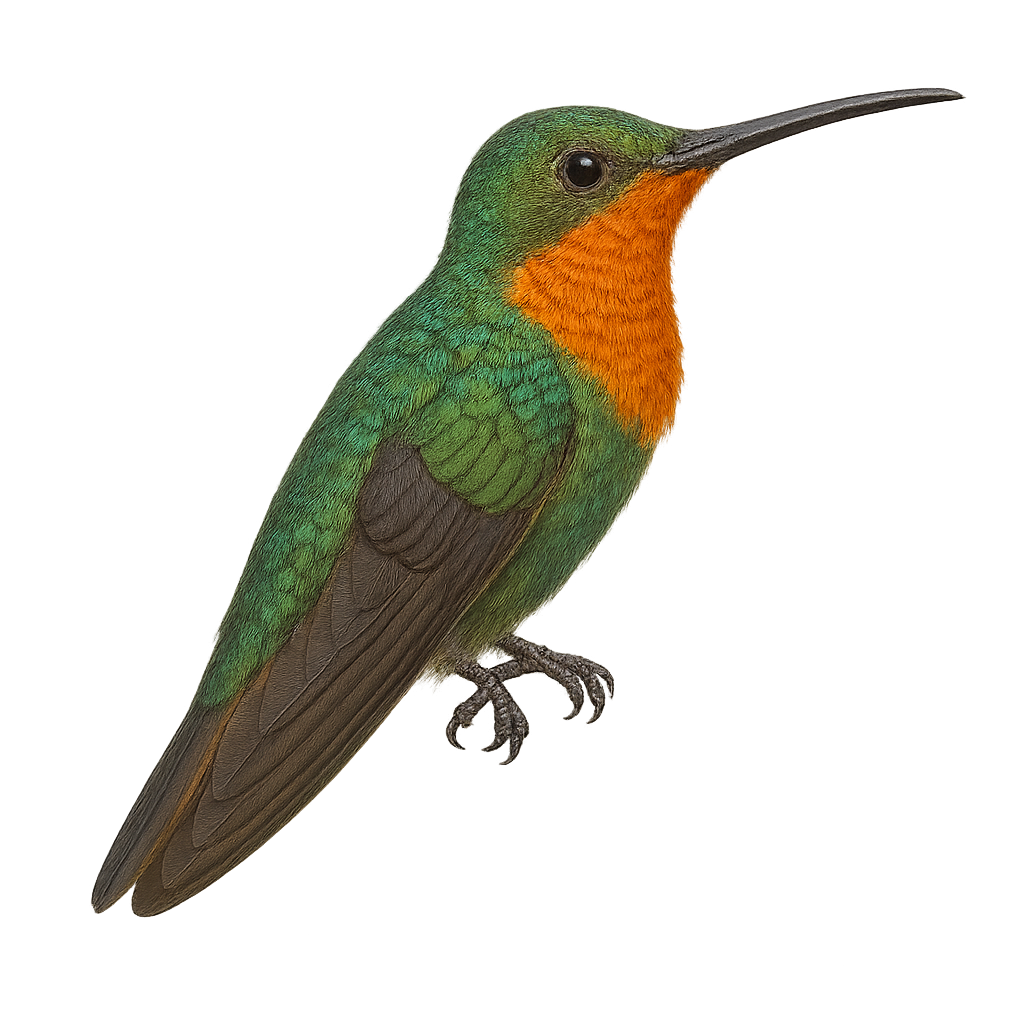
The Hispaniolan Mango, or Anthracothorax dominicus, is a captivating bird primarily found on the island of Hispaniola, shared by Haiti and the Dominican Republic. This hummingbird is recognizable by its vibrant plumage, featuring metallic green and blue hues. Males often display an iridescent throat, while females are slightly duller. They primarily feed on nectar but also consume small insects to supplement their diet. These birds are often seen in gardens, tropical forests, and wooded areas, where they play a crucial role in plant pollination. Their fast and agile flight is a spectacle to behold, especially when they defend their territory against other hummingbirds.
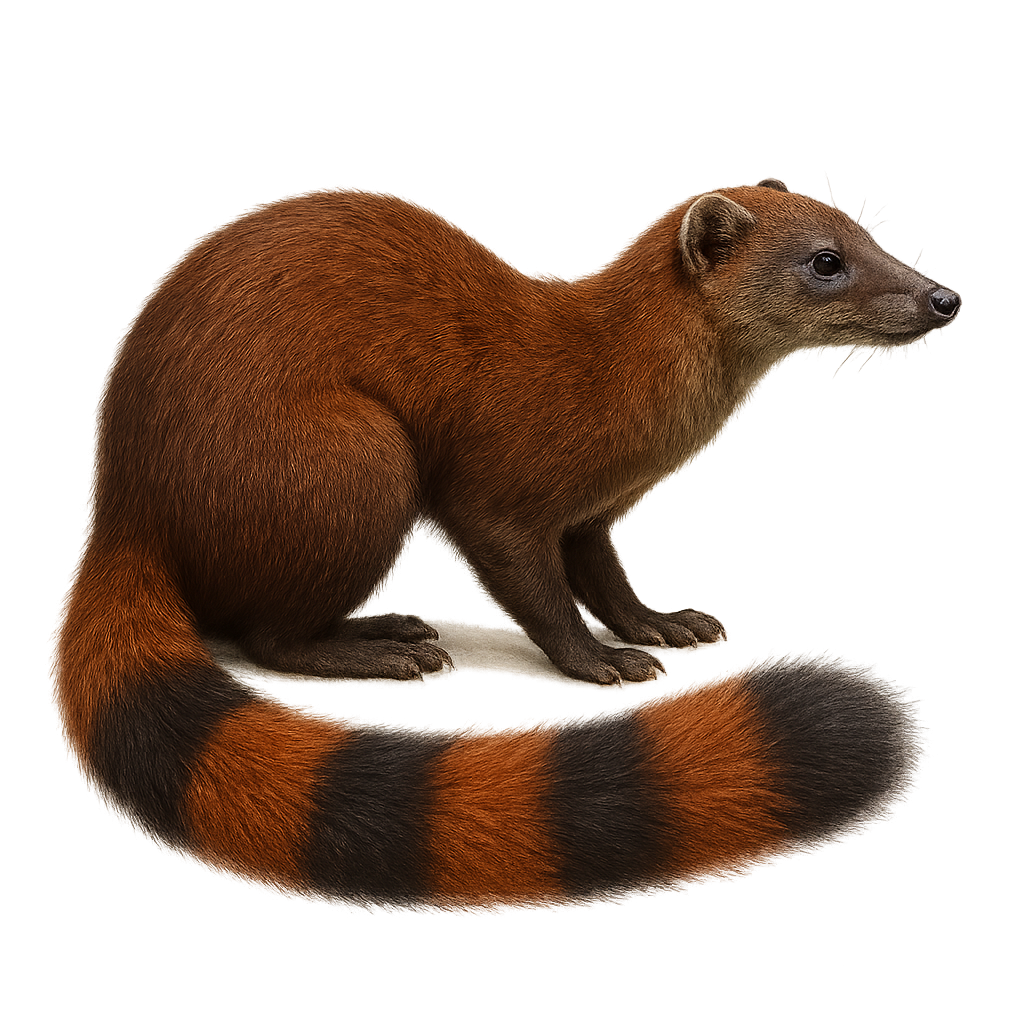
The ring-tailed mongoose, Galidia elegans, is a small carnivore endemic to Madagascar. It is distinguished by its black and russet ringed tail, giving it a unique appearance. Its fur is primarily reddish-brown, with darker shades on the back. It measures about 32 to 38 cm in length, excluding its tail, which can reach 28 to 33 cm. Agile and lively, it is often observed in the island's humid forests and wooded areas. It primarily feeds on small animals, insects, and fruits. Although its habitat is threatened by deforestation, it is still relatively widespread in some regions.
The bushy-tailed mongoose, or Bdeogale crassicauda, is a small African carnivore belonging to the Herpestidae family. It is characterized by its bushy tail and grayish-brown fur. Primarily nocturnal, it feeds on insects, small vertebrates, and fruits. It inhabits tropical forests, savannas, and wooded areas in East Africa. Although elusive, it is sometimes seen in small family groups. Its ability to adapt to various habitats allows it to survive in changing environments. However, deforestation and habitat loss pose potential threats to its population.
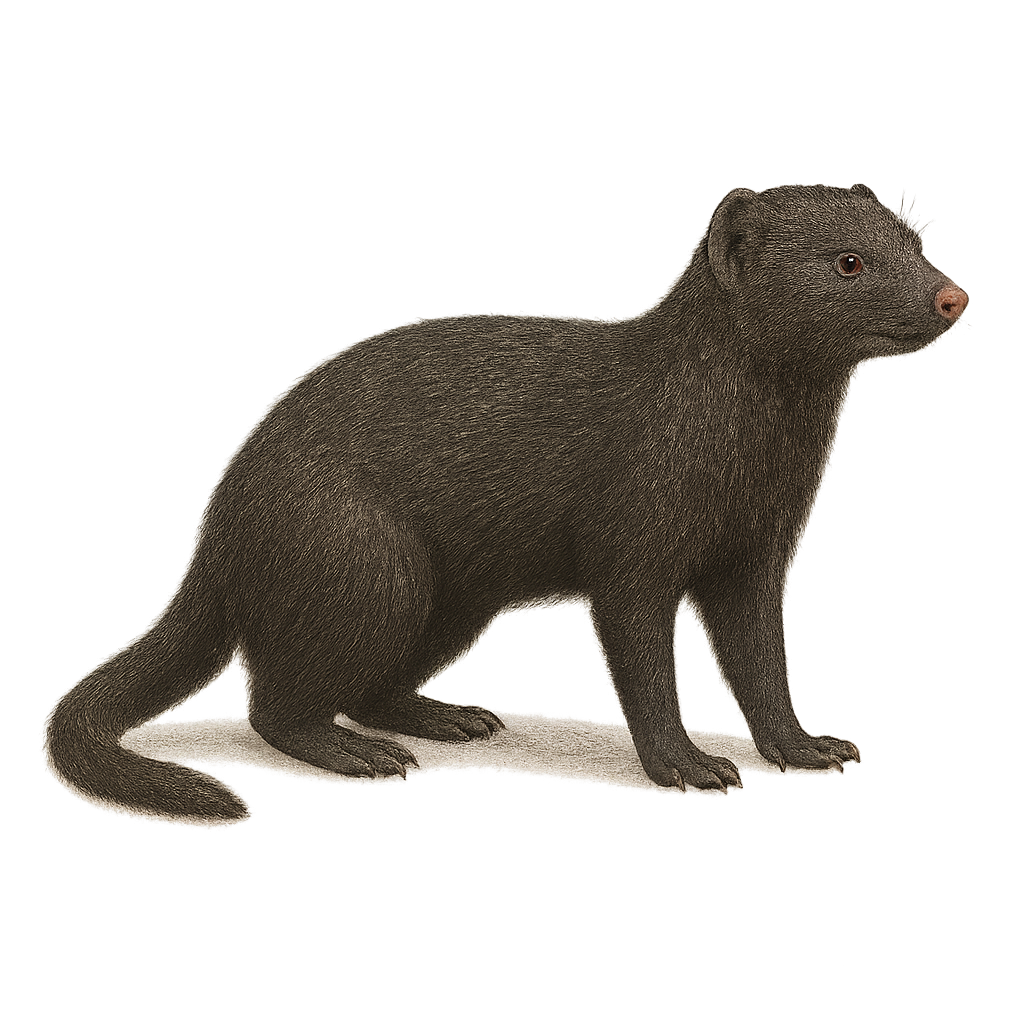
The Indian Brown Mongoose, Herpestes fuscus, is a small carnivorous mammal native to the Indian subcontinent. It is characterized by its dark brown fur and slender body. Measuring about 50 to 60 cm in length, it has a bushy tail that accounts for nearly half of its total length. This species is primarily terrestrial and feeds on small animals, insects, and occasionally fruits. It is known for its ability to hunt snakes due to its agility and speed. The brown mongoose typically inhabits a variety of environments, from tropical forests to shrublands. Although often solitary, it can sometimes be seen in small family groups.
The Ruddy Mongoose, or Herpestes smithii, is a small carnivorous mammal native to the Indian subcontinent. It is characterized by its reddish-brown fur and bushy tail. Measuring about 50 to 60 cm in length, it weighs between 1.5 and 2.5 kg. Adapted to various habitats, it is often found in forests, grasslands, and agricultural areas. The Ruddy Mongoose is primarily diurnal and feeds on insects, small mammals, and reptiles. It is known for its ability to hunt snakes, thanks to its speed and agility. Although generally solitary, it can sometimes be seen in small family groups.
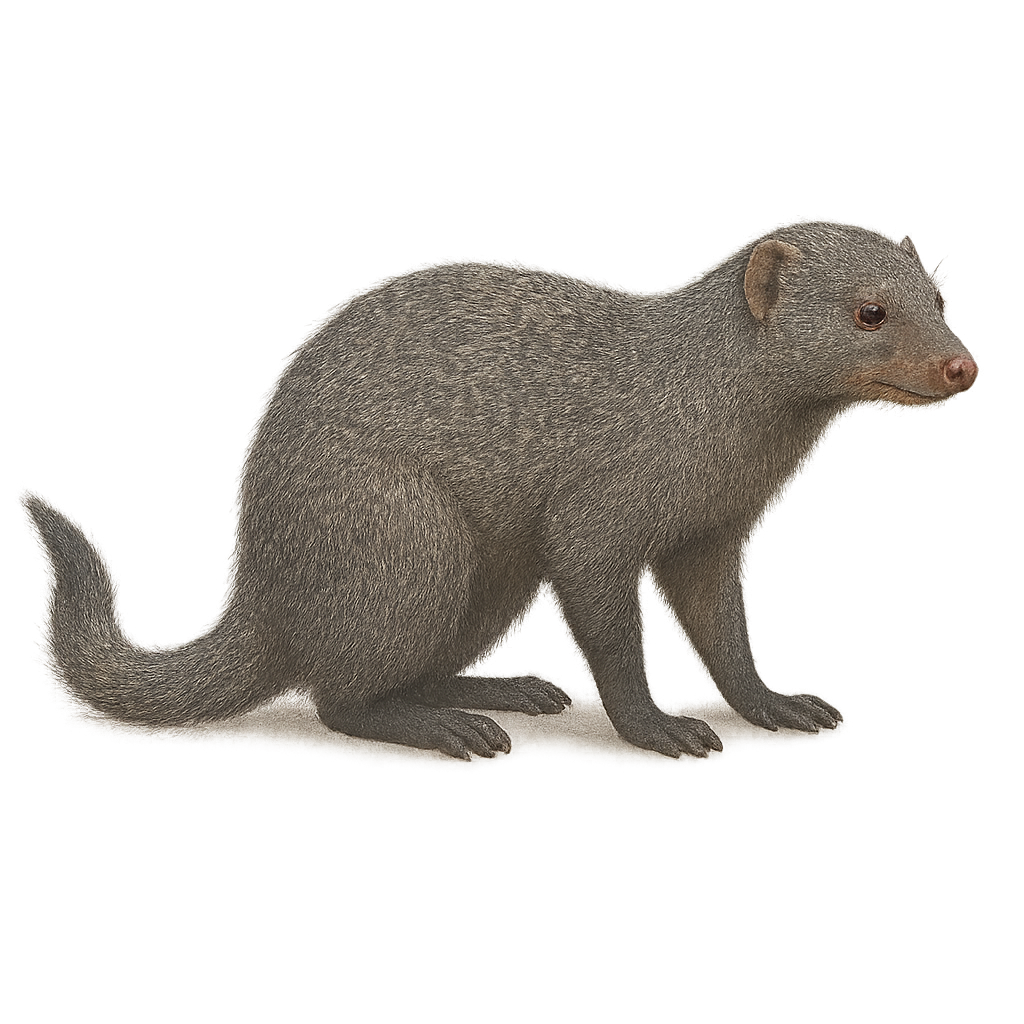
The Indian grey mongoose, Herpestes edwardsii, is a small carnivorous mammal native to the Indian subcontinent. It is recognizable by its grayish fur and bushy tail. Measuring between 36 and 45 cm, it typically weighs between 0.9 and 1.7 kg. Agile and fast, it is famous for its ability to hunt and kill venomous snakes, thanks to its speed and sharp reflexes. It inhabits various environments, from forests to agricultural areas, and adapts well to human-modified landscapes. The Indian grey mongoose is a diurnal animal, often seen foraging during the day.
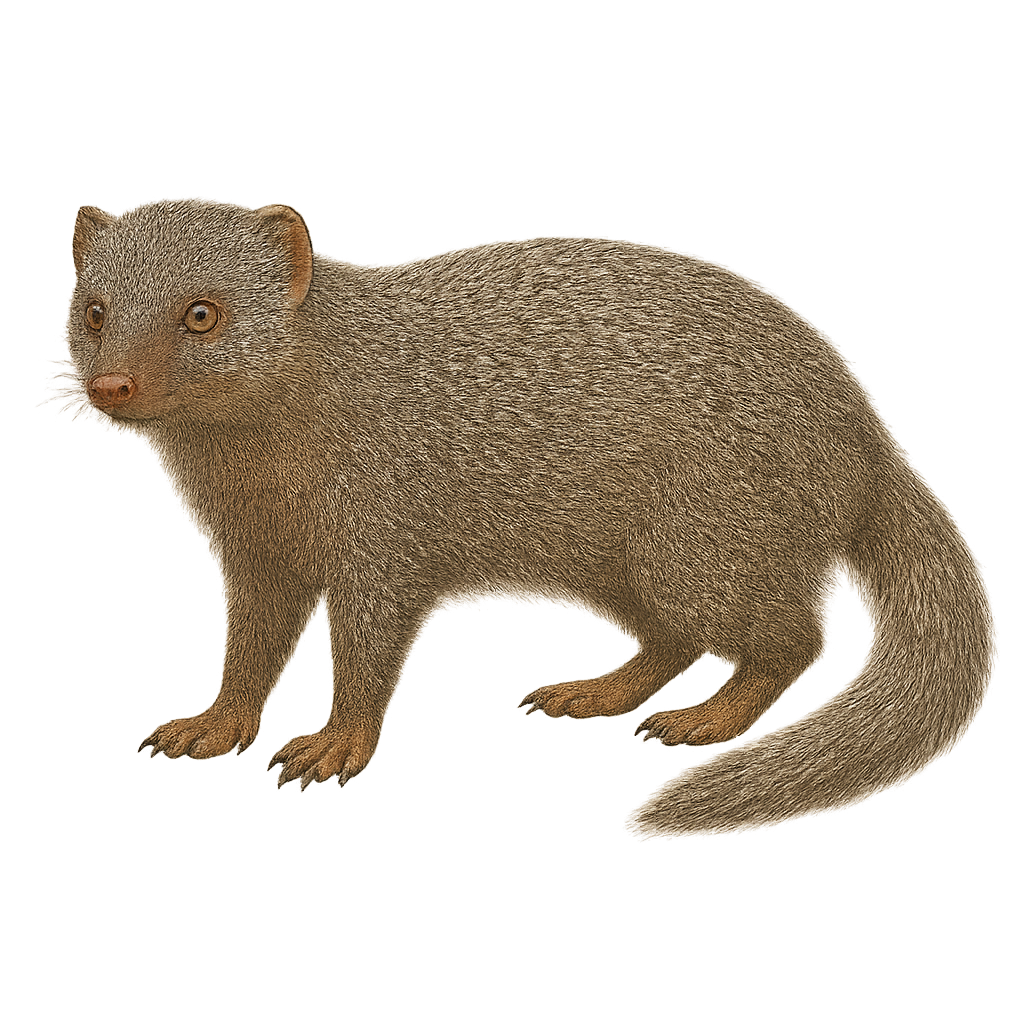
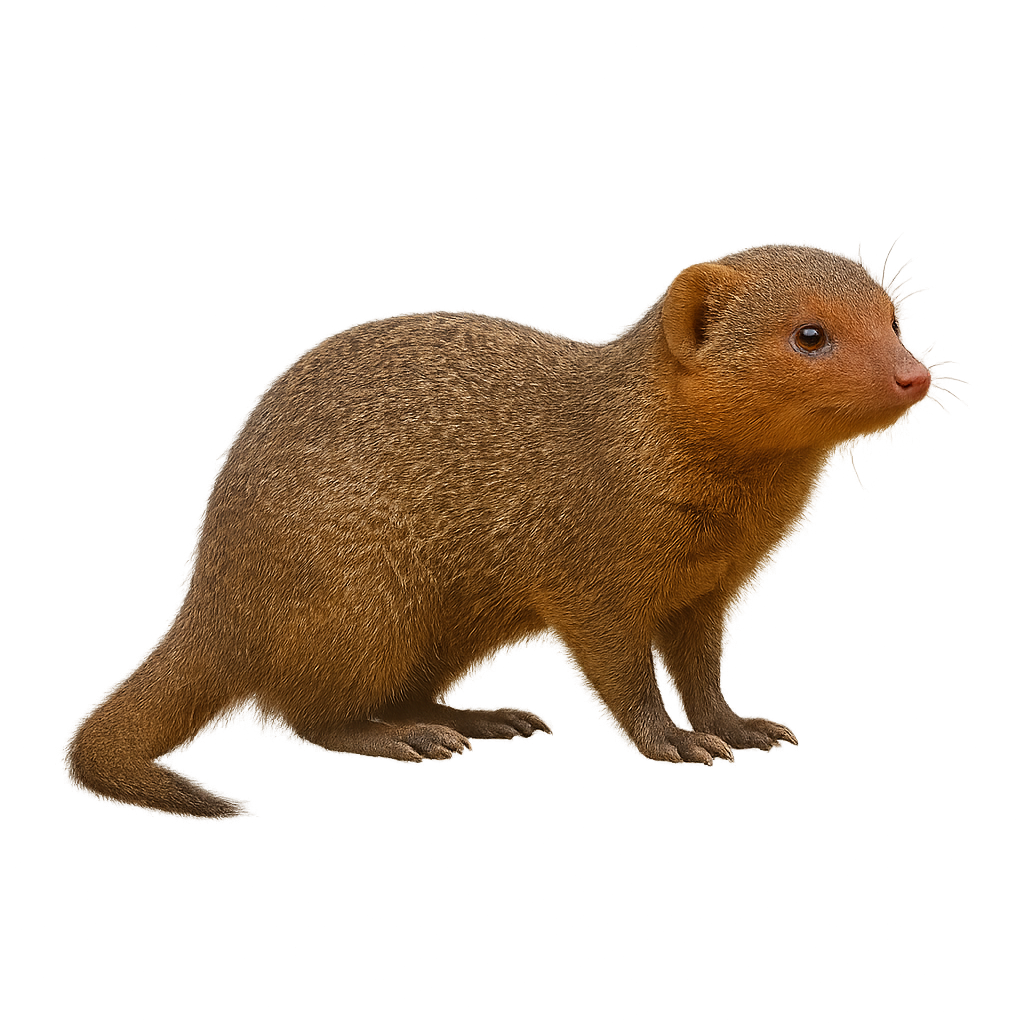
The Slender mongoose is a small species of mongoose often found in the savannas and dry forests of East Africa. It primarily feeds on small insects, reptiles, and occasionally small mammals. With its slender body and quick movements, it is highly agile and often lives in family groups. Slender mongooses are very social and communicate with each other through vocalizations and visual signals. Although abundant, this species may be locally threatened by habitat loss.
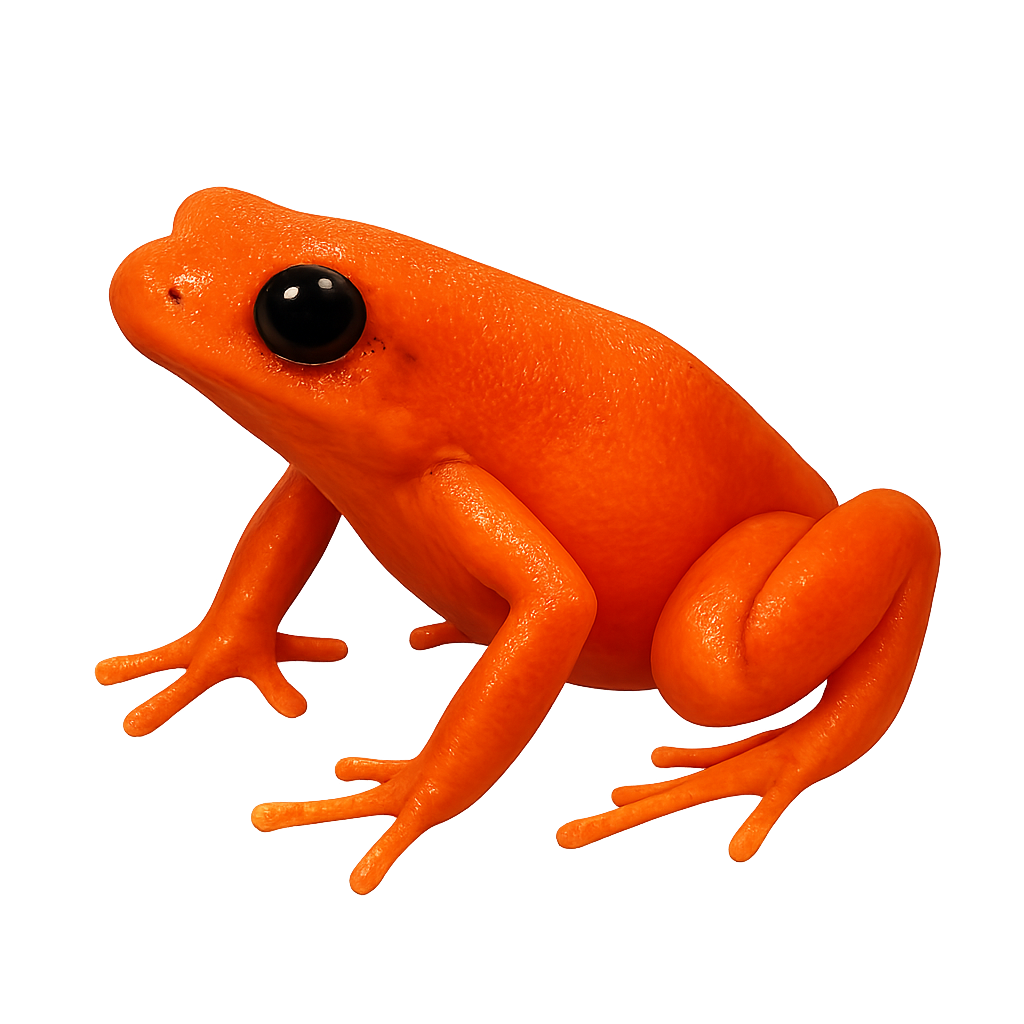
The golden mantella is a tiny frog (19–24 mm) with bright orange, toxic skin, living in leaf litter of eastern Madagascar’s rainforests. It feeds on small invertebrates and calls briefly after early wet-season rains to attract mates.
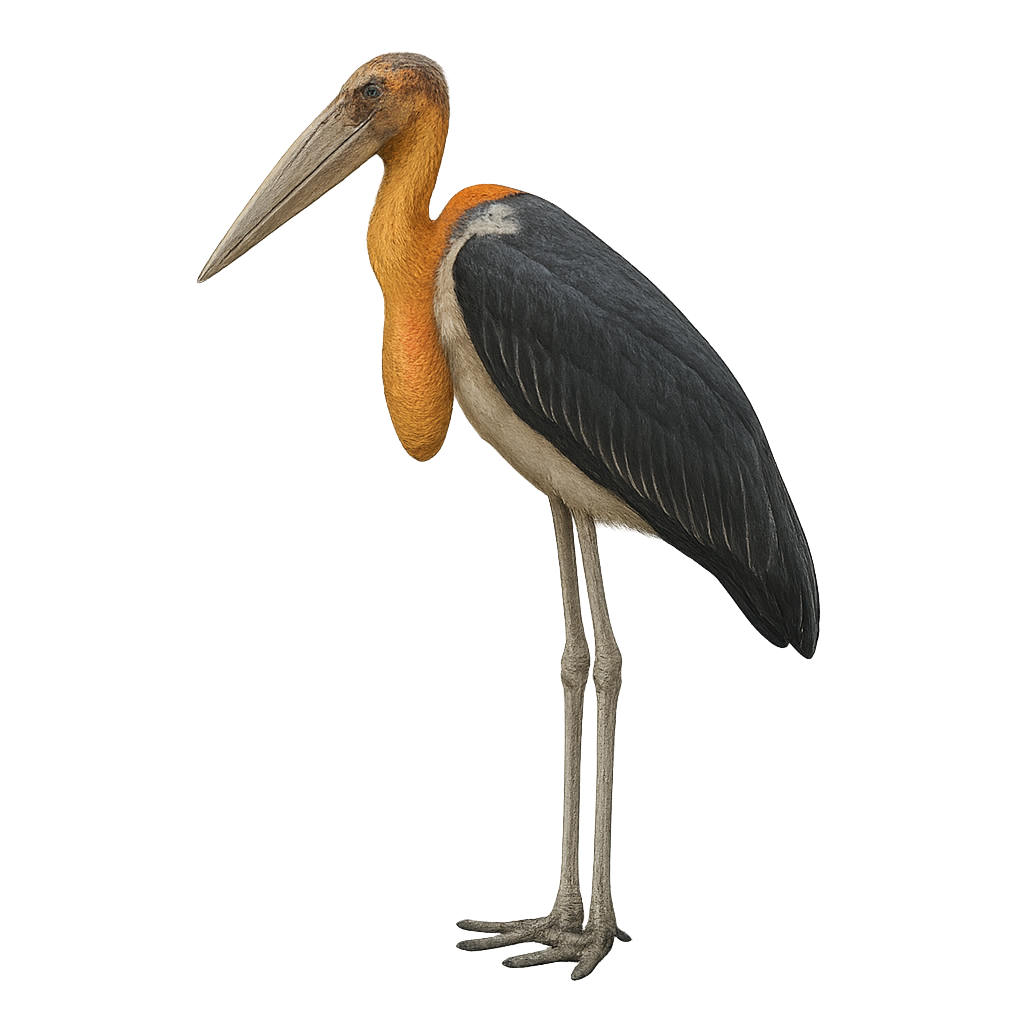
The Greater Adjutant, or Leptoptilos dubius, is a large wading bird from the Ciconiidae family, primarily found in South and Southeast Asia, especially in India and Cambodia. This bird is notable for its impressive size, reaching up to 1.5 meters in height, with a wingspan that can exceed 2.5 meters. Its plumage is mainly gray with white highlights, and it has a bare, often reddish head and neck. The Greater Adjutant is a scavenger, feeding mainly on carcasses, but it can also consume fish and small animals. It plays a crucial ecological role by cleaning ecosystems of decomposing organic matter.
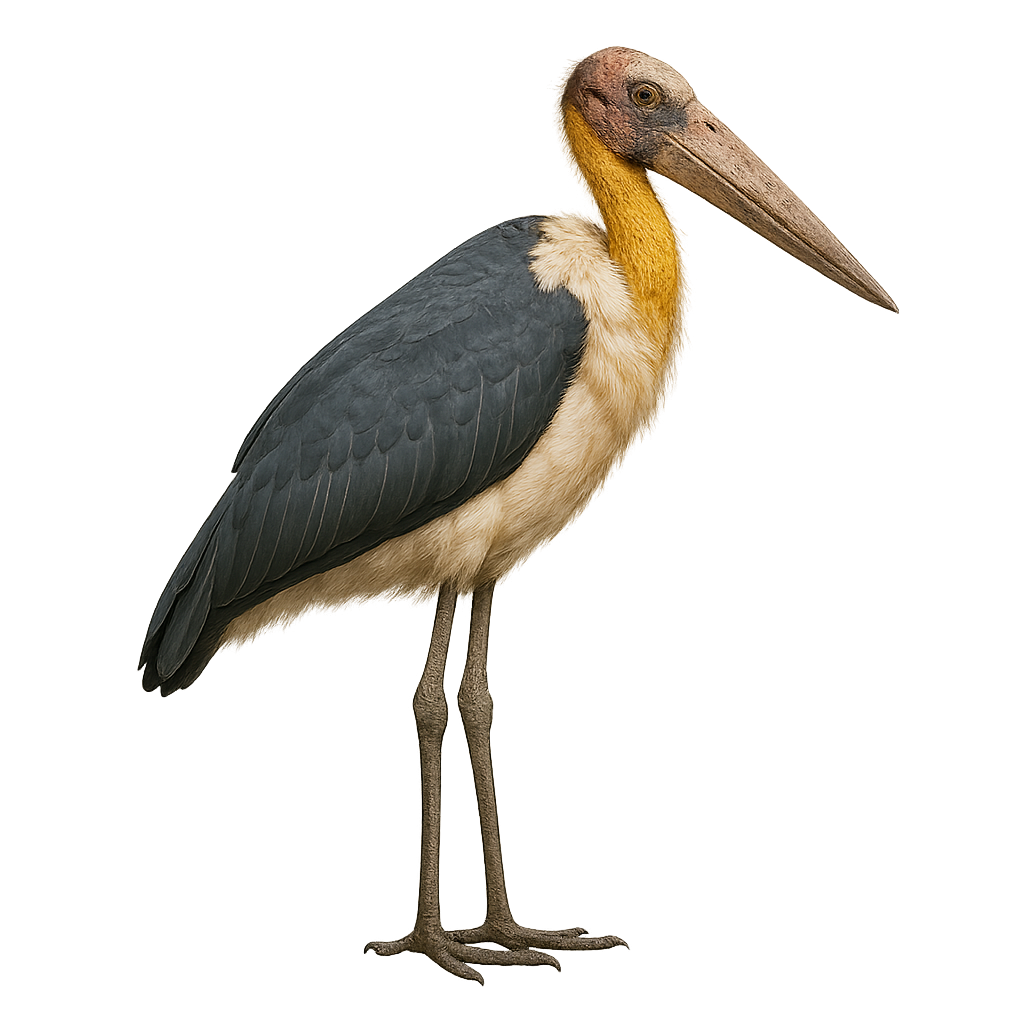
The lesser adjutant (Leptoptilos javanicus) is a large stork standing 110–120 cm tall with a 210 cm wingspan, exhibiting black upperparts and wings contrasted by a white belly and tail-underparts, and a bare pale gray head and neck. It inhabits coastal and inland wetlands of Southeast Asia, including mangroves, estuaries, flooded rice fields, and riparian forests. Feeding on amphibians, large invertebrates, and carrion, it forages by wading and probing with its long bill. Colonial breeder, it performs bill-clattering and neck-arching displays during nesting (February 1–May 31). Pairs lay 2–4 eggs, incubated 28–30 days, with chicks hatching March 1–June 30.
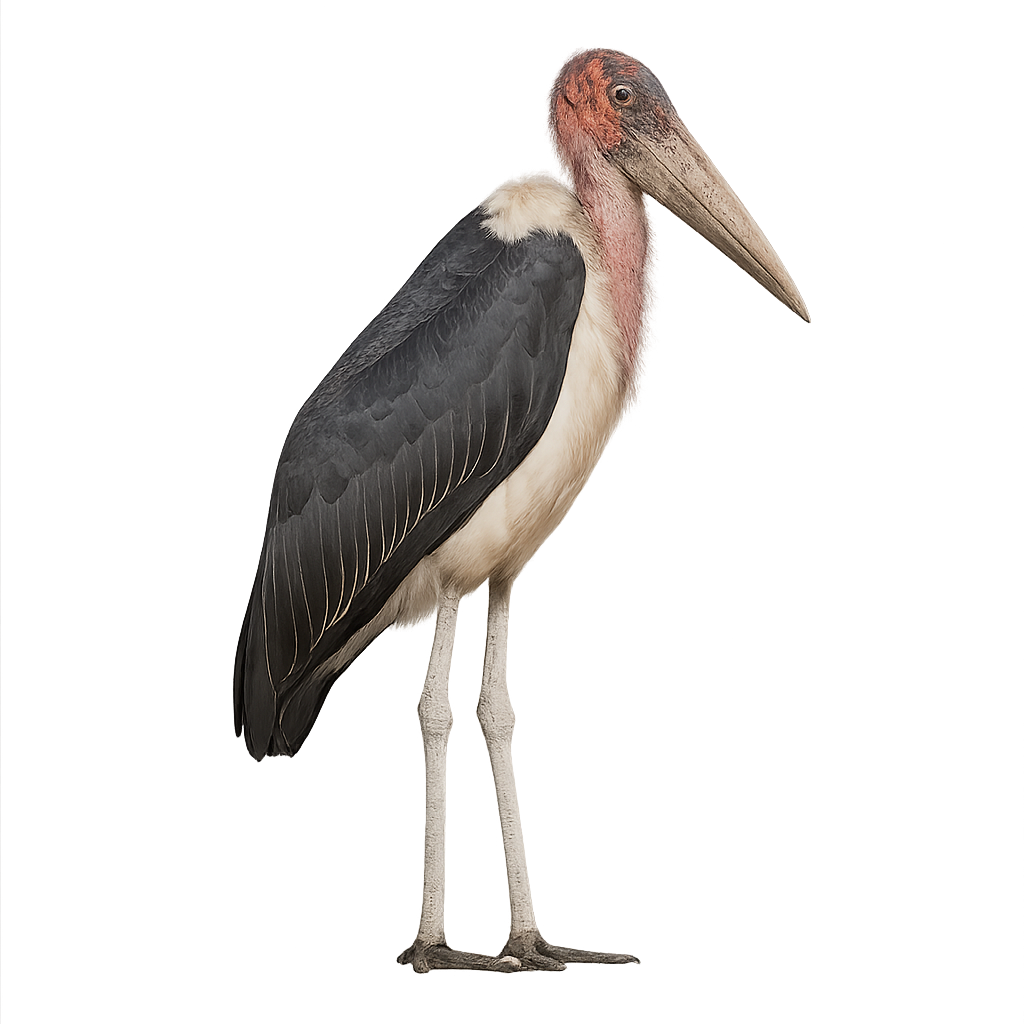
The African marabou is a large wading bird native to sub-Saharan Africa, easily recognized by its bare head, long neck, and mostly white plumage with black shades. It primarily lives in open areas near bodies of water, where it feeds on fish, dead animals, and waste. While it is not threatened, it is often associated with urban environments and can be seen in dumps. It is a solitary bird with a rather slow and discreet approach.
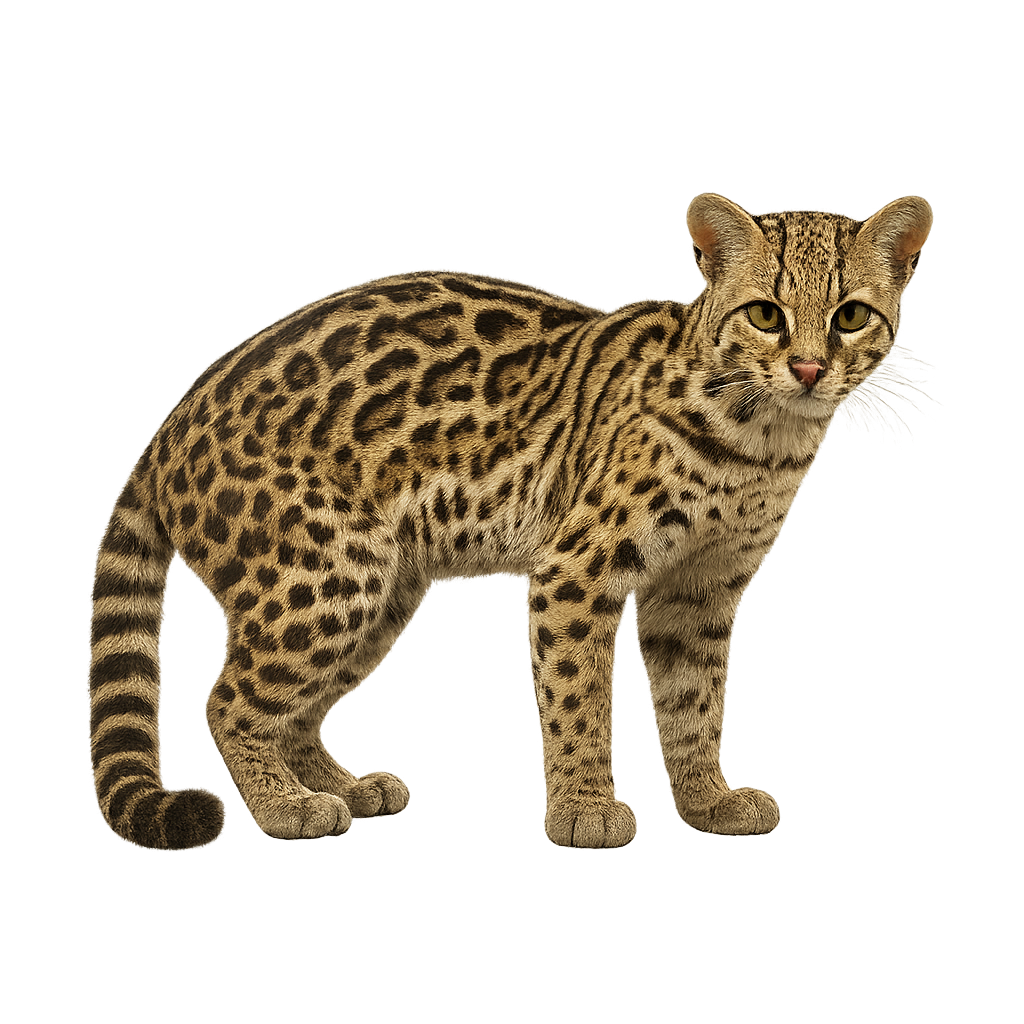
The margay is a small arboreal wild cat species found from Mexico to northern Argentina. Solitary and nocturnal, it spends most of its time in trees, hunting birds, monkeys, and small mammals with exceptional climbing skills. It can rotate its ankles up to 180° to grasp branches and uses its long tail for balance. During the breeding season, the female emits a long moaning call to attract the male, which responds with trilling sounds and head shakes before mating high in the trees.
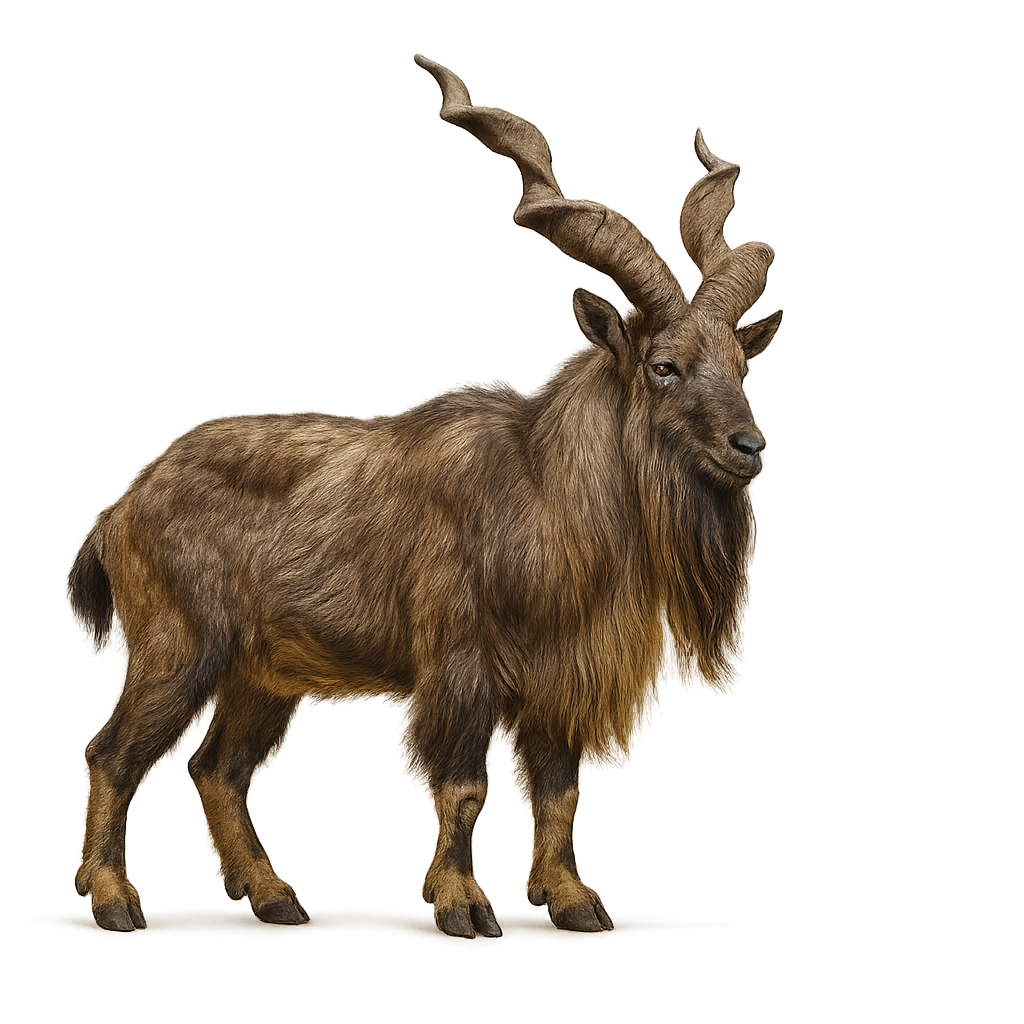
The Markhor is a wild goat species native to the mountains of Central Asia, primarily found in Afghanistan, Pakistan, Tajikistan, and India. It stands about 1.2 to 1.5 meters tall at the shoulder, with a body length of 1.5 to 2 meters, and weighs between 30 and 115 kg, with males generally being larger and more massive than females. The Markhor is famous for its impressive spiral horns, which can grow up to 1.5 meters long in adult males. Its coat is thick, typically brown or gray, with lighter fur on the belly and legs. It lives in mountainous and rocky areas, often at altitudes between 1,000 and 3,000 meters. The Markhor is an herbivore, feeding on mountain vegetation, including shrubs, leaves, and grasses. Although it is an agile climber and skilled at navigating steep terrain, it is also preyed upon by large predators such as snow leopards. The Markhor is classified as vulnerable due to overhunting, habitat loss, and human disturbances, but conservation efforts have helped stabilize its population in some areas.
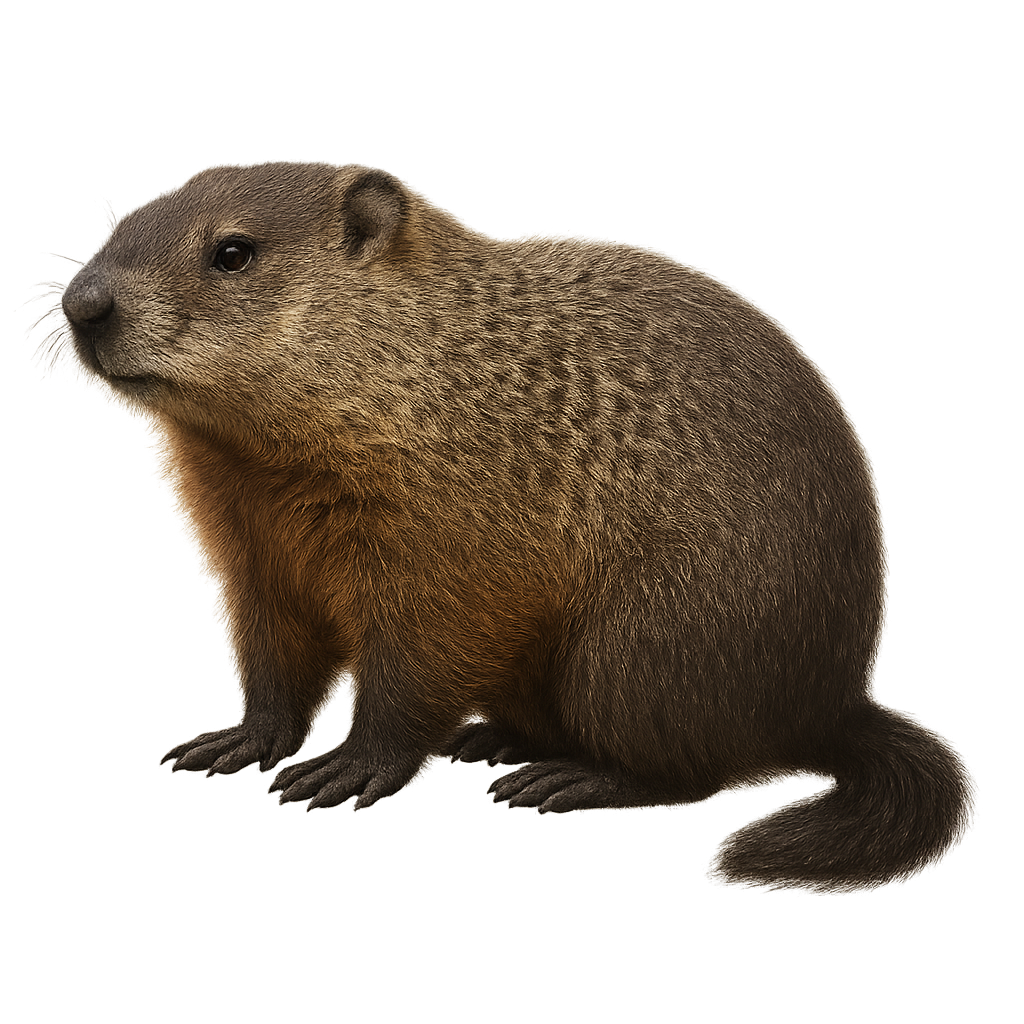
The groundhog, also known as a woodchuck, is a medium-sized rodent belonging to the Sciuridae family. It is widely distributed across North America, particularly in grasslands, forests, and agricultural areas. With a stocky body and thick brown-gray fur, it measures about 40 to 65 cm in length, including the tail. Groundhogs are known for their hibernation behavior, spending the winter in deep burrows. They are primarily herbivorous, feeding on various plants, grasses, and occasionally insects. Although often solitary, they can be observed in small family groups. Their sharp alarm call is used to warn others of predators.
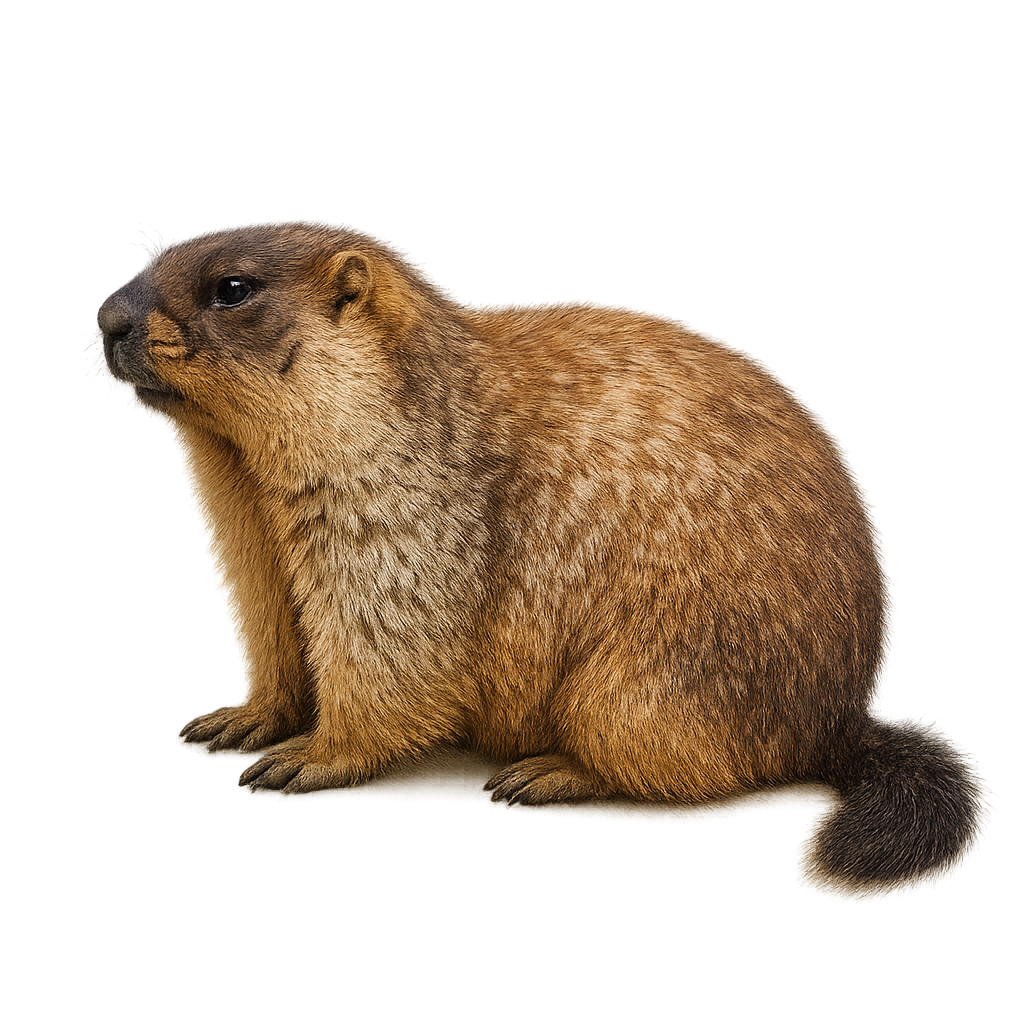
The Siberian marmot, Marmota sibirica, is a large rodent belonging to the Sciuridae family. It is primarily found in the steppes and grasslands of Mongolia, Russia, and northern China. This mammal is well adapted to cold climates, spending much of the year in hibernation. Its thick, dense fur ranges from brown to gray, providing excellent insulation against freezing temperatures. Siberian marmots live in colonies and dig extensive burrow systems to protect themselves from predators and harsh weather. They primarily feed on grasses, roots, and seeds. Although their population is stable, they are sometimes hunted for their fur and fat.
The Alpine Marmot is a large rodent primarily found in the mountainous regions of Europe, especially in the Alps, the Pyrenees, and the mountains of Italy. It measures about 40 to 60 cm in length, with a tail of 10 to 15 cm, and weighs between 3 and 7 kg, with females generally being a little smaller than males. Its coat is thick and typically brown-gray, with a lighter belly, allowing it to blend into its rocky and grassy environment. The Alpine Marmot lives in burrows dug into the ground, where it takes refuge to sleep, escape predators, and hibernate during the winter, a period when it enters a state of torpor for several months. During the summer season, it primarily feeds on grasses, roots, flowers, and berries. The Alpine Marmot is a social animal, typically living in family groups or colonies. While its population remains relatively stable, it is threatened by climate change and human development of its natural habitat.
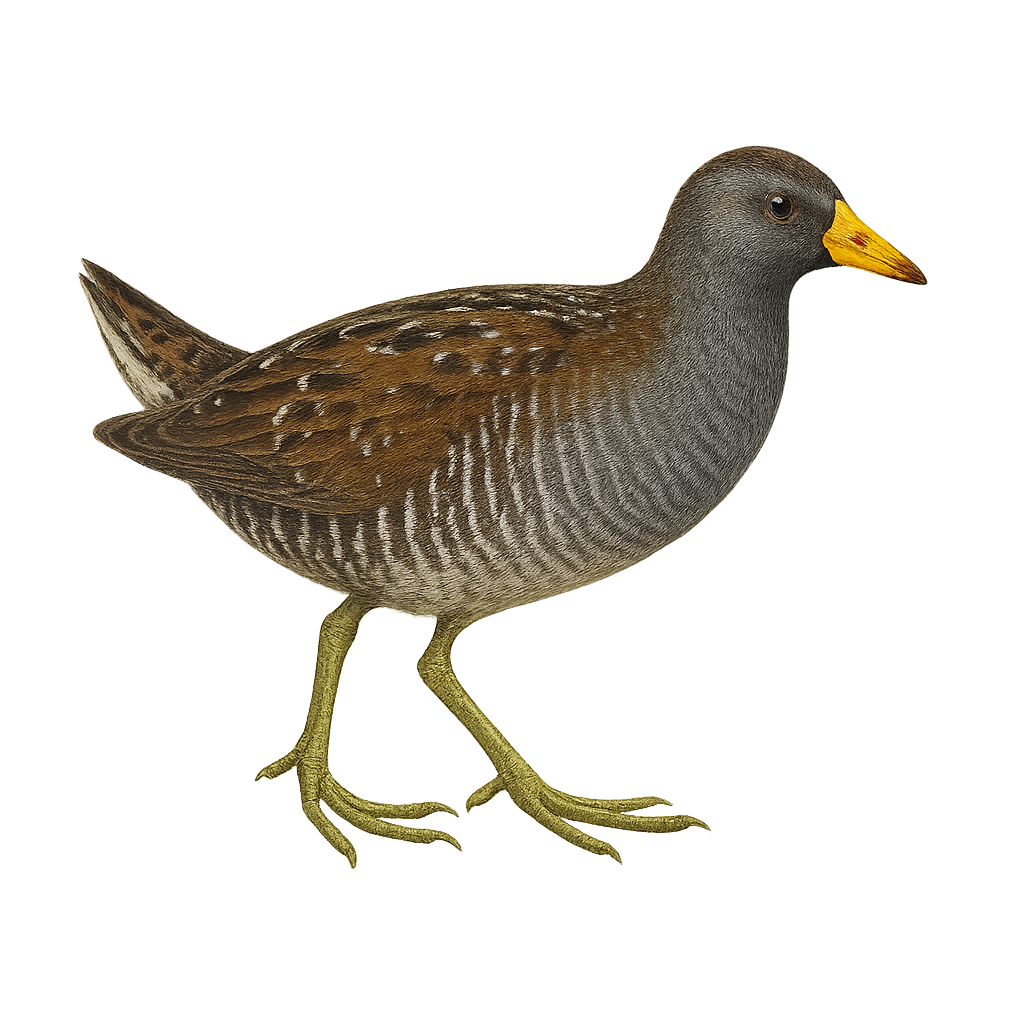
The Sora, or Porzana carolina, is a small waterbird belonging to the Rallidae family. It is easily identifiable by its olive-brown plumage with white stripes on the flanks and a bright yellow bill. This bird primarily inhabits marshes and wetlands in North America, where it feeds on seeds, insects, and small invertebrates. A migratory species, it winters in the warmer regions of the southern United States and Central America. The Sora is a secretive bird, often heard rather than seen, thanks to its distinctive call. Its ability to slip through dense vegetation makes it difficult to spot.
The Common Porpoise is a small cetacean from the Phocoenidae family, found primarily in the temperate and cold waters of the North Atlantic and the North Sea, although its range also extends to certain parts of the Baltic Sea. It typically measures between 1.3 and 2 meters in length and weighs between 40 and 65 kg. Its coat is dark on the back and light on the belly, and it has a small dorsal fin located near the back. The Common Porpoise has a rounded snout and is easily recognizable by its small, rounded pectoral fins. It primarily feeds on fish, crustaceans, and cephalopods, hunting using echolocation to locate prey in the water. Although it is often seen in small groups, it generally prefers to swim alone or in small family units. While the species is classified as of least concern, it faces threats such as pollution, accidental bycatch in fishing nets, and disturbances caused by maritime traffic.
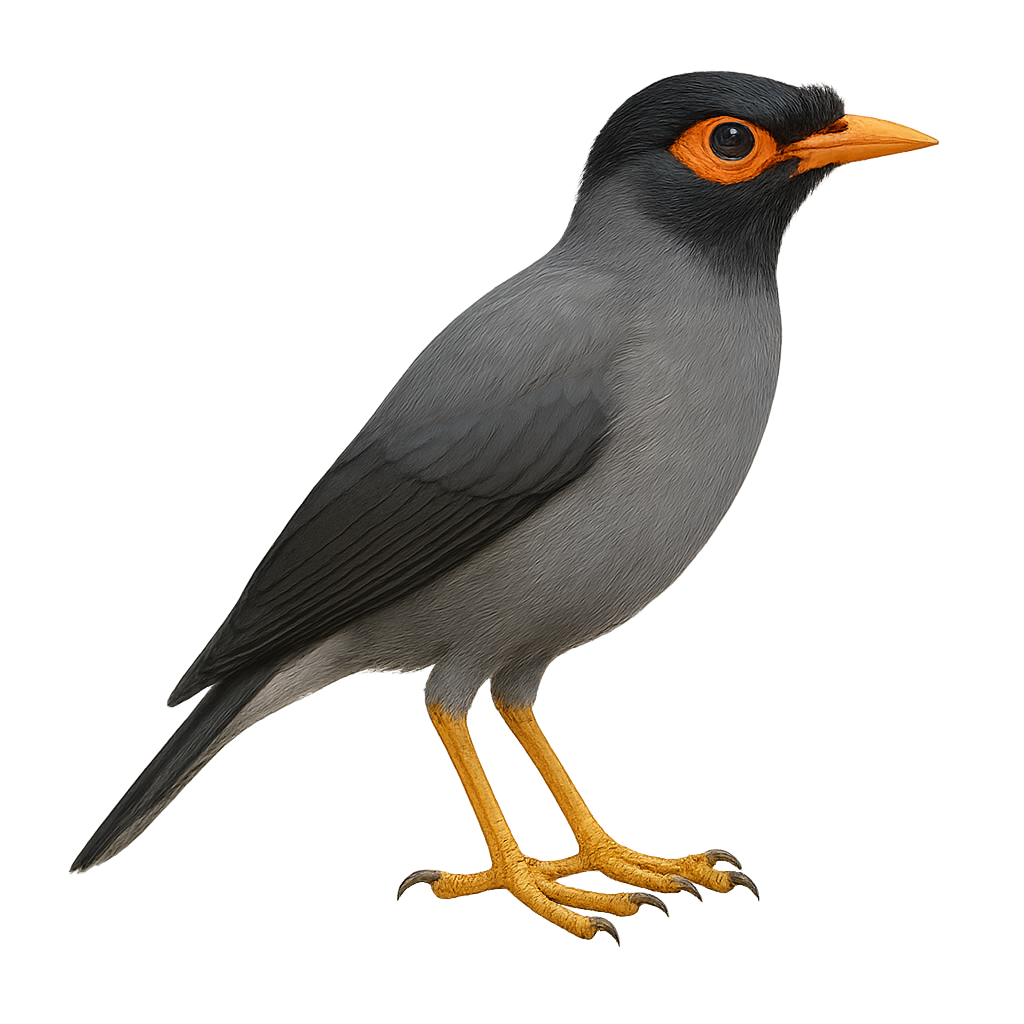
The Bank Myna, or Acridotheres ginginianus, is a medium-sized bird belonging to the Sturnidae family. It is primarily found in the Indian subcontinent, where it frequents open areas, cultivated fields, and villages. Its plumage is generally gray with metallic sheen, and it features black patches on its head and wings. This bird is known for its sociability and adaptability to various environments, making it common in human-inhabited areas. The Bank Myna primarily feeds on insects, fruits, and seeds. It is often observed in groups, which helps it protect against predators.
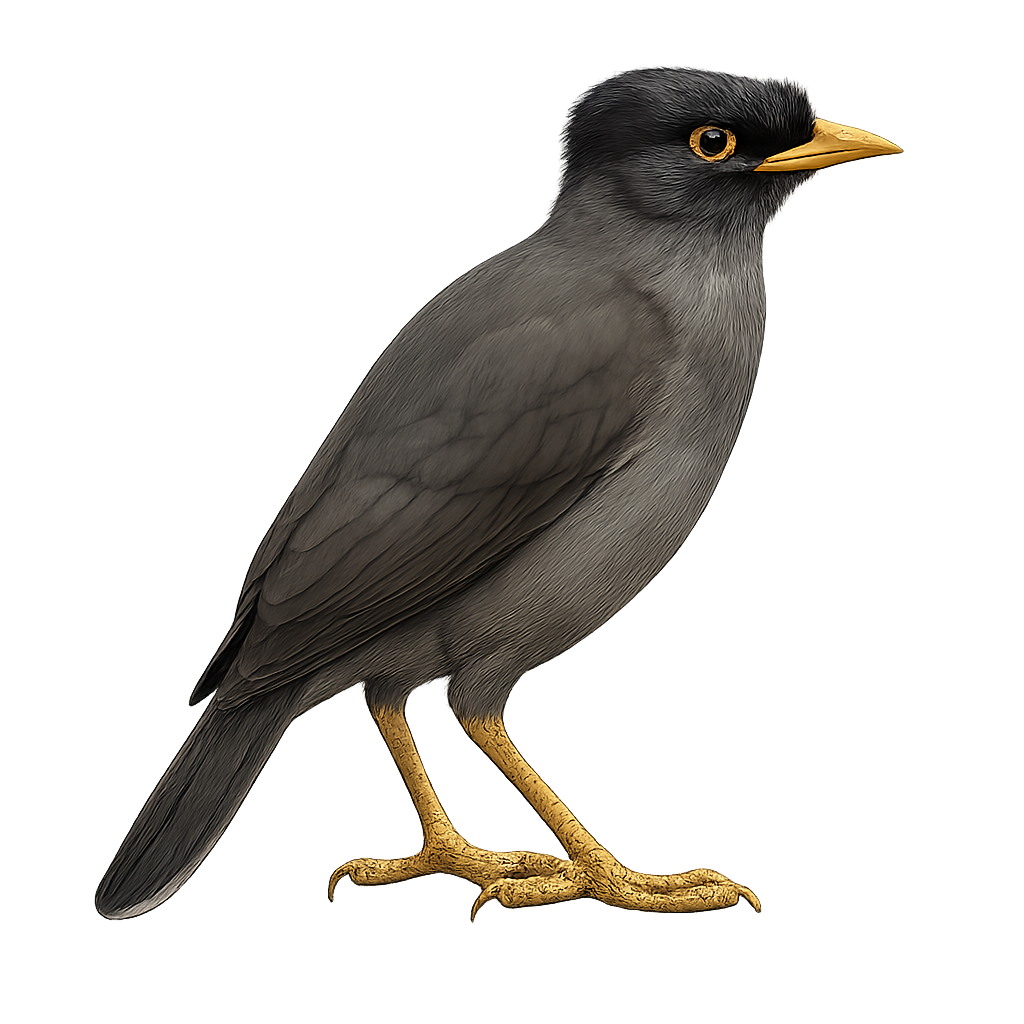
The Jungle Myna, or Acridotheres fuscus, is a medium-sized bird belonging to the Sturnidae family. Native to South Asia, it is often seen in forests, agricultural areas, and urban environments. This bird is characterized by its dark plumage, bright eyes, and yellow beak. Sociable and adaptable, the Jungle Myna is often seen in groups, foraging on the ground or in trees. It primarily feeds on insects, fruits, and seeds. Its song is varied and melodious, making it a favorite among birdwatchers. Although generally not very shy, it can be suspicious in areas where it is less accustomed to human presence.
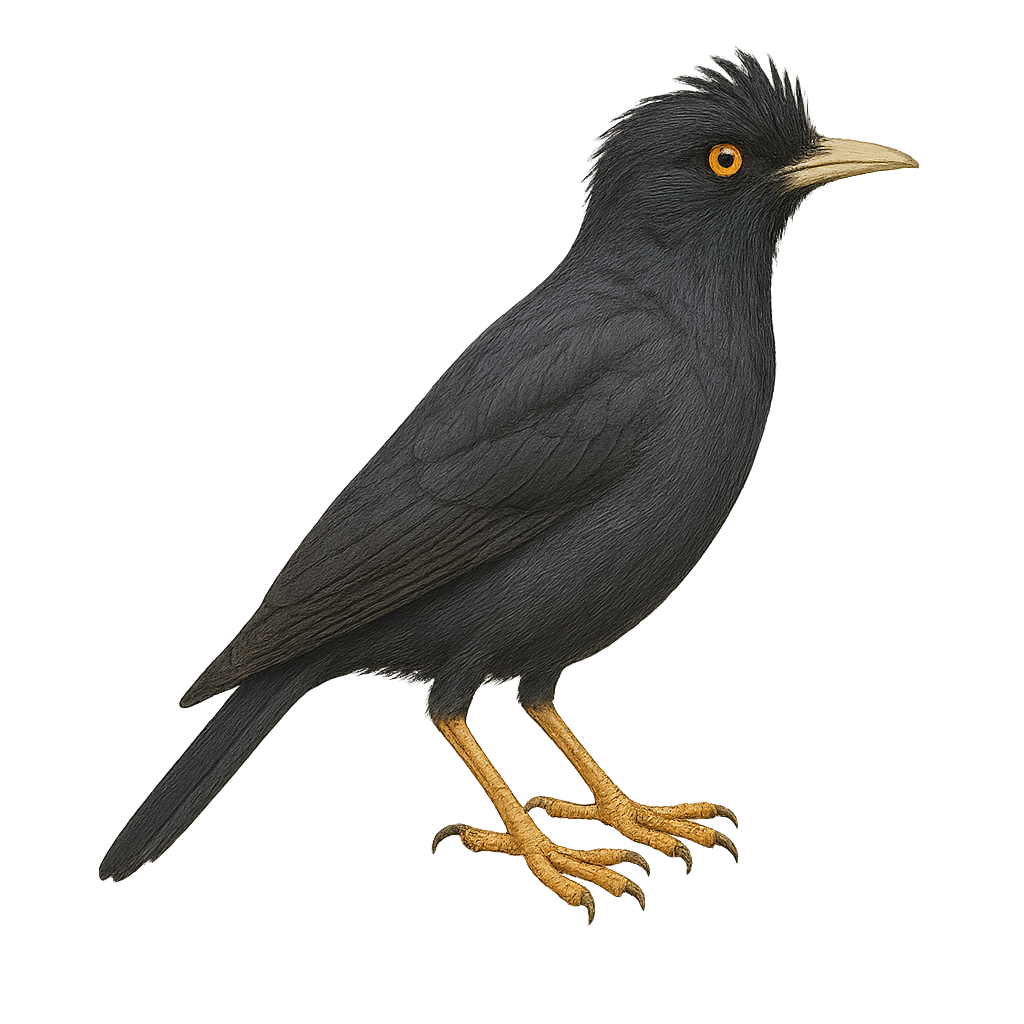
The Crested Myna, or Acridotheres cristatellus, is a medium-sized bird, about 25 cm long. It is characterized by its glossy black plumage, striking yellow eyes, and a distinctive crest on its head. Native to Asia, it is often found in urban and rural areas, easily adapting to human-altered environments. An omnivore, it feeds on insects, fruits, and seeds. Its song is varied, including whistles and imitations of other birds. The Crested Myna is a social bird, often seen in small groups. Although primarily sedentary, it may make short movements to find food.